This is the fourth installment in an ongoing series, “Powerless,” from Public Health Watch that examines how rising temperatures and skyrocketing electricity costs are placing Texans in danger.
HOUSTON — Even with new windows and insulation, it’s hot inside the living room of Felicia Thibodeaux’s home in Pleasantville, an historic community on Houston’s east side.
Too hot. She can feel the heat seeping through the windows, especially at the front of her southward-facing home.
“It’s burning up in that room,” she said recently, as a heat dome sat over southeast Texas.
About ‘Powerless’
An ongoing series about what’s driving the relentless rise in Texas energy costs. Read more.
She can feel her air conditioner “pulling” to keep up with the sizzling temperatures, and she knows the old unit needs to be replaced. But for now, Thibodeaux, 65, said she’ll keep “living on a wing and a prayer.”
The unrelenting heat in inner-city communities fueled by climate change has been exacerbated by what’s known as an urban heat island effect, when masses of concrete, a lack of trees and clusters of buildings in urban areas raise temperatures higher than in suburban and rural communities.
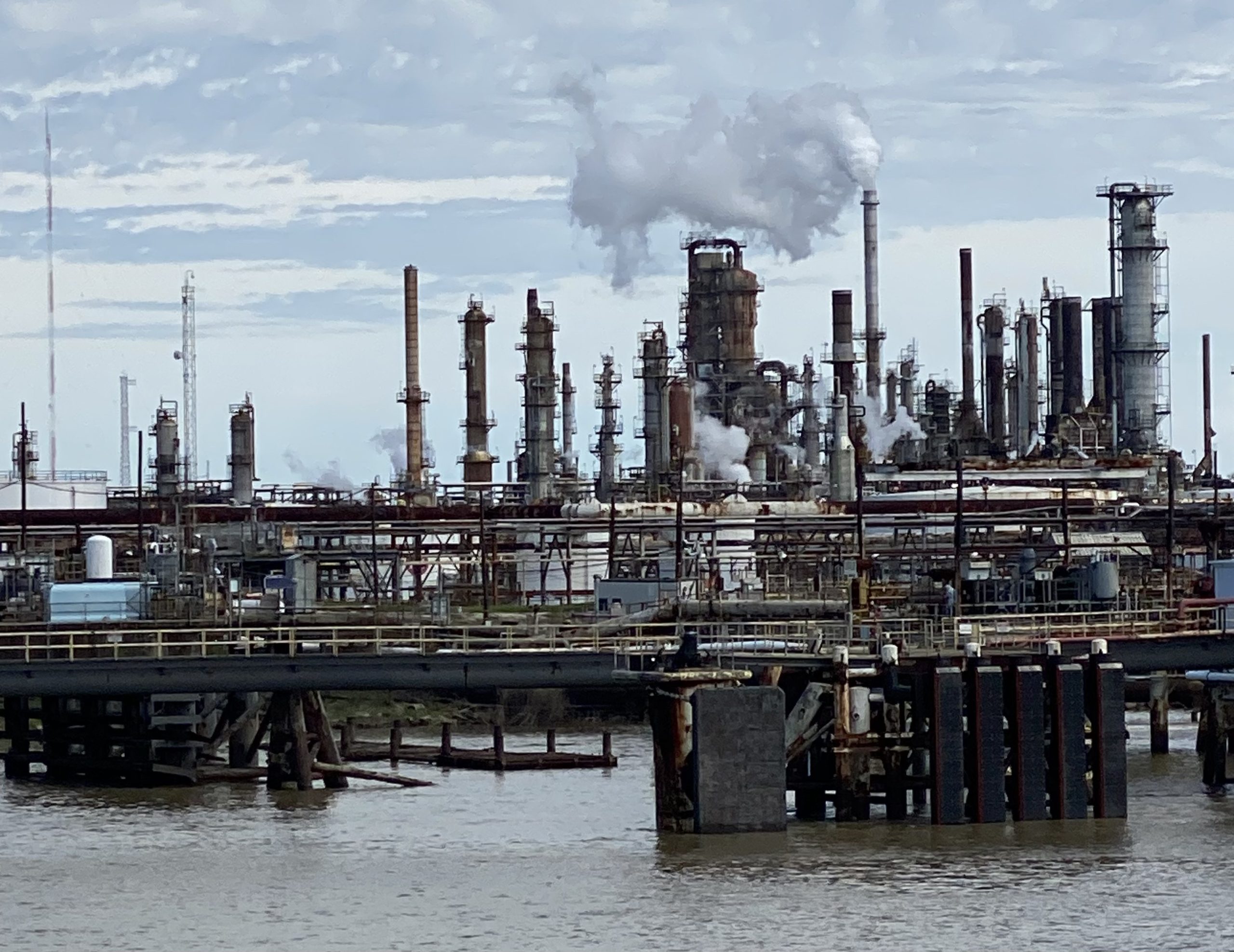
For people living in Houston’s older, majority-minority neighborhoods like Pleasantville — nestled largely in the city’s urban core less than a mile north of the Houston Ship Channel — the economic and health impacts of extreme heat have hit particularly hard this year.
“When you’re on a strict budget and you’re paying $200 light bills, it’s hard,” Thibodeaux said. “You can’t survive under a fan when the heat index is 102 degrees.”
Thibodeaux had just paid off a $488 electric bill in August when she was hit with a $280 bill in September. She turns the lights on sparingly, limits her use of appliances and keeps the thermostat inside her 1,300-square-foot home set to the mid-70s.
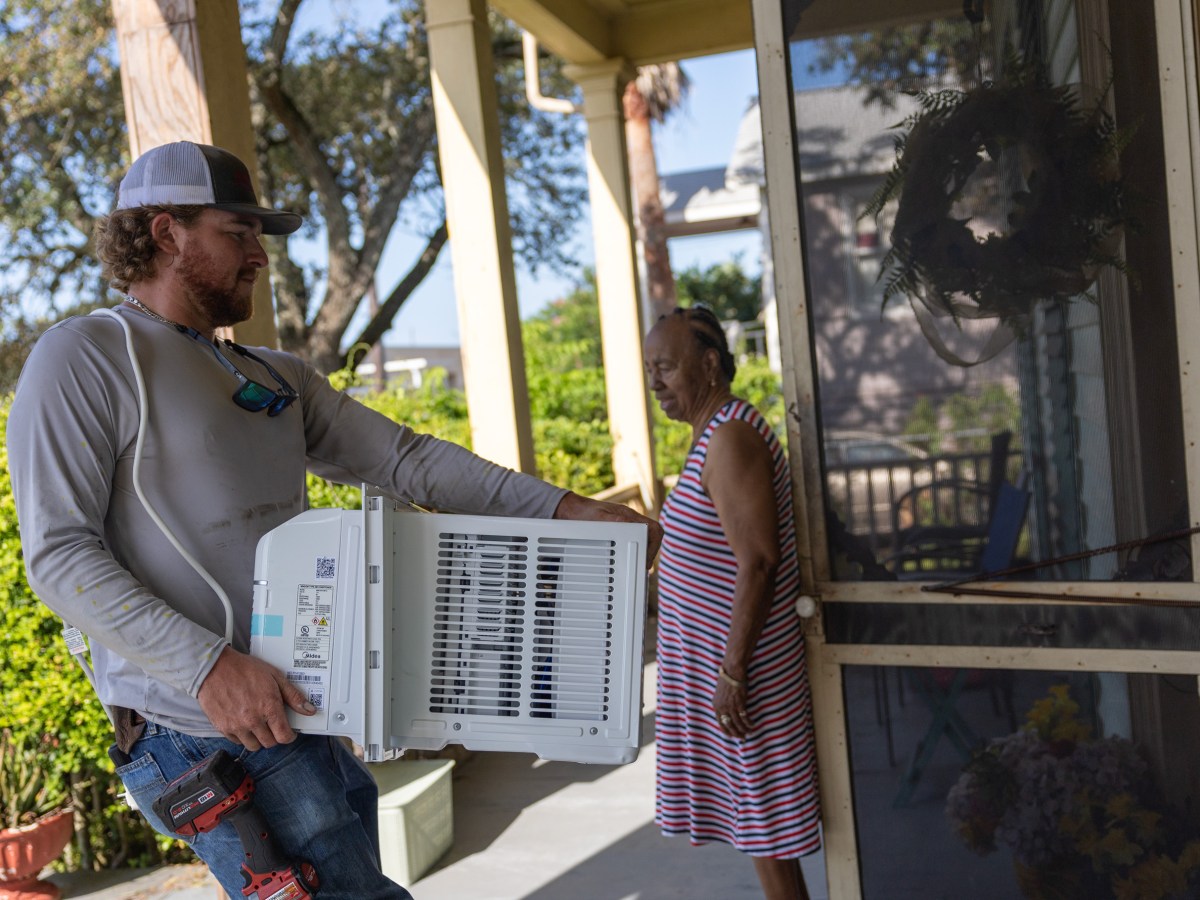
She installed new windows in her 1950s-era home, and was able to secure weatherization assistance from CenterPoint Energy, which put weatherstripping on her doors and installed new insulation to replace the “black felt-like paper” — likely a form of tar paper — in the exterior walls.
She can tell the difference in the temperature in most rooms in the house, but she has not been able to offset the cost of electricity, which has gone up in the five years since a winter storm overloaded the Texas electrical grid.
In addition to assistance from utility companies like CenterPoint, residents can get help from a state-run Weatherization Assistance Program, which operates with federal funding through the Texas Department of Housing and Community Affairs. For families that meet the income requirements, the program can provide windows, doors, weatherstripping, insulation, duct work, repair or replacement of heating and cooling systems, and other improvements.
Resources run thin, however. From 2021 through 2023, only 2,187 low-income households in Texas received help from the program — an average of 729 per year. Over the same period, 5,532 households received help paying their electric bills through the Low Income Home Energy Assistance Program, known as LIHEAP, according to annual reports filed with the state Legislature.
Harris County, which includes Houston, was second in the state in federally funded weatherizations, with 263 households receiving energy-saving improvements over the three-year period, the most recent years for which the state reports are available. South Texas ranked first, with 323 weatherizations, and the Greater East Texas area was third, with 209, according to a Public Health Watch analysis of the reports.
Overall, the state spent nearly $19.5 million over three years on the weatherization programs, with an average of nearly $9,000 spent per household. The weatherization projects resulted in cost savings of about $9.3 million in utility usage.
The needs, however, remain substantial in neighborhoods like Pleasantville, where the lingering impacts of natural disasters and systemic racism have limited residents’ ability to make home improvements that could mitigate the steep rise in electricity costs. The financial and emotional burdens cut across economic levels, as more people are forced to juggle their finances while seeking assistance to weatherize their homes and pay their electric bills.
“These communities are facing compounded burdens,” said Tsion Amare, manager of Texas political affairs for the Environmental Defense Fund, or EDF, a nonprofit, nonpartisan advocacy organization that works with communities on air and water quality, lead contamination, and other issues.
“They’re already facing health risks because of environmental injustices, redlining and historic racism,” Amare said. “They’re most vulnerable on climate change issues and, on top of that, their energy costs are increasing. They can’t get a break.”
Just inside the front doors of the busy Judson Robinson Sr. Community Center, a colorful mural tells the history of the people and the promise of Pleasantville, the first master-planned community in Houston developed as a place where Black Americans could purchase their own homes.
Urban Island
Pleasantville was established as a deed-restricted community for residential construction only in 1948, on land sitting just north of the Port of Houston. More than 600 homes were built from 1950-1955, featuring mahogany doors, hardwood floors and attic fans to combat the heat.
First-generation homeowners — including those returning from military service overseas — had long been shut out of full participation in American civic life. Pleasantville was a place where they could plant the seeds of community engagement, generational homeownership, local business, and political muscle.
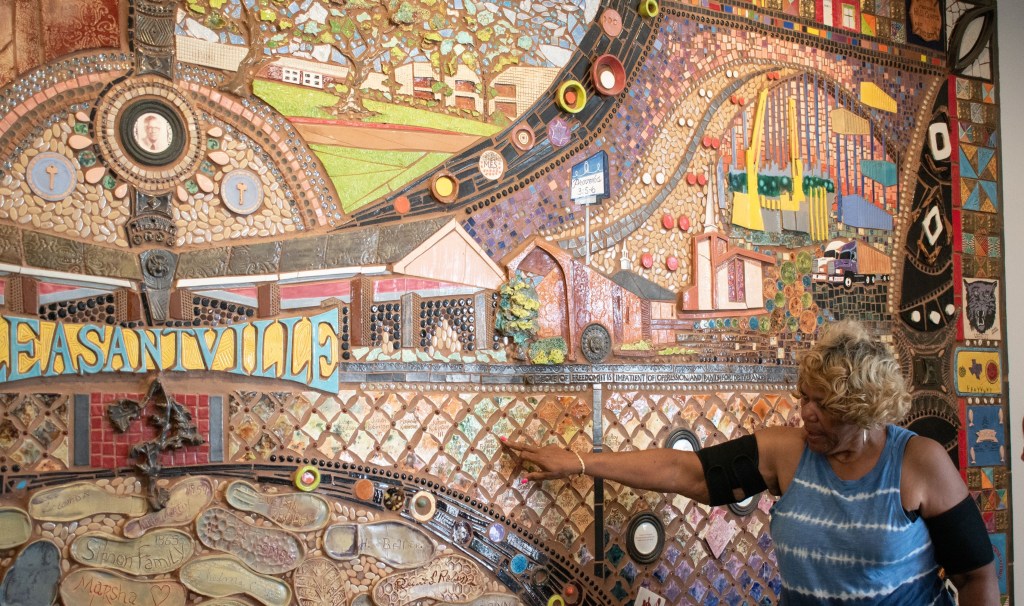
For a number of years, Pleasantville boasted nearly 100% homeownership and, after the extension of full voting rights to Black Americans, a voter participation rate that was 75% and above.
“Every politician flocked to us, because they knew we were going to vote,” Thibodeaux said. “They would ride around in a truck with a bullhorn.”
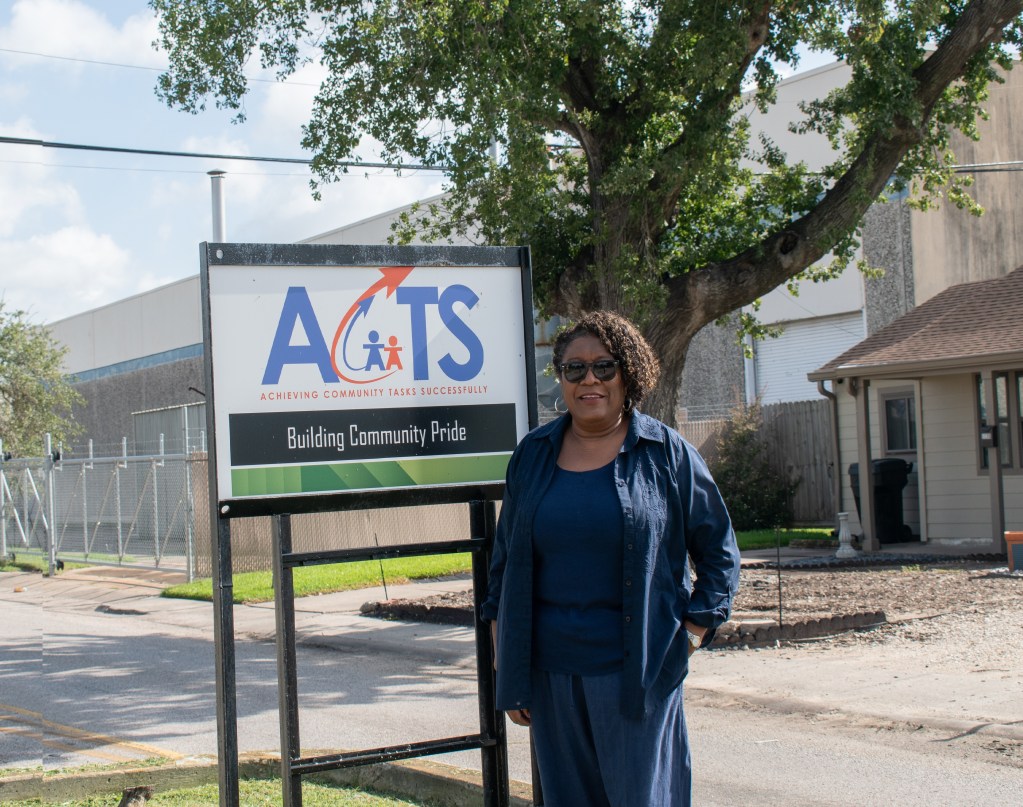
But with legal expansion of civil rights opening homeownership opportunities outside of redlined communities, Pleasantville began to experience “Black flight,” with some residents moving into communities that had previously been closed to them, said Bridgette Murray, founder of Achieving Community Tasks Successfully, or ACTS, a Pleasantville-based nonprofit focused on resilience and sustainability.
The neighborhood’s fortunes further shifted as Pleasantville became boxed in by industrial development and the construction of a busy stretch of Interstate 610 carrying truck traffic to and from the port.
Pleasantville eventually became a land-locked urban island — three of four entrances now require drivers to cross railroad tracks. The impact on air quality, flooding, and extreme temperatures — from man-made and natural causes — has been significant.
Murray founded ACTS in 2012. The organization has been a driving force behind data-driven efforts to improve air quality. It has helped develop a school-community garden, enhanced the neighborhood’s disaster preparedness, and worked to connect residents with weatherization, utility assistance and other programs.
Murray, like Thibodeaux, grew up in Pleasantville. In fact, many of the neighborhood’s residents never left or have returned home, often to be closer to aging parents or relatives. Murray describes Pleasantville as a small town within a big city, where neighbors are connected to one another and civic participation is in the neighborhood’s DNA.
“This has always been one of those kinds of communities where civic engagement, taking care of your neighbor, has always been a force within the community,” Murray said.
Vulnerable to Heat
Aljeretti Whitehead mostly stays inside these days.
Whitehead, 72, has chronic obstructive pulmonary disease, or COPD, and never strays far from her oxygen. After her husband died in 2018, Whitehead moved into her 92-year-old mother’s home in the neighborhood to better care for her. Her mother also has COPD and other health issues.
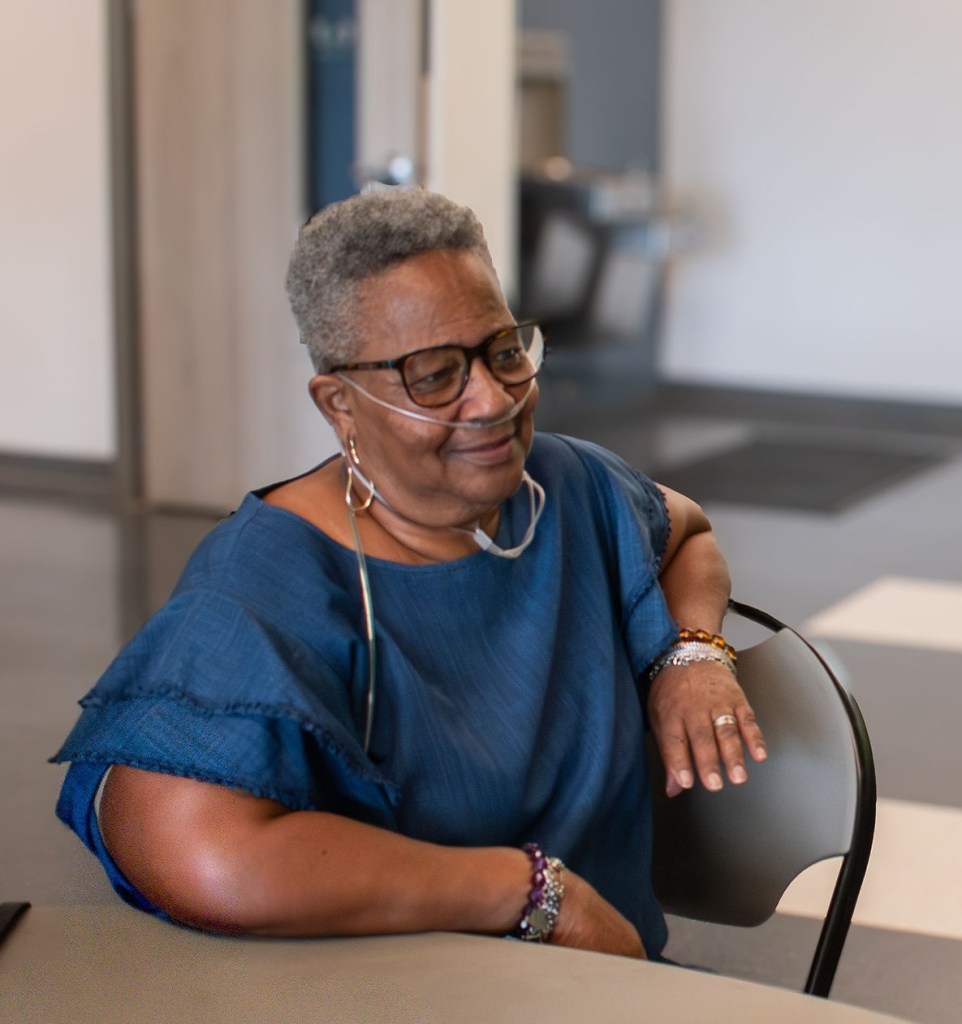
Whitehead has replaced all the windows in the home and made other improvements. Earlier this year, more than a year after applying, she received weatherization assistance for insulation, a new energy-efficient stove and wrapping for the hot-water heater.
She almost immediately noticed the impact: her electric bill fell from $500-$600 per month to around $300.
Heat has changed how she and many other people live, Whitehead said.
“It’s hot and humid, and me being on oxygen, I’m mostly closed in,” she said. “We can’t breathe. My mom ain’t coming outside except to go to the doctor anymore. She can’t breathe.”
Pleasantville is among the hottest neighborhoods in Houston, ranking 19th in a heat-mapping analysis by the Houston Advanced Research Center, or HARC, a nonprofit that focuses on energy, the environment and sustainability. The analysis found as much as a 14-degree difference in temperatures among Houston’s neighborhoods.
Data from Harris County Public Health shows that extreme temperatures in urban-core communities, including Pleasantville, are making more people sick and sending more people to the hospital at rates higher than the city as a whole.
Between 2019 and 2023, the number of reported heat-related illnesses exploded by 329% in Harris County, according to a 2024 report on the health impacts of extreme heat by Harris County Public Health.
“Residents in these [urban] communities face a higher risk of heat-related illness and adverse health outcomes,” according to a separate joint report by Harris County Public Health and the Houston Health Department.
Average temperatures in Harris County have climbed nearly a degree per decade since the mid-1970s, and the city of Houston’s Climate Impact Assessment in 2020 found an expected increase in the number of days with temperatures above 100 degrees. The assessment also predicted an increase in the number of nighttime temperatures above 80 degrees, providing little overnight relief from the heat, especially in homes without proper weatherization.

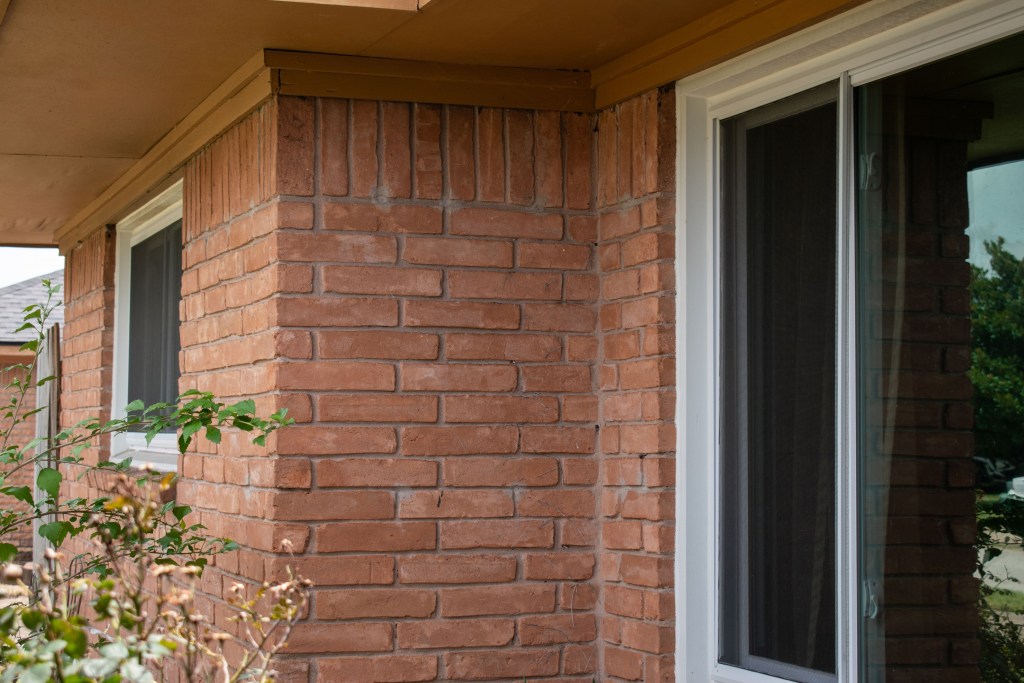
Older homes are especially vulnerable because of the building materials used in construction, a lack of proper insulation, and cracked or leaky windows and doors. According to EDF, 85% of homes in Pleasantville were built before 1979, a “crucial indicator when evaluating a community’s ability to adjust, limit, and cope with the extreme heat.” The neighborhood ranked in the 99th percentile in EDF’s Climate Vulnerability Index, based on a score “combining environmental, social, economic and infrastructure effects on neighborhood-level stability.”
Margaret Cook, HARC’s vice president for water and community resilience, said these problems translate into higher electric bills.
“They’re going to continue to spend more of their income on energy as they try to air condition a leaky home,” Cook said.“You can have a normal home where you already have expensive electricity, and then add to that that you need a lot of energy to cool it. So, you are spending a lot of money that’s wasted and on top of that you’re having to cool it even more because not only is it leaky, it’s hotter.”
Properly weatherized homes can save 4,000 kilowatt hours of energy annually, or about one-third of the average bill for many residents in the hardest-hit communities, Cook said.
But residents of Pleasantville have relatively low participation rates in weatherization assistance programs, she said, possibly because of lower engagement in the small community.
‘In a Desert’
Pleasantville native Marsha Lister, 73, helps connect her neighbors with utility and weatherization assistance through her role with the Coalition for Environment, Equity and Resilience, or CEER. In the past year, Lister said, she was able to secure utility assistance for 18 households and weatherization assistance for another 10.
Despite these successes, she believes Pleasantville has been largely overlooked by governmental authorities and assistance organizations.
“ZIP code ‘29’ has been, like, in a desert,” said Lister, who worked in Houston’s parks department for 36 years. “It has not received a lot of services because we are in an industrial area.”

ACTS founder Murray said resources for Houston’s east side communities have been lacking for a long time, leaving community organizations carrying the weight of connecting neighbors with government and nonprofit resources.
“It feels like a lot of communities on this side of town are abandoned,” she said.
The number of people seeking help for utility assistance and living expenses, meanwhile, continues to climb, but the money doesn’t stretch as far as needed. One Pleasantville resident received $1,200 in utility assistance effective on June 1, but that covered just three months of electric bills for an 1,100-square-foot home with central air conditioning, according to records reviewed by Public Health Watch.
The average energy burden — the percentage of household income consumed by energy costs — has risen to 7.2% in Harris County as of July 2025, according to data from the Texas Energy Poverty Research Institute, or TEPRI, and the Southeast Energy Efficiency Alliance.
In Pleasantville, many households are spending even more – about 8.4% of income on utility costs, according to TEPRI, a nonprofit research institute.
Still, many families are denied assistance.
In one program that CEER helped facilitate, about 50 percent of applicants were denied because their forms were incomplete, said the group’s executive director, Stefania Tomaskovic. Of these, about half were elderly and about 40 percent disabled.
CEER works with other organizations, including Baker Ripley, to help connect people with weatherization and utility assistance. Volunteer “climate ambassadors” and so-called navigators are trained to work in their communities to educate residents about the impacts of climate change and help them find assistance.
‘It’s Not Affecting Them’
Kevin and Paula Young have spent their lives trying to help others.
After they married six years ago, Paula moved into Kevin’s Pleasantville home and has become involved in community advocacy. Kevin was always there to lend assistance, she said.
“I try to put myself in situations to help,” said Kevin, 59. “I can’t do as much as I did before, but I can do a little here and there.”

Following a stroke two years ago, however, Kevin has not yet been able to return to work as a truck driver, and Paula, 58, recently came out of retirement to take a contract job with the Alief school district, where she had been a long-time special education teacher.
Their income has fallen by about half at the same time they have been hit with high costs for health and homeowners’ insurance, medical bills and rising property taxes.
The couple’s utility bills also escalated throughout the summer — jumping from $114 in April to around $290 in September.
For the first time in their life together, they find themselves having to ask for help, and are now applying for weatherization and utility assistance.
This has been a bitter pill, Kevin said. They had done everything Americans are told to do to be financially independent: They worked hard, owned their own home, stayed off credit cards, paid their bills on time, and put money away for their later years.
They had replaced about half their windows and were gearing up to insulate their home when Kevin had the stroke. They can feel the heat coming in from outside but keep the thermostat set at 75 degrees, with the ceiling fans running.
And yet utility costs keep climbing.
“We’re not wanting something for nothing,” Paula said. “We don’t feel like we’re getting more of anything — so why are the prices of things going up?”
Kevin suspects that policymakers don’t give much thought to the needs of low- and middle-income Texans.
“The way I see it, they feel like it doesn’t affect them,” he said.
Stepping in to Help
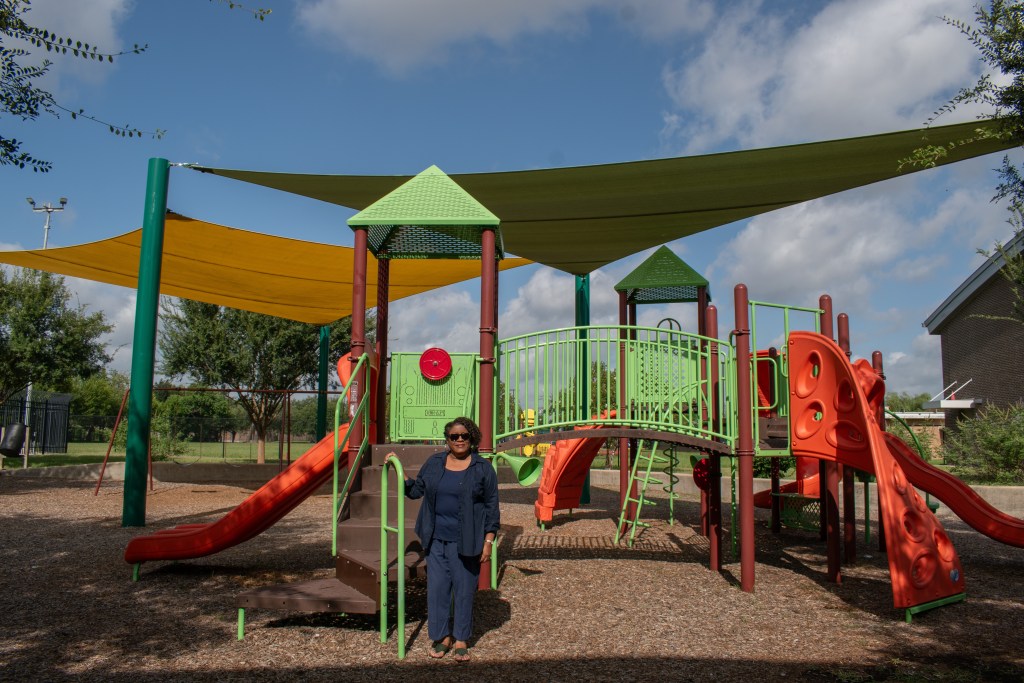
On a sweltering July day, Bridgette Murray sat at a table under a tree near the playground at the Pleasantville community center, which serves as a hub for the neighborhood. Brightly colored shade cloths stretch across the playground equipment.
Through ACTS, Murray led the charge to secure a grant for the shade screens because children couldn’t play on the metal equipment without getting burned.
On this day, several children climbed the playground ladders, went down the slide and were being pushed on swings.
Inside the air-conditioned center, seniors mingled after a three-times-a-week group exercise class while children took part in summer camp activities in two meeting rooms just off the lobby.
Murray, 70, launched ACTS as a community-based nonprofit focused on environmental, climate and social justice. It worked with Rice University to develop an oral history of Pleasantville and helped secure an Environmental Protection Agency air-quality monitoring station for the neighborhood. It was there for victims of Hurricane Harvey in 2017 and Winter Storm Uri in 2021.
The souring economy presents new challenges.
“There’s a lot of things, not only just against our community, but a whole bunch of communities,” Murray said. “If we don’t show others how to fight, or we don’t help others when they’re fighting, what’s going to happen to all of us?”
Adapting to Changes
Felicia Thibodeaux is doing what she can to adjust.
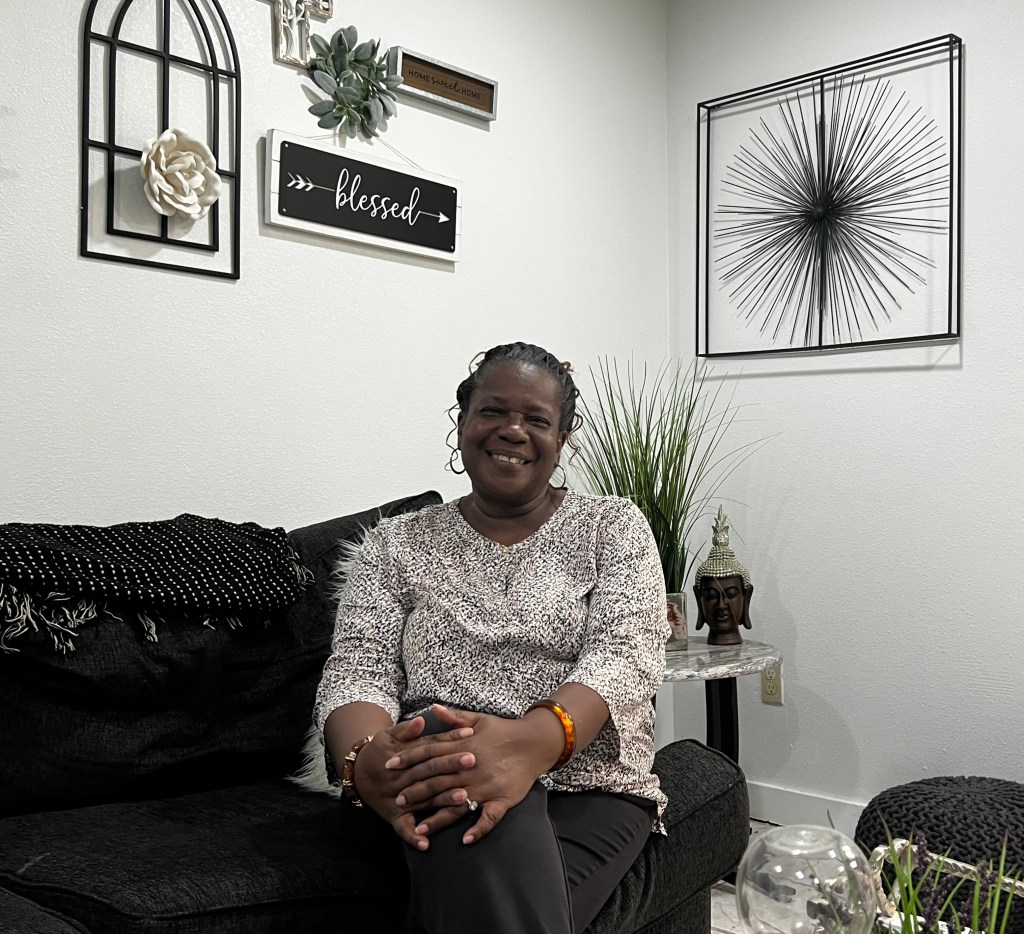
The rising costs are stressful, she said, and the unrelenting heat is impacting other parts of her life, as well. She worries about her mother and other elderly neighbors on fixed incomes.
She’s trying to make her home as energy-efficient as possible. She bought solar shades for some of the windows, but didn’t like the way they looked in the living room. After the hot summer, however, she’s thinking of putting them back.
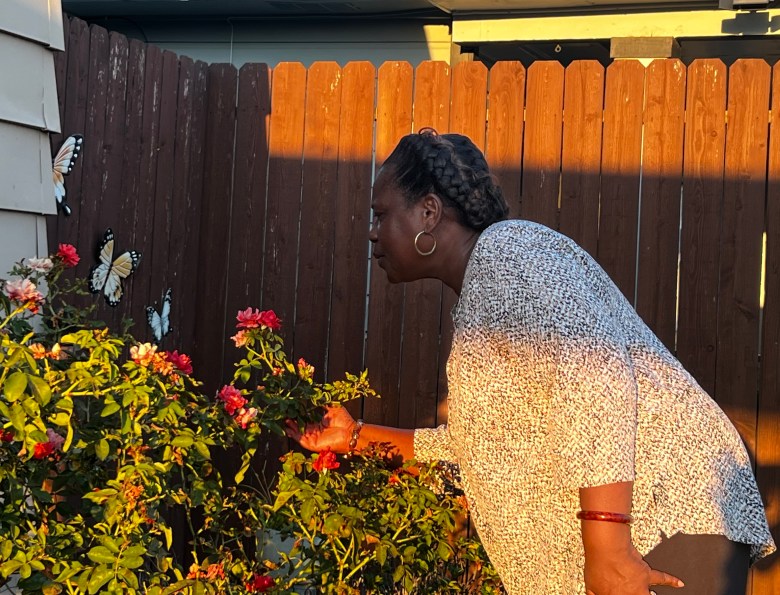
And as a self-described “yard-person,” she now tries to avoid the day’s heat, tending to her flowers only before the sun comes up or after it goes down.
Otherwise, she said, ”It’s unbearable.”
Houston-Area Resources
A number of organizations in the Houston area can help residents access funds to help with utility bills and weatherization.
- Achieving Community Tasks Successfully (ACTS): The Houston-based nonprofit offers education and information about disaster recovery, utility assistance, weatherization and other programs.
- BakerRipley: A nonprofit that works to connect people with resources, including tax, utility and weatherization assistance.
- Coalition for Environment, Equity, and Resilience (CEER): Residents can sign up for home weatherization services through the Houston-based coalition of nonprofits.
- 211 Texas/United Way Helpline: The United Way offers a 211 helpline and links other resources in the area.
- Utility companies: Contact your utility company to see if help is available to offset costs of high electric bills, with some income restrictions.