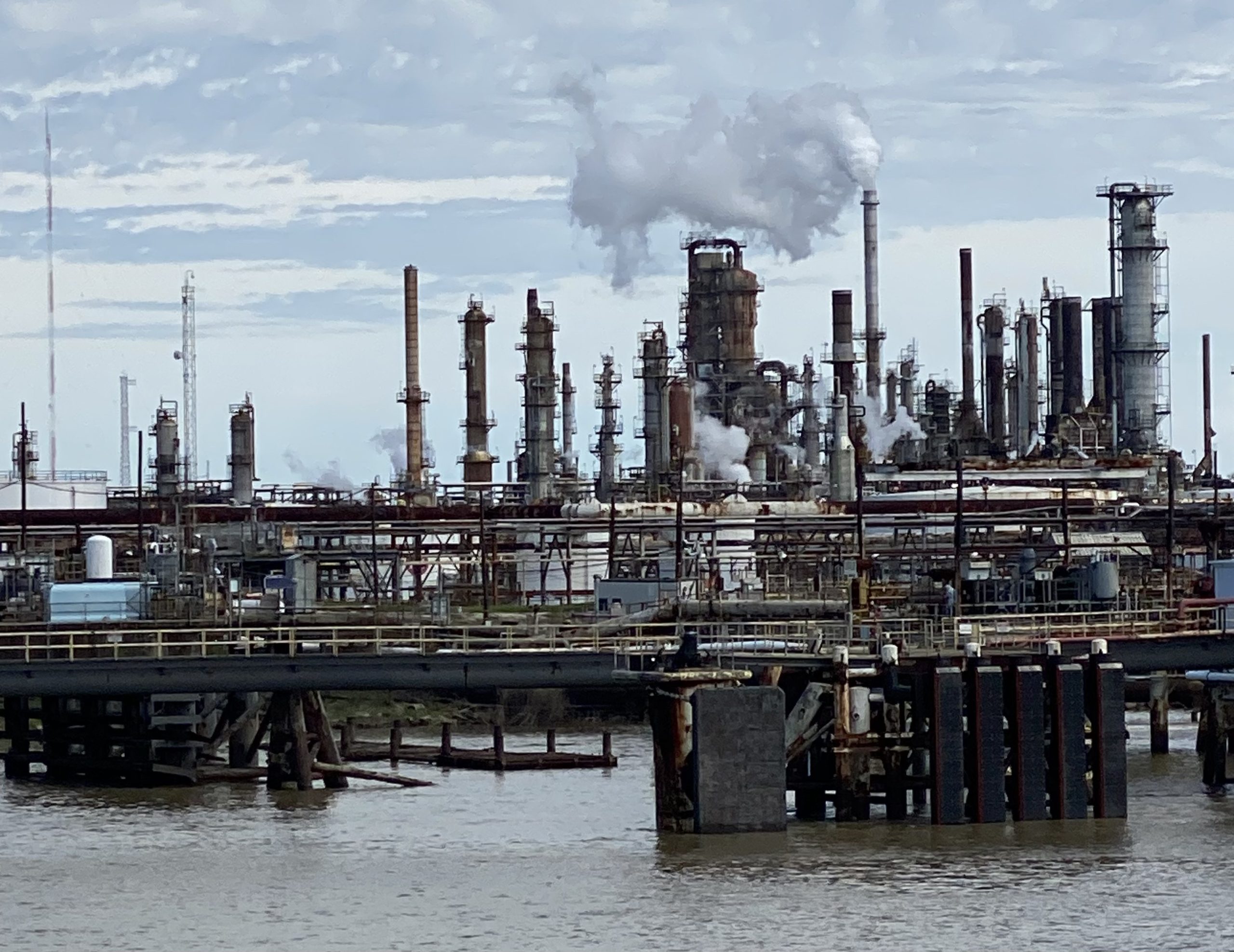
Billionaire William Koch’s industrial facility in Port Arthur, Texas, will voluntarily install pollution controls after decades of community pressure, a federal civil rights complaint and a lawsuit accusing the facility of gaming clean air laws.
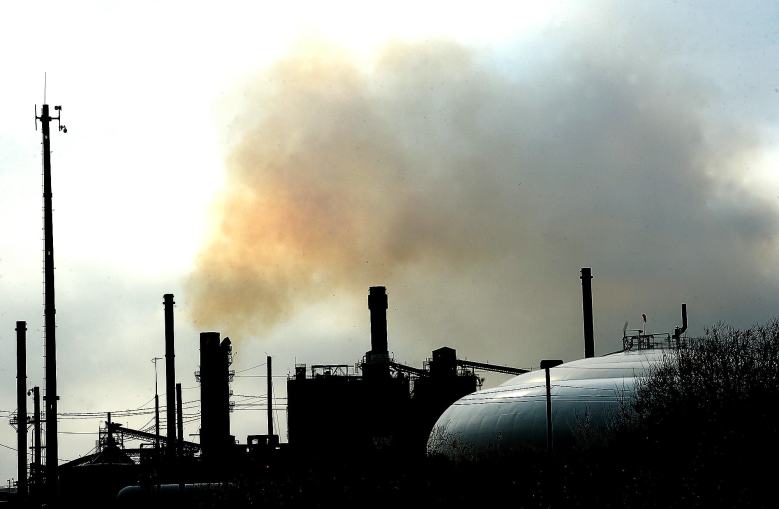
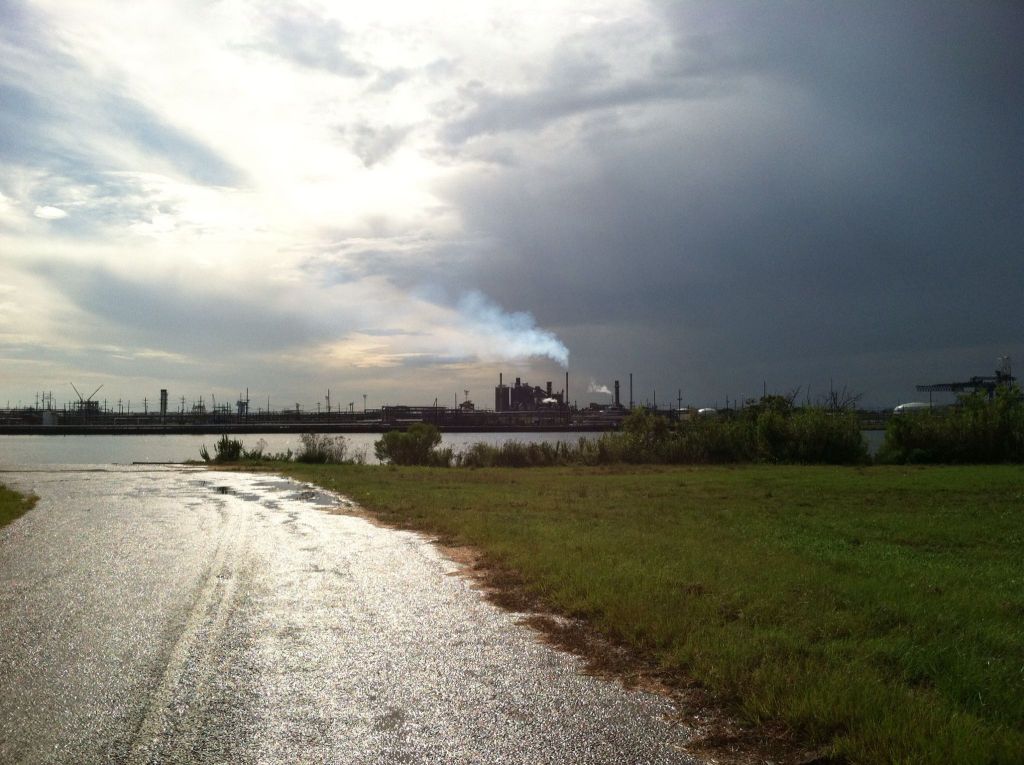
The 90-year-old Oxbow plant is a notorious polluter even in Port Arthur, an industrial city of about 56,000 known for foul air. Although Oxbow is one-one-hundredth the size of three nearby oil refineries, it is responsible for 80% of the lung-damaging, ozone-forming sulfur dioxide, or SO2, that lingers over Jefferson County each year. Plumes from Oxbow’s smoke stacks sometimes turn yellow, a sign of high sulfur content, and leave a hazy trail above the city’s West Side, where the population is more than 90% Black.
Oxbow burns the leftover gunk from oil refining to make calcined coke, which is essential in the production of aluminum. Those who live closest to the facility report some of the highest asthma rates in the nation, according to estimates from the Centers for Disease Control and Prevention. The rates are also higher than in Port Arthur as a whole.
Breathing SO2 can worsen asthma symptoms and increase hospitalizations. Chronic SO2 exposure can alter a person’s sense of smell and increase the likelihood of respiratory infections.
Oxbow will install the pollution controls on two of its four kilns by April 2027, according to the permit amendment it filed with the state in November. The facility’s annual SO2 limit will be lowered by more than a quarter, from 29.9 million pounds to 21.6 million pounds per year. Emissions of fine particles, which can cause health problems ranging from heart disease to Alzheimer’s, will drop by 42%
The new equipment will also lower the amount of hydrochloric acid the company is allowed to release by 45%. Hydrochloric acid has been linked to throat irritation, asthma and reproductive problems. In 2024, Oxbow emitted 34,000 pounds of the gas, according to FencelineData, an online database that compiles environmental information.
But this progress comes with some caveats.
The Texas Commission on Environmental Quality, or TCEQ, set Oxbow’s emission limits so high that the company could shut down the new equipment and still meet the state’s requirements. It allows Oxbow to release more SO2 each year than the company has released since 2019.
The equipment is also capable of cutting far more pollution than the permit indicates. Pollution controls can reduce SO2 emissions by more than 90%, but according to the Oxbow permit, emissions from each of the two smokestacks will be cut by just 20%. That means each smokestack can still emit nearly half a ton of SO2 every hour.
“This looks like a paper reduction to me. It’s not a meaningful real-world reduction,” said Colin Cox, who was one of the attorneys who filed a 2021 civil rights complaint against Oxbow. “They don’t have to change anything about the way they pollute to meet these requirements.”
The TCEQ did not respond when asked why Oxbow’s permit limits are so lenient.
West Side resident Hilton Kelley was surprised to learn that, after so many years of resistance, Oxbow had finally decided to install pollution controls. Kelly, who has been advocating for cleaner air for 26 years, said soot from Oxbow and other industrial plants regularly coats the neighborhood’s porches, lawns and cars.
“You fought against community folks pushing you to reduce the amount of sulfur dioxide you’re dumping, the amount of particulate matter and other toxins,” said Kelley, who founded the Community In-Power and Development Association Inc. “What changed between the last eighty, ninety years to now?”
An Oxbow representative declined to explain why the company decided to install the controls now, or to answer other questions for this story. But in the permit amendment, the company said it’s also installing a waste heat recovery system so it can sell excess heat from its operations. It’s unclear if the two projects are related.
A 2022 investigation by Public Health Watch and the Investigative Reporting Workshop detailed the privately owned company’s reluctance to invest in pollution controls.
In a 2018 lawsuit filed by one of Oxbow’s former business partners, a company executive testified that installing controls would have “no payback potential except environmental compliance” and would “not economically pencil out.”
Back then, Oxbow estimated it would cost $56 million to install controls and $10 million a year to operate them — small amounts for a company whose annual revenue in 2024 was $2.1 billion, according to the global management firm Boston Consulting Group.
***
Many of Oxbow’s industrial neighbors installed pollution controls long ago. But Koch’s plant has been able to skirt the investment because of a loophole in the 1970 Clean Air Act.
Facilities built before the law went into effect didn’t have to install controls unless they made a “major modification.” Oxbow hasn’t made a major upgrade in the last half century, the TCEQ told Public Health Watch and the Investigative Reporting Workshop in 2021.
The TCEQ could override the federal loophole by creating its own, stricter rules, but hasn’t taken that step. The agency has fined Oxbow only once in the last 17 years: A $31,200 penalty after Oxbow violated the SO2 standard eight times in 2017.
Although SO2 controls have been used by U.S. utilities since the 1970s, Oxbow’s permit describes the technology as the “first of its kind.” The equipment uses a lime slurry solution to absorb SO2 and create two types of mostly harmless salts.
By portraying a technology as new because it’s never been used in a specific facility, Cox said, companies hope regulators will set more generous pollution limits so they can avoid violations.
According to the permit, the TCEQ accepted that reasoning.
“The use of [a monitoring system] and the novel control system are new to the permit/site. Issues such as fluctuations in emissions are currently unknown,” Oxbow’s permit says. “Accordingly, a lenient monitoring program and averaging period for emissions (24 hours) was specified in the permit requirements.”
The permit says “more stringent” monitoring “may be implemented” later.
The TCEQ also allowed Oxbow to estimate emissions from its smokestacks and other equipment using a formula that can yield inaccurate results, according to the U.S. Environmental Protection Agency, or EPA. The formula uses emission data from facilities similar to Oxbow — but not data from the company itself. The EPA says the formula should only be used as a “last resort.” The agency instead recommends using monitoring or testing to craft permits.
Using the formula, Oxbow estimated that a smokestack without pollution controls would release 1,170 pounds of SO2 every hour. With controls, it would release 920 pounds an hour.
That drop is far less than the reduction of 90% or more that pollution controls usually achieve. Two lawyers and a scientist who talked to Public Health Watch said it’s impossible to know why the reduction is so small without more information from Oxbow or the TCEQ, both of which did not respond to questions.
In the permit, Oxbow said that after the controls are installed, it will produce more accurate estimates and consider “the economic and technical feasibility” of installing similar equipment on its other two kilns.
Cox said the TCEQ could have required Oxbow to do more extensive modeling before finalizing the permit. That way the agency could have set limits that would have forced Oxbow to keep the controls on.
“This is not rocket science,” Cox said. “It’s just TCEQ saying, ‘sure, whatever you want to do.’”
According to the permit, Oxbow can operate each kiln without pollution controls for up to 500 hours — or about 21 straight days.
***
Before Oxbow volunteered to cut its pollution, the company had resisted years of pressure to clean up its operations.
In 2021, the EPA opened a rare investigation into the TCEQ’s supervision of the facility. Residents and nonprofits argued that the state agency had violated the civil rights of the mostly Black community near Oxbow “by allowing dangerous amounts of air pollution to pour from an industrial plant for years, without any modern pollution controls.”
But that case stalled after the state of Louisiana sued the EPA in 2023, arguing the agency exceeded its authority by addressing “disparate impacts” under the civil rights act. Lilian Dorka, who led the EPA’s external civil rights program at the time, told Public Health Watch the EPA feared Texas would join the lawsuit if the agency pressed ahead, so it administratively closed the complaint.
Oxbow also came under scrutiny during a 2018 lawsuit filed by Port Arthur Steam Energy, or PASE. The “little green energy plant,” as its owner called it, had installed its own waste heat recovery system on three of the facility’s kilns in 2005, two years before Koch bought it. But Oxbow shut down the PASE operation in 2018.
During the trial, PASE’s lawyers argued that Oxbow timed its production schedule with wind currents so the TCEQ’s stationary air monitor wouldn’t capture its worst emissions. When the wind was blowing toward the monitor, PASE said, Oxbow would slow production. When the wind changed, the company would increase production again. Oxbow called the accusations “a conspiracy theory” and ultimately won its case.