Jaymie Baxley and Jennifer Fernandez reported this story for North Carolina Health News as part of “Uninsured in America,” a Public Health Watch project. This is the first in a two-part series.
On a Thursday morning in March, Tyrome Powell was holding court over a small group of men at the Tiny House HOPE Center in Greensboro as he talked about basketball.
In the background, the TV blared news anchors discussing the war in Iran. Across the room, barbers busily cut hair and trimmed winter beards. Volunteers at the center, which serves about 30 homeless people like Powell on weekdays, answered questions, handed out water and delivered mail.
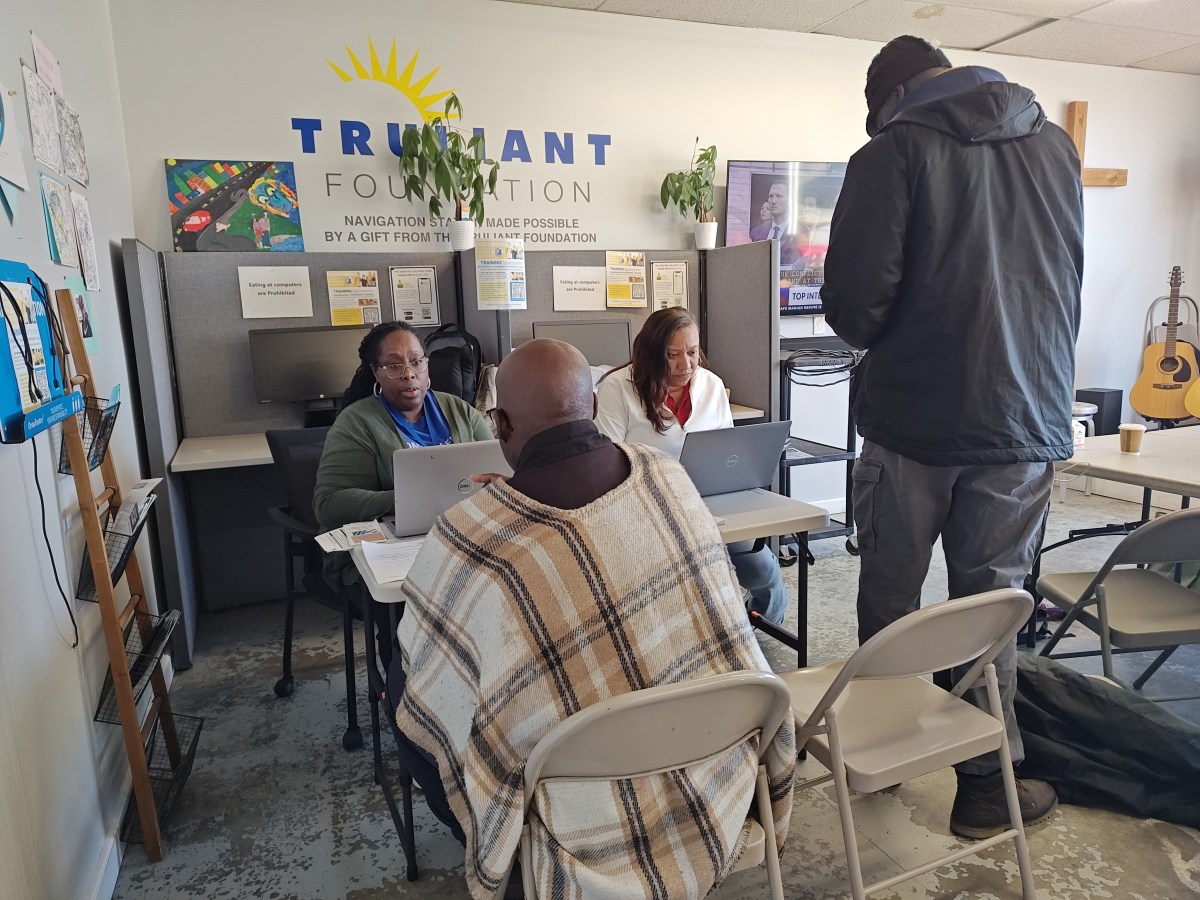
That morning, more than a dozen people stopped by the desk in a corner where Marie Lee and Brittany Scott set up once a month. They work for the Guilford County Department of Social Services to help people apply for federal food aid and Medicaid.
The duo will likely face a lot of difficult conversations about Medicaid next year, when work requirements passed last year by Congress kick in. Those new hoops are expected to affect about 732,000 North Carolina residents who got health care through Medicaid expansion, which the state’s General Assembly passed in 2023 after a decade-long fight. Traditional Medicaid recipients — people with disabilities, low-income elderly and children — will not be subject to the new requirements.
County social service workers expect to be on the receiving end of people’s confusion and frustration over fulfilling — and documenting — that work effort.
In Guilford County, about 46,000 adults ages 19 to 64 enrolled in Medicaid through expansion, according to the latest state data.
Under H.R. 1, the sweeping federal bill signed last summer by President Donald Trump, Medicaid expansion participants must prove they are working, volunteering or attending school for at least 80 hours a month to maintain their benefits. The new reporting starts Jan. 1, 2027. The law is projected to reduce Medicaid spending by nearly $900 billion over a decade, in part by tightening eligibility rules and increasing oversight of enrollment. It also requires states to conduct eligibility redeterminations every six months. Until now, most states have conducted them annually.
Powell, 60, said he hadn’t heard anything about the new Medicaid work requirements until speaking with a NC Health News reporter. While he hasn’t applied for Medicaid yet — he said he’s never been sick and doesn’t need health insurance — he doesn’t like the changes.
A lot of these programs have extra requirements that are hard to meet, he said.
“You see deaths of people because they don’t have health insurance,” he said. “There are too many requirements to meet already.”
So far, most people seeking help with Medicaid aren’t asking about the upcoming changes, said Sherri “Shea” Malpass, program manager with Guilford County Department of Social Services.
“That’s not real for them right now,” she said.
But it’s all too real for county DSS offices and their employees, who will bear the brunt of the work. North Carolina is one of 10 states where Medicaid eligibility determinations are handled at the county level.

‘A very hard conversation’
North Carolina’s local DSS offices are scrambling to prepare, even though many are not fully staffed. About 10 percent of county social services positions dedicated to Medicaid are vacant, according to the North Carolina Department of Health and Human Services.
Adding to the scramble: They still don’t have a road map.
The federal Centers for Medicare and Medicaid Services is expected to release guidance by June. Then, states will be in a mad rush to create policies and procedures, update technology and train frontline workers by January 2027 to work with beneficiaries who are due for recertification at the end of March.
Like the counties, North Carolina DHHS is waiting on final guidance.
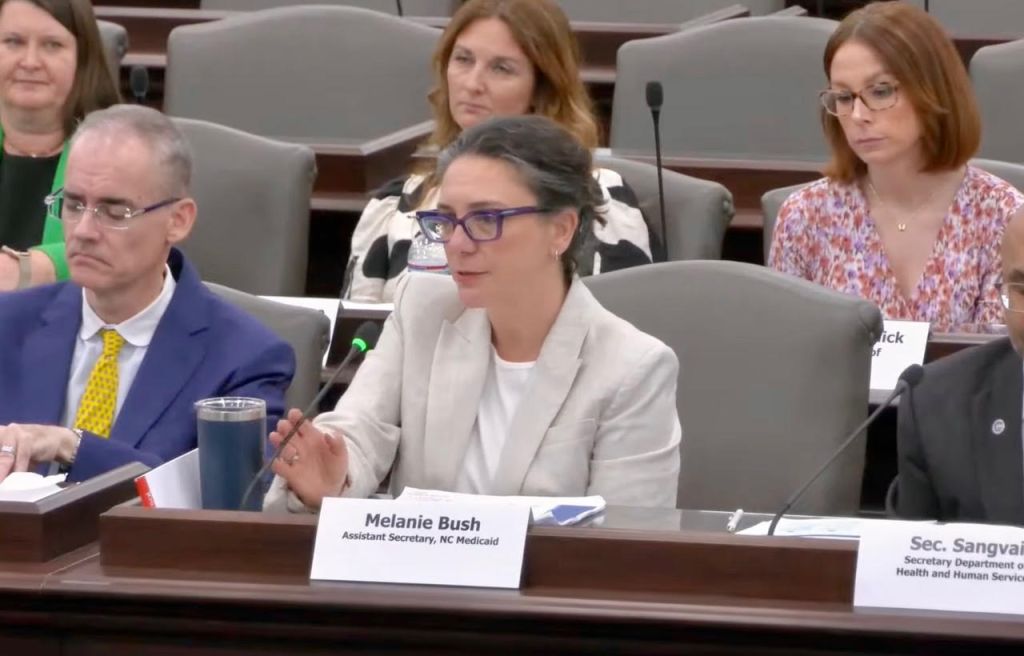
“Hopefully, we won’t have to do a lot of rework when the final guidance comes out,” said Melanie Bush, deputy secretary for NC Medicaid.
Getting final guidance in June with a launch of January 2027 “isn’t anywhere near enough time,” said Matt Salo, CEO of Salo Health Strategies and a former executive director of the National Association of Medicaid Directors.
“States are in a very, very difficult position,” he said.
A new report indicates that 4.9 million to 10.1 million people across the country could lose Medicaid coverage. In North Carolina, as many as 345,600 people could fall off the Medicaid rolls, according to a March 25 analysis by the Robert Wood Johnson Foundation and the policy think tank Urban Institute.
Bush said North Carolina’s initial estimates of who could lose coverage were lower than what the new report shows — around 255,000. However, she expects that number will increase now that state legislators have indicated they want beneficiaries to document their work effort for three consecutive months in every six-month recertification period.
Those disenrollments would likely include some people who are meeting the work requirement but face challenges documenting their work activity, the researchers wrote.
How many people lose coverage will depend in large part on choices North Carolina makes in how it implements the new rules. The RWJF/Urban Institute analysis modeled three scenarios — high, medium and low mitigation — reflecting how aggressively states use tools like automatic data-matching and broad exemption definitions to keep people enrolled.
Even in a best-case scenario, requirements around work and reporting it will cause millions to lose Medicaid across the U.S. If states do not implement the law carefully, the foundation said, that number could double.
A trickle of information
Salo said CMS has been dribbling out communications, hints and signals for months to give states an idea of where the guidance is headed. States also can look to Georgia, which rolled out a work requirement in 2023, to see what did and didn’t work, he said.
One of the key architects of the federal rollout — Grant Thomas, a senior adviser at CMS — was among the people in charge of Georgia’s troubled work requirement program, Salo said.
North Carolina, however, has reason for cautious optimism. When the state undertook the massive post-pandemic “unwinding” of Medicaid — verifying eligibility for more than 2.5 million participants for the first time since COVID-19 began — it leaned heavily on automation to ease the burden on caseworkers and enrollees. The state implemented an “ex parte” process that used data from wage databases run by the Social Security Administration, the IRS and other agencies to confirm eligibility and automatically renew coverage. Ninety-nine percent of renewals were completed this way — the largest share of any state.
The state drew on similar strengths when it launched Medicaid expansion in late 2023; it automatically enrolled 268,000 people based on existing data on the day expansion went live.
Whether those strengths can be brought to bear on the demands ahead is uncertain. Automating renewals meant checking existing data against known eligibility criteria. Verifying work requirements is different, as it means tracking hours logged at seasonal jobs, informal gigs and volunteer sites — month after month, for hundreds of thousands of people. That’s a problem no state has solved at scale.
North Carolina is making use of that automation and expanding those efforts, Bush said.
“Our goal is to be … as simplified as possible for our beneficiaries, to make this process as easy as possible for them, while also guaranteeing that they are actually eligible,” she said.
DHHS is planning robust messaging, drawing on lessons learned during the expansion and unwinding periods, to reach beneficiaries, Bush said. It also is retraining Medicaid ambassadors — trusted community members who helped connect with people during expansion — to share information on work requirements.
“There are people that are going to think that it applies to them, [but] it does not,” Bush said. “It’s going to be confusing for the entire Medicaid population.”
Complicating the message: Not everyone understands they are on Medicaid expansion. They just see their health card showing they have Medicaid, Bush said.
And as more people lose coverage, it will fall to overworked caseworkers to share the bad news.
“Nobody wants to tell somebody ‘You’re no longer eligible,’” Malpass said. “That’s a very hard conversation.”
Because North Carolina is so diverse, counties will face unique problems as caseworkers try to accommodate the lives of everyone from fisherfolk to farmers to seasonal workers — who will have to document their work hours to access health care.

The tourist economy
Chuck Lycett has been here before — wrestling with the challenge of delivering social services to people scattered over a long, skinny barrier island. Lycett, director of Dare County’s Department of Social Services, learned during the pandemic that geography is a solvable problem. What worries him now is everything else.
Dare County is not a typical North Carolina county. Residents are strung along the Outer Banks, from the Virginia border south to Hatteras 60-odd miles away. A satellite office in Frisco serves the remote southernmost part of the county on Hatteras Island.
Farther north, workers commute from Currituck and Tyrrell counties — an hour each way — to the main office in Manteo, the county seat.
Housing costs make recruiting local workers a challenge. The local economy is built on tourism, in an area dotted by expensive vacation homes and little affordable housing. A substantial share of Dare County’s resident workforce spends the summer months in demanding, cash-heavy jobs — sometimes working two or three gigs, clocking more than 40 hours each week and squirreling away the dough. The slack winter season brings something closer to unemployment.
“That was the first thing I thought about,” Lycett said, referring to seasonal workers who start in May, finish by late September and then face a recertification window in January or February with no recent work to show. A twice-yearly recertification cycle means those summer workers could lose Medicaid coverage precisely when there’s no paid work to be had.
The documentation challenge is compounded by the nature of Dare County’s informal economy. About a quarter of the 1,570 local beneficiaries enrolled under Medicaid expansion — the group affected by work requirements — are self-employed. Some receive 1099 tax forms from housecleaning or home inspections. Others live on tips.
Lycett is waiting, along with many others, for the federal Centers for Medicare & Medicaid Services to clarify what verification will require. The General Assembly has made it clear what it wants from that verification: three months of records, no self-attestation of work hours and tallying income from all members of a household — including those who might be undocumented — into the application.
“We are in a holding pattern,” he said.
That uncertainty lands on a department already stretched thin. Lycett runs a staff of about 40, from frontline workers to program managers. On a good day, he estimates an 8 percent vacancy rate — but that metric doesn’t capture a deeper problem.
“I also don’t have staff that have been here long enough to really be trained and efficient,” he said.
Across his three Medicaid units, Lycett’s workers last fall averaged just 11 to 13 months of experience.
The technological infrastructure those workers rely on is a decade old. NC FAST, the state’s system for assessing Medicaid eligibility and managing cases, was built in an era before AI-assisted processing, automated recertification triggers or digital document portals. Those tools could free caseworkers to focus on the complicated cases that work requirements will multiply.
In the meantime, Dare County is thinking practically.
The department has considered installing kiosks at the Frisco office where beneficiaries could scan and submit documents without making the hour-plus drive. In places like Stumpy Point — 30 to 40 miles to the southwest, where some families run fishing or crabbing operations and rarely make it to Manteo — staff will go visit residents if necessary.
“There are no barriers if people want to apply,” Lycett said.
“I can see them being frustrated and not being able to manage the [work] requirements.”
Kimberly irvine, director of the wilson county department of social serbvices
What he can’t solve is the administrative pressure — the audits, accuracy requirements and sheer volume of manual verification that work requirements will add. Even if every vacancy were filled tomorrow, Lycett said, the county would face a capacity problem.
“The pressure has to be released somewhere,” he said, adding there are probably not “enough potential employees in Dare County to fill all the vacancies” at his agency.
Lycett sees one silver lining: Volunteer work at food pantries, thrift stores and nonprofits could count toward compliance requirements during the off season, potentially benefitting local community organizations.
That will bring its own set of problems, though, where those often thinly staffed organizations will have to track and verify those hours.
Generational poverty in a farming area
In her four-decade career as a social worker, Kimberly Irvine has seen how the population that relies on Medicaid and food assistance contrasts with the caricature of fraud and dependency that often animates policy debates and online chat rooms.
She ticked through the profiles: single parents juggling work and a child with a disability; people with mental health or substance use issues; workers whose hours vary too much from month to month to reliably document what is required to qualify for insurance.
“The widespread fraud — I’m just not seeing it,” said Irvine, director of the Wilson County Department of Social Services.
Medicaid fraud occurs, but it’s usually committed by providers, not beneficiaries. The North Carolina Department of Justice’s Medicaid Investigations Division has uncovered multiple cases of fraud by providers in recent years.
After work requirements take effect, caseworkers who now determine eligibility will also have to track compliance, navigate verification for nontraditional employment and manage the friction of informing beneficiaries that their coverage is at risk.
The caseload may decrease somewhat, but each case will require more oversight, Irvine said. “It’s going to be more complicated to keep up.”
The large number of agricultural workers in the county are a particular challenge, as many farm workers are paid off the books. In the past, farm workers could attest to the hours they worked; the new law passed by the General Assembly removes that option.
Irvine echoes Lycett’s wish for a modernized state benefits system with multilingual support, real-time error detection that flags inconsistencies early, and seamless data-sharing with vital records, tax systems and unemployment databases.
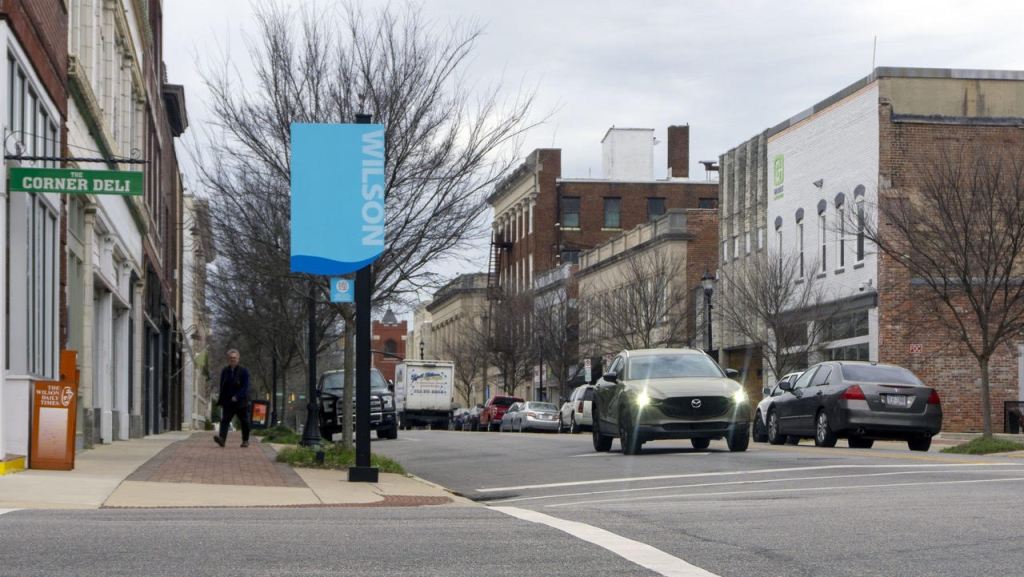
Those will cost money — and the financial calculus is stark for Wilson County, whose unemployment rate is seventh highest among the states’ 100 counties. Wilson’s poverty rate is 17.6 percent, compared with 12.5 percent for the state, census data show.
Congress also changed the cost-sharing rules around federal food aid in the new law. Irvine said that will mean roughly $866,000 more in costs for Wilson County in the first eight months of the fiscal year. The county’s total local DSS budget is about $13 million; the federal changes will increase the local share by nearly 10 percent, with no new funding from the state starting in 2028. The federal government can impose financial penalties for a high payment error rate that the state would pass down to localities. Wilson County’s portion of penalties could reach $4.2 million, Irvine said.
She said no state relief has been offered for county governments’ share.
Her deepest concern isn’t fiscal, though. It’s about who falls off the rolls when the new Medicaid work requirements hit already fragile populations.
“It’s a lot to try to understand,” Irvine said. “I can see them being frustrated and not being able to manage the requirements.”
The department’s caseworkers, she added, won’t have the bandwidth to walk clients through the process individually. They’re already at capacity. Irvine’s department currently has four vacancies, with two in Medicaid, putting it near the 10 percent statewide rate.
This story is part of “Uninsured in America,” a project led by Public Health Watch that focuses on life in America’s health-coverage gaps and the impact of potential Medicaid cuts and other changes.