This story was originally published by Straight Arrow.
CORPUS CHRISTI, Texas — May Mendoza is in need of water. But despite the fact that her restaurant, Perrin’s on the Water, is literally on the waters of the Texas Gulf Coast, drinking water is in increasingly short supply. On a sunny Wednesday in late April, she taped up signs in the bathrooms and on the front and back doors, alerting guests to the effects of Corpus Christi’s rapidly accelerating water shortage.
“We’re just going to bottled water in a couple days,” Mendoza told a couple as they found a seat at her New Orleans-style restaurant.

Corpus Christi’s city leaders have called for declaring a “Level 1” water emergency at the end of the summer, cutting the amount of water residents, small businesses and big industry can use by 25%. And Mendoza isn’t one to wait for an emergency to hit her. So she’s preparing.
“No more free water,” she said. “We’re trying to get ahead of it.”
What’s behind the water crisis in Corpus Christi?
She is moving to paper plates for certain dishes and throwaway cups for anything but cocktails, so there will be less to clean in the kitchen.

Perrin’s just opened about two months ago, and Mendoza hopes the summer regulars still decide to vacation in town. The next few months, she said, is their best time.
“Something has got to be done,” Mendoza said. “And it’s got to be done soon.”
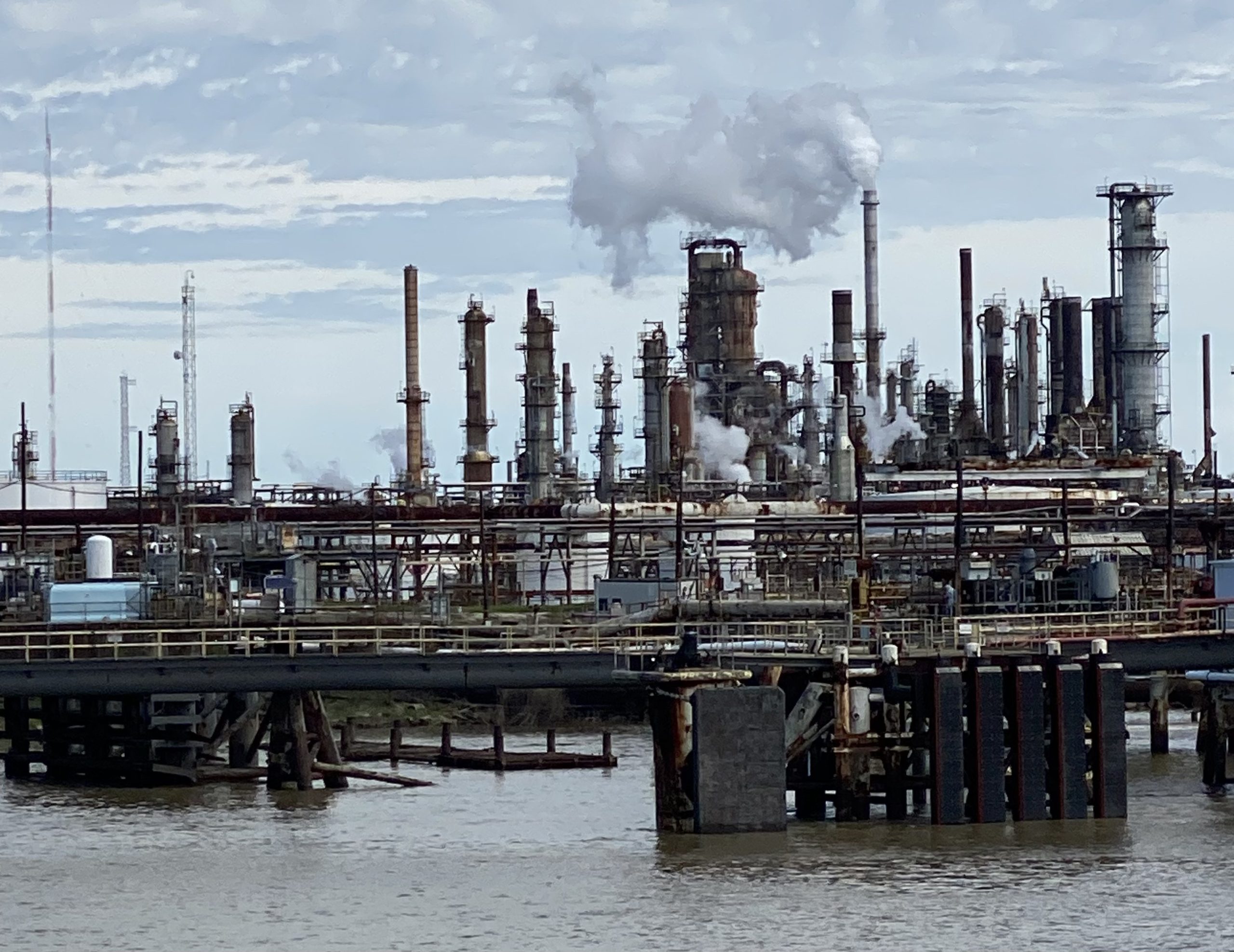
Mendoza is just one of Corpus Christi’s roughly 318,000 residents squaring off with a water crisis after several dry and rainless years. Now the city is at an impasse: Demand for water has reached a limit as its dedicated lakes, reservoirs and groundwater wither away. In the past few months, the local shortage has gained state and national attention, sparking concerns for the global oil and gas industry — in which Corpus Christi is a vital player — and threats of a state takeover by Governor Greg Abbott. It has also laid bare the ongoing rift between leadership, residents and industry on how the city should move forward, whether through conservation, new sources of water or a mix of both.
Residents and leaders alike dig in on opposite sides of the debate over removing salt from the Gulf’s waters to aid the city.
Is desalination the best solution for the Texas coast?
The city has for years considered constructing desalination plants — costly facilities that convert saltwater to fresh, drinking water. The project is controversial among residents who remain divided on whether desalination is the right move. Critics point to the environmental impact, the location and concerns over industrial water consumption, while proponents assert it’s the best decision for the community, the economy and the growing industrial market despite a $1 billion price tag.
Meanwhile, Corpus Christi is far from the first Texas city drying up. Lake Medina west of San Antonio has for years barely reached 5% of its total capacity, causing residents to buy water and dig deeper wells. And across Texas, communities are raising concerns over water shortages due to a rise in data centers, all the while there is a concerted effort from some to ship East Texas water to drier regions.
“Corpus Christi is just one canary in the coal mine,” said Jennifer Walker, director of the Texas Coast and Water Program at the National Wildlife Federation. “Corpus is certainly a very acute example that everyone is watching, but there are other parts of the state dealing with water scarcity.”
However, this year, all eyes are on Corpus. City Council rejected the first desalination plant contract last fall, but is currently in the stage of considering a new contract in the same location. That decision could arrive as soon as this summer, pending final environmental research and a city council vote.
In the meantime, residents are preparing for tighter restrictions this summer.
“You know, it’s on us to be aware of what’s happening, the choice that our city or water utility is making around water supply decisions,” Walker said. “Going forward in a water-constrained era, communities will need to be making the decisions about where the next iteration of water comes from.”
An industrial debate
Monna Lytle’s neighbors have been moving away, one after another since long before anyone mentioned a water emergency in Corpus Christi. They cleaned out their homes in the city’s Hillcrest neighborhood, packed up their lives and settled across town. Eventually, their houses were bulldozed and debris removed, leaving behind empty, grassy lots to make room for the city’s booming oil and gas industry.
Lytle stayed.
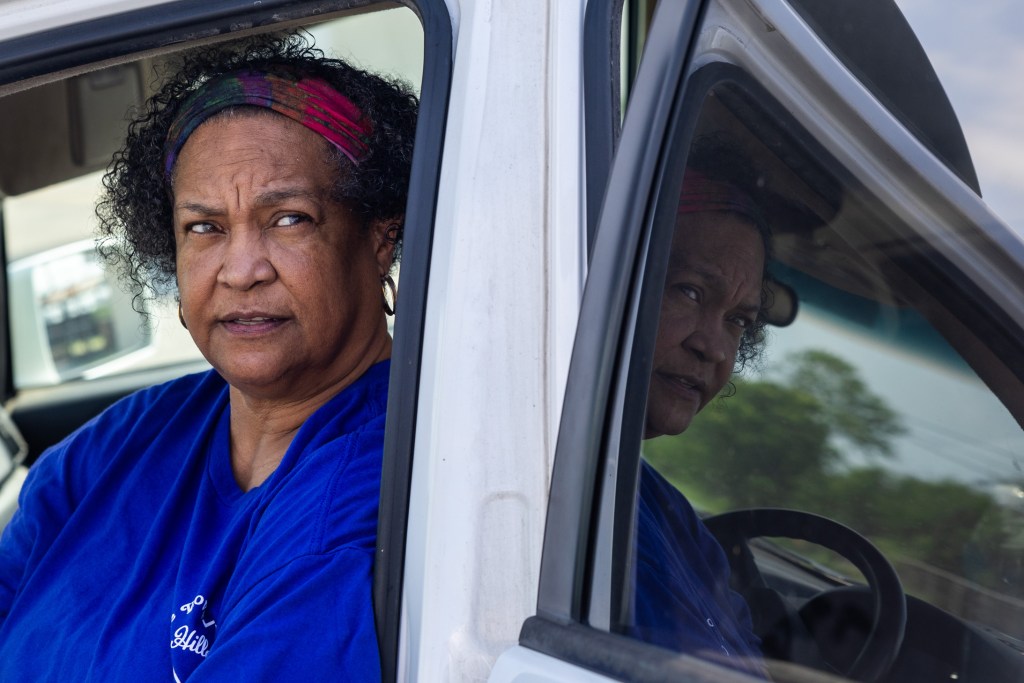
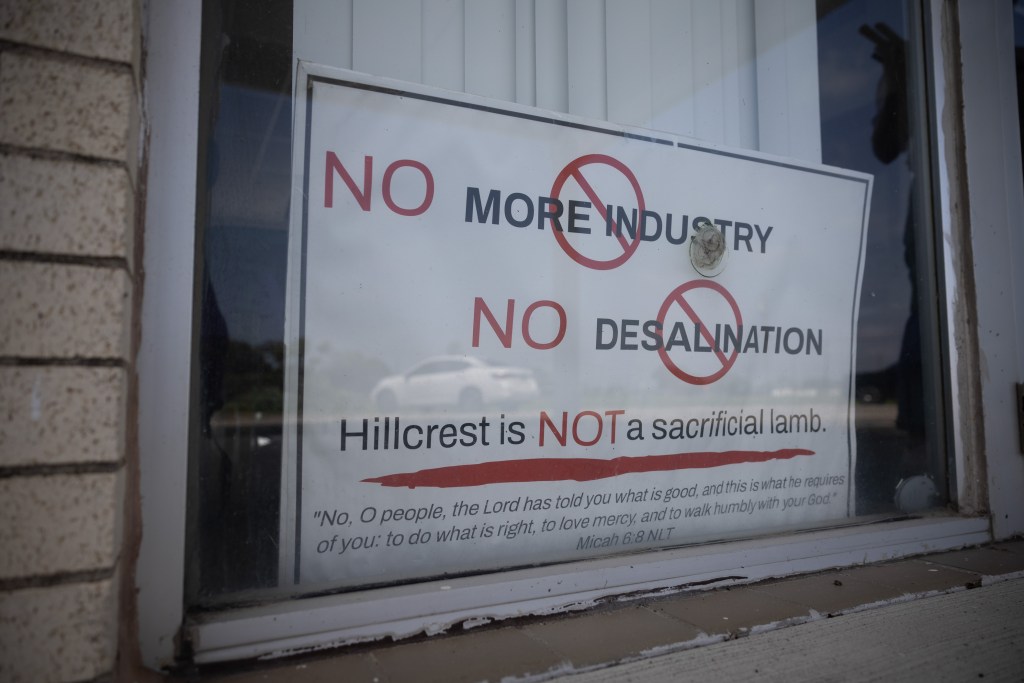
She remained unswayed by a city buyout, which promised a fresh start away from the growing industrial corridor reshaping Hillcrest’s historically Black and Brown community in the city’s northeast end. Today, over a decade later, Lytle is still fighting for her family home. This time, she is taking on a desalination plant just a few blocks from her house.
“No one is realizing this plant is inside a neighborhood,” said Lytle, 71. “It’s not adjacent, it’s not nearby, they want to put a desalination plant inside a neighborhood.”
While this summer’s water concerns have hit a parched and fevered pitch, this is far from the first time Corpus Christi has fallen into dry times. In 2011, the city recorded one of the worst droughts in history. It shriveled up the water supply and pushed the city to implement severe water restrictions for residents and surrounding communities.
The dried up lakes and scorched lawns shocked leadership to begin looking at the issue of water seriously. This included the possibility of desalination, said Jim Klein, a history professor at Del Mar College in Corpus Christi. Klein was on city council from 2023 to 2024, where he voiced concerns over industry, desalination plants and finding other solutions to the water crisis.
How much water does the oil and gas industry use?

“It’s been like a slow train coming and now it’s at the station,” Klein told Straight Arrow. “There’s been a standard practice here in Corpus Christi to sell water to anybody who wants it, to kind of treat water as an unlimited resource, and we’re finding out now it’s not unlimited.”
Corpus Christi normally pumps its water supply from Lake Corpus Christi and Choke Canyon to the west, and Lake Texana and the Colorado River to the east. As of May 3, Lake Corpus Christi is at 8.3% capacity and Choke Canyon is at 7.3% capacity. Lake Texana is at 67.8%, but shrinking with use.
For years, leadership considered desalination as the best solution for residents and the growing industrial sector. This push accelerated in 2015 after the Obama administration increased exports from the United States in liquified natural gas. Since then, industry has grown substantially — launching what some consider an “industrial renaissance.” Today, Corpus Christi is the largest liquified natural gas export in the United States.
However, not every resident is thrilled about the industrial boom — especially when it comes to water usage. Industrial facilities, such as refineries and petrochemical plants, use about 50 to 60% of Corpus Christi’s total water supply, according to local officials. The city uses about 100 million gallons a day.

Klein pointed to the city promising 25 million gallons a day to ExxonMobil in 2017 as an example of an over-extention of water demands.
“The city is going to oversell our water supply and we already did,” Klein said. “That’s why we’re here now because they oversold the supply. If we plan on building a desalination plant, well then Exxon should pay for, not 70%, not 80 — 100%.”
Klein’s frustrations grew when Corpus Christi City Council approved a voluntary exemption in 2018 that would allow industry to opt into a surcharge rather than restrict their water usage during certain drought stages. The surcharge sets aside funds every month to aid the city in finding a solution to the water shortages.
But for some like Dan Herrington, a Padre Island resident running for a city council spot this November, industry and Corpus Christi are so interconnected, he believes curtailing water supply from facilities could spur citywide consequences. Herrington told Straight Arrow he worries if the city stops providing water to these companies, they could leave town.

“I think we have been very quick to vilify industry when industry literally affects all of us in Corpus,” Herrington said. “Our port is one of the leading LNG exporters in the world so literally the world needs Corpus Christi to have water. We have to solve this problem in a way that makes sense.”
Herrington supports desalination plants, including the one in Hillcrest, for which, he noted, the Texas Commission on Environmental Quality has already approved permits.
“We’ve spent so much time arguing and kicking the can down the road, which is exactly what we’ve done with this desalination project,” Herrington said. “If we don’t have enough water, industry is not going to come.”
Concerns for the harbor
Desalination is out of the question for Claudia Rush, the pastor at Brooks AME Worship Center, the last remaining church in Hillcrest. From its front windows, Rush can see Citgo Refinery.

While the other community churches have left due to industrial development, Rush does not plan to go anywhere anytime soon. She knows, as much as the residents know, that the church is a gathering place for the community.
This community includes the Hillcrest Residents Association — an organization that has historically raised alarm bells over industry in the area. On a recent Wednesday morning, Rush met with community advocate Armon Alex and Lytle, who wore a shirt that said, in part, “Pray for Hillcrest. Don’t Prey on Hillcrest.”

“A good amount of young people are leaving the area because this is all they see around them,” Alex told Rush. “What happens if we further put an additional nail in the coffin if they approve something like desalination?”
In a statement, Corpus Christi public information manager Robert Gonzales said that “the City has actively engaged with Hillcrest neighborhood leaders and residents,” and “while the Inner Harbor site has previously received necessary permits, the City Council is actively exploring and negotiating with private-sector partners for additional desalination solutions”
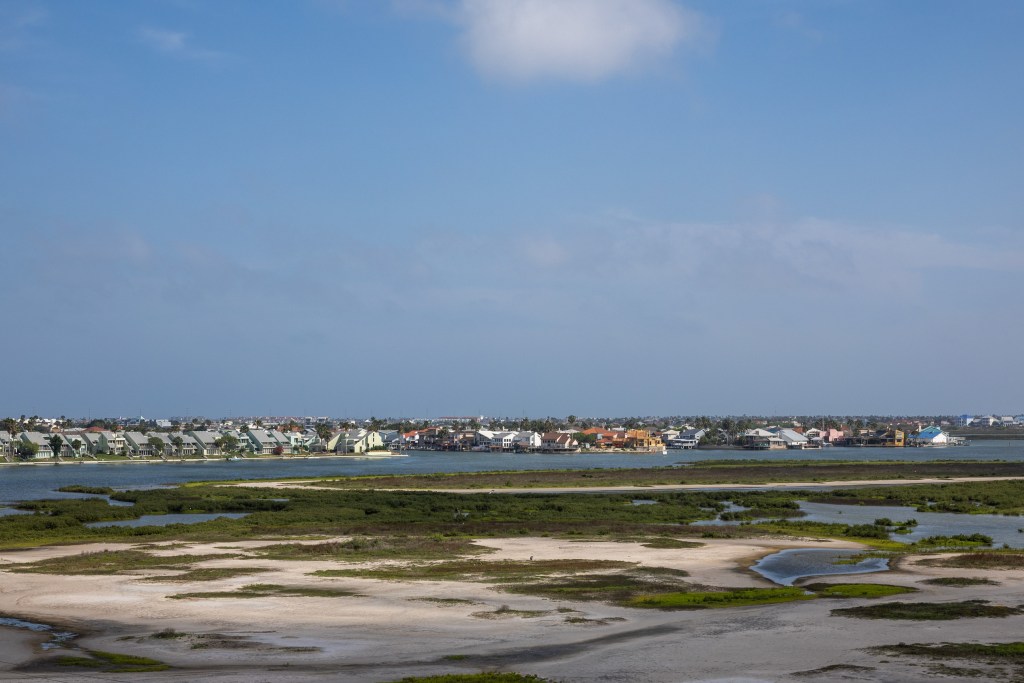
Alex is a member of the Corpus Christi City Council’s Watershore and Beach Advisory Committee and despite the TCEQ permits, has advocated for another study looking at the wide-range impact desalination discharge will have on the ecosystem. The facility will pump a highly salinic liquid called brine back into the bay.
How do cities find new water sources, besides desalination?
“We’ve had scientists and experts, including myself, who have said this is going to be a bad case if we put it back into the bay, which we call the inner harbor.” Alex said. “You could do it safely if there is enough mixing going around, but there aren’t strong enough currents in the inner harbor or Corpus Christi Bay.”
The final study — called a far field report — should be published by June.
Desalination isn’t the lone solution to the city’s water crisis, said Alex. Water conservation and pulling from other sources could prove better options, Alex told Straight Arrow.

Alex is pushing to place the exemption fee program for industry on the election ballot this November. The measure needs 11,000 signatures by July 1 to be approved and they have about 5,000 as of late April. From there, Alex hopes residents will vote to reverse the exemption fee program and drive industry to cut back during drought.
On this, the city is firm. Gonzales said that “the funds, approximately $6 million annually, are restricted for use in developing new, long-term water supply projects” and if removed “the immediate revenue used to fund new water sources would need to be replaced by other funding mechanisms.”
Klein and Herrington both separately pointed to the Mary Rhodes Pipeline as one possible short-term and long-term solution. The pipeline pulls water from Lake Texana, which fills from the Colorado River, but has been under-utilized, said Klein. As of April, the pipeline provides 70% of the city’s water supply.
Klein also highlighted evaporation as a concern worth addressing. The reservoirs that Corpus pulls from lose 50% of their capacity in a year due to water evaporating in the heat and sun. Floating solar panels — a relatively new technology used in California and New Jersey — can cut evaporation by 50 to 70%. However, the technology is new and didn’t get traction at the city, Klein said.
The city is also considering pulling water from the nearby Evangeline Aquifer, but has received pushback from residents and farmers in Sinton, Texas who are concerned about their own water levels. City leaders are also developing water along the Nueces River with one area already supplying 4.5 million gallons a day of water from eight wells. Another well is expected to produce 17 million gallons per day by May.
However, no matter what, Alex said, the main issue isn’t necessarily finding new water or conservation strategies. It’s how to direct the water toward residents and small businesses who need it.
“If the solution doesn’t include curtailments of the largest water users in our area, then those solutions are null and void,” Alex said. “You’re only putting tape on the cracks then.”
And the future of Corpus Christi’s cracks will serve as a national lesson. One way or another.