
A weekly roundup of public health news
Increase in climate-related flooding threatens food crops
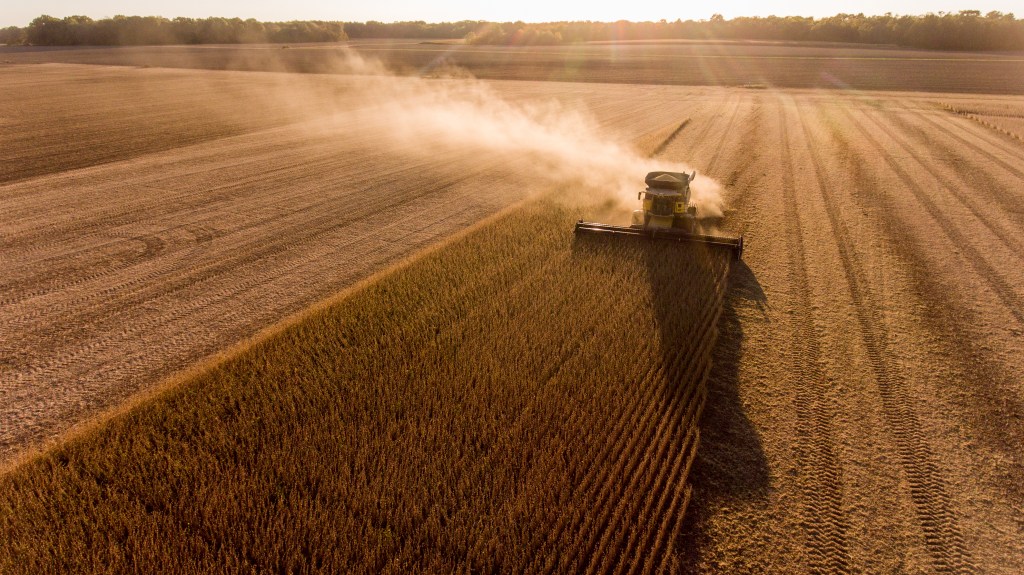
Climate change is worsening flooding in U.S. agricultural lands. New research shows the problem impacts crop yields, drinking water supplies and even greenhouse gas emissions, posing a growing threat to public health.
U.S. crop losses from climate change-related flooding in recent decades have been worse than estimated and are predicted to continue rising, according to a new study in Science Advances.
Past crop models have largely missed damage caused by flooding, which led them to underestimate losses for corn, soybeans and wheat in the U.S. and globally, researchers said. After adding a new flooding adjustment, they found flood-related losses could match or exceed drought losses in many farming regions.
The biggest U.S. risks were in Illinois, Indiana, Iowa, Kansas, Minnesota, Mississippi, Missouri and Nebraska, all major producers of corn, soybeans and wheat. Damage in those states could ripple through food supplies and prices, the study said.
If greenhouse gas emissions continue at a high level, the projected average annual U.S. losses from 2015 to 2100 will total about $287 million for corn, $234 million for soybeans and $212 million for wheat, researchers estimated.
More than 4.2 million acres of cropland in four major corn-producing states are located in flood-prone areas, according to a new analysis from the Environmental Working Group.
Located in Illinois, Iowa, Minnesota and Wisconsin, the croplands are sited in what the Federal Emergency Management Agency calls 100-year flood plains, which are considered to have a 1% chance of flooding in a given year. However, the frequency of flooding in such plains is growing, with other recent research finding coastal areas are experiencing them as often as annually.
More flooding can damage soil and worsen fertilizer or pesticide runoff that can contaminate drinking water supplies. In the case of corn, which is heavily fertilized with nitrogen, flooding can also worsen nitrous oxide emissions, the Environmental Working Group analysis noted. As floodwaters force air out of soil, microbes convert fertilizer nutrients into nitrous oxide gas, which is then released into the air.
Agriculture is already the main source of U.S. nitrous oxide emissions, which warm the Earth nearly 300 times more than emissions from carbon dioxide. More than half of agriculture-related nitrous oxide emissions in the U.S. comes from corn, the analysis noted.
Immunization rates dip among health care workers
Flu and COVID-19 vaccination coverage among U.S. health care workers has dipped, a new study in Morbidity and Mortality Weekly Report shows.
During the 2024 to 2025 respiratory virus season, which runs October through mid-May, about 76% of U.S. health care personnel were vaccinated against influenza. Only about 40% were vaccinated against COVID-19, according to the study, which was led by researchers from the Centers for Disease Control and Prevention.
Those rates are a drop from just a few years ago. During the 2021 to 2022 season, nearly 80% of health care personnel were vaccinated against flu while 87% were vaccinated against COVID-19. Cases of the latter were also more common that season than they are today.
Flu and COVID-19 vaccinations were recommended for all U.S. health care workers during the 2024 to 2025 season, but not required at many workplaces. Vaccination coverage for both infectious diseases, which can be passed on to both staff and patients, was higher in workplaces where employers offered on-site vaccination, the study found.
Coverage during the 2024 to 2025 season also varied by occupation, with pharmacists and physicians having the highest influenza vaccination rates. By place of work, hospital personnel were most likely to get their flu shots, while staff in long-term care settings were least likely. While long-term care workers have consistently had lower flu shot rates, the rate in the 2024 to 2025 season was an increase from the previous season, researchers noted.
COVID-19 vaccination coverage was highest among physicians, assistants and aides, and lower among nurses and non-clinical personnel. In sharp contrast to flu, COVID-19 vaccination rates were highest for health personnel in long-term care settings, possibly because of a federal rule that requires nursing homes certified by the Centers for Medicare & Medicaid Services to offer COVID-19 vaccines and to educate staff and residents about benefits and side effects.
‘Forever chemicals’ exposure during pregnancy linked to harm before, after birth
Exposure to “forever chemicals” can interfere with pregnancy and harm children long after they are born, new research finds.
Damage from exposure to per- and polyfluoroalkyl substances can begin before birth, an April 14 study in Environmental Research shows. Pregnant mice that consumed water with low levels of PFAS for just four weeks experienced damage to their embryos, including pregnancy loss, researchers found. Surviving fetuses also weighed less. Developmental abnormalities were found generations later in the daughters and granddaughters of exposed mice.
The harms of PFAS exposure during pregnancy can continue after birth, other new research shows. A study in the Journal of Exposure Science & Environmental Epidemiology that looked at data from California children found PFAS exposure in the womb may also raise the risk of childhood acute lymphoblastic leukemia, the most common childhood cancer.
Researchers tested dried blood samples collected at birth, finding children with the highest levels of two common types of PFAS in their blood were more likely to later develop leukemia. The study also found possible risks from newer, less-studied PFAS compounds.
New science also links exposure to PFAS while in utero to asthma in childhood. In a study in PLOS Medicine, researchers found children whose mothers had very high PFAS exposure from contaminated drinking water during pregnancy were about 40% more likely to develop asthma by age 12 than children with low exposure. About a third of children who had high exposure developed asthma, compared with 16% in the low exposure group.
PFAS are a class of about 12,000 manufactured chemicals used in products such as nonstick cookware, stain-resistant textiles and firefighting foam. They are known as “forever chemicals” because they do not break down in the human body or environment. Previous research has shown PFAS can cross the placental barrier, exposing a fetus during pregnancy.
Other recent public health news of note:
• Workers who handle cardboard products can develop work-related asthma from dust, a new study in the American Journal of Industrial Medicine finds. Nearly 25 years of data from a statewide respiratory surveillance system showed most reported cases were linked to cardboard dust, not paper dust. Workers in shipping, box manufacturing and recycling were most affected. No cases were identified among paper mill workers, a contrast with earlier research. Cardboard may pose greater risks due to its composition and additives, researchers suggested.
• Most new data centers in the U.S. are coming to rural areas, a new Pew Research Center analysis finds. About 67% of planned facilities are in rural communities, while 87% of existing data centers are in urban areas. More than 1,500 new centers are in development nationwide, with most construction concentrated in the South and Midwest. Virginia, Texas and California are expected to see the most growth. Data centers often cluster together, with 38% of Americans already living within 5 miles of at least one. The centers — which are large, warehouse-style compounds used to handle computer processing needs — can bring noise and pollution to communities and draw heavily on local resources such as water.
• U.S. wildfires are burning longer during the day because of climate change, making them harder to put out. New research in Science Advances shows shifting weather patterns are reducing the nighttime lull that firefighters rely on to contain fires. Annual daily burn hours have increased by about 36% from 1975 to 2024 as warming disrupts normal cycles. The analysis of nearly 9,000 fires found many now burn more than 12 hours a day, with some reaching peak intensity at night.
The Watch is written by Michele Late, who has more than two decades of experience as a public health journalist.