

A weekly roundup of public health news
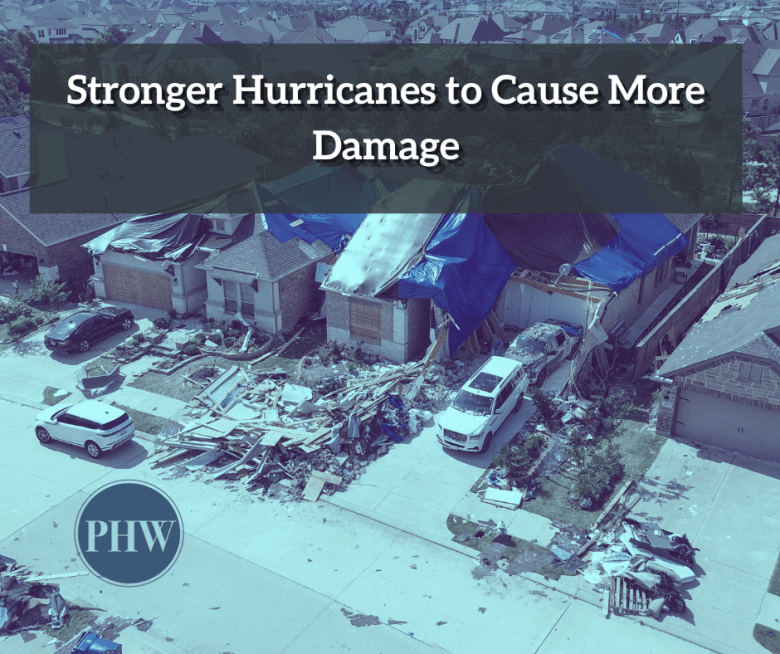
Stronger hurricanes to cause more damage
As hurricane winds become stronger with climate change, losses for U.S. property owners will become significantly worse, especially for those in the South, a new study in Risk Analysis predicts.
By 2060, wind-related losses for homeowners in Southeastern coastal states could be as much as 76% higher, and by 2100, they could be 102% higher, according to the study, which was released May 21.
Texas will experience the highest increase in losses, with 14% higher hurricane wind speeds in the 2050s than today, followed by the Louisiana, Mississippi and Alabama region, the researchers said.
The predictions are based on estimates of future global temperatures from human-caused climate change, which continue to rise. While the total number of hurricanes is expected to stay about the same in coming decades, their intensity will increase, with more of them classified as major.
Researchers focused their work on Southeastern states because they have been hardest hit by major hurricanes in the U.S. in recent decades. Those include Hurricane Helene, which caused $79 billion in damages across multiple states in 2024, including North Carolina, Georgia and Florida.
This year’s hurricane season in the Atlantic, which runs June 1 to Nov. 3, will be above normal, according to the National Oceanic and Atmospheric Administration. The agency is predicting as many as 10 hurricanes, three to five of which will be major.
Poll: Most people support measles vaccination
Americans overwhelmingly recognize that the benefits of being vaccinated against measles outweigh the risks, a national poll finds.
The Annenberg Science and Public Health survey, conducted in April, found 83% of adults believe the benefits of the measles-mumps-rubella vaccine for children outweigh risks, which are generally minor. Side effects of MMR vaccination can include soreness at the injection site, a mild rash, stiffness or a fever, according to the Centers for Disease Control and Prevention. More serious side effects are rare.
The poll also found that 67% of adults correctly understand that vaccines do not cause autism. While that rate is high, it is lower than in recent years, with 71% of people rejecting the connection in 2021. The decrease comes as vaccine and science skeptics appointed by the Trump administration assume leadership of key federal health agencies.
About 70% of Americans believe children should be required to be vaccinated to attend public school because of the potential risk to others, the poll found. While vaccination requirements for schools have long been the norm across the U.S., policymakers are increasingly pursuing measures that make it easier for parents to opt out or loosening requirements. In Idaho, a law that bars schools, government entities and companies from requiring vaccination for participation will take effect July 1.
While the U.S. generally averages about 180 cases of measles a year, more than 1,000 cases have been confirmed in 2025, largely because of an outbreak centered in an unvaccinated religious community in West Texas. Three people have died in the outbreak, including two children, and most of the cases have occurred in people under age 20.
Recent data show the outbreak may be slowing. While 115 new cases a week were reported at its height in March, only 20 were reported the week of May 4. The outbreak has spurred a surge of interest in MMR vaccinations, particularly in affected states.
Two doses of MMR vaccine are 97% effective against measles and 86% effective against mumps, according to CDC.
Microplastics in ultra-processed food may be harming mental health
Microplastics are building up in human brains and ultra-processed food may be at least partly to blame, new research says.
The average human brain contains a spoonful of microplastics, which may be contributing to rising rates of depression, dementia and other mental health disorders, according to a series of papers published May 20 in Brain Medicine. The research synthesizes recent studies on microplastics in the brain, levels of which have increased 50% between 2016 and 2024.
Microplastics, which are pieces of plastic that are less than 5 millimeters in length, are created when plastic materials wear down. Growing research has linked them to human health harms, including higher risks of heart attacks among people with microplastics in their artery plaque. A new study released May 19 found inhaling microplastics weakens lung immune cells.
A recent review in The BMJ found that people who consumed ultra-processed foods had a higher risk of depression and anxiety. The new papers conclude microplastics in foods may be one reason. Researchers cited data that foods such as chicken nuggets contain 30 times more microplastics per gram than chicken breasts, likely because of industrial processing.
The scientists suggested creating a dietary microplastic index to assess microplastic content and risk of accumulation based on the foods people eat.
Other recent public health news of note includes:
• A woman’s exposure to air pollution while pregnant can increase asthma risks for her child in adulthood, new research says. The findings, released at the American Thoracic Society’s International Conference, also showed in utero exposure to air pollution can lead to epigenetic changes that persist for generations.
• Children who are exposed to high levels of air pollution while young are more likely to be in poor health at age 17, a new study in Scientific Reports finds. Youth from disadvantaged neighborhoods are at particularly high risk of exposure.
• Most Spanish-speaking Hispanic adults say it’s important for their health care provider to speak the same language or provide translation services. But many patients have difficulties finding a provider that meets their needs, according to a new report from the Urban Institute.
• Climate change, poor mental health, rising obesity rates and exposure to violence are among the top health challenges facing the world’s adolescents today, according to a new report in The Lancet.
• Workers who responded to the World Trade Center attacks in New York City in 2001 are at higher risk for cardiometabolic diseases, says new research in the American Journal of Public Health.
• Dengue and chikungunya, two diseases once confined to tropical areas, may soon be endemic in Europe because of increasing mosquito range with global warming, according to new findings in The Lancet Planetary Health. Outbreaks of the two diseases have increased in frequency and severity in Europe as temperatures have risen with human-caused climate change.
• Research in Environmental Science & Technology says certain foods may contribute to human exposure to so-called “forever chemicals.” The chemicals, which have been linked to a range of health risks, were higher in study participants who consumed seafood, eggs and brown rice.
The Watch is written by Michele Late, who has more than two decades of experience as a public health journalist.