For years, coal miners across central Appalachia have been battling the resurgence of an incurable respiratory disease — black lung.
Earlier this year, veteran reporter Howard Berkes, along with partners at NPR, Public Health Watch and the Appalachia + Mid-South Newsroom, got access to research from a federal agency with the most up-to-date rates of black lung among coal miners. It revealed that working veteran underground coal miners in central Appalachia had the highest rates of black lung in nearly 50 years. The joint investigation Coal’s Human Cost builds on previous reporting done by FRONTLINE and NPR in the documentary Coal’s Deadly Dust.
The new documentary follows Berkes as he investigates the increasing number of black lung cases among veteran and younger coal miners, the specific role of toxic silica dust, and the industry and government’s failure to respond.
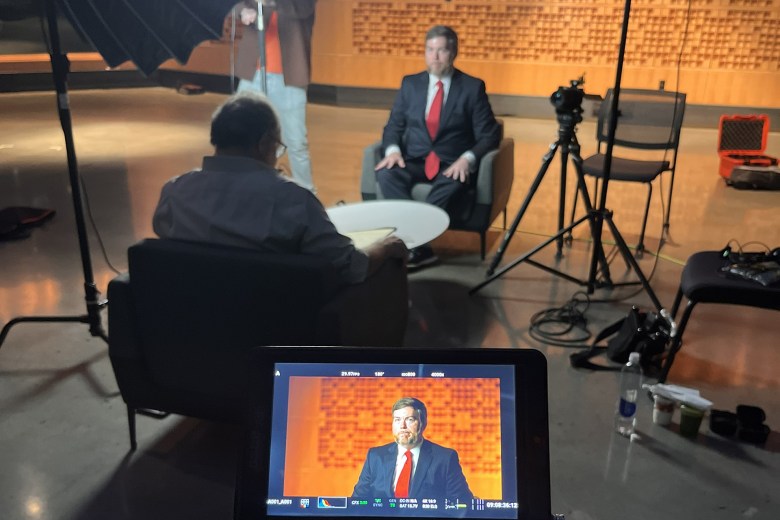
In a conversation with FRONTLINE, Berkes — correspondent and producer of the new documentary alongside director Molly Born — discussed his years reporting on miners in Appalachia, gaining their trust, and documenting the human toll of the black lung epidemic.
This interview has been edited for length and clarity.
You’ve been reporting on the resurgence of black lung disease for over a decade. How did you first learn about this issue and decide to cover it?
I have been working on this on-and-off for 15 years. It started in 2010. There was a huge mine disaster in West Virginia in which 29 coal miners were killed. I spent a year investigating the failures of the company and of the federal regulators — the Mine Safety and Health Administration — to address the kinds of things that led to that disaster.
But a year after the disaster, one of the investigative reports produced by an official body, in this case a panel assembled by the governor of West Virginia, came out with not only conclusions about the mine disaster, but there was in it a small sidebar that talked about a very high rate of black lung disease among the miners killed. A pulmonologist had gone through the autopsies of those miners and found evidence of black lung disease at an extraordinarily high rate, ten times the reported rate for West Virginia at the time. That’s what got me interested.
I teamed up with another reporter from the Center for Public Integrity, and we spent about a year looking into whether or not this was an indication of something bigger, a bigger resurgence of disease in the region, which we were able to document. Our first story — series of stories — came out in 2012.
Earlier this year, you obtained a draft of new research on the most up-to-date rates of black lung. Can you share more about those findings and what they say about efforts to rein in black lung disease?
This summer, the National Institute for Occupational Safety and Health [NIOSH] came out with their latest report of the rate of disease in miners that they had tested — working coal miners in central Appalachia — Kentucky, West Virginia, and Virginia.
For miners who’ve been working at least 25 years underground, that rate was reported as 1 in 3. There hasn’t been a rate that high since 1978. You have to go back to an era in coal mining when black lung was so bad among miners that 40,000 coal miners in West Virginia went on strike demanding action on black lung disease.
It’s not just the miners who’ve worked more than 25 years; miners who’ve worked more than 15 years now have a higher rate of disease in central Appalachia than has been reported since the 1980s.
The film opens with you speaking to Johnathan Wright, a 44-year-old coal miner diagnosed with black lung in 2023. How is he a representative of the black lung patients you were reporting on for this film? And what did his story tell you about how things had changed since you last reported?
Johnathan was a working coal miner until last year, when the mine he worked in closed. He was diagnosed in 2023 by one of those NIOSH mobile vans that go around the country testing coal miners for black lung. He fits this NIOSH study of a 5-year timeframe of working coal miners in central Appalachia being tested for black lung and having a high rate of disease.
He’s already feeling effects; he can’t quite hunt like he used to in terms of going up the steep hills and mountains in Appalachia. He gets tired really quickly. He said if he was able to go back to work mining tomorrow, he probably wouldn’t be able to because he just wouldn’t have the stamina to do it anymore.

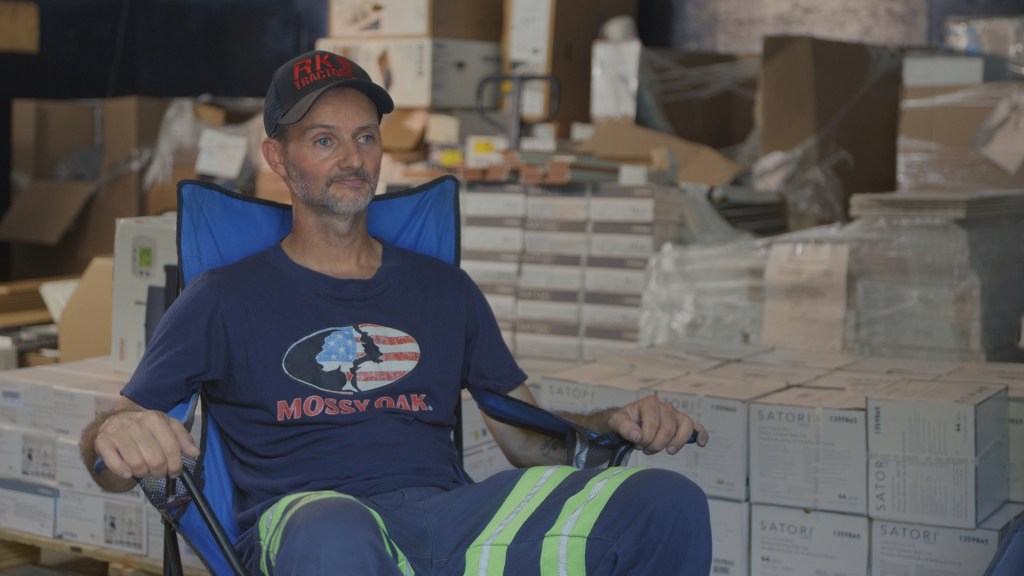
He’s a classic example of a miner at a relatively young age with disease that is predicted to get worse and worse over time. We see in the film others who have had that progression of disease and what kind of suffering they’re going through. He provides a poignant benchmark of someone who looks relatively healthy, but has got a lot coming to him that is not going to be easy to deal with.
As these younger miners get this disease and are unable to work, they have younger families; they have younger kids who depend on them for income. As it hits younger miners like Johnathan, you just have to wonder, how are these families going to get by? Federal and state benefits — it’s nice to have those, but it’s not a lot of money. It’s a lot less than what they would have made mining coal or doing just about anything else. And so it really puts these families in tough situations.
In your time reporting on black lung, you’ve interviewed dozens of coal miners — many of them in extremely delicate health situations. How do you earn their trust? And how did you keep in touch with some of them for almost a decade?
In the age of social media, it’s easy to keep in touch with people. And I have had a habit for a long time of keeping in touch with people who’ve appeared in my stories by sending them links to more recent stories that I’ve done. And also, I follow some of the coal miners that I’ve interviewed and their families on social media, and they follow me. Some of them have suffered horrible cases of disease, some have died, some have had lung transplants. I’m interested in how they’re doing.
Earning their trust is a tough thing. I covered coal mine safety stories of various kinds, not just black lung disease, since 2010. And sometimes, it took months and months of patient contact with people, especially coal miners in Appalachia, to win their trust.
It is a major challenge in Appalachia, because there’s a history of reporters from outside the region parachuting in, doing stories that basically just capture the stereotypes that people have of Appalachia and coal country, and leaving. And so I was greeted with suspicion, which I completely understood, but I kept returning to the region over the course of 15 years. And so people could see that I was serious about the reporting.
The other thing — and I found this to be true everywhere I’ve worked — is that it’s helpful to have a local guide, if you will, someone who can help make connections and someone who’s trusted by people. In the case of black lung, I developed relationships with the black lung clinics across the country and in Appalachia. I did the same thing with lawyers who represent miners with black lung disease.

In this documentary, you tried to revisit two of the miners from your early reporting: Danny Smith and Greg Kelly. How would you describe the situations you found them in, and how do their cases reflect some of the different trajectories of the disease?
For Danny Smith, who was a main participant in Coal’s Deadly Dust, his health is not very good. I have been in touch with him ever since 2018, but he did not want to be filmed again. He said he was really too sick to sit down for an interview with us and spend time with us filming. He preferred to communicate by Facebook message or text message, because he said he couldn’t get through a phone call.
Greg Kelly was interesting because he has had a double lung transplant since we interviewed him in 2018. Both Greg Kelly and Danny Smith were among the two sickest miners I’ve encountered.
It was interesting to see what five years of new life has meant to Greg Kelly and how his life has changed. But he’s one serious infection away from not surviving. He has survived five years, but the median survival rate is only 6.6 years for coal miners with new lungs, and he knows that.
I think it really helps illustrate for people how awful this disease is and what it takes from people’s lives. And even a lung transplant, which will buy more time for some, is tough.
There’s a scene at the respiratory clinic where you look through coal miners’ funeral programs — some of them you met and interviewed years before. How do you approach working on an investigation on this type of beat when you know this is a possibility?
I’ve talked to dozens of miners who were sick and are going to die from this disease. And I’ve asked every one of them what they think their futures are going to be like. That’s not an easy question to ask, but every one of them answered it. They know that their future is not going to be good and that they’re going to die horrible deaths from this disease. They really appreciated somebody caring about that, asking about that, somebody who was willing to tell the rest of the world about it.
I feel like my job as a journalist is to tell the stories of people whose stories are not otherwise told or aren’t told in a complete and effective way. And so while it’s difficult to talk to people who are in difficult circumstances, that’s what we as journalists aspire to do, and it’s what we should be doing as often as possible.
Are young people going into mining? Are they deterred by the dangers?
There are fewer jobs, but there still are jobs, and there still are mines that are opening and reopening.
Those jobs pay well and they pay great benefits. And so it’s really attractive to younger people graduating from high school and wanting to stay where their families have been for generations.
I have often asked miners, what do they tell their kids about mining. And some of them have said, “I’ve discouraged them from going into it. I’ve told them it’s dangerous work, not only because of the threat of black lung disease, but mining accidents, roof falls and getting hit by equipment underground.” But almost to a person, they told me that their son or daughter — there are women mining coal — still wanted to mine. And even miners with terrible disease tell me that they loved mining. And some have said they would still mine today if they could, if they weren’t too sick. And that’s because there’s kind of a camaraderie that develops underground.
Having reported on coal miners’ safety and black lung for so many years, what do you hope viewers take away from this documentary?
I hope that people can get some insight into lives and experiences that they would not otherwise see. And that they might gain a better understanding of what people are going through. In this case, the suffering that people and families and communities are going through needlessly.
I am realistic enough and have enough experience in journalism to know that you can’t expect change to happen as a result of your stories. You don’t do your stories because you’re trying to facilitate change. You do them because you want to expose wrongdoing or failure to protect people, in this case. So who knows what will come out of it? But I hope that people will view this film and be open to understanding more about the experiences of these coal miners, how they got to where they are, the failures that have led to this, and some sense of what needs to be done to provide protection and prevent this from occurring again.
We hear repeatedly in our interviews that people have told us, “We keep coming back and talking about this. We didn’t think we’d have to come back in 8 years and talk to you about this again. And here we are, talking about it again.”
This story is part of a joint investigation between FRONTLINE, NPR, Public Health Watch and Appalachia + Mid-South Newsroom that includes the documentary Coal’s Human Cost. Watch the documentary at pbs.org/frontline, in the PBS App and on FRONTLINE’s YouTube channel.