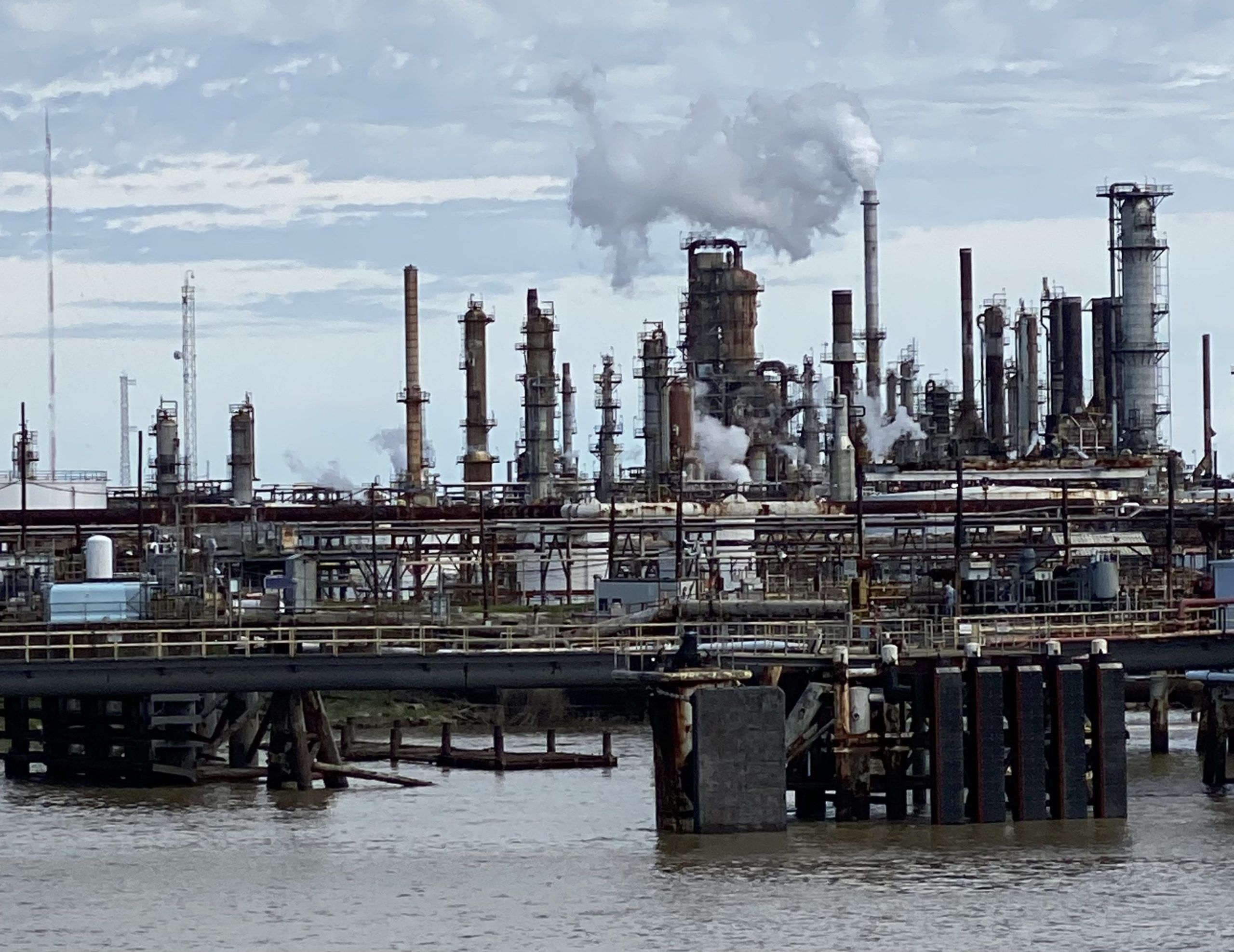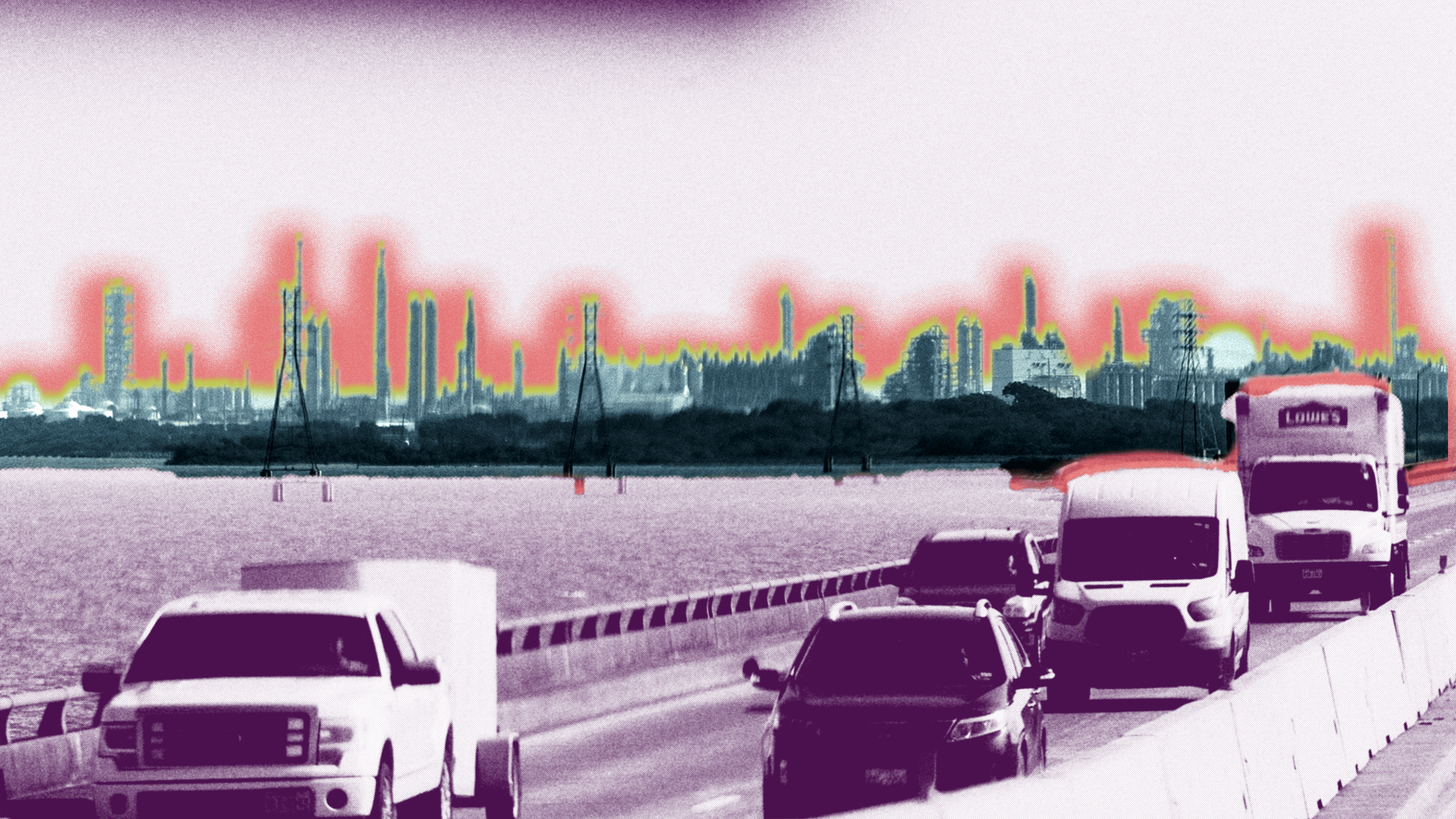
POINT COMFORT, Texas — For more than four decades, the Formosa Plastics plant here has been a picture of turmoil and indulgence. Situated in Calhoun County, on the Texas Gulf Coast, it has amassed a record of environmental contamination and workplace calamity that, in theory, should have subjected it to rigorous oversight and limited its ability to grow.
Instead, Texas regulators have given the Taiwan-based company permission to expand its Point Comfort plant 10 times in the past 16 years, allowed its managers to avoid spending money on pollution controls and slashed enormous fines the company was in line to receive.
The state’s stewardship of Formosa is crucial because the company’s foundational product — a resin that underpins production of a common form of plastic — requires the use of two chemicals so hazardous that the U.S. Environmental Protection Agency has short-listed them for possible restrictions or bans. Highly flammable vinyl chloride is a known carcinogen that targets the liver, brain and other organs. Ethylene dichloride, or EDC — an oily, smelly liquid used to make vinyl chloride — is a probable carcinogen that can quickly evaporate into a flammable, poisonous gas. Formosa has mismanaged both from its earliest days in Point Comfort.
Public Health Watch has spent the past 10 months examining Formosa’s environmental and worker-safety records and its relationship with the Texas Commission on Environmental Quality, or TCEQ. The TCEQ is the lead enforcer of federal anti-pollution laws in Texas, but our investigation shows that in Formosa’s case, the agency has behaved more like a sympathetic counselor than a flinty cop.
Among our findings:
- The Point Comfort plant is among the nation’s top emitters of vinyl chloride, a carcinogen and a key ingredient in polyvinyl chloride, or PVC, a type of plastic used in pipes and other products. Most of Formosa’s emissions are allowed as part of its routine operations. But others are due to accidents, known as emissions events. While these incidents have generally declined at other large petrochemical facilities in Texas over the past two decades, they’ve increased at Formosa. About 40% of them involved vinyl chloride.
- The TCEQ has cited Formosa for 587 environmental violations since 2010, but it has fined the company for only 71 of them, resulting in about $1.4 million in penalties. That amounts to less than three hours’ worth of sales last year for Formosa Plastics Corp. USA, the parent of Formosa operations in Texas and Louisiana. Formosa resolved 18 air pollution violations not by fixing the root causes but by obtaining permit amendments that allowed it to legally release more foul air. That’s like addressing chronic speeding on a stretch of highway not with an enhanced police presence but by raising the speed limit.
- After a series of chemical releases, fires, explosions and 34 worker injuries at Formosa in the 2010s, the U.S. Department of Justice found that the company’s failure to follow operating instructions had left one of its units vulnerable to fire and explosion for close to two decades. In 2013, that unit ignited, injuring 14 workers, including two who had to be airlifted out of Point Comfort. The case was settled in 2021, with Formosa agreeing to pay $2.9 million in penalties.
- Worker safety remains a pressing concern at the plant. At least 122 people were hurt there between 2020 and 2025 — more than at four other large Texas chemical facilities combined, according to a Public Health Watch analysis of self-reported federal injury data. In the first 10 months of this year, the Calhoun County Emergency Communications Division received 27 medical emergency calls from Formosa, according to 911 logs. That’s more than in all of 2014, the company’s recent peak. In August, a call came in for a worker who was severely burned on both legs and had to be airlifted.
- For 18 years, Formosa stored some of its hazardous waste without a permit, a major infringement of federal law. When the TCEQ discovered the infraction in 2014, it could have penalized the company for each of the 6,534 days it was out of compliance, for a maximum fine of $51 million. Instead, Formosa was penalized for each year it was out of compliance. After additional discounts, its fine was just $103,000.
“This is like a list of red flags,” said Tom Mariani, who led the Justice Department’s environmental enforcement section during the first Trump administration and the Biden administration. “If the EPA came to me and said, ‘Well, here’s what we know about Company X,’ I’d say, ‘This entity deserves our attention.’”
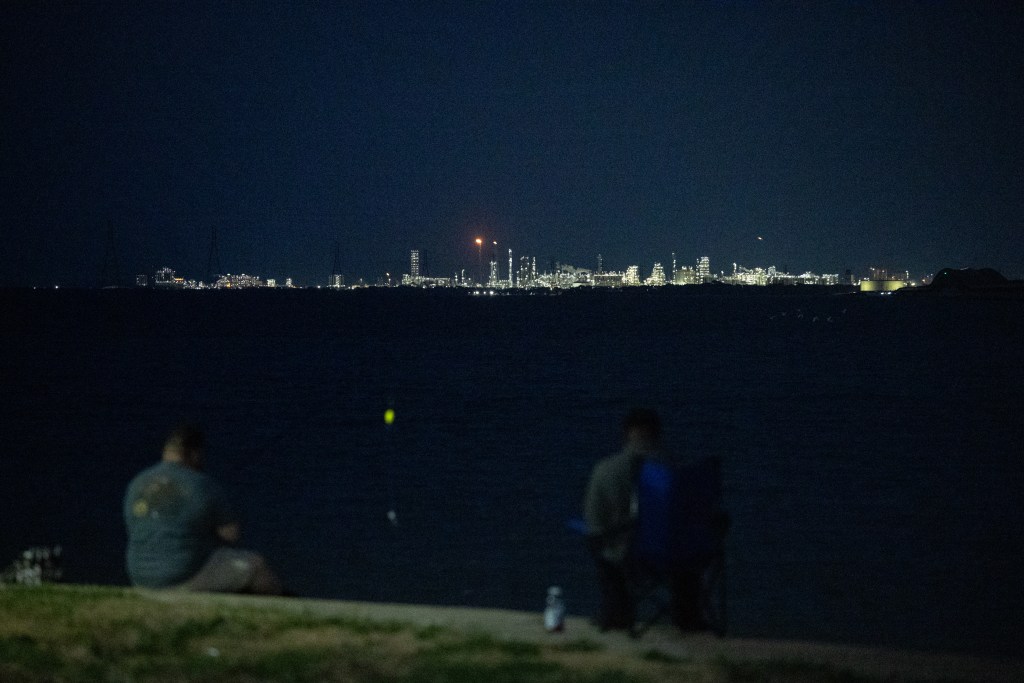
Formosa’s environmental and worker-safety problems extend well beyond Texas.
In 1985, the company’s now-shuttered PVC plant in Delaware City, Delaware, was so rife with vinyl chloride leaks that the state revoked its operating permits and shut it down temporarily. Michael Castle, Delaware’s governor at the time, warned chemical manufacturers that “if we must make a choice between the interests of industry and the well-being of our constituents, invariably we will act in the interest of the public.”
In 2004, two years after Formosa took over a PVC plant in Illiopolis, Illinois, the facility exploded when a cloud of leaked vinyl chloride ignited, killing five workers and injuring three. Federal investigators found there had been a near-miss at the plant two months before the blast — and a similar close call a year earlier at a Formosa plant in Baton Rouge, Louisiana. The Illiopolis facility never reopened.
Formosa’s biggest environmental debacle, in 2016, made headlines around the globe. Wastewater spilled from the company’s steel mill on the coast of central Vietnam, leaving behind more than 100 tons of dead fish and sickening untold numbers of people. Formosa admitted responsibility and paid the Vietnamese government $500 million, but it is still being sued by victims of the disaster, who claim they haven’t recovered physically or economically.
These highly publicized episodes didn’t slow Formosa’s momentum in Texas.
Less than a year after the Vietnam spill, the TCEQ gave the company the go-ahead to build a third high-density polyethylene, or HDPE, unit — which makes the raw ingredients for milk jugs, trash bags and other consumer and industrial products — even though its two existing HDPE units had racked up major hazardous-waste violations and experienced two accidents that injured 19 workers. The project extended Formosa’s footprint north, into adjoining Jackson County, where it now owns 7,000 acres of undeveloped land — an expanse half the size of Manhattan.
In September 2023, shortly after TCEQ inspectors cited Formosa for its 43rd air-pollution violation that year, the agency gave the company permission to move deeper into Jackson County. The unit there will produce 1-Hexene, a flammable liquid that can irritate the eyes and respiratory tract and, in high concentrations, lead to unconsciousness or death. Texas Gov. Greg Abbott, who was feted by Formosa executives during a 2024 trade mission to Taiwan, praised the project and announced that it qualified for a new state tax incentive program.
Fires, explosions and toxic discharges aside, the TCEQ classifies Formosa as a “satisfactory performer.” This designation shields it from the higher penalties, extra paperwork and slower permitting that can go with an “unsatisfactory” rating.
“Formosa is not an isolated case,” said Kathryn Guerra, a former TCEQ and EPA employee who now directs the TCEQ Watchdog Campaign for the advocacy group Public Citizen. “It’s what happens when the state favors corporate profit over public health. There’s nothing a polluter can do that would make the TCEQ not give it another permit.”
Public Health Watch sent a summary of our findings and a list of detailed questions to Formosa. The company did not answer the questions but sent an email saying it “takes its environmental and workplace safety responsibilities seriously. We work closely with the appropriate regulatory agencies, comply with applicable reporting requirements, and continually pursue improvements in our operations.”
We also sent summaries of our findings to the TCEQ, the EPA, the U.S. Occupational Safety and Health Administration, or OSHA, and state and federal elected officials.
The TCEQ declined to comment. Spokespeople for the EPA and OSHA did not respond to repeated requests for comment.
This is like a list of red flags.
Tom Mariani, former chief of the U.S. Department of Justice’s Environmental Enforcement Section
“Thank you for bringing this information to my attention,” State Sen. Lois W. Kolkhorst, a Republican whose district includes Calhoun County, said in a written statement. “I will take a closer look at these claims and consult with the TCEQ and other regulatory agencies about the sanctions or lack thereof. Safety of employees and meeting necessary and important environmental protections must be a top priority for the state.”
State Sen. Molly Cook, an emergency room nurse and a former volunteer environmental organizer, said the findings were “hard to hear. … This is just another example of how corporate entities are allowed to run wild in Texas at the expense of everyday Texans.” Cook, a Democrat from Houston, said that in the coming legislative session, she will be “laser-focused” on making sure TCEQ permits aren’t “rubber stamps” for companies that “soil our air and soil our water.”
A spokesperson for Abbott, a Republican who lost his bid for a fourth term last week, declined to comment. “I would have to refer you to TCEQ,” the spokesperson wrote in an email. A spokesperson for the governor-elect, Democratic state Rep. Gina Hinojosa, did not respond to requests for comment. The governor appoints the three commissioners who oversee the TCEQ.
Fraught beginnings
When Formosa opened its plant on the eastern shore of Lavaca Bay in 1983, its primary product was PVC resin, a white powder that is mixed with chemicals, heated and shaped to make pipes, siding, packaging and other goods. Making the resin requires two extremely hazardous ingredients: vinyl chloride and ethylene dichloride, or EDC.
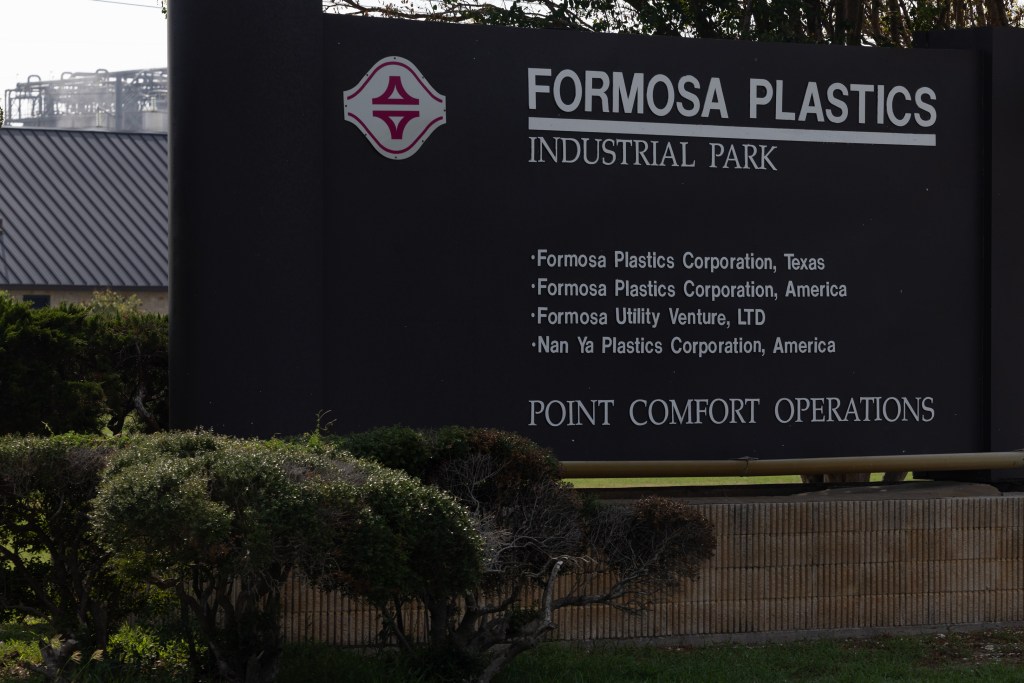
Formosa struggled to manage these chemicals from the start.
The plant was still under construction when EDC spilled onto the soil and seeped into the groundwater. Two years after the facility opened, the Texas Attorney General’s Office sued Formosa for 65 air violations involving excessive releases of vinyl chloride. In the late 1980s, the EPA found that Formosa had been storing and treating EDC-laced hazardous waste without a permit. The EPA later fined Formosa a then-record $3.4 million.
Despite more spills and air violations, in 1989 Texas and the EPA greenlit a $1.3 billion expansion that would enlarge the plant’s domain fivefold. The project included an EDC manufacturing unit that would give the company an in-house supply of the essential chemical.
Formosa said its investment would yield the “world’s safest and cleanest chemical complex.” News accounts told another story.
During the first year of construction, three laborers died and Formosa spilled about 500 gallons of EDC it was unloading from a barge. In 1991, a broken valve unleashed into the community a dense cloud of hydrochloric acid, which irritates the respiratory system and, in heavy concentrations, can cause a fatal buildup of fluid in the lungs. Nearby ranchers said it burned their eyes and throats and sent their cattle “bawling and running.” The following year, OSHA cited Formosa for dozens of workplace safety violations, including willfully failing to monitor for vinyl chloride when workers were being exposed above legal limits.
Just four days after the EDC unit opened in 1993, 2,000 gallons of EDC leaked out of a faulty joint, sending a worker to intensive care.
According to a class-action lawsuit residents filed against Formosa in 1994, the plant produced noxious “vapors, fumes, dust, smoke and odors. … There are also frequent explosions, powerful rumblings and vibrations from the Formosa facility which shake the ground of Plaintiffs’ property and rattle windows of Plaintiffs’ homes.”
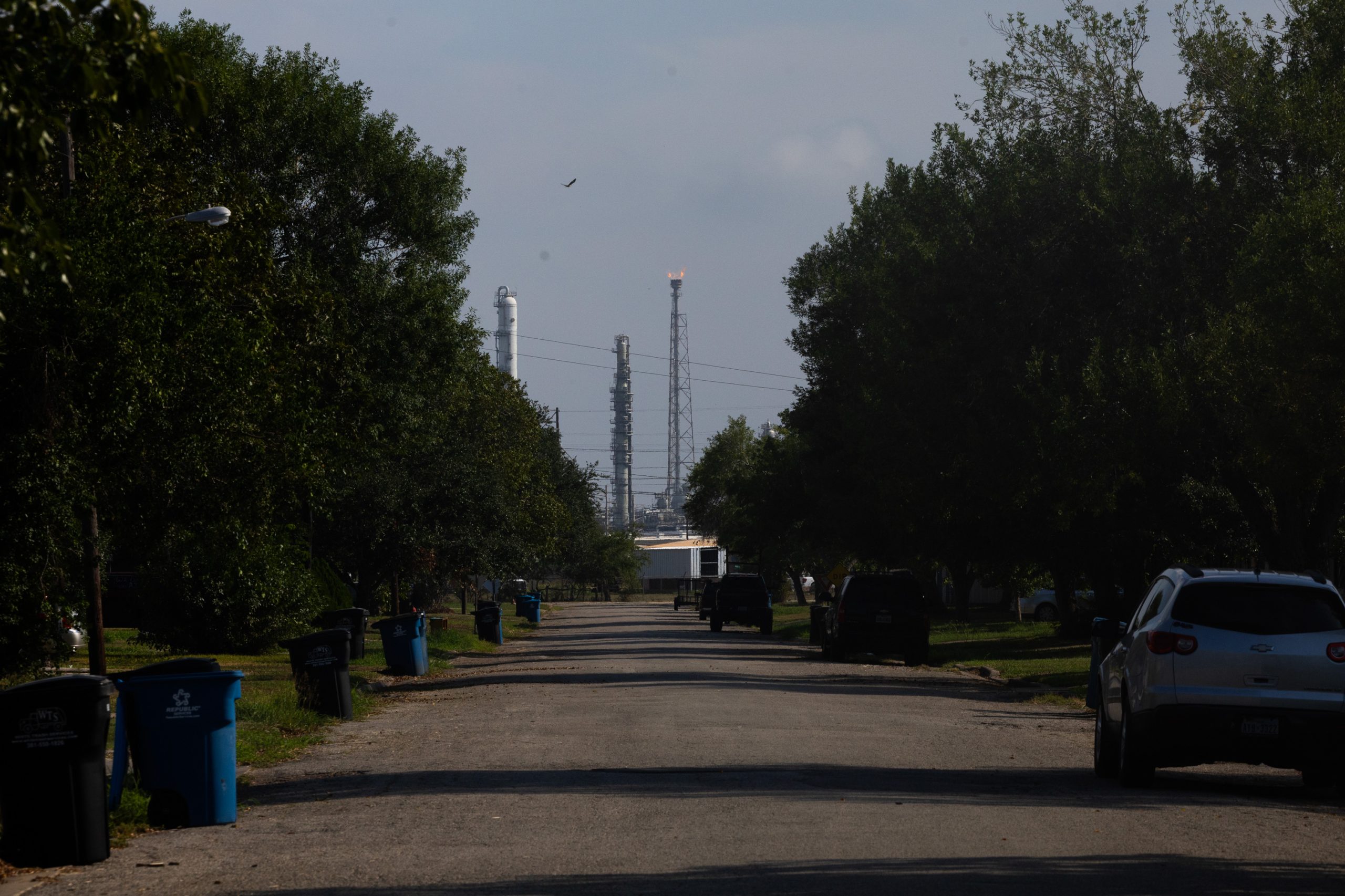
Formosa ended up buying many of the homes and land at above-market prices, a lawyer for the plaintiffs said. Today, Formosa owns about a third of the residential properties in Point Comfort, and the town’s population is about a quarter of what it was when the company arrived.
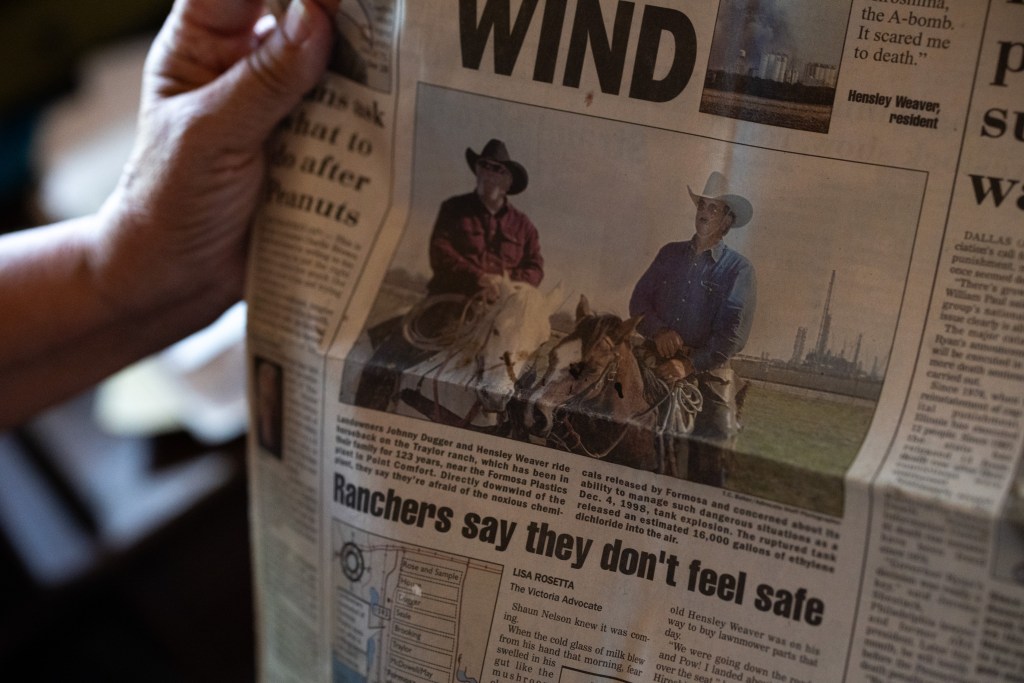
In 1997, Formosa enlarged the EDC unit and boosted its shipping rate for the chemical. A string of tragedies followed. Just two months after regulators authorized the expansion, two workers were found dead in a tank of EDC. The following year, another EDC tank exploded, injuring 67 workers. News reports said the blast shook homes in Point Comfort, caused three schools to evacuate and sent an estimated 16,000 gallons of the chemical into the environment.
The company also fought to control releases of vinyl chloride it made and used on site. In 2009, Formosa signed a federal consent decree that included a $2.8 million fine and required it to spend an estimated $10 million to control leaks of vinyl chloride and other volatile organic compounds, or VOCs, and improve its handling of EDC- and vinyl chloride-contaminated waste at its Point Comfort and Baton Rouge plants.
The legally binding agreement remains in effect, and the company still hasn’t gained control of the two problematic chemicals, which wind up in the air, on the ground or on workers.
Formosa has reported 50 leaks of vinyl chloride to the U.S. Coast Guard’s National Response Center and the TCEQ since 2020. The gas escaped through misaligned or open valves, holes and cracks in piping, or broken equipment. On October 19 of this year, nearly 4,000 pounds of vinyl chloride was expelled from a ruptured pump, according to a report Formosa filed with the TCEQ. The leak lasted 17 hours.
Since 2020, Formosa has reported more than two dozen EDC spills and air releases, and at least four workers have been injured after coming into contact with the chemical, according to OSHA records. In one of those incidents, a worker cleaning out a tank of EDC suffered burns over 30% of his body and was hospitalized with kidney failure.
TCEQ records show the company is still cleaning up groundwater contamination caused by years of EDC and vinyl chloride spills. The agency and Formosa did not answer questions about the extent of the contamination or whether it poses a threat to the community.
The EPA recently concluded that EDC presents an “unreasonable risk” to industrial workers because it can damage the kidneys, respiratory tract and male reproductive system, and “over a lifetime can cause cancer.” The agency said it will deal with those risks by strengthening worker protections and monitoring and possibly restricting or prohibiting the production or use of the chemical.
Mariani, the former Justice Department lawyer, handled dozens of enforcement cases involving petrochemical companies. Those operations are extremely complex, he said, and it’s not uncommon for things to go wrong.
“OK, is anybody perfect? No. But it seems like this facility [Formosa] is pretty far away from perfect,” Mariani said. “The public record shows that the facility has had significant problems, which could well mean violation of law.”
‘Waiting for the big one’
Petrochemical plants are inherently dangerous places, where workers risk injury, illness or death every time they drive through the gates.
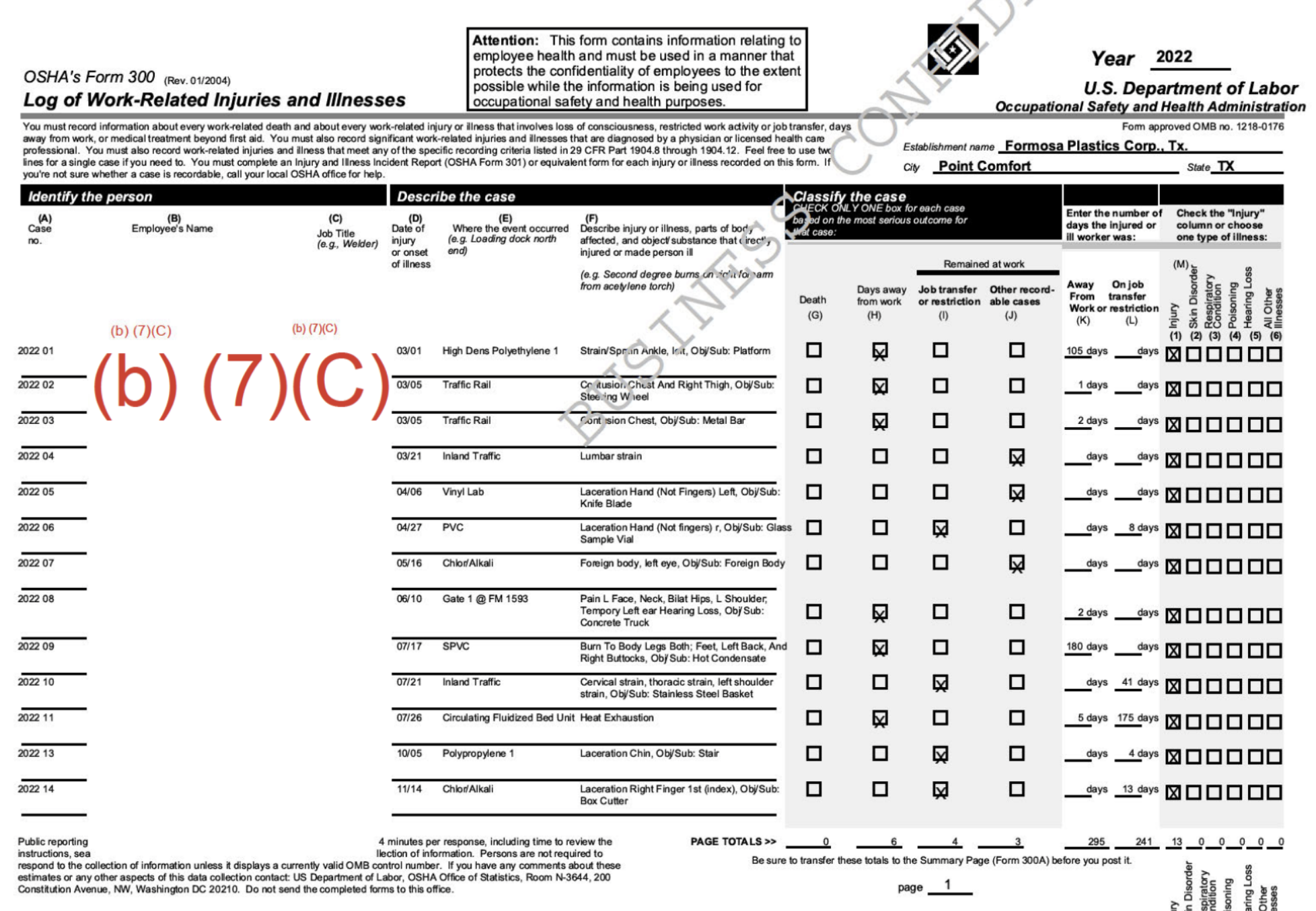
But Formosa workers face a higher risk of injury than those at other large petrochemical complexes in Texas, according to a Public Health Watch analysis of self-reported federal injury data. Between 2020 and 2025, more people were injured at Formosa than at four other facilities combined – ExxonMobil in Baytown, ExxonMobil in Beaumont, LyondellBasell in Channelview and Dow Chemical in Freeport.
Formosa’s Vinyl Chloride Monomer, or VCM, unit, where it makes vinyl chloride, is especially feared and despised by workers.
“It is the oldest unit at the plant and easily the scariest,” a former employee told Public Health Watch. He requested anonymity because he still works in the petrochemical industry. “They’ve done so little maintenance over time that the drainage ditches, canals, trenches are plugged.”
He described the unit as chaotic and replete with hazards.
“There was mud and dirt and crap that had never been cleaned up. There was hoses coiled up at the bottom of ladders where people were coming down off of towers. … There was pallets floating in or sunk in [standing water] out there for you to trip over. … It was a scene like I have never encountered in a plant in my life.”
A current worker, who asked not to be identified for fear of retaliation, said many of the VCM unit’s pipes are corroded. “Everything is either being shut down because stuff needs to be replaced or something’s busting,” he said. “It’s drama. There’s a lot going on.”
He said that until he was interviewed by Public Health Watch, no one had told him that vinyl chloride could cause cancer. The EPA is expected to decide next year whether the chemical presents an unreasonable risk to workers or the public and should be more strictly regulated.
About a third of Formosa’s emissions events in the past five years occurred at the VCM unit, according to TCEQ records. The unit battled a power surge, shutdowns, and bursting and leaking equipment that resulted in large releases of vinyl chloride, hydrochloric acid and EDC.
The former worker said his concerns extend beyond the VCM unit.
“The failure to follow safety rules was pretty profound,” he said. He frequently saw people bypass OSHA-mandated procedures, including lockout-tagout. That’s a potentially life-saving rule that requires shutting down and isolating equipment prior to maintenance, so workers aren’t exposed to electricity, chemicals or maiming hazards.
This lax safety culture, he fears, could lead to something cataclysmic.
“Formosa’s safety pyramid is chock full,” he said, referring to the theory holding that weak management, unsafe behavior and frequent small incidents build toward catastrophes. “They’re waiting for the big one at the top, and they’re adding to the bottom daily. It’s only a matter of time.”
Formosa itself has acknowledged the dangers that lurk in the facility. In a worst-case accident scenario it filed with the EPA, the company estimated that a 10-minute release from the VCM unit could uncork a ground-hugging cloud of hydrochloric acid that could travel 15 miles and put more than 20,000 people at risk of injury or death. According to TCEQ records, that unit has had five accidental releases of hydrochloric acid in the past five years.
Calhoun County’s Local Emergency Planning Committee coordinates with Formosa and other large chemical plants to prepare for accidents and natural disasters. The committee’s sole member, Ladonna Thigpen, told Public Health Watch she was “not familiar” with Formosa’s worst-case scenario report. But she expressed confidence in the company.
“Accidents happen,” Thigpen said. “All you can do is prepare, and they do a good job at preparing and they have good teams out there.”
A different picture emerged when Public Health Watch reviewed lawsuits, 911 records and OSHA injury logs dating to 2017. We found similar workplace accidents occurring year after year.
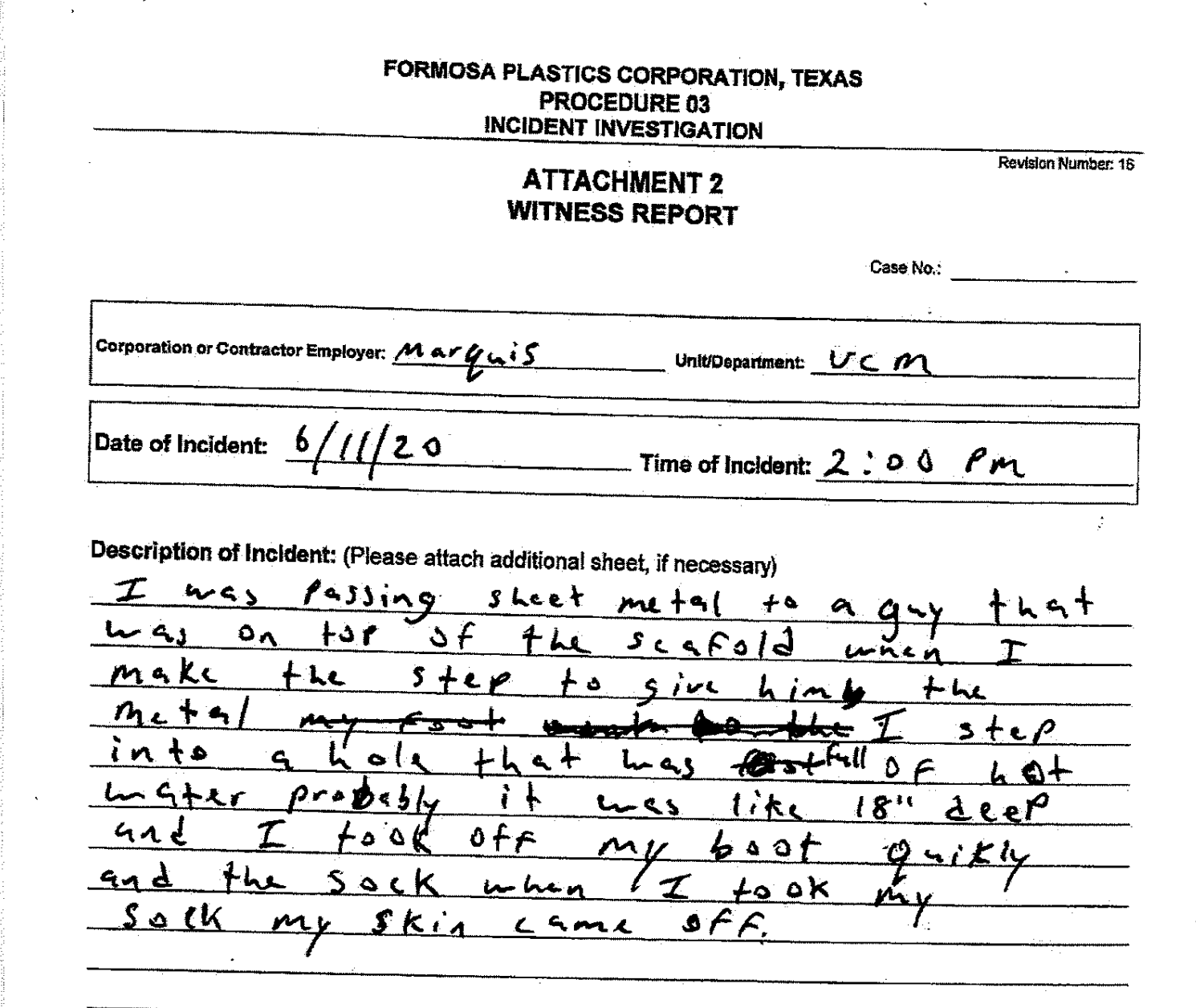
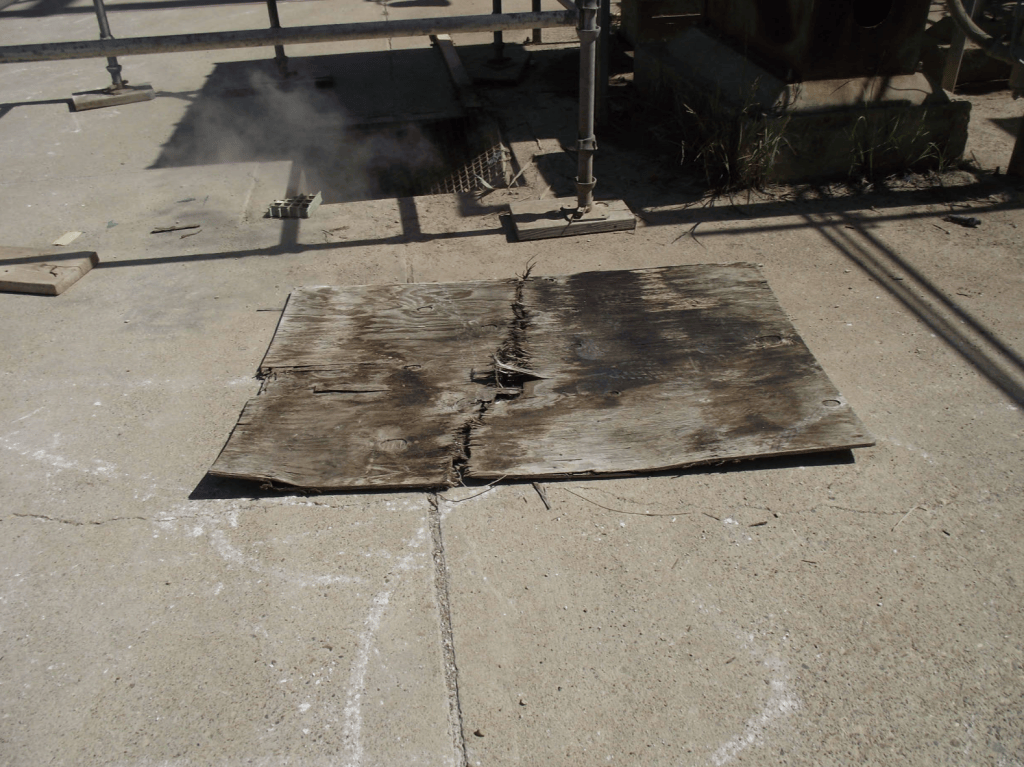
On three occasions, workers were severely burned after falling into holes filled with hot liquid that had been left open or improperly covered with plywood or cardboard. A worker who fell into scalding condensate in the VCM unit wrote in a Formosa incident report, “When I took my sock [off] my skin came off.”
One worker’s lawsuit said she hadn’t been provided with fall protection and had plummeted two stories from a tower. Another worker died after falling 25 feet through a hole in the floor grating of an elevated platform, according to an OSHA inspection report.
At least 14 people were injured after coming into contact with EDC, caustic liquid, chlorine gas or other hazardous substances.
A worker’s lawsuit filed in August said he was installing a flange when acid poured out, penetrating his protective clothing and causing severe burns. Another lawsuit alleged that when a worker went to replace a valve that was supposed to be empty, she was hit in the face with a high-pressure blast of PVC powder and liquid latex. The blast knocked off her hard hat and safety goggles, she said, and sent her stumbling backward over a pallet someone had left on the floor.
In the past four years, OSHA has cited Formosa for nine serious violations. Seven were for endangering workers in the VCM unit by failing to follow lockout-tagout procedures and failing to inspect a vessel and piping, among other things. After negotiations with Formosa, the agency downgraded seven of the nine violations and deleted two, cutting the initial $134,400 in penalties almost in half to $71,300.
Public Health Watch asked Formosa about the recent workplace accidents, as well as conditions and safety practices in the VCM unit. The company did not answer the questions.
‘Putting out wildfires’
It’s OSHA’s job to protect people from workplace perils, but in Formosa’s case, the agency has mostly been missing in action. While OSHA has responded to injuries and worker complaints at Point Comfort, the agency’s last planned, comprehensive inspection of the facility took place a decade ago. Since then, at least 21 people have been severely injured there, agency data shows.
OSHA’s discontinuity is likely due to its traditionally sparse resources, which have become even leaner under the Trump administration. OSHA now has fewer inspectors than at any time in its 55-year history, the AFL-CIO reported this year. It would take the agency’s 70 inspectors in Texas 215 years to visit every workplace in the state.
Dean Wingo, a former OSHA area director in Fort Worth and assistant regional administrator in Dallas, led the agency’s investigation into one of Texas’s worst industrial disasters in recent decades: the 2005 explosion at BP’s Texas City refinery, which killed 15 workers and injured 180.
“I would say Formosa, from what I’ve looked at, is going to experience a catastrophic event if they don’t correct their behavior at some point,” Wingo told Public Health Watch. “That would be my prediction.”
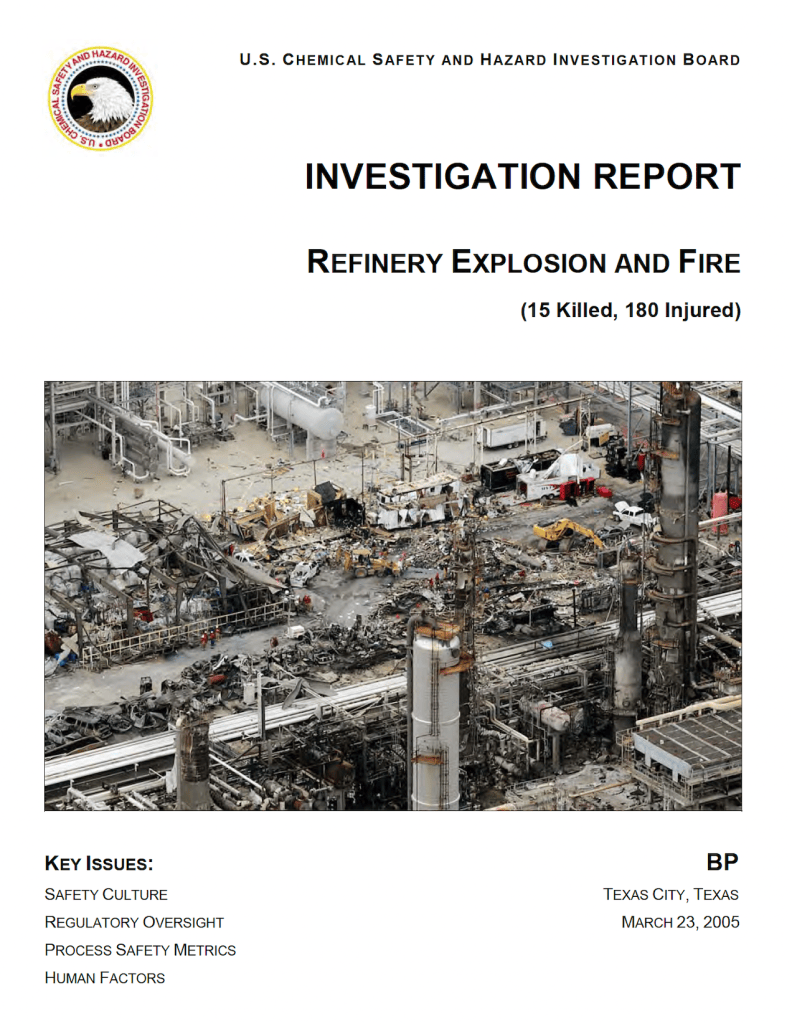
The U.S. Chemical Safety and Hazard Investigation Board’s report on the Texas City accident pinned most of the blame on “serious deficiencies” in BP’s safety culture and the company’s failure to invest in preventive maintenance. “Warning signs of a possible disaster were present for several years, but company officials did not intervene effectively to prevent it,” the board said. BP paid a record $87 million in OSHA penalties for its role in the tragedy.
Wingo worries that Formosa could be heading down the same path, given its frequent chemical accidents, injuries and poor housekeeping practices.
“They’re not actively looking for hazards and fixing them,” he said. “They’re waiting until they become issues and then … the expression is ‘putting out wildfires.’ So, they don’t look at fire prevention; they just look at putting out the fires when they happen. Their safety program is reactive, not proactive.”
I would say Formosa, from what I’ve looked at, is going to experience a catastrophic event if they don’t correct their behavior at some point. That would be my prediction.
dean wingo, former osha area director and assistant regional administrator
Overstretched regulators
If OSHA has done an imperfect job of protecting workers, the TCEQ has fallen short safeguarding everyone else. The agency says it prioritizes both public health and economic development. In fact, it often goes out of its way to accommodate the companies it oversees.
Formosa is a case in point.
Although the company has racked up hundreds of environmental violations in the past two decades, the resulting TCEQ fines average just $83,000 per year. For an enterprise that collected $4.4 billion in annual sales last year, that’s the equivalent of a typical American household losing $1.65 in the sofa cushions.
“When you’re talking about multibillion-dollar companies, the penalties have to be meaningful to their bottom line in order to deter them from further noncompliance,” said Guerra, of Public Citizen. “If you fine them the same amount that the CEO makes before lunchtime in a day, it’s not going to deter them.”
The Texas Legislature has increased maximum penalties for polluters twice in the past 15 years. But in 2011, the TCEQ undercut those penalty boosts: It stopped tripling or quadrupling fines for companies with especially bad records.
The TCEQ did, however, continue another practice: offering sizable discounts to companies that settle their cases quickly or show a “good-faith effort to comply” with the rules. Formosa received such discounts on 80% of the 29 enforcement orders Public Health Watch examined, even in cases where the company had been deemed a “repeat violator,” a designation that should, in theory, have qualified it for larger penalties.
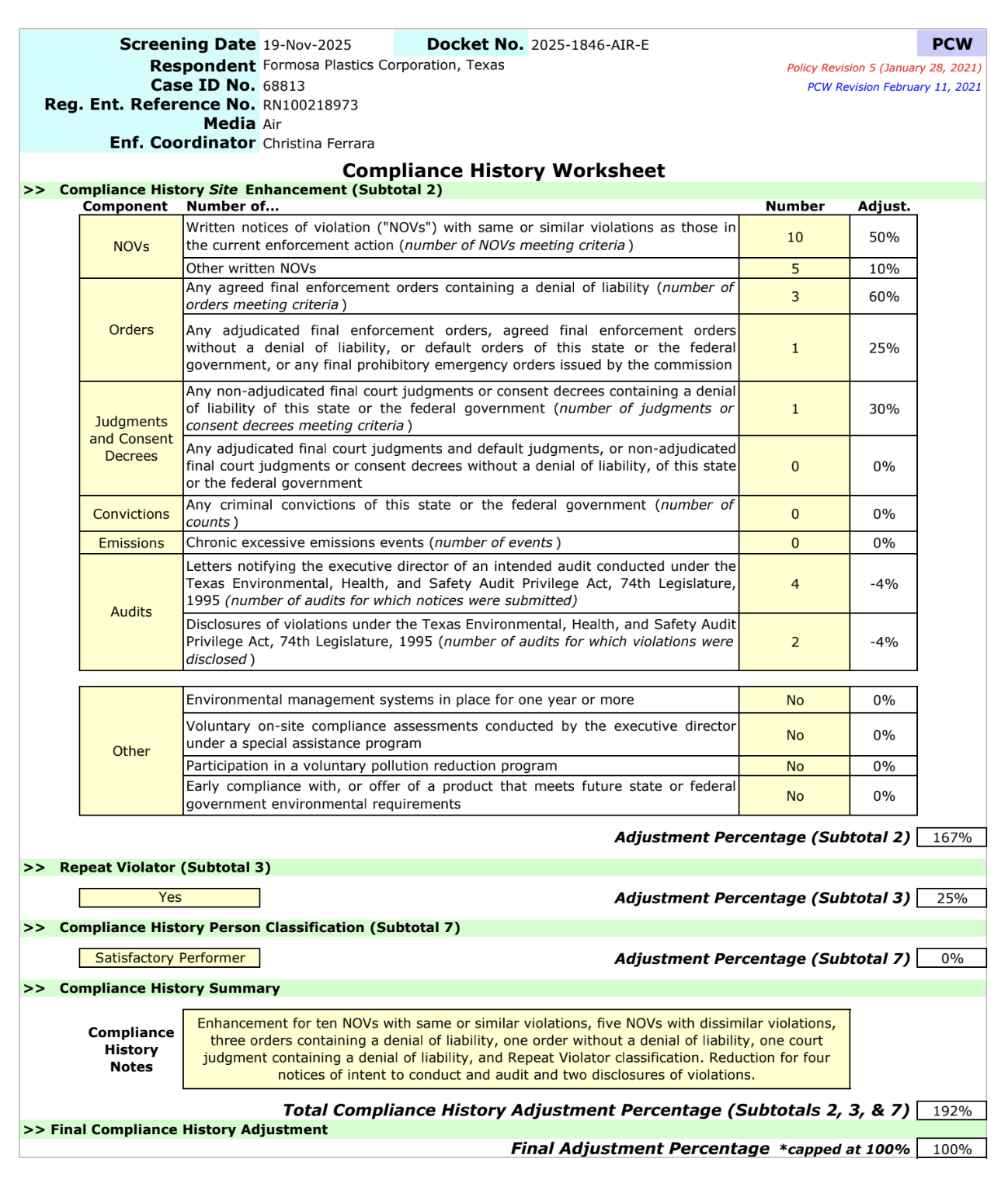
The agency does have a cudgel at its disposal: It can fine companies for each day they commit a major violation of environmental laws. But in Formosa’s case, it’s rarely used.
Nine of the company’s violations over the past two decades qualified for this designation, including one that was outstanding for more than 18 years. If Formosa had been fined by the day, it could have drawn penalties ranging from hundreds of thousands to tens of millions of dollars. But the TCEQ wielded this hammer only twice during that period, both times on violations that lasted just a day or two.
Even if the TCEQ had a sudden urge to clamp down on big polluters, it would strain to make that happen. The size of the agency’s enforcement staff — 1,006 positions at last count — has remained stagnant, even as the number of permit holders has increased by about 111,000 over the past five years. Today, there is roughly one compliance employee for every 829 permittees — businesses as small as a laundromat or as large as the ExxonMobil complex in Baytown.
In its legislative budget request for 2028 and 2029, the TCEQ asked for an extra $16.1 million for enforcement and investigations. If the request isn’t granted, Guerra said, funding for these activities won’t increase enough to keep up with the rising number of regulated companies.
The TCEQ didn’t respond when Public Health Watch asked about the growing chasm between the regulators and the regulated. But the TCEQ commissioners — the political appointees who oversee the agency — got defensive when Guerra broached the topic at their regular March meeting.
Guerra fired off two performance metrics Public Citizen compiled using the agency’s own 2025 data: the fewest number of on-site inspections in eight years, including the COVID-19 pandemic, and a backlog of nearly 1,400 enforcement cases.
Commission Chairwoman Brooke Paup replied icily that she found Guerra’s presentation “incredibly offensive to the 3,300 TCEQ staff who work tirelessly to make sure that this environment is protected.” Another commissioner dismissed Public Citizen, which claims about 1 million members and supporters nationally, as “a group with a very small following.”
Luke Metzger, executive director of the advocacy group Environment Texas, said the TCEQ’s deferential treatment of Formosa and other polluters unmasks the state’s permissive approach to regulation.
“The TCEQ emphasizes that it focuses on [companies] getting to compliance, that enforcement is just one tool and we should look at the results, not just how much they’re being fined,” Metzger said. “Unfortunately, we see in this case, as we see in many others, that the company is not getting to compliance. It’s clearly not working.”
Still ‘satisfactory’
Today, the footprint of Formosa’s Point Comfort plant stands at 2,500 acres, an area three times the size of New York’s Central Park. Its network of tanks, pipes, stacks, office buildings and parking lots stretches for nearly 3 miles along Farm-to-Market Road 1593.
According to data compiled by Material Research L3C, a supply-chain information service, the facility makes more chemicals used in plastics production than any other in the country. Formosa Plastics Corporation USA — primarily composed of its Texas and Louisiana facilities — had $13.1 billion in total assets at the end of last year.
The company has spread some of its wealth throughout Calhoun County.
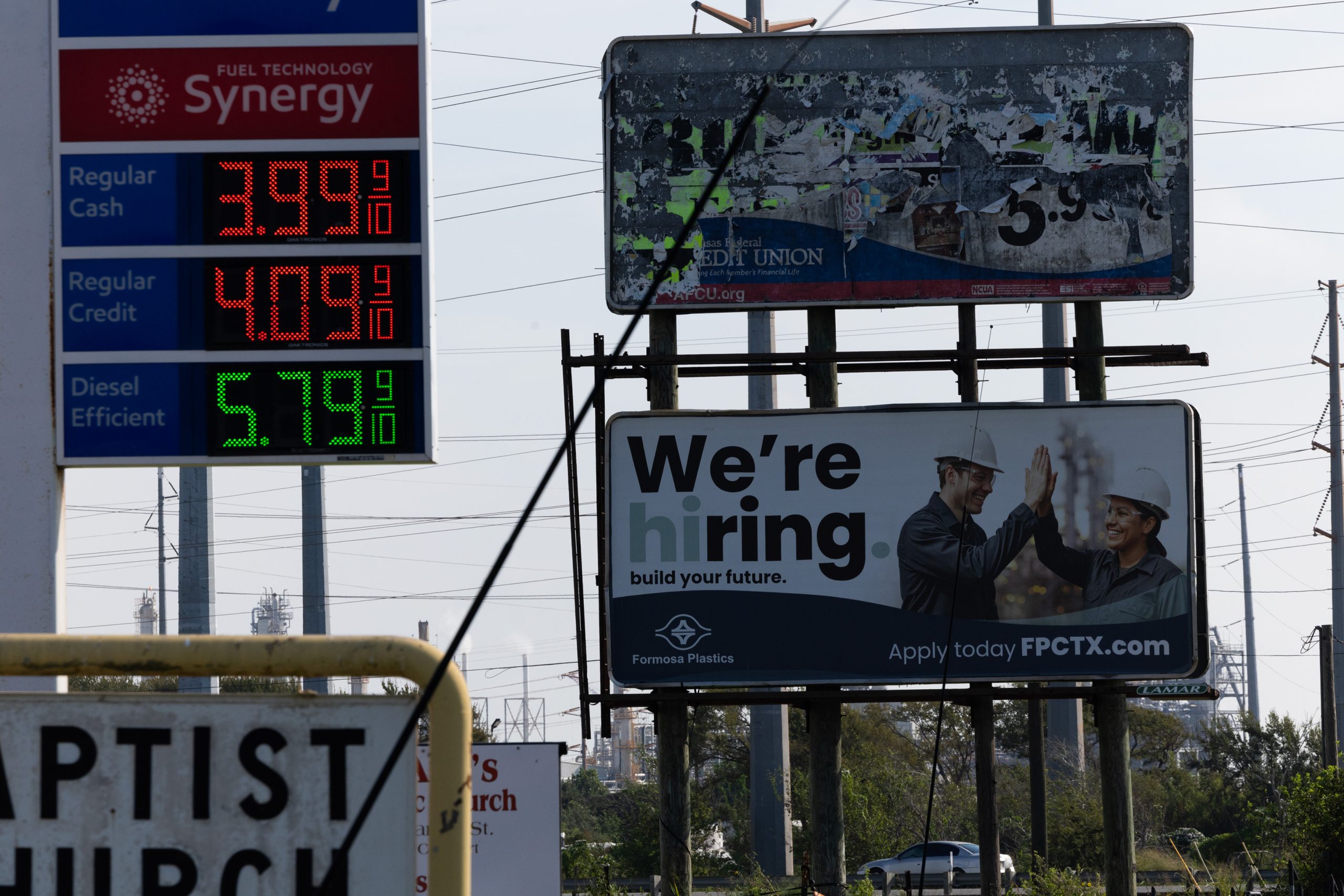
About 3,700 people now work at the Point Comfort site, making it an economic leviathan in a remote part of Texas. The pay is good enough to attract novices to the chemical industry, with new hires earning up to $27 an hour. To ensure a steady supply of homegrown talent, Formosa opened a training center in the old Point Comfort elementary school building, which it bought in 2014.
The company also contributes money and sweat equity to various projects and causes, sometimes voluntarily, sometimes to qualify for tax breaks. It has donated to dozens of religious institutions, and its employees participate in blood drives and beach cleanups. It hosts an annual golf tournament that generates hundreds of thousands of dollars for the United Way. In exchange for a tax abatement, it gave $2 million for a clinic at Memorial Medical Center in Port Lavaca, a city of 11,000 across Lavaca Bay from Point Comfort.
But its largesse has a hidden cost.
According to a study commissioned last year by the Texas Campaign for the Environment, Formosa has received $148 million in tax abatements from Calhoun County and its school district. About $39 million of that lost revenue could have been used to fund local needs like emergency services, law enforcement, roads and transportation, the study said.
Point Comfort itself has shrunk by more than half since Formosa began work on its first units, U.S. Census Bureau estimates show. The few hundred people who still live there are likely breathing more toxic air.
According to the state’s emissions inventory, Formosa’s releases of volatile organic compounds, or VOCs, have doubled since 2010, making it the sixth-largest source in Texas. VOCs can cause cancer, central nervous system damage and chronic respiratory impairment. But the state is not regularly monitoring the impact of these emissions on local air quality; its nearest VOC monitoring station is about 80 miles away.
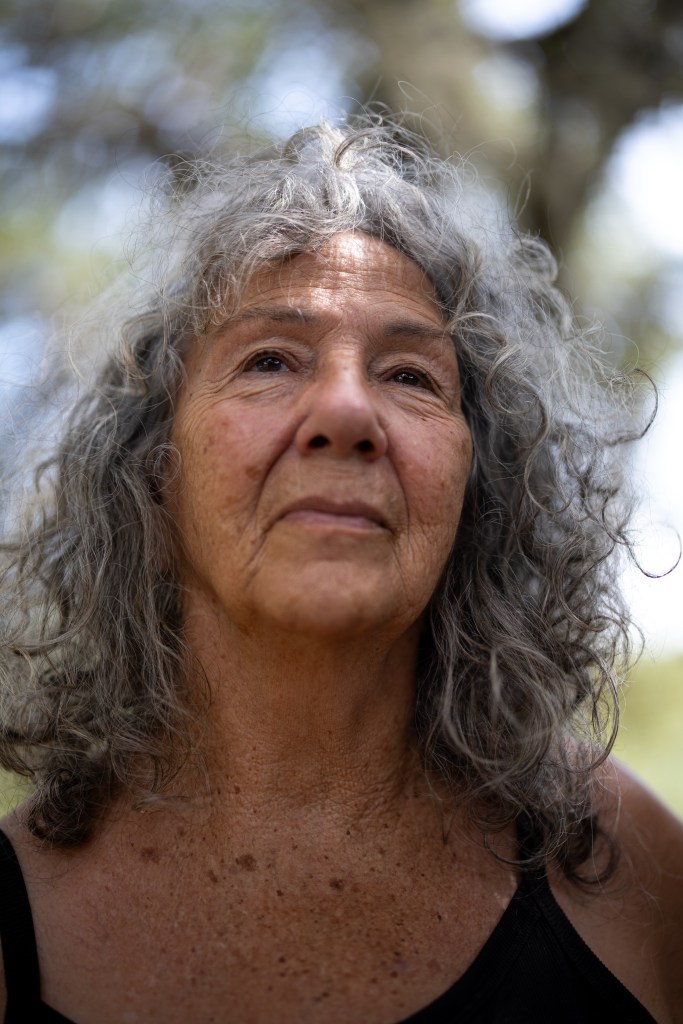
Formosa’s only real reckoning in Texas has come not from any government agency but from a small band of locals indignant about the plant’s pernicious effects on the region’s bays and estuaries, which sustain commercial and recreational fishing and provide habitat for a rich array of wildlife, including endangered whooping cranes and sea turtles.
In 2017, an environmental group called the San Antonio Bay Estuarine Waterkeeper and fisherwoman-turned-activist Diane Wilson brought a citizen lawsuit under the Clean Water Act. It accused Formosa of dumping vast quantities of plastic pellets and PVC powder into Lavaca Bay, Matagorda Bay and Cox Creek. After a 2019 federal bench trial, the judge labeled Formosa a “serial offender.” The company signed a consent decree committing to pay $50 million into the Matagorda Bay Mitigation Trust and to obey a “zero discharge” mandate: No plastic waste should come from the plant’s wastewater or stormwater outfalls.
Formosa hasn’t kept that promise.
Since the lawsuit was settled, it has racked up more than 1,000 violations for spilling PVC powder primarily into Lavaca Bay and has paid an additional $44 million into the mitigation trust. The TCEQ recently closed an enforcement case involving hundreds of these releases and did not issue a penalty.
The agency’s willingness to stand up to Formosa will soon be tested again, because the wastewater permit that governs its discharges into Lavaca Bay is up for renewal. The permit, notably, is missing a “zero discharge” requirement.
Loretta Brown, who lives in Port Lavaca and runs cattle on a ranch in Calhoun County, attended a public meeting the TCEQ held about the permit last month. She wanted to know why the agency was “even considering another permit” given that Formosa has committed so many violations since the citizen suit was settled.
The TCEQ’s Michael Sunderlin, who is handling the permit renewal, replied that the agency had reviewed the company’s environmental record and rated it “satisfactory.”
“With 1,100 offenses since the last lawsuit — that comes back satisfactory?” Brown asked, incredulous.
***
Nine days after that meeting, the TCEQ faced a new Formosa-induced headache.
Just before 4 a.m. on October 28, silos of plastic pellets at the plant caught fire and detonated. Bursts of flames shot high into the sky. Homes trembled miles away. Anxious exchanges popped up in local Facebook groups. “Here we go again,” one user wrote.
Formosa assured the public there had been no injuries and told the state there had been no chemical releases significant enough to report.
After Wilson filed a complaint, the TCEQ said it would investigate.
Jason Buch and Elizabeth Douglass contributed to this story, which was produced with support from the FencelineData.org coalition.