
This story was corrected on 6/20/26
Mental health was the last thing Wendy Dudley discussed with her family as they struggled to make ends meet in rural Roanoke County, Virginia.
Nobody made the connection between living paycheck-to-paycheck and fighting to stay afloat emotionally, Dudley said. So she moved through life the way she thought she was supposed to, by pushing her feelings down.
But then Dudley’s first husband died of a drug overdose, and her own addiction to prescription pills and alcohol “went skyrocketing … just trying to numb that kind of stuff,” she said. She went into long-term recovery for substance use disorder and now uses that experience to help patients at the Bradley Free Clinic, where she’s the manager of behavioral health.
The clinic is part of the Virginia Telemental Health Initiative, a first-in-the-nation effort to meet the growing need for mental health services by pairing free services and workforce development, with a noted impact in rural communities. Its services are particularly important now, as more Americans are losing their federal healthcare benefits and as Spanish-speaking patients cope with fears of deportation.
About 80% of patients referred to telemental services are bilingual, and the initiative is trying to ramp up translation services for appointments where bilingual therapists aren’t available, said Anna Hardin, the initiative’s clinic director. At one point, she said, there was a six-month waitlist for people seeking online therapy in Spanish.
Dudley said bilingual community members are increasingly reluctant to show up for in-person appointments at the Bradley Free Clinic. The clinic once required that all first appointments be in person, but it now allows all appointments to be online.
“Even though they saw the clinic as a safe space, they still had to travel from their house to here, not understanding what their rights were once they got in the building,” Dudley said.
How it works
The initiative, which started as a pilot program in 2022 and launched full-scale in 2024, is a virtual and free mental health clinic that operates statewide. Uninsured or underinsured patients can register at one of the state’s participating free clinics. They receive telehealth counseling from post-graduate volunteers working toward their licenses under clinical supervision.
Some clinics provide iPads and technical support for people without reliable internet service. Some provide spaces for therapy sessions. Some provide bilingual counselors.
The volunteers benefit from the initiative, too, because their work helps accelerate the licensing process. Mental health workers are in short supply nationwide. More than 30% of Virginia’s counties are facing a worker shortage, according to the Investigative Reporting Workshop’s analysis of April 2026 data from the federal Rural Health Information Hub. Three-quarters of those counties are rural, with one of the largest gaps in the Southwest corner of the commonwealth.
In 2025, the Telemental Health Initiative scheduled more than 7,300 appointments that connected more than 570 patients with 61 post-graduate counselors. The initiative’s partnership program has bloomed over four years, growing from 10 clinics to 31. Anxiety and depression were the top diagnoses last year, with working mothers, older patients and immigrants a large part of the patient population.
The initiative was originally founded by Virginia’s long-running telehealth network, a nonprofit that advocates for telehealth across the state. Today the initiative also receives funding from state and private grants, as well as individual and corporate donors. The Virginia Department of Behavioral Health and Developmental Services and the University of Virginia also provide support.
Its annual operating budget was just under $600,000 in 2024, according to its IRS 990 tax filing. Executive Director Mara Servaites said the 2025 budget was “a bit higher” because patient needs are evolving and more clinics have joined the program.
“Does funding impact us? Of course,” said Hardin, the clinic director. “Because anytime you have more money, you can promote more, you can offer more incentives for volunteers. Because we know the patients are there, and we need the volunteers.”
The initiative currently has 61 volunteers, up from 43 in 2024.
Reaching out across cultures
Freya Rodriguez, who has a master’s degree in social work from Virginia Commonwealth University, volunteered with the initiative in 2025. Most of the 3,000 clinical hours she needed to become a licensed clinical social worker came from her work with the initiative.
Rodriguez, who is bilingual, is now just a few months shy of getting her licence. The need for bilingual counselors is so great that she’s already being paid to work up to 10 hours a week to see patients at clinics across the state. She said most of the requests for therapy in Spanish come from the Free Clinic of Culpepper and the Mother of Mercy Free Medical Clinic in Arlington, both in northern Virginia.
“They [clinics] had a really, really, really, big waitlist for Spanish-speaking clients,” Rodriguez said. “And so they offered the idea of hiring me on because I was seeing a mix between Spanish-speaking and English.”
Because she is Mexican-American, Rodriguez said the work feels personal, especially in today’s polarized political environment.
“I have a lot of really hard conversations with them about going back to their home country, like self-deporting, and that’s just a really painful situation,” she said.
Pam Morris senses the same fears at the Greene Care Clinic, where she is executive director. About two hours north of Roanoke, it’s among the 26 Virginia counties whose sheriffs signed contracts that authorize state and local officers to enforce federal immigration laws or directly assist U.S. Immigration and Customs Enforcement. Although Virginia’s Democratic governor, Abigail Spanberger, ended statewide contracts with ICE in January, such local agreements have remained.
“We just had a new Spanish-speaking patient this week,” Morris said in an April interview with IRW. “And I remember one of our docs said, ‘Boy, I haven’t had a Spanish-speaking patient in a long time.’ ”
‘A perfect storm’
The Greene Care Clinic is nestled in rural central Virginia near Charlottesville, in a county of just under 22,000. It provided 142 free telehealth counseling sessions through the Virginia Telemental Health Initiative in 2025, Morris said, even though it has no behavioral health experts on staff.
Nearly a fourth of Virginia’s 8 million residents experienced mental illness in 2024, according to an impact report by the telemental initiative, but 200,000 of them couldn’t afford to see a doctor.
While a nationwide shortage of mental health care workers isn’t new, it has deepened over the past two decades due to the pandemic and post-pandemic increase in mental illness coupled with slashes to government-funded healthcare services.
Addiction counselors, marriage and family therapists and mental health counselors are among eight behavioral health professions expected to see “substantial shortages” by 2038, according to the 2025 State of Behavioral Health Workforce.
Clinic directors and therapists interviewed by IRW said financial problems come up repeatedly in sessions, with many worrying that they won’t be able to afford any healthcare at all.
The poverty rate in Greene County, for example, is lower than others in Virginia, but it’s still higher than the national average.
“Life is stressful for people in pretty good situations,” Morris said. “And then, you know, if you’re someone without insurance and you’re lower income or struggling financially, life is really stressful.”
More than 1.5 million Virginians get their health insurance through Medicaid, according to 2025 data from KFF, which reports on health-policy news. But many of them will lose that coverage because of the new verification checks and eligibility requirements written into the One Big Beautiful Bill, signed into law in July 2025.
Among other things, Medicaid recipients must now work a minimum of 20 hours a week.
“What if they just come in at 18 hours a week …. Does that mean it doesn’t count and they lose their insurance?” Morris said. “It just sounds to me like it’s going to be crazy.”
Medicaid recipients make up 38% of clients at the Bradley Free Clinic, where Wendy Dudley works. She said the rest are uninsured.
“I’m just very fearful of that perfect storm that’s going to happen on a rise of uninsured patients and then a decrease in the amount of funding,” Dudley said. “And what’s that going to mean for people that are in the cracks?”
In October, some legal immigrants — including refugees, asylum seekers and domestic-violence survivors – will also lose Medicaid coverage, because the bill changed the definition of “eligible alien.”
Dudley worries the new restrictions won’t just limit access to care, but disincentivize it altogether. Even those who still qualify may be deterred by the intricate verification process.
“A lot of our patients that we see, they have so many barriers to overcome,” Dudley said. “We see a huge unhoused population, a huge undocumented population. So any kind of barriers that you place in front of some of these individuals … they’re just gonna give up.”
Making an impact
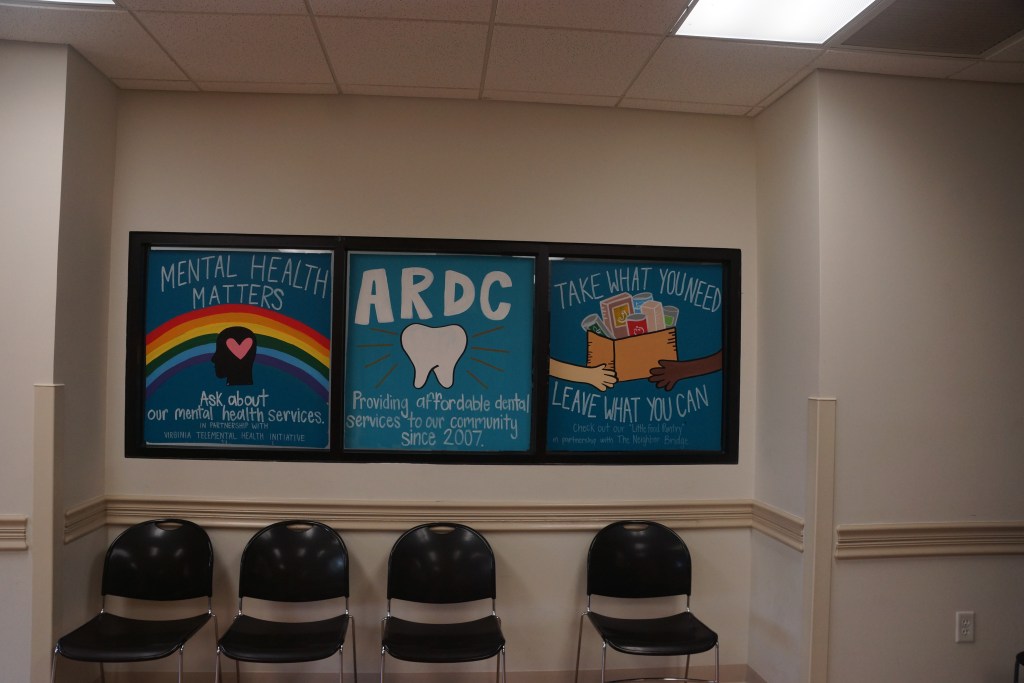
The Augusta Regional Dental Clinic is one of the initiative’s top referring clinics. As its name suggests, its primary mission is serving people who don’t have access to dental care. But after its dental hygienists noticed that their small talk with patients often turned into confessions of trauma and loss, it joined the initiative. It has referred over 200 patients since the partnership began in 2024.
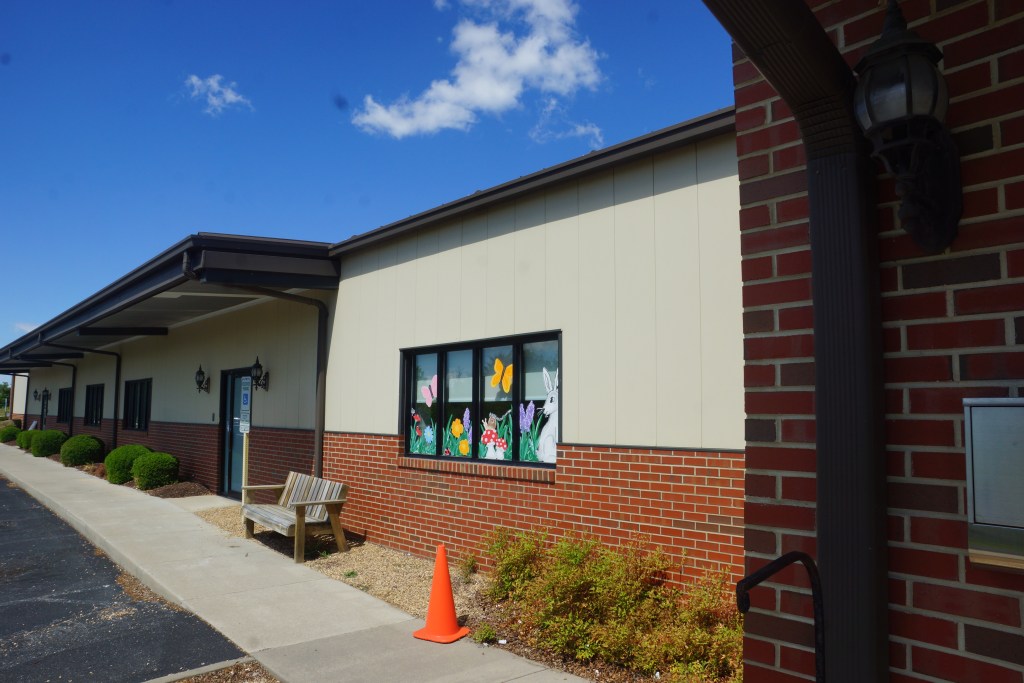
The one-story brick building is tucked off the side of a busy road in Fishersville. A small sign in an empty grassy field directs drivers to the parking lot, which is full on most days.
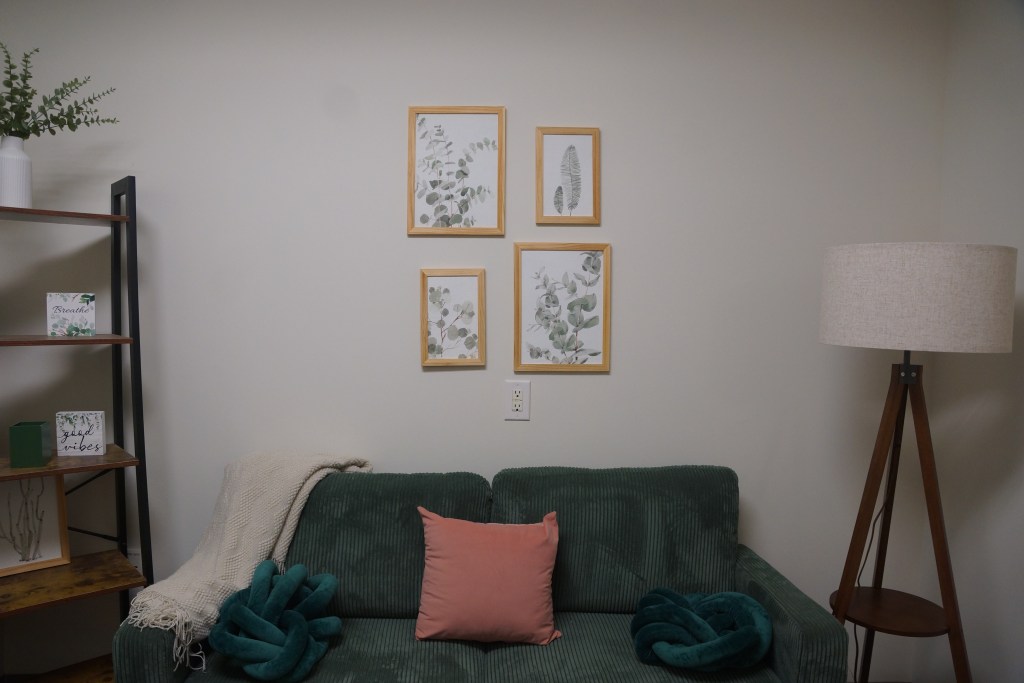
Inside it would be difficult to tell that the clinic provides mental health services if not for a room set aside, furnished with a couch and adorned with posters with affirmations such as “Breathe” and “good vibes.”
Most patients choose to do their sessions from home, said Executive Director Sophie Parson,
but the room is always available for those who need more privacy or better internet service.
“The people we meet, they’ve gone through so much in their immigration journey, in relocating here, the trauma, the uprooting of everything,” Parson said.
The clinic has seen a spike in Ukrainian patients in recent years. There’s also been an increase in uninsured patients, Parson said, after premiums in the Affordable Care Act marketplace rose this year.
Some 33,000 people in Virginia have already lost coverage, according to the Virginia Mercury.
Parson said 80% of clinic patients work at least one or two jobs.
“The rest are retired veterans, students, like we don’t have people just happy on public subsidy,” she said. “When you have a medical premium that’s $600, $700 and after that you still have a deductible and a copay… I mean they just cannot.”
Parson said providing virtual therapy to this struggling population is essential.
“We really see the impact here, I mean, the patients that we’re referring, I don’t even know where they would go in the community,” without this program, Parson said.
This story was updated to clarify the Virginia Telemental Health Initiative’s description and sources of funding, which do not include federal grants. The story has been corrected to note that the Greene Care Clinic provided 142 free telehealth counseling sessions through the Virginia Telemental Health Initiative in 2025, not 2024, and that the Augusta Regional Dental Clinic is in Fishersville, Virginia.
The Investigative Reporting Workshop is part of the Mental Health Parity Collaborative, a group of newsrooms that are covering stories on mental healthcare access and inequities in the U.S. The partners on this project include The Carter Center and newsrooms in select states across the country. IRW is also co-publishing this story with Public Health Watch.