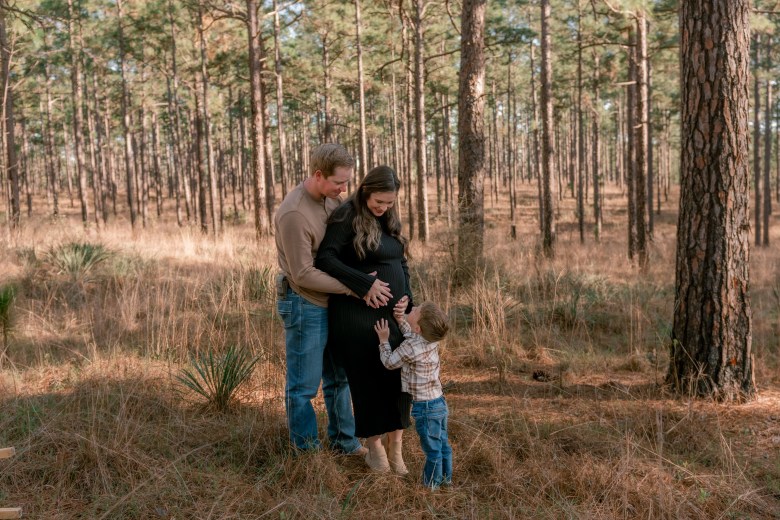
This is the second story in a two-part series by Public Health Watch examining maternal health deserts in East Texas. The first part found that women in the region face among the worst access to care in the state.
HEMPHILL, Texas — They remember the white-knuckle drives along backroads at night to get to hospitals that could treat them, of gushing blood from undiagnosed, potentially fatal complications.
Pregnant and living in rural East Texas, they sometimes drove more than 100 miles, several times a week, just to see an obstetrician.
Since Sabine County Hospital closed its labor-and-delivery unit in 2000 and the county lost the last of its physicians who delivered babies, women have had to seek prenatal and maternal healthcare outside the county for everything from routine visits to emergencies.
More than a half-dozen women in Sabine County, on the Louisiana border, spoke to Public Health Watch about the complications they faced during pregnancy and their lack of access to maternal healthcare.
Here are some of their stories.
Kelly Clark, 31
Mother of two
Just a few hours after leaving her obstetrician’s office in Nacogdoches, Kelly Clark’s contractions went from 15 minutes apart to about two minutes apart. By the time she and her husband raced back to Nacogdoches from their Sabine County home, her contractions were 1½ minutes apart. She could not put her legs together and felt a tremendous pressure to urinate.

Kelly Clark delivered both her children in Nacogdoches, miles from the family’s home in rural Sabine County, because of lack of maternal healthcare closer to home.
Credit: Photo courtesy of Kelly Clark
Clark, an emergency room nurse at Sabine County Hospital in Hemphill, could not believe she was in a race against time — again — to deliver a baby at the labor-and-delivery unit closest to her home.
When Clark’s first child was born in 2017, her husband rushed home from out of town to take her to the Nacogdoches Medical Center. He cut the drive – which normally took more than an hour – down to 33 minutes.
“Every time you pass through a town, you’re like, ‘Okay, we’re that much closer,’” Clark told Public Health Watch. “You’re just kind of breathing every step of the way, because you don’t have another choice.”
By the time they reached the hospital, it was too late for a C-section — her son had gotten stuck in the birth canal. He was born blue and not breathing, but was promptly resuscitated.
Then, in June 2020, there she was again, at 37 weeks racing against the clock to get to Nacogdoches. Her husband carried her into the hospital, and the labor-and-delivery nurse took one look, said, “Oh my gosh.” The baby was coming, and the pressure had been causing her distress about urinating.
Her doctor rushed in wearing athletic shoes and gym shorts, put on a surgical gown, broke her water, and her daughter came out immediately, Clark said.
“The baby was fine,” Clark said. “We were very, very close. We were only in the room for a couple of minutes before she was born. I was breastfeeding her for the first time while they were starting my IV and I was completing the consent forms. It was that fast.”
But not everything went smoothly. Clark had been identified as positive for Strep B during her second pregnancy, but because she delivered early, she had not yet been given the antibiotics meant to protect the baby. That meant her daughter required extra monitoring after birth, which meant extra time in the hospital.
If Sabine County Hospital had been able to provide routine testing and maternal healthcare, it’s possible at least some of the complications could have been mitigated, she said. Living in rural Texas, whether by choice or circumstance, she said, shouldn’t require a struggle to access appropriate healthcare.
“I think it is a disservice to all of us who live here,” Clark said.
Hollie Perez, 42
Mother of three
Hollie Perez thought her water had broken when she finally arrived at the hospital in Beaumont, two hours from her Sabine County home. But when the nurse pulled back her gloved hand, dripping with bright red blood, Perez, an experienced labor and delivery nurse, knew exactly what was happening.
At 35 weeks pregnant, she was bleeding out from a placental abruption. The discovery of fresh blood changed everything, and she was rushed to the operating room.

“You have to prep real quick and then pray that everything’s fine,” she said, adding that she was “really freaking out” that her son was being delivered prematurely at only 35 weeks, because babies born that early often can have problems with their lungs.
While her son did have to stay in the neonatal intensive care unit because of blood-sugar issues, he was otherwise fine. She didn’t get to see him until the next day.
Perez, a Sabine County native, had worked as a labor-and-delivery nurse in Louisiana. She knew when she moved back that there were no obstetricians, which impacted her both professionally and personally. But Sabine County is home. She has family nearby and much prefers rural to urban living.
She pursued work as a hospice nurse and maintained her long-standing relationship with an obstetrics practice in Beaumont because she knew and trusted the doctors and staff. They made her feel safe.
But the lack of maternal health resources in Sabine County is short-sighted, she said. In an ideal world, there would be sufficient funds to operate a full-fledged unit that could handle deliveries, including emergencies.
Perez said she would jump at the chance to return to working in labor and delivery locally. She understands that economic realities make that unlikely, but believes that women in Deep East Texas are being put at needless risk.
“If you live here, there are going to be hurdles that you may have to go through to get the care you need,” she said. “There shouldn’t be, but there are.”
Mackinzi Sutton, 23
Mother of two
Mackinzi Sutton will always be grateful to the nurse at her Lufkin obstetrician’s office who advocated for Sutton to not be sent home — more than an hour away — to wait for her early labor to turn into active labor.
Sutton and her baby would be safer if they were monitored at the hospital, the nurse said.

“If it wasn’t for that, I wholeheartedly believe I would have had my son on the side of the road,” Sutton said.
As it happened, she delivered her son about 12 hours after being admitted to the hospital. Her first-born, a daughter, had arrived after a scheduled induction.
Lack of access to prenatal care can be exhausting, time-consuming, expensive and sometimes profoundly uncomfortable when women are forced to drive an hour or more for check-ups and monitoring, Sutton said.
Husbands and partners often can’t go to those appointments because of work obligations. Child care must be arranged and time off from work secured. The situation is challenging even when there are no complications, she said.
“Pregnancy is not linear,” she said. “We get the short end of the stick sometimes when it comes to better resources. Especially with our healthcare.”
Sarah Gipson, 31
Mother of one
The first time Sarah Gipson saw her newborn daughter was on Facetime, with monitors attached to her tiny body as an oxygen machine helped her breathe.

Gipson was in another part of the hospital, recovering from an emergency C-section and being treated for dangerously high blood pressure.
What she’d expected would be a routine doctor’s appointment on Halloween Day in 2024 had turned into a race to save them both. A sonogram had revealed that her baby was “dry” – that she’d lost all amniotic fluid, and that emergency surgery was necessary.
Gipson, who lives in Sabine County, wonders if her blood pressure could have been better controlled, her stress levels reduced, and the loss of her amniotic fluid detected earlier if she’d had access to prenatal and maternal healthcare closer to home.
Haley Rhodes, 30
Mother of two
In 2023, just a half-hour after returning to her Sabine County home from an obstetrician’s appointment and a childbirth class in Lufkin, Haley Rhodes was standing in her kitchen when she began “gushing blood.” She was 32 weeks pregnant.
Within minutes, she and her husband were in their truck, speeding back to Lufkin, 60 miles away.
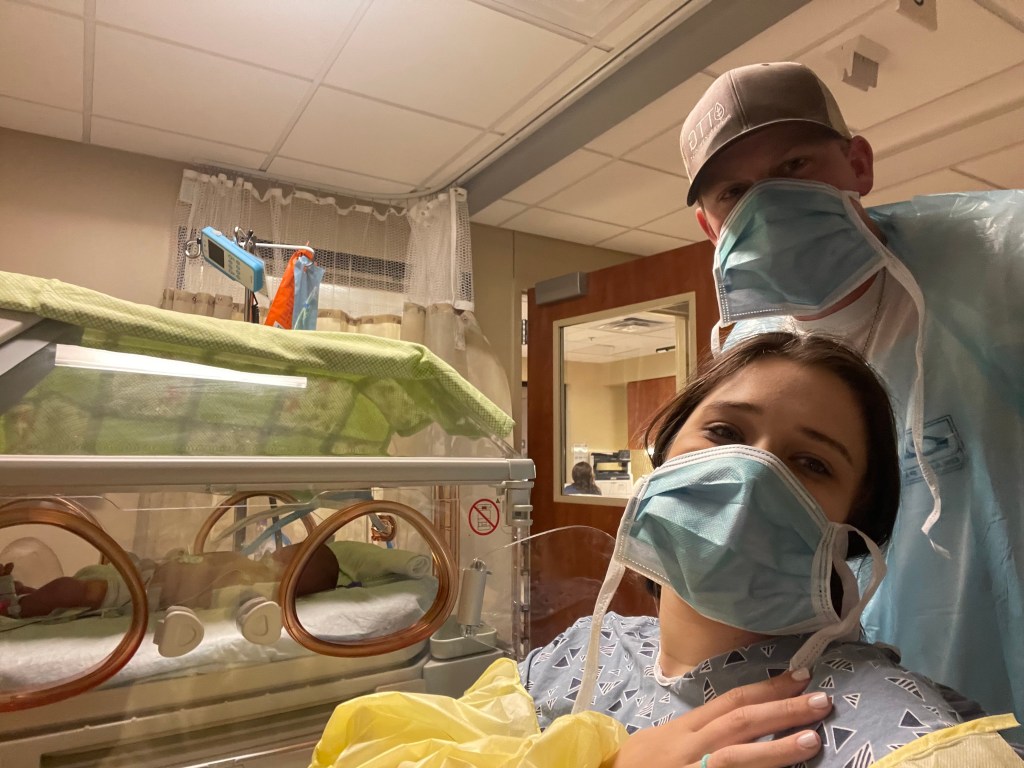
After an emergency C-Section, her doctor told Rhodes’s husband that she —- and the baby —- were lucky to be alive. She had suffered a placental abruption, a potentially deadly complication during pregnancy.
Rhodes, who gave birth to her second child earlier this year, said rural Texans deserve better access to medical care closer to their homes. Driving more than an hour each way for even routine care throughout a pregnancy is logistically difficult and stressful, she said.
The stress worsens when the number of visits increases late in the pregnancy or because of complications.
Aspen Hershberger, 28
Mother-to-be
For Aspen Hershberger, living in Sabine County is worth the difficulties in finding access to specialized medical care.
“I enjoy the country,” said Hershberger, an emergency medical technician/paramedic with Sabine County Emergency Medical Services. “I enjoy not being right on top of my neighbor. And I loved growing up here.”
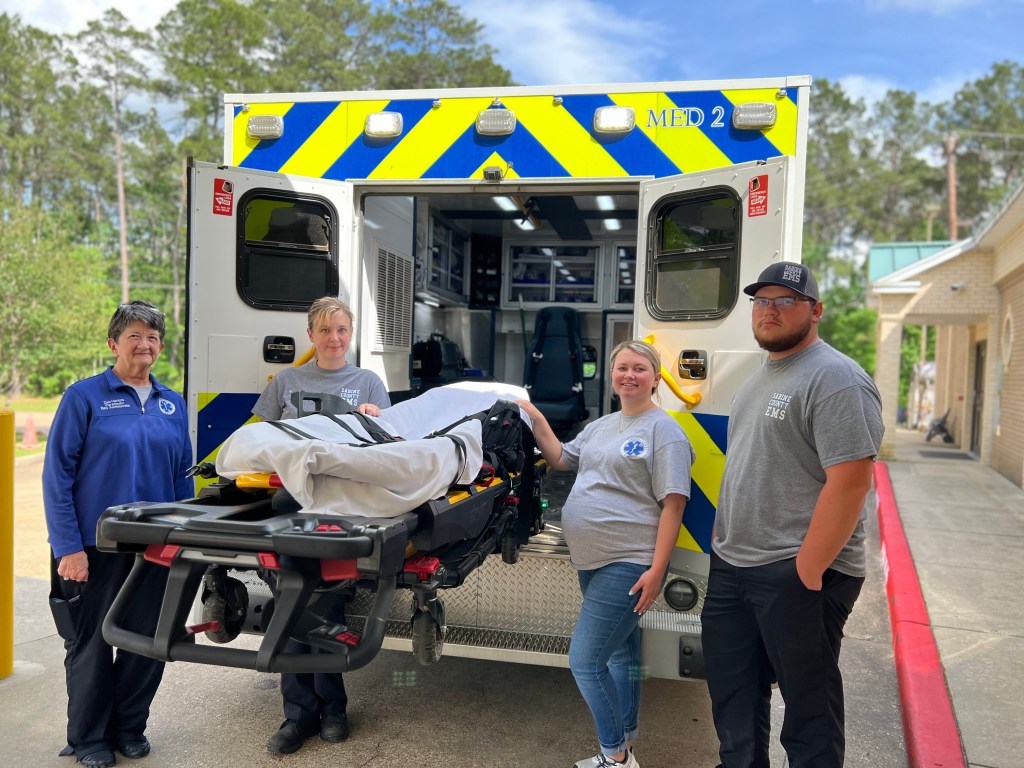
Now pregnant with her first child, Hershberger says the fact that she and her husband are EMTPs gives her reassurance that they will be proactive if she senses something is off. But she understands the fear other women face, especially if something goes wrong.
Her due date is July 10, and so far she has had no complications. But she knows a number of women who haven’t been as lucky and have been forced to seek emergency care.
Like others who spoke to Public Health Watch, Hershberger said she hopes state leaders will find ways to support Sabine County Hospital — and other rural medical facilities — in providing maternal health care to reduce the stress on rural Texas women and their families.
“It’s needed here, that’s for sure,” she said.