
A weekly roundup of public health news
Parkinson’s risk higher near dry cleaners
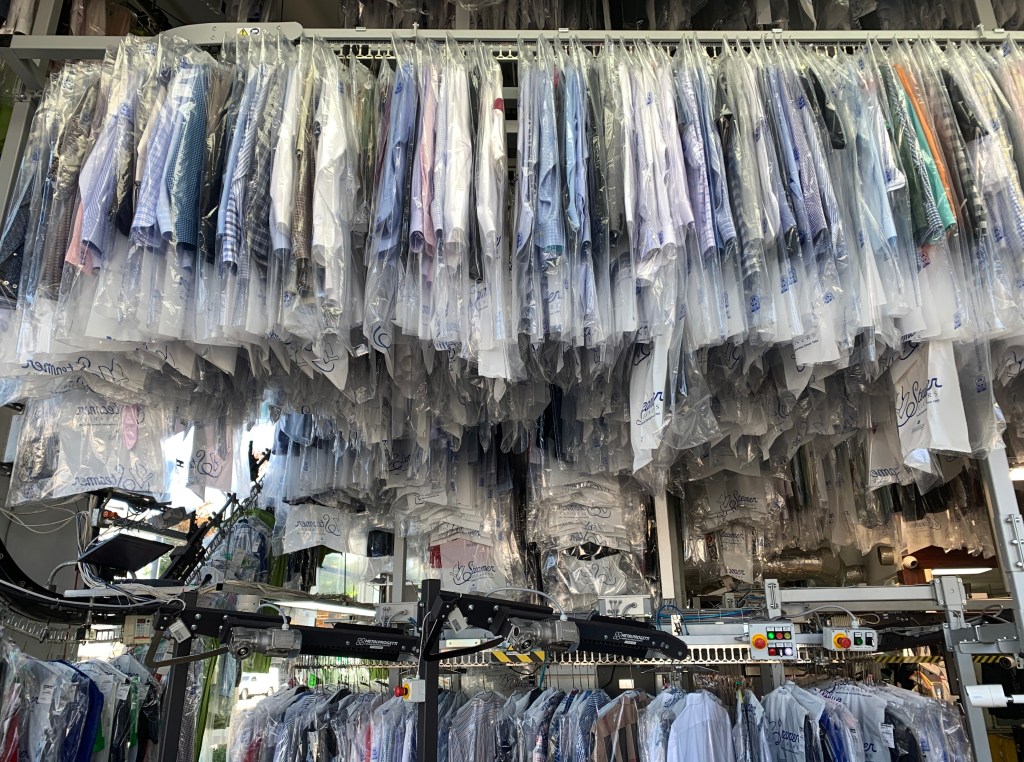
Living close to dry cleaners can increase the likelihood of developing Parkinson’s disease, a new study reports.
Published this month in npj Parkinson’s Disease, the research found people living within 500 feet of a dry cleaning business had a 14% greater risk of developing Parkinson’s disease compared to those who lived farther away.
The linkage weakened as distance from a dry cleaner increased. The nationwide study examined data on nearly 19 million U.S. older adults, including about 181,000 people newly diagnosed with Parkinson’s disease.
Dry cleaners have long used chlorinated solvents that can contaminate nearby soil and groundwater. Trichloroethylene, known as TCE, was widely used by the industry beginning in the 1920s before largely being replaced by perchloroethylene, or PCE, in the 1950s. PCE can break down underground to form TCE, allowing contamination to persist long after chemicals are released. The chemicals can move through groundwater and form vapors that enter buildings above contaminated areas.
Dry cleaners are often located in densely populated neighborhoods, including buildings with housing, potentially exposing nearby residents. Previous research found an estimated 75% of dry-cleaning sites may have some contamination.
Associations between dry-cleaning sites and Parkinson’s varied by region, the study found. Some of the strongest were found in southern Illinois, along the Tennessee-Kentucky border and in the Dallas-Fort Worth area. Other clusters were detected in Michigan, Pennsylvania, Indiana, Southern California and the New York City region.
Researchers suggested the regional differences could be related to factors such as local geology, population density and aging infrastructure that may make it easier for contaminants from dry cleaners to reach housing.
Wildfires can leave lasting contamination in water
Wildfires can contaminate more than just the air. New research shows chemicals and bacteria can dirty water sources — including some used for drinking — for long after the burning ends.
Fires can leave behind contaminants that are carried into rivers, streams and coastal waters by rain, runoff and eroding soil, according to two new studies published Aug. 19 in PLOS Water.
Arsenic can be one of those threats. A new review, conducted by researchers with the University of North Carolina in Chapel Hill and U.S. Environmental Protection Agency, found drinking water is often contaminated with arsenic following nearby wildfires, especially if mining, agricultural or urban areas are burned. In some instances, arsenic levels exceeded what is allowed by U.S. drinking water standards. While arsenic occurs naturally in rocks and soil, it can also be released by industrial sources.
Runoff was the most common route into water. Fires can strip away vegetation and alter soils, making it easier for rain to wash sediment and contaminants into waterways. Arsenic levels were often highest during the first storms after a fire, but elevated levels were detected as long as five or 10 years later in some locations, the study said.
Bacteria can travel from burned landscapes into water as well. An analysis of two decades of data by University of California researchers linked wildfires with increases in fecal-related bacteria in coastal waters.
The type of contamination varied with the landscape. Larger increases in total coliform bacteria occurred near less-developed watersheds, where soil and decaying vegetation can harbor bacteria. Fecal coliform increases were more closely associated with urban watersheds, where humans and animals can both be sources.
Rising global temperatures and severe droughts related to climate change are contributing to larger, hotter and more dangerous wildfires that burn over longer periods of the year. An August study in the Bulletin of the American Meteorological Society found the area of U.S. forests burned each year by wildfires has increased threefold because of climate change since 2000, with surges in both large wildfires and smoke.
Cases of occupational-related lung disease likely underestimated
Cases of silicosis — an incurable lung disease that is sickening some workers — have soared in California, with hundreds of illnesses identified in the past four years alone. But actual case numbers are most likely much higher, new research estimates.
From 2019 through August 2026, California health officials confirmed more than 630 cases of silicosis among workers who fabricated engineered stone countertops. Nearly 93% of cases were counted in the past four years as new policies were passed and awareness of the problem grew.
But inconsistent screening, missed diagnoses and reliance on reports of known cases mean many illnesses are likely going undetected, according to new research published Aug. 12 in NEJM Evidence.
Researchers looked to Australia, where engineered stone products containing more than 1% crystalline silica have been banned since 2024, for insights. In Queensland, Australia, where all current and former countertop fabrication workers were offered screening, more than 25% were diagnosed with silicosis, previous research has found. Given that thousands of people work now or previously in countertop fabrication in California, numbers in the state are likely higher than official counts, researchers said.
Silicosis is a lung disease caused by inhaling crystalline silica dust. Engineered stone, commonly sold as quartz, typically contains more than 90% crystalline silica. Workers can inhale dangerous levels of the fine dust when they cut, grind and polish slabs to make stone-flecked countertops used in home kitchens, businesses and elsewhere.
California is currently the only U.S. state with active, dedicated public health surveillance tracking engineered stone-related silicosis cases. Cases are not reported at the national level, though many other states have also confirmed illnesses among workers.
Awareness of the problem has grown rapidly in California since officials identified the state’s first known case in 2019 in an engineered stone worker who died in his 30s.
As of Aug. 20, the California Department of Public Health had confirmed 35 related deaths and 74 lung transplants. Nearly all victims were Hispanic men. Workers are being diagnosed with the disease at relatively young ages after short periods of exposure, with cases progressing rapidly.
California has strengthened regulations to reduce silica exposure, but violations remain widespread, the study said. State workplace safety officials inspected 85 of the more than 1,300 countertop fabrication shops in California in 2024, finding violations at 95% of them.
In May, state workplace safety officials agreed to begin emergency rulemaking after receiving a petition seeking to prohibit fabrication and installation of engineered stone containing more than 1% crystalline silica. While some stores, such as Ikea, have removed the countertops from sale, they are still sold in popular U.S. home improvement stores.
Public Health Watch has led investigative reporting on the silicosis epidemic in California and beyond, earning a 2023 national journalism award with partners for its work.
Other recent public health news of note includes:
• As extreme weather disasters grow more frequent with climate change, nearly 40% of Americans say their community has been harmed. Thirty-eight percent of U.S. adults said their town or city experienced damage from extreme weather during the past year, according to a new Walton Family Foundation-Gallup poll. Among those affected, 57% were worried their community would experience more damage in the next 12 months. Residents in the eastern-south central region of the U.S., which includes Alabama, Kentucky, Mississippi and Tennessee, were most likely to report damage. The U.S. experienced nearly two dozen weather-related disasters last year that caused at least $1 billion in damage apiece.
• Commercial flight crews are at higher risk of death from radiation-related cancer, according to a new study in JAMA Internal Medicine. Published Aug. 17, the study found flight attendants and pilots had the highest rates of radiation-related cancer deaths among more than 500 U.S. occupations. Flight attendants and pilots had higher rates of death from breast cancer, central nervous system cancers, prostate cancer and melanoma. Pilots also had higher rates of death from leukemia. Flight crews are exposed to cosmic radiation at high altitudes, though they are not covered by federal radiation dose limits or monitoring requirements.
• Increasing tree cover in cities can lower temperatures and prevent deaths, new research published this month in GeoHealth shows. Chicago neighborhoods that gained tree canopy from year to year had lower death rates, with each 1% increase associated with about a 10% reduction in deaths. Increasing tree cover was linked to fewer deaths from cardiovascular and respiratory diseases, mental health conditions and some musculoskeletal conditions. Areas that lost more tree canopy annually experienced higher death rates.
The Watch is written by Michele Late, who has more than two decades of experience as a public health journalist.s more than two decades of experience as a public health journalist.