

A weekly roundup of public health news
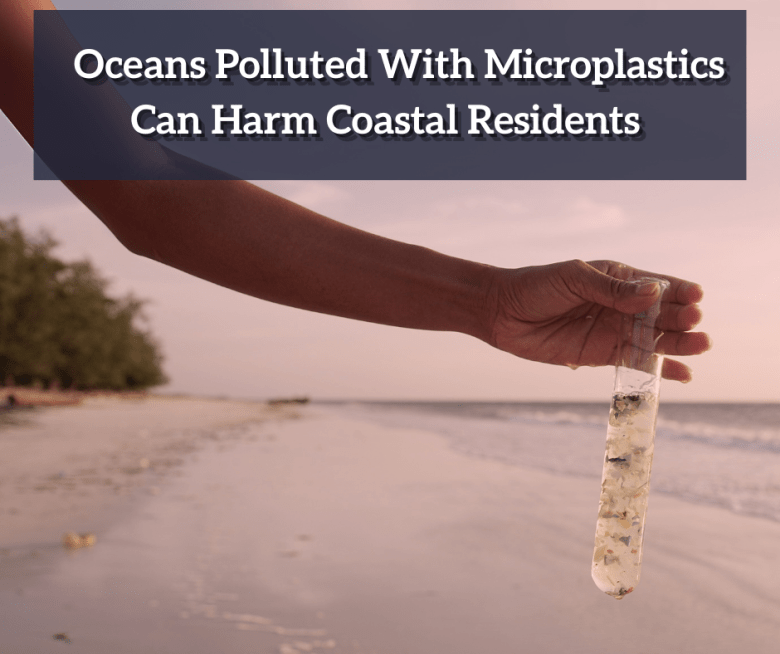
Coastline living may increase health risks from microplastics
Microplastic-polluted oceans may be putting people who live alongside them at increased risk for stroke, Type 2 diabetes and other cardiometabolic disease risks.
New research in the Journal of the American Heart Association finds coastal communities with high concentrations of microplastics in their ocean waters have higher population rates of heart and metabolic diseases, including coronary artery disease.
Microplastics — plastic particles that are less than 5 millimeters in size — are created when packaging, synthetic fabrics and other products break down, polluting air, soil and water. They include nanoplastics, which are smaller than one-thousandth of a millimeter and are invisible to the eye.
In the new study, people in coastal areas with high levels of microplastic pollution — defined as 10 or more plastic pieces per bathtub-sized scoop of water — had an 18% higher risk of Type 2 diabetes, 7% higher risk of coronary artery disease and 9% more strokes than people in areas with low levels of microplastics.
Americans living along the Gulf of Mexico and Atlantic coasts had higher rates of each of the three conditions than residents along the Pacific coast, researchers found.
Growing science links microplastics to a range of health concerns, from blockages in arteries to accumulation in the brain. Marine microplastics can be ingested by humans through contaminated seafood or water or inhaled via ocean spray and wind, among other means of exposure.
Global warming will hurt US crop yields, study predicts
Rising temperatures will make it harder for the world to produce enough staple food crops by the end of the century — and the U.S. will be one of the worst-hit agricultural regions, new research predicts.
Published June 18 in Nature, the study found global yields for key crops such as wheat, corn and soybeans will be 8% lower by 2050 than they would be without climate change. If industrial, agricultural and other emissions that contribute to climate change continue to rise unchecked, global crop yields will be 24% lower by 2100, researchers said.
As temperatures rise, parts of Canada, China and Russia may become the world’s agricultural powerhouses, with crop yields falling significantly in the U.S., Brazil, Central Africa, Europe and other currently productive areas. Soybean production in the U.S. could fall by half, and yields of cassava — an important subsistence crop in low-income countries — would fall by 40% in sub-Saharan Africa.
Overall, each 1-degree Celsius increase in temperature from human-caused climate change will reduce the world’s ability to produce food by 120 calories per person per day, researchers estimated.
The decrease in crop yields could trigger higher prices and food shortages, increasing hunger and destabilizing nations, particularly in poorer regions of the world. Researchers called for innovation, cropland expansion and adaptation to ensure adequate food supplies.
High heat a problem for indoor workers
Indoor heat is a growing problem for U.S. workers, with many employees in the service industry regularly exposed to high temperatures on the job, new research finds.
About 65% of food and retail workers regularly feel uncomfortably hot or overheated at work, according to a June 11 report from the Shift Project, an initiative of Harvard University and the University of California-San Francisco that focuses on working conditions.
Workers in warehouses, fast-food outlets and restaurants experience the highest levels of heat on the job indoors, with little relief, the report found. About 40% of indoor retail workers — who researchers say are often overlooked in heat standards and regulations — regularly experience high temperatures at work.
The hot conditions impact health, with 37% of workers reporting heat-related headaches, 34% experiencing heat-related fatigue and 24% suffering heat-related nausea. Most workers said their employers did not have a heat safety policy or were not aware if there was one. And in some workplaces that had policies, workers said they were ignored.
New standards proposed by the U.S. Occupational Safety and Health Administration last year would define high indoor heat conditions as 80 degrees or higher. Half of the workers surveyed for the report said they are regularly exposed to that temperature.
The future of the standards — which would require water, paid rest breaks and other relief during high temperatures — are in jeopardy under the Trump administration, which has slashed funding, staff and research on occupational health and safety this year.
Arsenic in drinking water can be harmful during pregnancy
Federal regulations set limits on how much arsenic — a naturally occurring element — can safely be present in public drinking water. But exposure to arsenic at levels even below those limits can be harmful during pregnancy, a new study finds.
Published June 16 in JAMA Network Open, the research found babies born to mothers exposed to significant levels of arsenic in drinking water were more likely to be born preterm, have lower birth weights or to be smaller than expected.
Researchers looked at data on about 14,000 women across the U.S., finding their arsenic exposure ranged from less than 1 microgram per liter of drinking water to more than 37 micrograms per liter. EPA standards set a maximum level of 10 micrograms per liter for arsenic in public water systems, though New Jersey and New Hampshire have a limit of 5 micrograms per liter.
Women exposed to higher levels of arsenic drinking water were more likely to have babies with low birth weights or who were smaller than expected, researchers found. Babies born to Black women were at highest risk.
Arsenic is present in the environment in rocks and soils and can also come from industrial sources such as mining, pesticides and coal burning. Previous research has found U.S. arsenic levels in drinking water are highest in rural communities and in the Southwest and Midwest.
Other recent public health news of note includes:
• Death rates for American Indian and Alaska Native people are significantly higher than reported, says a new study in the Journal of the American Medical Association. Death certificates for at least 41% of the population misidentify them as white, which may lead to significant underreporting on life expectancy and disparities, researchers found.
• Levels of very small fine-particle air pollution, known as PM1, had been on the decrease in the U.S. in recent decades, thanks to federal regulations. But rising wildfire activity has slowed that progress, new research in The Lancet Planetary Health says. PM1, which is less than 1 micron in size, can penetrate the lungs and bloodstream and cause damage to organs.
• New findings in The Lancet Microbe show overuse of disinfectants in intensive care units may increase the risk of antibiotic-resistant infections for some patients. Researchers linked excessive disinfection procedures with increasing rates of methicillin-resistant staphylococcus epidermidis, a type of bacteria often associated with infections in implanted medical devices and hospital settings.
• More states are requiring employers to offer earned sick leave, but not all workers are benefiting from it, a new study in Safety and Health at Work reports. Eighteen states and Washington, D.C., require short-term, paid time off for sick or injured workers. But people who are uninsured, have low incomes or are concerned about their immigration status may be hesitant to take advantage of it, researchers found.
The Watch is written by Michele Late, who has more than two decades of experience as a public health journalist.