Introducing “Fumed,”
A New Podcast From Public Health Watch
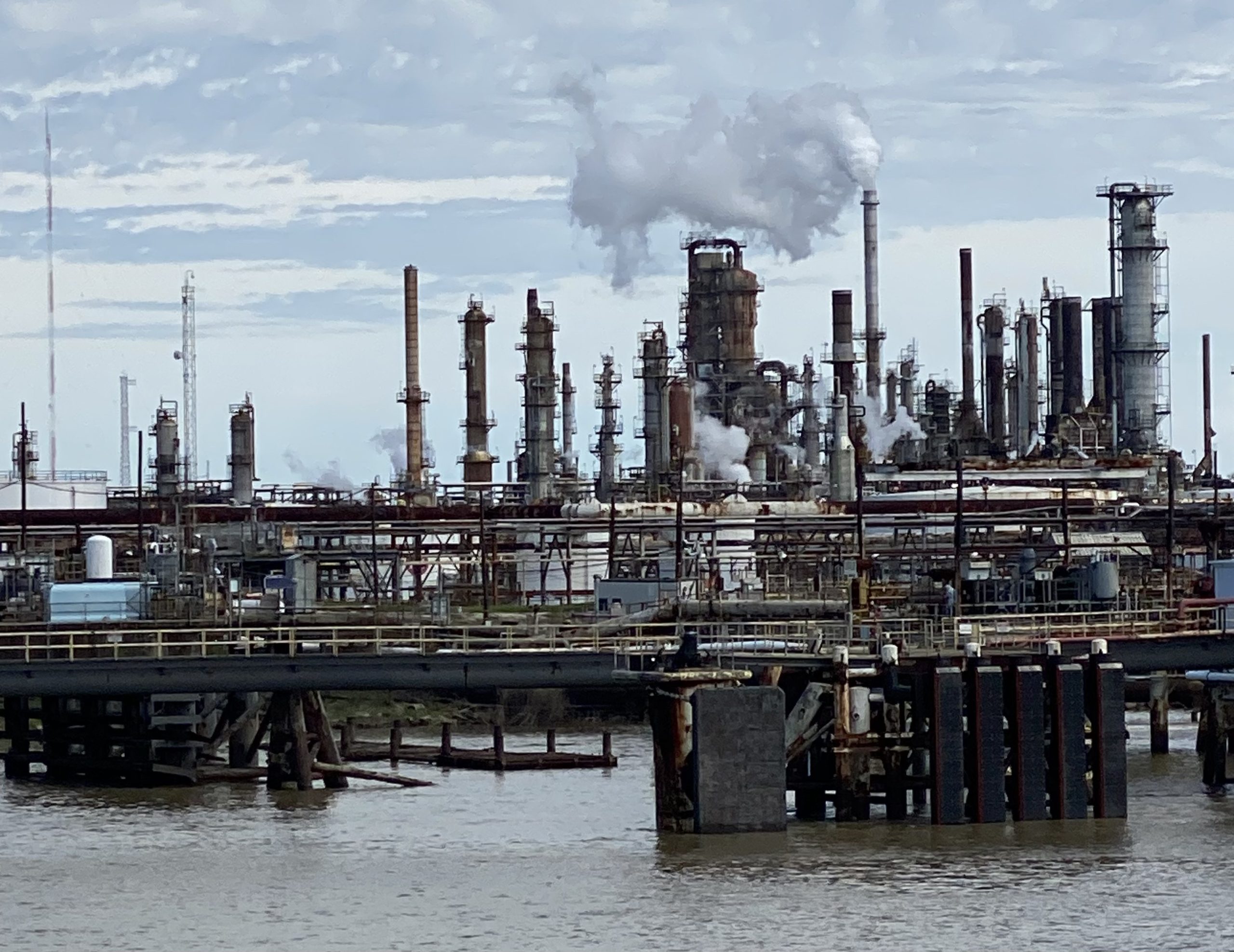
Listen to “Fumed,” an investigative podcast about the people who live in the shadows of America’s chemical plants and oil refineries.
Vaccination already under fire from Trump administration
Despite decades of evidence supporting the safety and efficacy of vaccination, the Trump administration has begun chipping away at the life-saving public health tool.
On Feb. 14, President Donald Trump signed an executive order aimed at barring federal funding to schools, universities and other educational institutions that require students to be vaccinated against COVID-19 as a condition of attendance. The order directs his education and health secretaries to create a plan to end what he called “coercive COVID-19 vaccine mandates” and come up with a process for withholding federal funds from educational institutions that defy his order.
Given the drop in both cases of the disease and vaccination requirements, the order was not expected to have much impact, but it marked the first major move against vaccines by Trump since he re-assumed the presidency in January.
The order was issued a day after Robert F. Kennedy Jr., Trump’s new secretary of U.S. Department of Health and Human Services, was sworn into office. Despite stating “I am not anti-vaccine” during his Senate confirmations, Kennedy’s previous work as founder of an anti-vaccination nonprofit group has left some unconvinced.
During his first major speech to HHS staff Feb. 18, Kennedy said he planned to “investigate” whether antidepressants and childhood vaccines are contributing to chronic disease, according to a report from ABC News. And two days later, HHS ordered the Centers for Disease Control and Prevention to put a hold on its “Wild to Mild” flu vaccination promotion, with STAT reporting it was because Kennedy wanted information on “informed consent.”
Also of concern was the postponement of an upcoming meeting of the Advisory Committee of Immunization Practices, a body that makes recommendations for CDC’s adult and child vaccination schedule. The meeting, to be held Feb. 26 to 28 in Atlanta, was slated to include discussions on topics such as vaccinations against meningococcal disease for college students.
A group of infectious disease experts and organizations, led by the Partnership to Fight Infectious Disease, called on the administration to reschedule the meeting and its public comment period “to ensure Americans receive the information needed to protect themselves against vaccine-preventable illnesses.”
The meeting cancellation may not be the only roadblock ahead for the immunization advisory committee. On Feb. 20, Politico reported Kennedy may be making plans to remove members of advisory bodies he deems to have a conflict of interest, including those that advise on vaccines.
The Trump adminstration actions came even as the number of measles cases in an outbreak in West Texas continue to climb. As of Feb. 25, 124 cases had been confirmed in the state’s South Plains and Panhandle region, including one death of a unvaccinated child, according to the Texas Department of State Health Services. Nine measles cases have also been detected in New Mexico. Two doses of the MMR vaccine prevent more than 97% of measles infections, the health department noted.
U.S. hospital occupancy higher than before pandemic
Occupancy rates at U.S. hospitals have soared so high they may soon trigger a shortage of beds, a new study says.
Published Feb. 19 in JAMA Network Open, the research found a 75% occupancy rate at U.S. hospitals from May 2023 to April 2024 — the year after the COVID-19 public health emergency ended. Prior to the pandemic, the U.S. hospital occupancy rate averaged 64%.
The higher occupancy rate is driven not by an increase in the number of hospitalizations, but rather a decrease in the capacity of hospitals to care for patients, the study noted.
Hospital occupancy rates are determined by dividing the number of patients in a hospital by the number of “staffed beds” — physical beds in a hospital that have enough health workers to care for the patients that may occupy them. The number of staffed beds in U.S. hospitals fell 16% over the study period.
While the study did not examine the reason for the decrease, researchers noted that other studies have linked the drop in staffed beds to a shortage of registered nurses and other health care workers as well as growing hospital closures.
Taking into account the increasing size of the older adult population in the U.S., the nation could see a shortage of staffed hospital beds by 2032, bringing longer emergency wait times, more medication errors and other problems along with it, the researchers warned.
Airborne lead levels spiked during L.A. wildfires
Levels of lead in Los Angeles air reached extremely high levels during the city’s massive wildfires last month, raising concerns about toxicity.
Days after the Eaton Canyon and Palisades fires began Jan. 7, air quality monitors in Los Angeles recorded a 110-fold increase in fine-particle airborne lead levels, according to the Feb. 20 study in Morbidity and Mortality Weekly Report.
While the National Ambient Air Quality Standard for airborne lead is 0.15 micrograms per cubic meter over a three-month period, airborne lead levels in Los Angeles reached 0.5 micrograms per cubic meter on Jan. 9. By the evening of Jan. 11, lead levels had returned to the city’s normal levels, the study said.
While pollutants are often found in wildfire smoke, urban fires present unique risks. As structures, vehicles and other infrastructure burn, so do the paint, plastic, wires and other elements they contain — and the chemicals within them.
About 16,000 structures burned during the L.A. fires, a large proportion of which were built before 1978, when leaded paint use was common. Study researchers said the health effects of brief, elevated lead exposures are not well understood and merit further examination.
Other recent public health news of note:
- Out-of-pocket drug costs for people covered by Medicare Part D have grown substantially, says a new study in JAMA. For the blood thinner Eliquis, for example, out-of-pocket costs for Part D beneficiaries in stand-alone plans jumped from about $47 to $102 over a four-year period — an 117% increase. But for people with Medicare Advantage drug plans, the cost for the same drug rose only 4%. Researchers said prescription benefit managers for Part D drug plans are tying patient costs to artificially inflated list prices for medications.
- Arctic glaciers are leaking significant amounts of methane, a potent greenhouse gas, as they melt with climate change, a study in Biogeosciences finds.
- Low Medicaid reimbursement rates for telehealth services are contributing to workforce shortages at health clinics, particularly among mental health care practitioners, according to research in JAMA Network Open.
- Despite making up only a quarter of the total land area that burns each year in the United Kingdom, peatland fires are causing most of the country’s fire-driven carbon emissions, new findings in Environmental Research Letters show. Human-caused climate change is creating drier and hotter conditions in the U.K., contributing to peatland fires. Researchers said the findings are relevant to peatlands in other parts of the world, including those in the U.S.
- A new study in JAMA Network Open reports that Black women with metastatic triple-negative breast cancer are 37% less likely to receive immunotherapy treatment than white patients. Triple-negative breast cancer, which is more common in Black women, has fewer treatments, leading to higher death rates than other types of breast cancer.
- The U.S. Department of Defense, which has used firefighting foams with “forever chemicals” on some of its installations, needs to provide more details on costs associated with cleanup, says a new report from the U.S. Government Accountability Office. While initial assessments have been carried out, long-term cleanup has not yet begun at any of the installations, the report said.
The Watch is written by Michele Late, who has more than two decades of experience as a public health journalist.