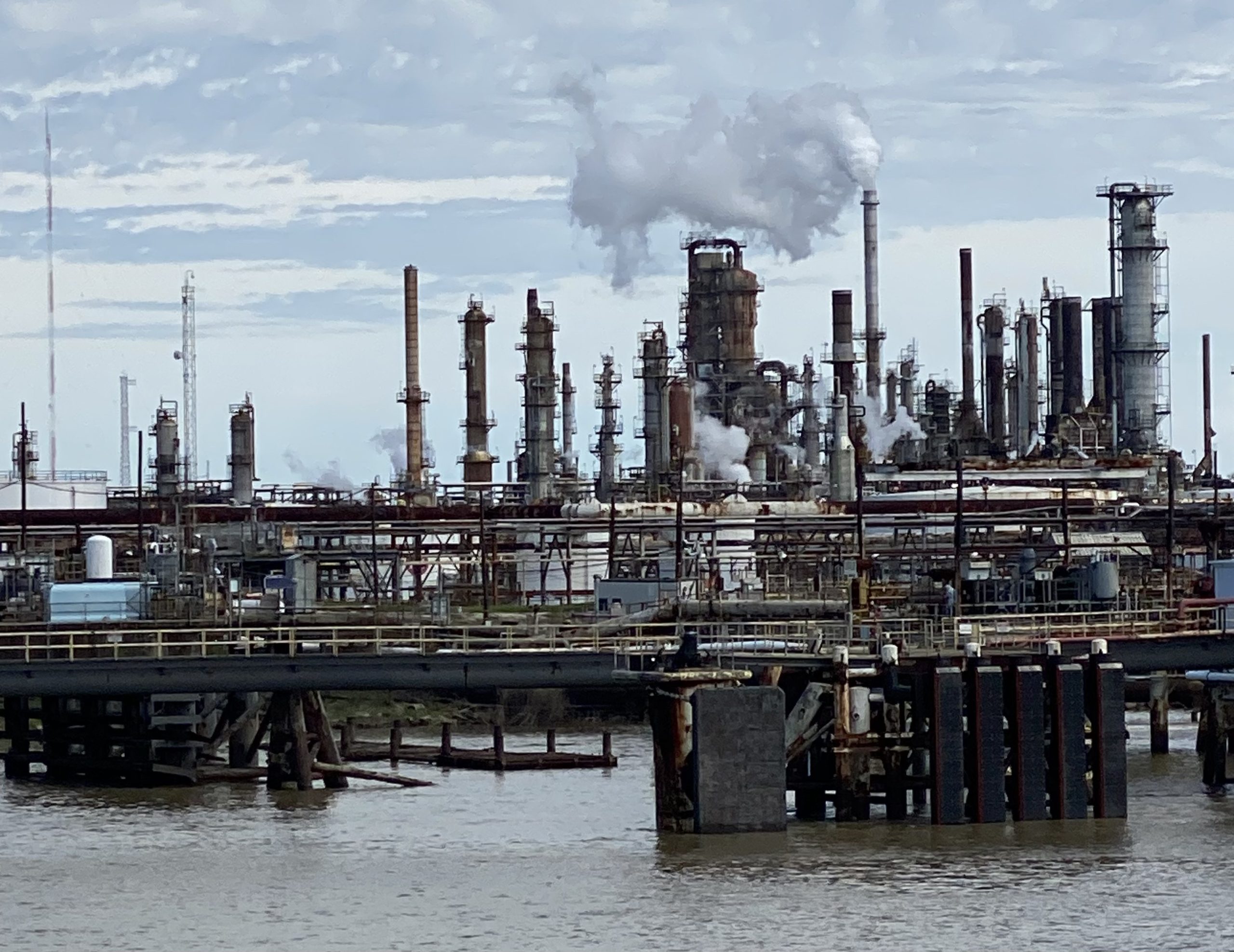
Landfills emitting high levels of methane
The nation’s more than 1,200 open landfills are an important source of climate-changing emissions in the U.S., new research confirms.
More than half of open landfills may emit higher levels of methane, a greenhouse gas that becomes trapped in the Earth’s atmosphere and drives global warming, than previously known, a study released March 28 in Science suggests.
Unlike traditional methane measurements, which are taken by walking over landfill sites with handheld sensors, study researchers used airborne spectrometers to gauge emissions. They surveyed 250 landfills in 18 states from 2018-2022, finding significant point-source methane emissions at 52% of the sites — 2.7 times higher than emissions found via walking surveys.
Instead of being spread across the whole of a landfill, point-source emissions are hot spots confined to a local area. Sixty percent of the surveyed landfills had hot-spot emissions that lasted for years, the study found.
Dotting landscapes from coast to coast, U.S. landfills receive more than 146 million tons of waste a year. As of 2018, food was the largest component, making up 24% of landfill waste, according to the Environmental Protection Agency. As that and other organic waste — such as cardboard, yard trimmings or wood — decay, methane and other emissions are released.
Only about 32% of the 292 million tons of municipal solid waste generated annually in the U.S. is recycled or composted, according to the EPA. Landfills are the nation’s third-largest source of human-caused methane emissions.
Heart disease, stoke risks grow with neighborhood disadvantages
Environmental and social factors that are detrimental to neighborhoods, such as high-traffic roadways or low access to care, can be bad for heart health, a new study finds.
Compared to other Americans, people living in neighborhoods with more environmental and social disadvantages have up to twice the risk for developing heart disease and stroke, according to the Journal of the American Heart Association study.
Released March 27, the research found that 21% of Black adults and most Hispanic adults lived in neighborhoods with “alarmingly high” environmental burdens, as did about a third of adults ages 18 to 44.
Among those were air and water pollution, proximity to railways and airports and a lack of recreational parks. Neighborhood social disadvantages included poverty, low education and employment and a lack of safe and affordable housing.
Researchers used the Environmental Justice Index — a federal tool that shares data on environmental, social and health factors by U.S. census tract — to examine neighborhood disadvantages. People in the most vulnerable tracts had 1.6 times the rate of blocked arteries and more than twice the rate of stroke than residents of other neighborhoods, the study found.
Risk factors for cardiovascular disease were also higher in the most vulnerable areas. In those neighborhoods, people had 1.5 times higher incidence of high blood pressure and obesity, 1.8 times higher rates of chronic kidney disease and twice the rate of Type 2 diabetes.
Job security linked to less anxiety, distress
Workers who have job security enjoy better mental health, a new study finds.
Published March 25 in JAMA Network Open, the study found that people with greater security — who knew it was unlikely they would lose their jobs — were much less likely to experience anxiety and serious psychological distress on a regular basis than those who did not feel secure.
Similar mental health benefits were found for people who had greater job flexibility, such as the ability to work remotely or create their own schedules. As job flexibility and security increased, people also reported working fewer days while sick, according to the findings, which were based on a May 2023-January 2024 survey of more than 18,000 working adults.
Greater job security and flexibility were each associated with a decrease of about 25% for serious psychological distress, which includes depression, hopelessness and loss of interest.
When it came to anxiety, the level of decrease differed, however. Having more job security lowered anxiety by 27%, but greater job flexibility only reduced anxiety by 13%.
About a third of U.S. working age adults experience anxiety and depression, but that rate soars to 50% among people ages 18-24. The COVID-19 pandemic worsened job insecurity, particularly among workers in low-wage positions, the researchers noted.
Dementia care more expensive for Black, Hispanic patients
Health care costs for Black and Hispanic people with dementia are higher than for white patients, a new study says.
The average total cost to Medicare for a white patient diagnosed with dementia was about $136,300, according to the study, which examined data on older adult patients from 2000-2016. That cost jumped to about $160,400 for Hispanic patients and $165,700 for Black patients.
Costs also varied during the last year of life for the patients, with about $39,000 for white people, $47,500 for Hispanic people and $51,300 for Black people, said the study, which was published March 20 in the Journal of the American Geriatrics Society.
Study researchers linked much of the disparity to greater use of costly health care — such as emergency department visits and inpatient hospitalizations — among Hispanic and Black patients, particularly during their last year of life.
While some of the differences in care may be linked to preferences of patients or caregivers, they also likely reflect disparities in access to care for people of color, researchers said. Hispanic and Black Americans are less likely than white people to have a usual source of health care or to have health insurance, for example, which may lead them to rely more heavily on emergency care. In the year after being diagnosed with dementia, Black and Hispanic patients are less likely to have health care follow-up.
Lifetime total cost of care for a person with Alzheimer’s dementia can be as high as $377,000, including Medicare costs, caregiving and out-of-pocket spending, previous research has found.
Other recent public health news of interest includes:
• Common chemicals used in a range of consumer products, from furniture to hair products, may be linked to neurological diseases, a study in Nature Neuroscience finds.
• The Environmental Protection Agency is requiring industrial facilities to step up safeguards against chemical discharge into rivers, lakes or other bodies of water during weather disasters, which are strengthening with climate change.
• Potentially dangerous levels of dehydration are common among farm workers, a study in Environmental Research finds.
• High neighborhood eviction rates can harm the mental health of Black pregnant women, according to a study in the American Journal of Epidemiology.
The Watch is written by Michele Late, who has more than two decades of experience as a public-health journalist.