
A new report examining human rights violations by petrochemical companies along the Houston Ship Channel calls for Texas to overhaul its environmental regulations and asks the U.S. Environmental Protection Agency to review the state’s policing of the industry.
The report, by the human rights group Amnesty International, describes the ship channel as a “sacrifice zone,” a term the United Nations uses for places “where residents suffer devastating physical and mental health consequences and human rights violations as a result of living in pollution hotspots and heavily contaminated areas.” The report argues the ship channel is more accurately a “racial sacrifice zone” because its pollution disproportionately affects people of color.
Alysha Khambay, an Amnesty International researcher who focuses on business and human rights, said most sacrifice zones are in places that have few or no environmental regulations. The ship channel is unique, she said, because it has regulations, but they’re not always enforced by the Texas Commission on Environmental Quality (TCEQ) and EPA.
“The issue is, at least in Texas, that they’re just not enforced in a way that’s actually protective of the environment and human rights,” Khambay said.
The TCEQ told Amnesty International in November that it had “no comment at this time” on the findings of the report. The EPA did not respond to the organization.
When asked by Public Health Watch about the report, the TCEQ said it “does not comment on forthcoming reports we haven’t been provided, disabling the agency from having the ability or opportunity to verify the quality of data used in drawing their conclusions.” The EPA did not respond by the time of publication.
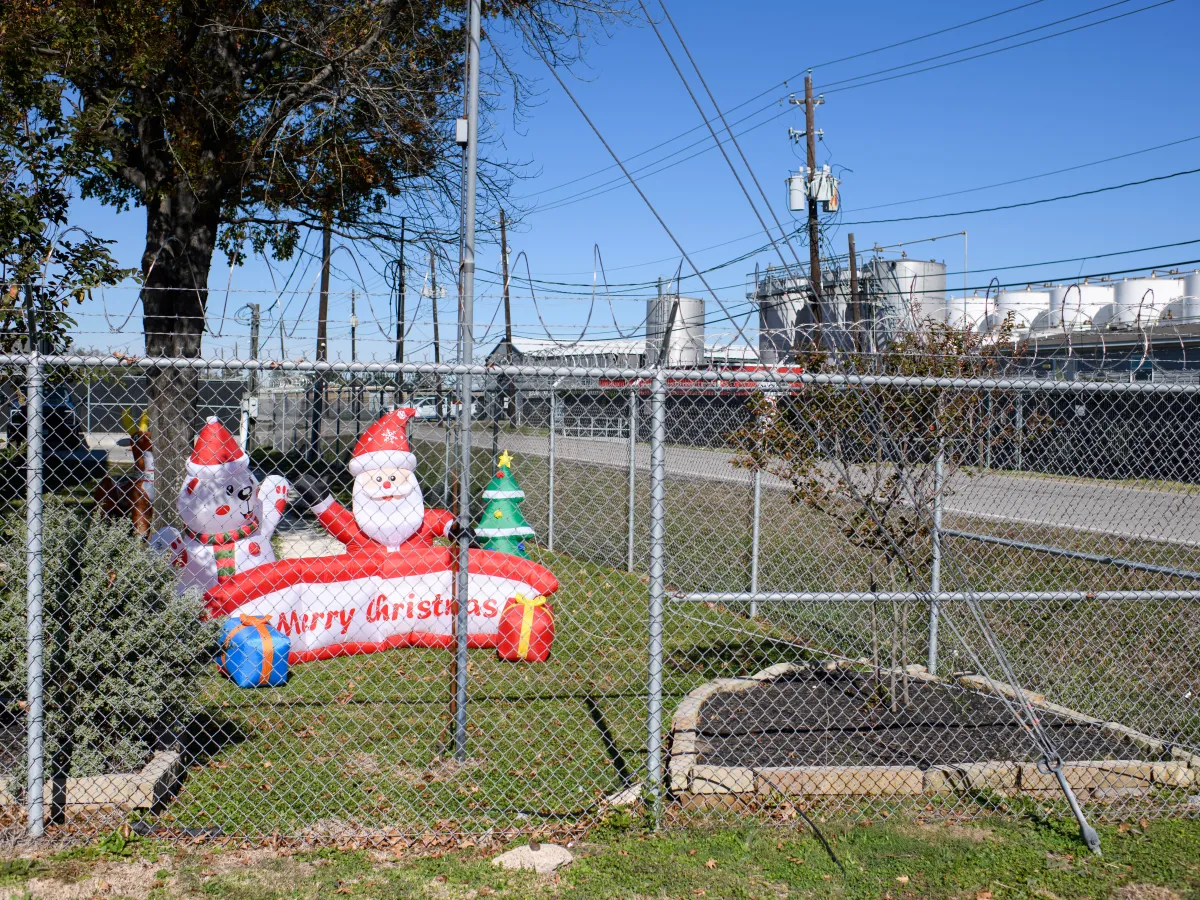
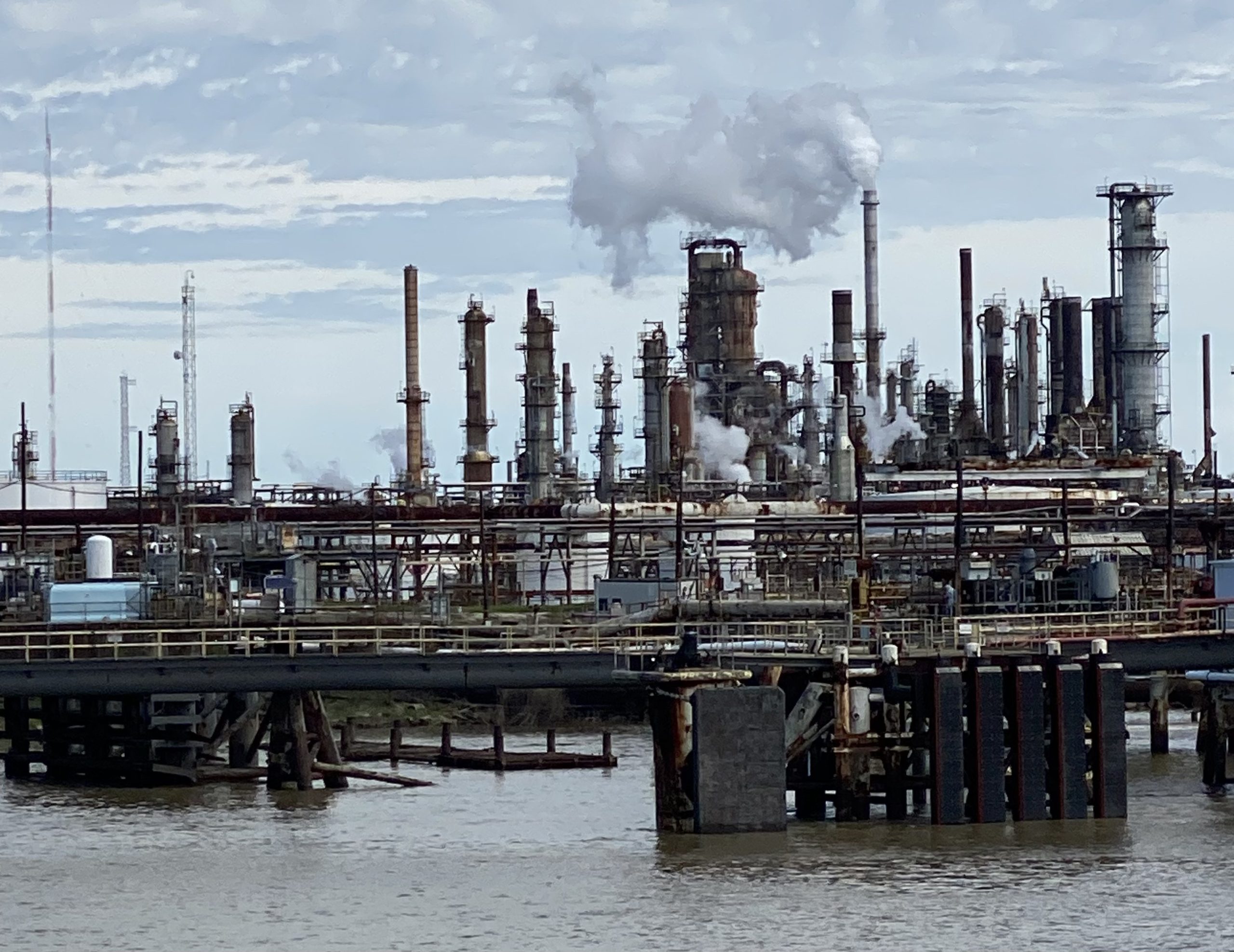
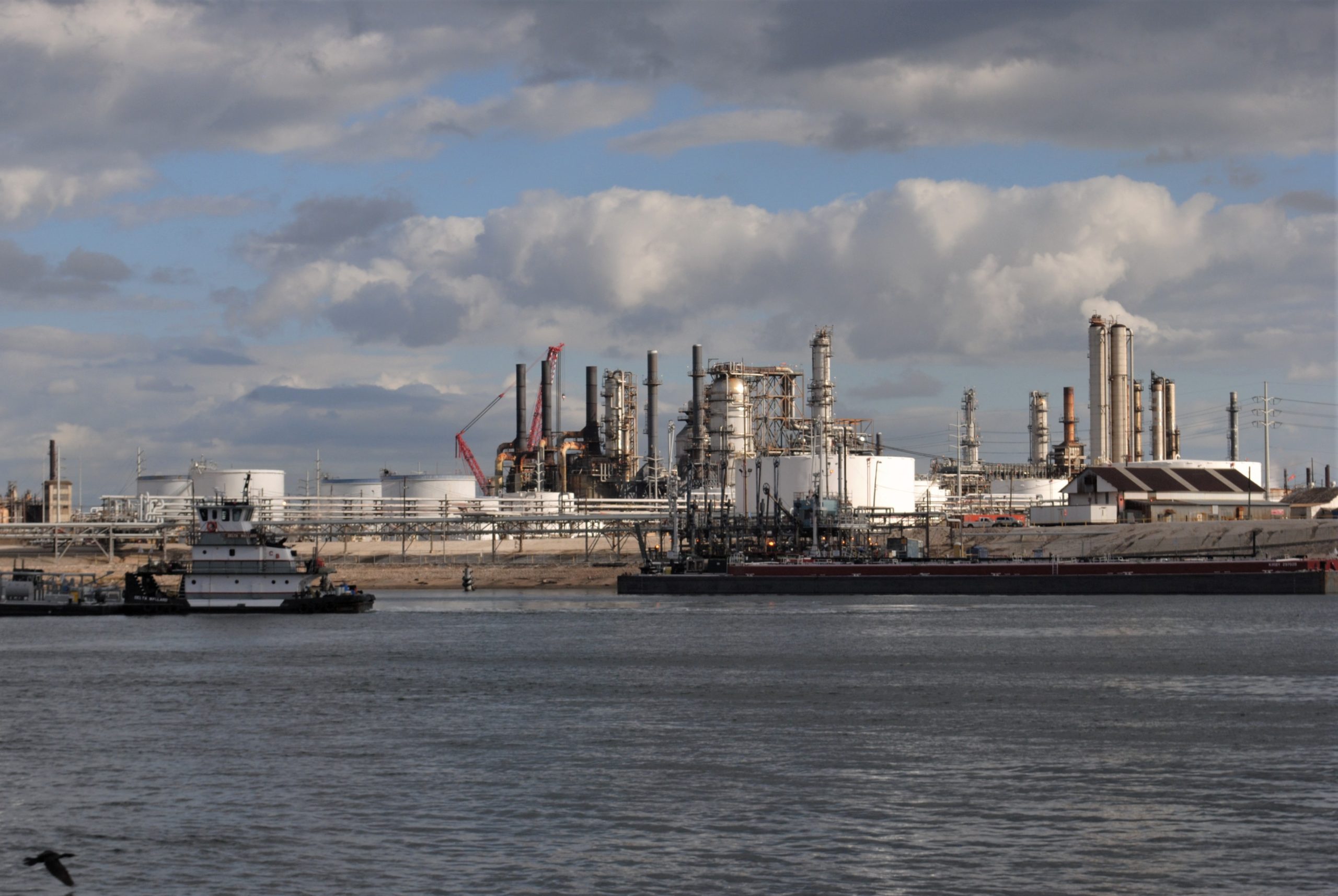
The Houston Ship Channel stretches 52 miles through eastern Harris County, the heart of the nation’s petrochemical industry. The county is home to 10 refineries and thousands of chemical facilities that transform oil and gas into chemicals used in a variety of products, including plastics, paints and fertilizers.
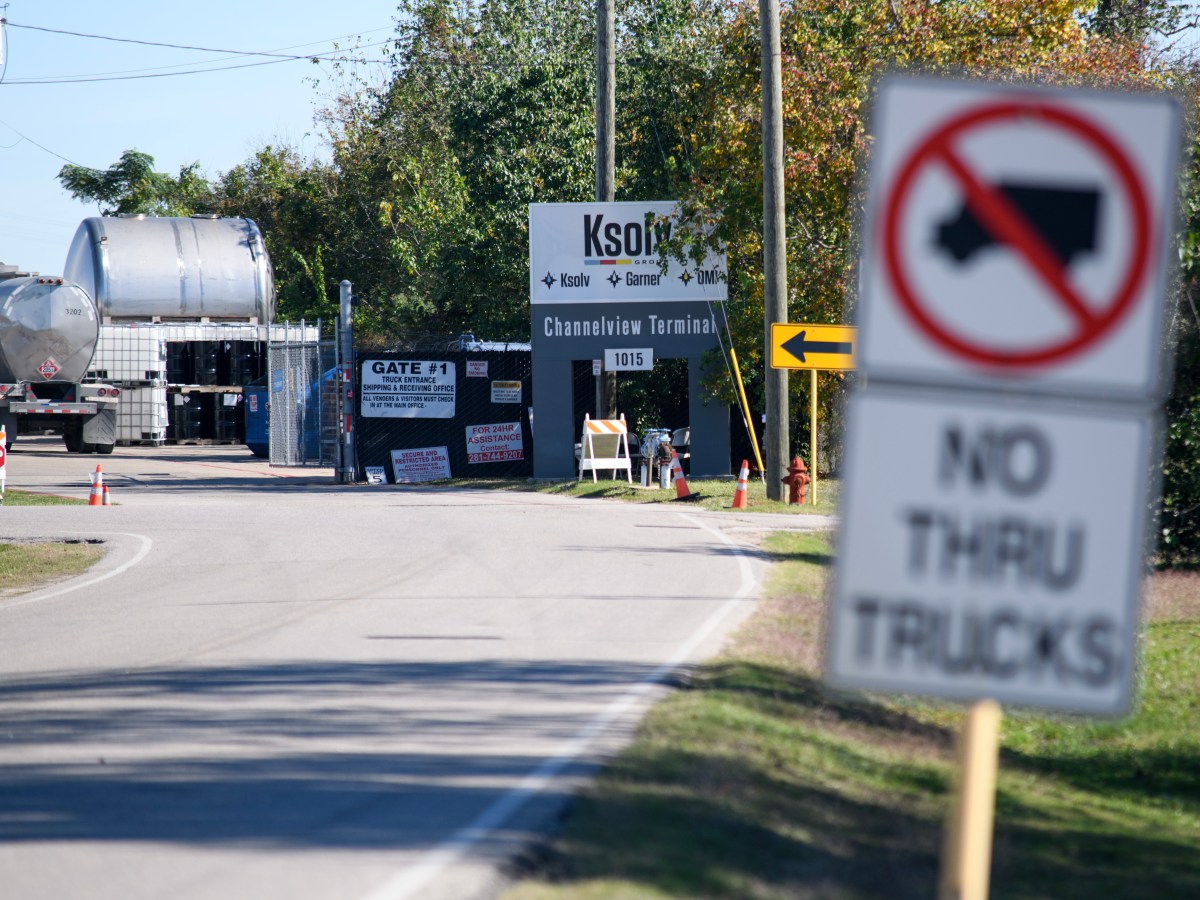
Public Health Watch has been reporting on pollution in Harris County for the past two and a half years. The most recent investigation showed that the TCEQ has known for almost 20 years that residents of Channelview, an unincorporated community east of Houston, were breathing high levels of cancer-causing benzene, but had done little to remedy the problem.
For the report, Amnesty International researchers interviewed 29 current and former community members who lived, worked or went to school within three miles of a petrochemical facility. About half said they or a relative had respiratory issues, such as frequent breathing problems, or a diagnosed disease like lung cancer.
“Every time we turn around, somebody got cancer,” E. Jack, a longtime resident of Channelview, told Public Health Watch. “I keep telling everybody there’s a reason. There’s a reason we have a lot of sick people now.”
When Jack’s daughter, Shumona Collins, was growing up, the family lived near a chemical facility in Channelview owned by LyondellBasell, one of the world’s largest plastics, refining and chemical companies. Collins returned to Channelview as an adult because she feels a sense of community there. She’s now a trustee on the school board.
“You have people that want to get out here and they want to be a part of the American dream by owning a home, raising kids in the area,” Collins said, “but not knowing that what they are inhaling or breathing, it’s going to potentially be hazardous to them in the long run.”
A 2019 analysis by the Episcopal Health Foundation found a 21-year gap in life expectancy between whiter, more affluent neighborhoods in west Harris County and low-income communities of color on the east side, where most of the petrochemical facilities are located.
The industry’s effects on nearby communities are likely to increase with the world’s growing demand for plastics, Khambay said. Since 2016, eight petrochemical facilities have opened in Texas and 30 — including 11 in Harris County — have expanded, according to Oil and Gas Watch, an arm of the nonprofit Environmental Integrity Project.
“For the communities who live in the sacrifice zone, they are already experiencing devastating consequences to their health from this pollution,” Khambay said. “The industry’s expansion has quite serious, I think, ramifications for this human rights crisis that makes the situation even more urgent.”
There have been 15 chemical explosions, fires and toxic releases reported along the Houston Ship Channel since 2021, according to the report. These disasters have killed one worker and injured at least 28 others.
Smaller, less dramatic chemical leaks are more common. There have been 18 reported unplanned releases in Harris County this year, according to TCEQ data reviewed by Public Health Watch. The report notes there is no centralized system to alert nearby residents when leaks or disasters occur.
Companies can avoid being fined for these illegal leaks by using the “affirmative defense” claim, which allows them to file a written report explaining that an incident was “beyond the control” of the company. A 2017 report from Environment Texas and the Environmental Integrity Project found that Texas fined polluters for less than 3% of the nearly 25,000 illegal chemical leaks between 2011 and 2016. A TCEQ spokesperson told Public Health Watch last year that “the current enforcement rate for reported emission events is more than 10%.”
The density of polluting facilities along the ship channel makes it difficult to tie pollution or health effects to specific companies, but the report highlights four facilities with long histories of violating air and water regulations: ExxonMobil Baytown Complex, LyondellBasell Channelview Complex, Shell Chemicals Deer Park and Intercontinental Terminals Company, or ITC, Deer Park.
An analysis of TCEQ data by the Amnesty International researchers found that these four facilities combined had thousands of leaks that exceeded their permitted limits. In the last 20 years:
- ExxonMobil Baytown Complex had 1,013 illegal releases.
- Shell Chemicals in Deer Park had 790 illegal releases.
- LyondellBasell Channelview Complex had 463 illegal releases.
- ITC, whose 2019 fire released cancer-causing benzene into nearby communities for weeks, had 49 illegal releases.
The report offers several recommendations for how Texas could address the problems along the ship channel, including denying permits for new and expanding facilities, increasing staff to respond to and investigate residents’ complaints about pollution and removing regulatory loopholes like affirmative defense.
The report also asks the EPA to increase its oversight of the TCEQ or, if necessary, use its authority to implement and enforce federal laws the state has ignored.