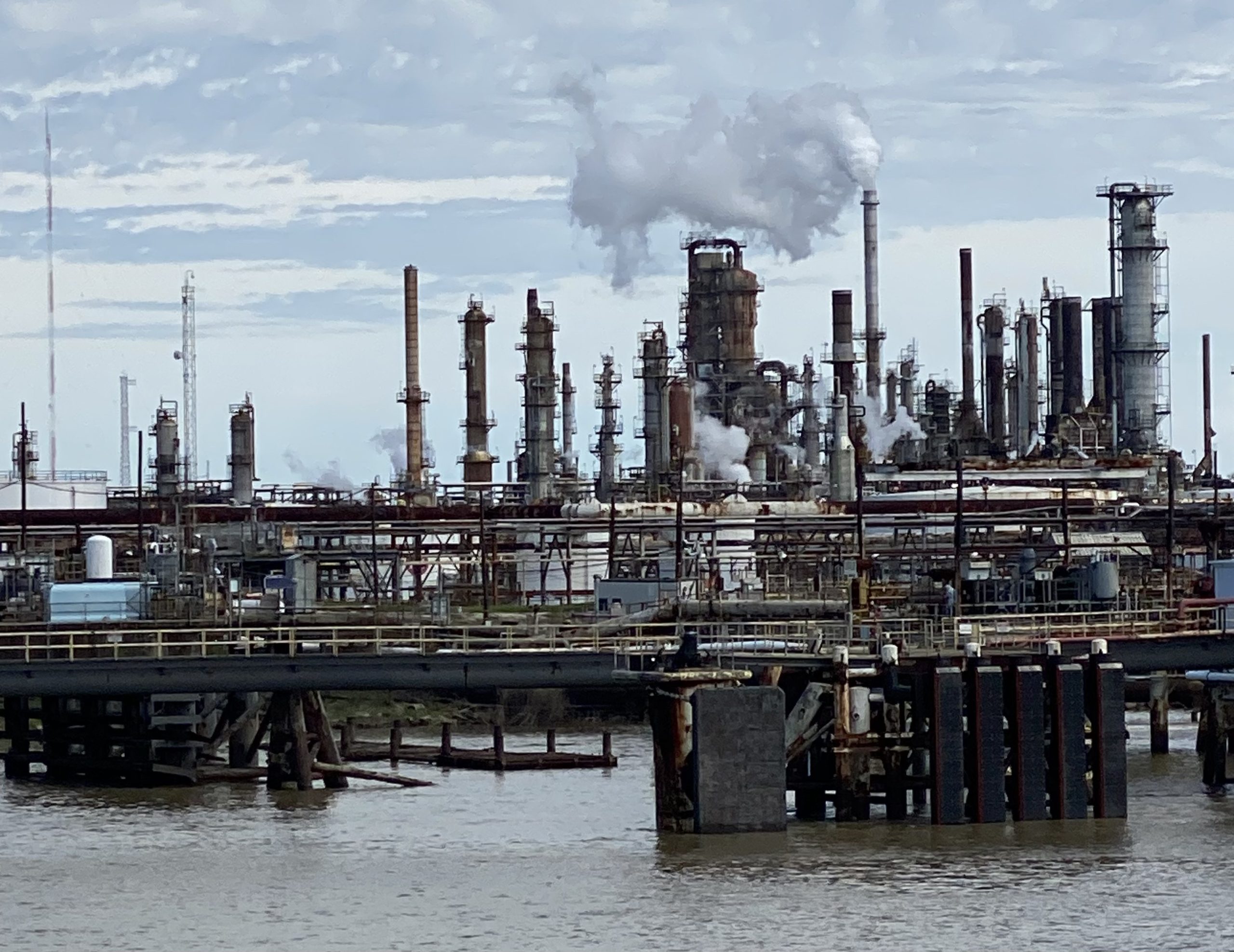
Air quality alert days predicted to soar from climate change
By the year 2100, Americans may need to spend a lot more time indoors to offset the risks of climate change-fueled air pollution, new research finds.
The number of unhealthy air quality days caused by fine-particle air pollution, also known as PM2.5, could quadruple across the nation in the next 80 years, according to the study, which was published Jan. 16 in the Proceedings of the National Academy of Sciences. The rise in air quality alert days would be steepest in the eastern United States, increasing by one month a year. Black populations and people in homes that are not well-sealed would be disproportionately affected.
Enacting policies that reduce emissions from outdoor pollutants, such as those from transportation, power plants and industry, could save the nation $5,400 per person a year in health costs, the study estimated. Achieving the same reduction in exposure by staying inside would require 142 more days in tightly sealed, well-ventilated buildings, at an average cost to the nation of $11,000 per person.
While reducing emissions that cause air pollution is good for all Americans, some population groups could especially benefit, a study published Jan. 17 in Nature Communications found.
U.S. air pollution emissions declined substantially overall from 1970 to 2010, but wide disparities occurred across that period. Counties with growing proportions of Hispanic and American Indian residents were more likely to experience increased ammonia air pollution from agriculture, for example, while counties with growing median income levels experienced less.
Lowering lead levels decreases blood pressure for American Indians
Reducing blood lead levels can lower blood pressure and protect long-term cardiovascular health, a new study among American Indian adults finds.
Researchers looked at data from tribal members living in Arizona, Oklahoma, North Dakota and South Dakota, finding a 33% drop in blood lead levels over a 10-year period. In study participants with the biggest lead decreases, blood pressure dropped as much as 55% — comparable to the effects of prescription medication.
Even people who had a small reduction in blood lead levels experienced a decrease in systolic blood pressure, according to the study, which was published Jan. 11 in the Journal of the American Heart Association.
Blood lead level reductions were also linked to decreases of a marker associated with heart failure.
Thanks to bans on leaded gasoline, paint and plumbing and other measures, blood lead levels have dropped for Americans over the past 50 years. American Indians tend to have higher exposures to metals than the general population, in part because of contaminated dust and water from abandoned mines. Other possible exposures for the tribal population include lead-based paint in older buildings and traditional food or medicine.
The research was an extension of the Strong Heart Study, a University of Oklahoma Health Sciences Center-led project that focuses on the cardiovascular health of American Indian adults.
Climate change could strand older adults along U.S. coasts
Rising sea levels could spur millions of younger people to move away from U.S. coastal areas in coming decades, leaving older adults behind, a new study predicts.
Between now and 2100, sea level rise fueled by climate change could drive 400,000 to 10 million people to relocate from the nation’s coasts, according to researchers with Florida State University and Climate Central. Those migrations, which are more likely to involve younger, more mobile workers and residents, could spur another 5.7 million to 53 million people to move away from the coasts as well.
As older people are less able to relocate, the median age in coastal communities could spike as much as 10 years, said the research, which was published in the Proceedings of the National Academy of Sciences. Similar patterns have occurred in the past: After Hurricane Maria devastated Puerto Rico in 2017, for example, many working-age adults left the island, raising the average age of the remaining population.
As more people leave U.S. coastal areas, professionals such as health workers would be drawn to the new areas of opportunity, leaving older residents with gaps in services, the researchers predicted.
The U.S. is already experiencing sea level rise, particularly along the Gulf of Mexico and its southeastern coasts. Sea levels along contiguous U.S. coastlines could rise as much as a foot by 2050, predicts NASA’s Sea Level Change Team.
As temperatures continue to climb from climate change around the world, — spurring food and water shortages, weather-related disasters and other dangers — more than 140 million people are expected to migrate in sub-Saharan Africa, South Asia and Latin America alone, the World Bank estimates.
Microplastics in natural fertilizer spread via wind
Natural fertilizer that is used to enhance the nation’s agricultural fields may be sharing more than just nutrients. A new study finds inhalable-sized microplastics in the product are being spread by wind.
The research, published Jan. 17 in Environmental Science & Technology Letters, focused on treated sewage sludge, which is processed into biosolids and used in U.S. crop production. About 2 million metric tons of biosolids — sourced from wastewater treatment plant material — are applied to fields each year, according to the U.S. Environmental Protection Agency.
Researchers found that small bits of plastic less than 5 millimeters long are easily picked up from the ground by the wind. Because the artificial particles are less dense than the organics in soil, breezes that might not be strong enough to kick up soil dust from the biosolids can still contain microplastics.
Over a three-month period, 84% of wind periods studied by the researchers were strong enough to pick up microplastics, but only 23% were strong enough to pick up soil dust. That means fields with biosolids may produce more emissions than previously modeled, the study said.
Microplastics can enter wastewater through sources such as clothes washing, road runoff and human and animal fecal matter. Microplastics blown from fields with biosolids can also carry pollutants, the researchers said.
Beyond crops, biosolids are also used in landfills, landscaping, forestry and land reclamation, such as former mining sites. More than 700 pollutants have been identified in biosolids, but according to EPA, their presence alone does not indicate that the products pose harm to the environment or human health.
The Watch is written by Michele Late, who has more than two decades of experience as a public-health journalist.