
A weekly roundup of public health news
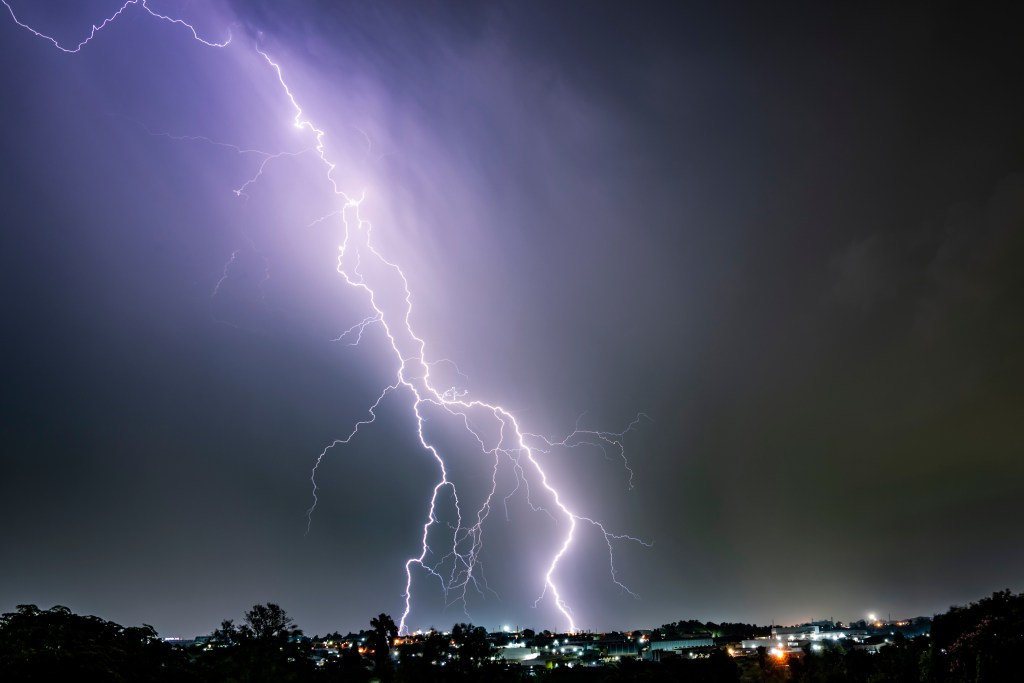
Lightning to spark more wildfires as heat worsen
Lightning, which is already a leading cause of U.S. wildfires, could trigger even more blazes in coming decades as the nation grows hotter and drier with climate change, a new study shows.
The western U.S. particularly will be impacted, with 98% of the region experiencing more high-risk days for lightning-sparked wildfires as soon as 2031, according to the study in Earth’s Future.
Lightning causes more than two-thirds of wildfires in the western U.S. By 2060, states most at risk for wildfires started by lightning — such as Oregon, Idaho and Montana — could experience up to 12 more lightning days each summer, driving even more fire activity, researchers said.
Climate change is making lightning-caused wildfires more frequent and intense. Hotter conditions are drying out forests and grasslands, while stronger storms cause more lightning. Longer fire seasons and dry vegetation are also making it easier for fires to start and spread.
Nearly 9 million acres of land and 4,500 structures were burned by wildfires in the U.S. in 2024, according to the National Interagency Fire Center. At least 6,900 of the U.S. wildfires that burned that year were linked to lightning.
Health care workforce shortage looms in U.S.
The U.S. will have a shortage of nearly 600,000 key health care practitioners by 2032, impacting access to care across the country, a new report says.
Released Sept. 16 by Georgetown University’s Center on Education and the Workforce, the report found 18.4 million workers with postsecondary education are going to retire in the next eight years across all U.S. occupations, outpacing the number of qualified younger workers in the job market by about 4.6 million. At the same time, changes to the U.S. population and economy will create a need for at least 685,000 more skilled, educated workers.
That gap will translate to a shortage of 189,000 physicians, 42,000 licensed practical nurses and 362,000 nurse practitioners and registered nurses. The physician shortage, which will be heaviest in the primary care field, will be worse in the South and West, the report said.
High turnover rates and burnout are already contributing to shortages in the health care workforce. A new Harris Poll survey, released Sept. 15, found fewer than a third of workers feel valued by their employers and many feel under supported. More than half of workers in the poll — which included physicians, nurses and nurse practitioners — said they will look for a new job, interview for another position or switch to a new role in the next year.
Texans uninsurance rates expected to rise with subsidy cuts
As many as 1.45 million Texans insured through health insurance marketplace plans could lose coverage if federal tax subsidies expire in December as planned.
That estimate comes from a new report by researchers with Texas A&M’s Bush School of Government and Public Service. They predicted that as many as 800,000 of those people could become uninsured, worsening health in the state and straining hospitals.
Texas ranks first for number of federal health insurance marketplace enrollees by state, with about 4 million residents purchasing coverage during last year’s open enrollment period. With 16% of all U.S. enrollees, Texas has nearly twice as many marketplace users as Florida, the second-leading state.
Neither Texas nor Florida has expanded Medicaid eligibility for their residents, meaning middle-income people who lose marketplace insurance may struggle to find coverage they can afford. Without the federal subsidies, premiums could more than double, according to the report, which was funded by Episcopal Health Foundation.
Some regions of Texas will suffer more than others. While only about 11% of residents in the state’s urban areas are enrolled in marketplace plans, 40% or more of residents in a dozen of the state’s more rural countries are covered by the plans. In West Texas’ Hudspeth County, 52% of residents are enrolled in marketplace plans, the report said.
Nationally, as many as 4 million Americans could become uninsured if the federal subsidies come to an end, the Congressional Budget Office has projected. Young adults and Black and Hispanic populations, who are more likely to have lower incomes and to rely on the marketplace, would be at higher risk of becoming uninsured.
Other recent public health news of note includes:
• Children with leukemia are more likely to die if they were exposed to pesticides while in utero, according to recent findings in Cancers. Young patients who were exposed to any kind of pesticide during their mothers’ pregnancy had a 60% higher risk of death within five years, researchers found. Those who were exposed to rodenticides, many of which can interfere with blood clotting, had a 91% higher likelihood of dying.
• Higher temperatures from climate change could cause dengue cases to rise as much as 76% across much of the Americas by 2050, says new research in the Proceedings of the National Academy of Sciences. Several hundred locally acquired dengue cases have been reported in the continental U.S. in the past decade, including warm-weather states such as Texas, Florida and California.
• Texas’ total abortion ban that took effect in 2021 increased health dangers for women who experienced a pregnancy loss, a new study in the American Journal of Public Health reports. Researchers found the number of women who received blood transfusions after a pregnancy loss — an indicator of severity — was 15% higher than expected following the ban. Another new analysis from the National Bureau of Economic Research examined a 2013 Texas abortion ban, linking the measure to increased poverty, including evictions and mortgage delinquency, and higher rates of financially motivated crime, such as theft and burglary.
• Wildfires in the western U.S. could worsen water shortages in the region, a new study in Science Advances, says. As wildfires grow in severity and frequency with climate change, winter snow pack is melting earlier, shrinking the water supplies the region relies on during its warm, dry summer months.
The Watch is written by Michele Late, who has more than two decades of experience as a public health journalist.