

This story was updated February 5, 2025.
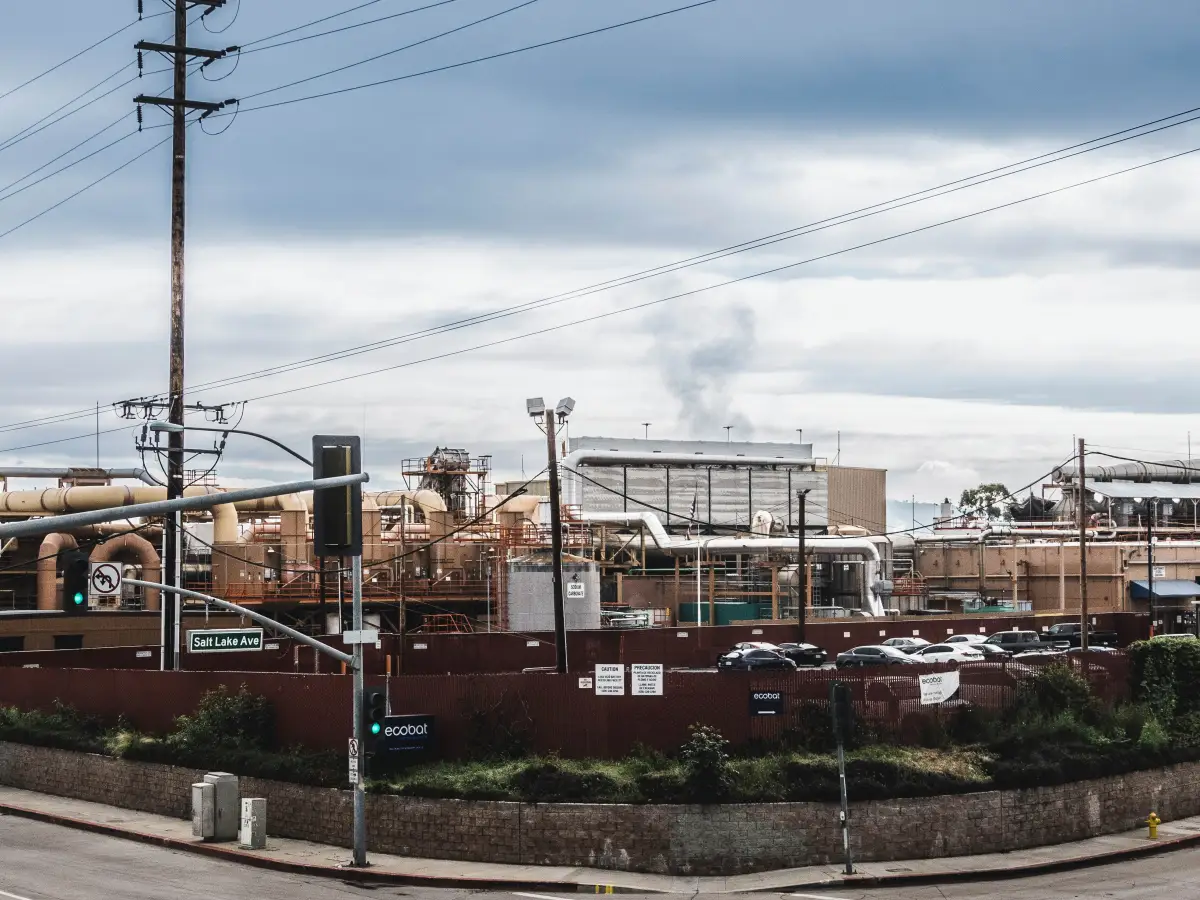
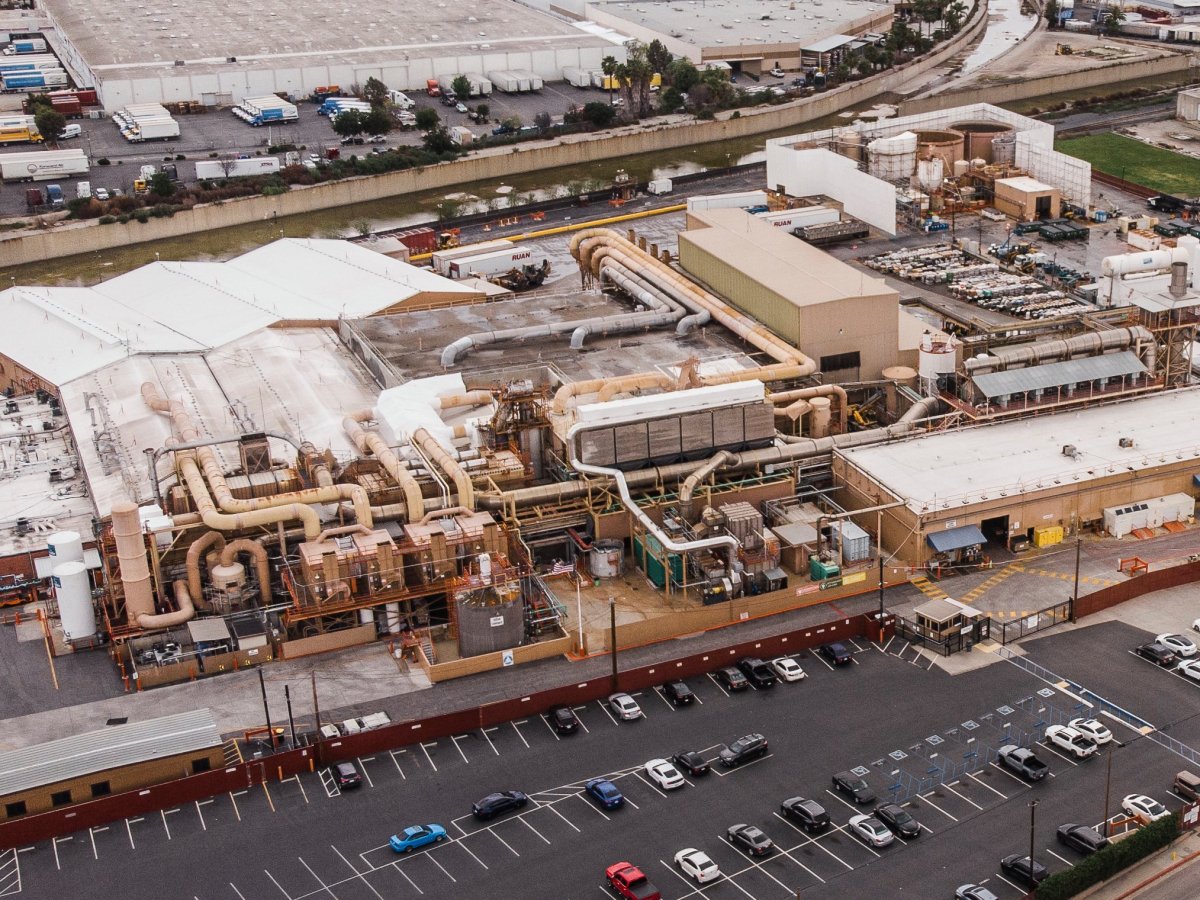
California’s only lead battery recycling facility has admitted violating its hazardous waste permit and related state laws, caused by tanks the company allowed to become corroded, including one leaking toxic sludge, according to a consent order made public Tuesday by the state.
Ecobat Resources California, formerly known as Quemetco, will pay a fine of $315,000 as a result of the legally binding order. Half will be paid as an administrative penalty to the state’s Department of Toxic Substances Control, and half to the nonprofit California School-Based Health Alliance for a supplemental environmental project in schools near the facility.
The penalties come as hazardous waste regulators at DTSC are considering whether to renew the lead smelter’s operating permit and after Public Health Watch detailed more than two dozen violations and other concerns at the facility in the City of Industry east of Los Angeles County.
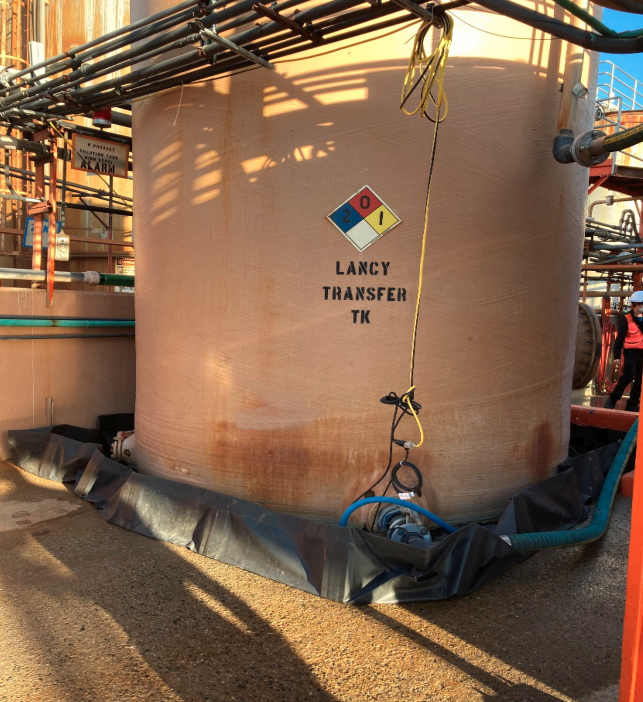
Ecobat recycles 600 tons of lead batteries and scrap a day, a complex process that relies on and generates liquid befouled with acids and toxins. In October, as part of a series exploring ongoing issues and how a permit might address them, Public Health Watch reported on violations alleged since Ecobat’s original permit expired in 2015, including “for storing waste in an unauthorized tank and for letting nine more tanks become deteriorated and corroded.”
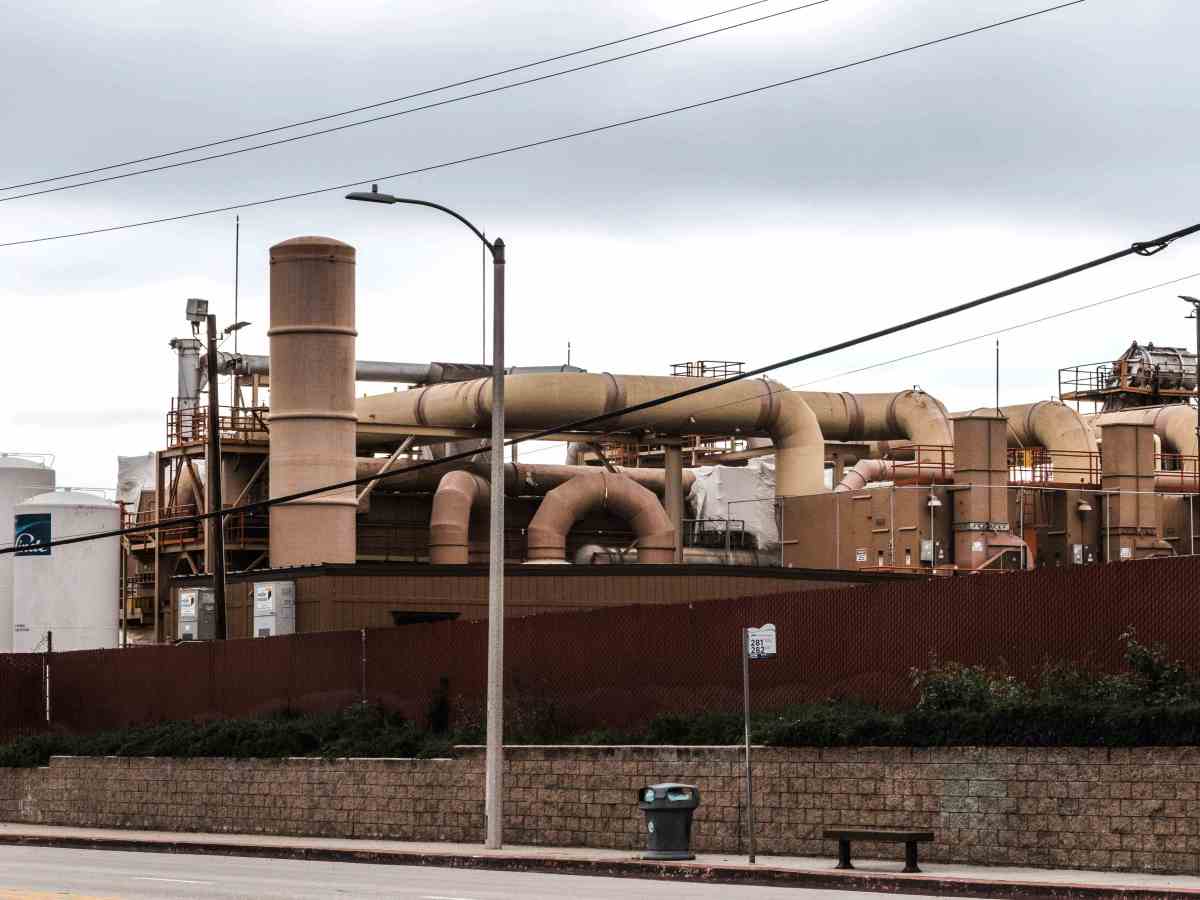
The tank violations, accrued in 2019 and 2020, were described by the DTSC’s own inspectors. A report from Dec. 14, 2020, criticizes Ecobat’s logs for storage tanks as incomplete and describes three inches of sludge, containing lead above permitted levels, in the bottom of a 7×4-foot tank.

Ecobat issued a statement Tuesday repeating its earlier assertions to PHW that none of the violations posed a risk to the community.
“DTSC allegations relate to four technical aspects of Ecobat’s operations that DTSC alleged failed to comply with applicable regulatory requirements,” wrote Dan Kramer, a spokesman for the company, in a statement sent to PHW. “None of these issues relate to any release of hazardous substances from the facility, and in each instance, while Ecobat did not fully agree with DTSC’s assessment, Ecobat took prompt corrective action to address DTSC’s concerns, including the implementation of enhanced training to ensure that issues like this do not arise in the future.”
The statement notes that Ecobat has not received a Class 1 violation from the DTSC since 2020.
“Ecobat is proud of its continued focus on compliance,” he continued. “We work to comply with all applicable regulations, and we endeavor to resolve any identified issues as promptly as possible.”
The consent order requires that Ecobat stop challenging tank-related violations, that the company pay financial penalties, and that the company follow state hazardous waste law.
“DTSC has worked diligently to require Ecobat to resolve the deficiencies identified in the statement of violations,” said Alison Wescott, a spokeswoman for DTSC, who pointed out that much of the fine focuses on a community project. “Resolving the violations required lengthy technical discussions, which are all reflected in the consent order.”
Under state regulation, companies that sign legal settlements with the DTSC can divert penalty money to supplemental environmental projects, certified by the state to “reduce the impact of hazardous waste, hazardous materials, and hazardous substances on California’s environment and communities.”
Ecobat will write a check for $157,500 to the California School-Based Health Alliance, an Oakland-based organization that “aims to improve the health and academic success of children and youth by advancing health services in schools.” Currently, the alliance has no programs in Hacienda Heights or North Whittier, two communities close to Ecobat. It has worked in the Bassett Unified School District, covering a portion of Avocado Heights, for the past year, according to executive director Sergio Morales.
Wescott said the programs can help improve living conditions in those areas.
“Many Californians live with multiple pollution sources, and they help improve environmental health and economic vitality,” Wescott said.
Like other smelters and hazardous waste generators in California, Ecobat operated for many years without a permit. The DTSC issued the facility’s first one, for a period of 10 years, in 2005. As the permit was expiring, the only other lead battery smelter west of the Rockies, Exide, declared bankruptcy.
At the same time, the company, then known as Quemetco, sought to renew the permit for the smelter in the City of Industry. Regulators repeatedly found the application deficient, and it was not finalized until 2023. Along the way, the state cited the smelter several times for violations.
The Clean Air Coalition of North Whittier and Avocado Heights, represented by Earthjustice, has criticized both the company and regulators for failing to enforce California’s hazardous waste standards, which are authorized by the federal Resource Conservation and Recovery Act, and are in some ways more stringent than that law.
“This is a surprise. No one from DTSC informed us of this consent order,” said Rebecca Overmyer-Velázquez, a coordinator with the Clean Air Coalition.
A lawyer for the group, Earthjustice’s Angela Johnson Meszaros, called the order “performative compliance.”
Last summer, after public workshops, hazardous waste regulators released a draft permit for Ecobat, opening public comment for several months to address extensive documentation. If approved, the draft permit has a term of five years, not 10, over the company’s objections.
Katie Butler, now the director of the DTSC, told PHW last fall that historic violations would not disqualify the smelter from obtaining a renewed permit, and that her confidence in Ecobat’s future ability to meet permit conditions was based on its record of returning to compliance after violations have been found.
“Some facilities will return to compliance quickly,” Butler said. “Others will take a longer time, and that matters.”
Earthjustice cited PHW’s reporting in its public comments to the state during the permit process.
“Ecobat has a long, persistent, and ongoing record of failing to comply with permit conditions that are meant to protect human health and the environment,” wrote Earthjustice. “DTSC has not provided a reasoned basis to either ignore Ecobat’s past behavior or believe that Ecobat’s future behavior will be different from its past and current behavior.”