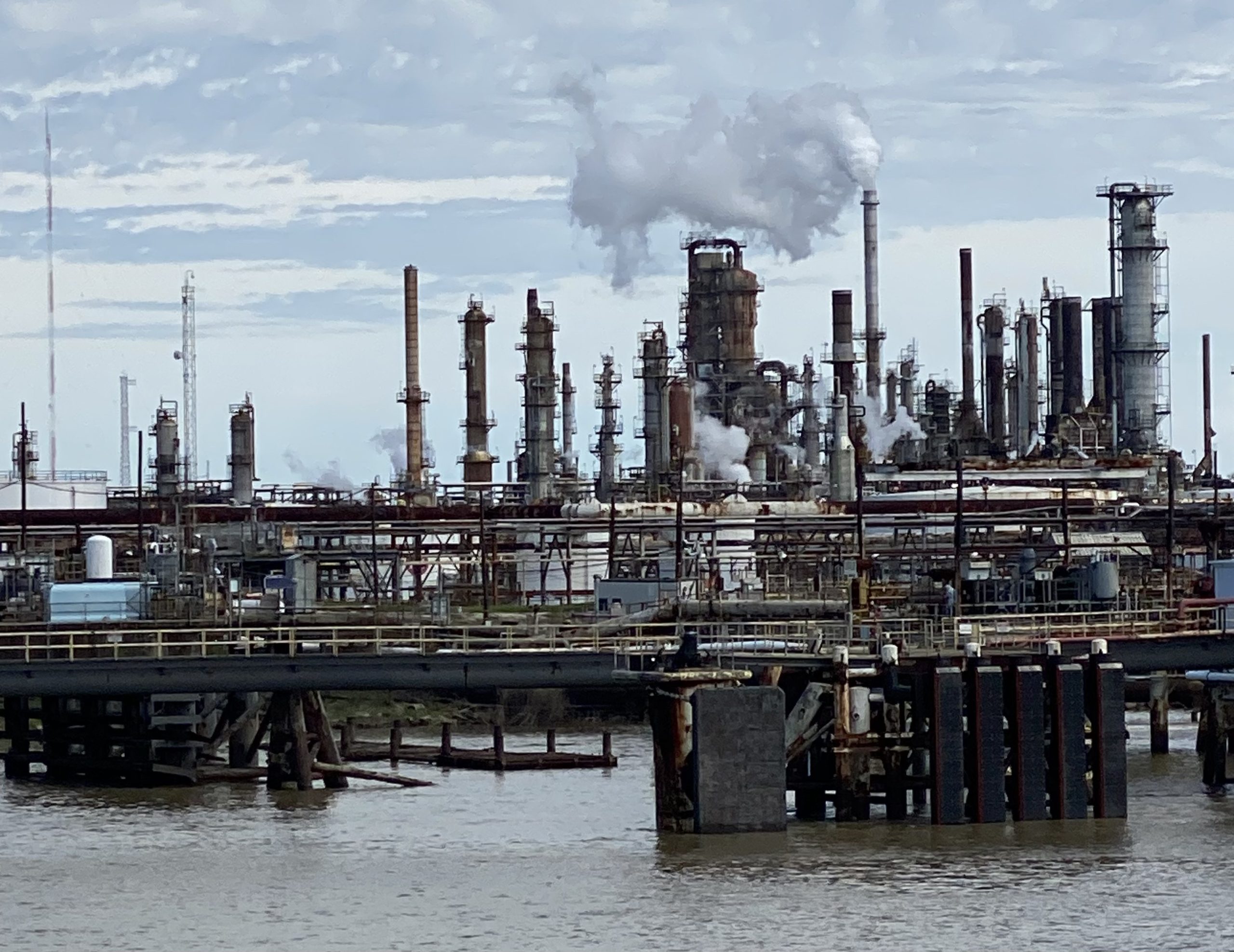
LOS ANGELES COUNTY, California — After repeated delays, California regulators have unveiled more stringent requirements for Ecobat, the state’s only operating lead battery recycling plant. A newly released draft permit for the Los Angeles County smelter includes expanded air monitoring and soil testing beyond the facility’s fenceline – something its neighbors have demanded since its original permit expired eight years ago.
Speaking to a state oversight board on Wednesday, after the draft permit was released, Department of Toxic Substances Control Director Meredith Williams said the “strong” new requirements Ecobat must meet reflect the department’s strategy to “enforce, enforce, enforce” hazardous waste laws.
“It’s a very old permit,” Williams said. “So there were a lot of opportunities to strengthen [it].”
“The permit has to be clear,” she added. “If the permit is not clear, the inspectors don’t know what to inspect.”
Williams also highlighted a “nascent working group,” convened around Ecobat, which will include local elected officials, neighborhood advocacy groups and other experts. The plant is located in City of Industry, a city made up almost entirely of businesses about 19 miles east of downtown Los Angeles.

Rebecca Overmyer-Velázquez, a coordinator with Clean Air Coalition, an advocacy group, questioned why the Department of Toxic Substances Control, or DTSC, isn’t requiring Ecobat to make improvements before the department grants the company a permit. One recurring issue is a cracked floor in the plant’s containment area, where lead, arsenic and other chemicals could leak. Repairing it will require Ecobat to cease operations for a month.
“It’s backwards,” said Overmyer-Velázquez, whose group represents neighbors in North Whittier and Avocado Heights. “You don’t get a permit until you fix the problems.
“I feel like I am talking to my 14-year-old daughter, saying, ‘Do what you’re supposed to do, and you haven’t done it.’”
Overmyer-Velázquez said she doesn’t know anything about the working group Williams mentioned.
“It doesn’t inspire confidence,” Overmyer-Velázquez said.
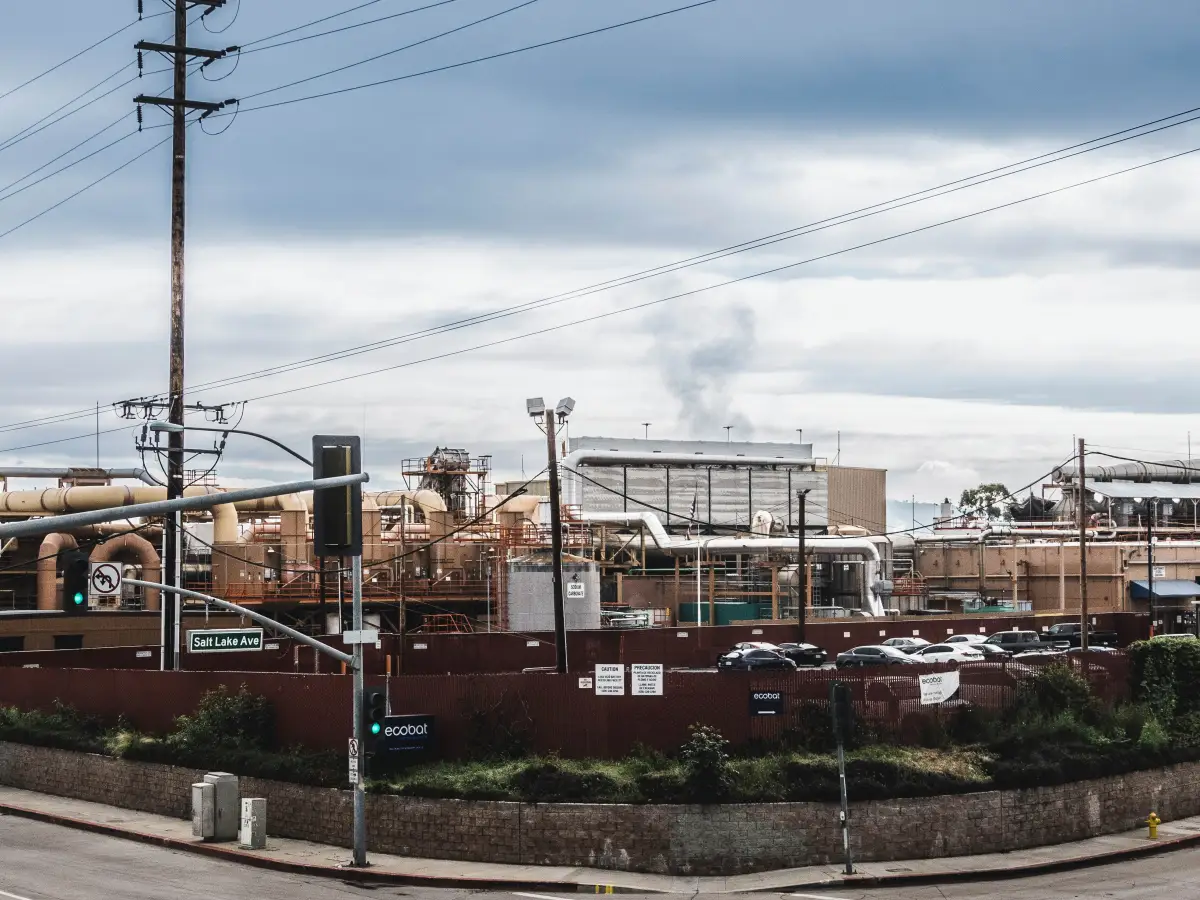
Lead is a neurotoxin; people who breathe airborne particles of lead or accidentally put it in their mouths — especially children — can suffer nerve disorders and developmental problems. Smelting itself can send other toxic substances into the air and soil around a facility, including arsenic, hexavalent chromium and formaldehyde.
Katie Butler, deputy director of the state’s hazardous waste management program, said invitations are still going out for the working group, which is intended to be a “productive space” for communication among regulators and the public.
She added that regulators lacked authority to order repairs to the containment floor unless they could prove it was an imminent threat or endangerment to health or the environment.
“We were in a little bit of a chicken-and-egg situation,” Butler said.
Ecobat said in a press release that the company “welcomed” the new permit. In a written statement to Public Health Watch, company spokesman Dan Kramer said Ecobat had been “imploring” regulators to move forward with the draft permit. “We remain eager to roll out” environmental improvements, Kramer said, including repairs to two storage areas, known as the batch house and the containment house.
Materials that regulators released with the draft permit acknowledge the facility’s history of problems. During a dozen inspections over a decade, DTSC inspectors tallied at least 15 of the most serious, “class one” violations and gave Ecobat a “conditionally acceptable” status for operating. The company has also racked up minor violations and has run afoul of county, water, worker safety and air regulations.
Most recently, the South Coast Air Quality Management District announced that Ecobat failed to collect valid lead and arsenic monitoring samples last year, as a smelter-specific local rule requires. And in 2022, the company failed to maintain negative pressure at the smelter, a control essential to limit toxic emissions. It’s not clear how long those conditions persisted, or how the health of the facility’s neighbors may have been affected by the violations.
Work toward soil testing in the neighborhoods beyond Ecobat’s fenceline could begin as soon as early August. On Monday, regulators sent a letter to Ecobat, requesting meetings and an investigative work plan for soil testing a half-mile to three-quarters of a mile away from the facility.
Ecobat earlier had paid, under order, for soil tests in a smaller area, with a second phase of work in 2020 and 2021.
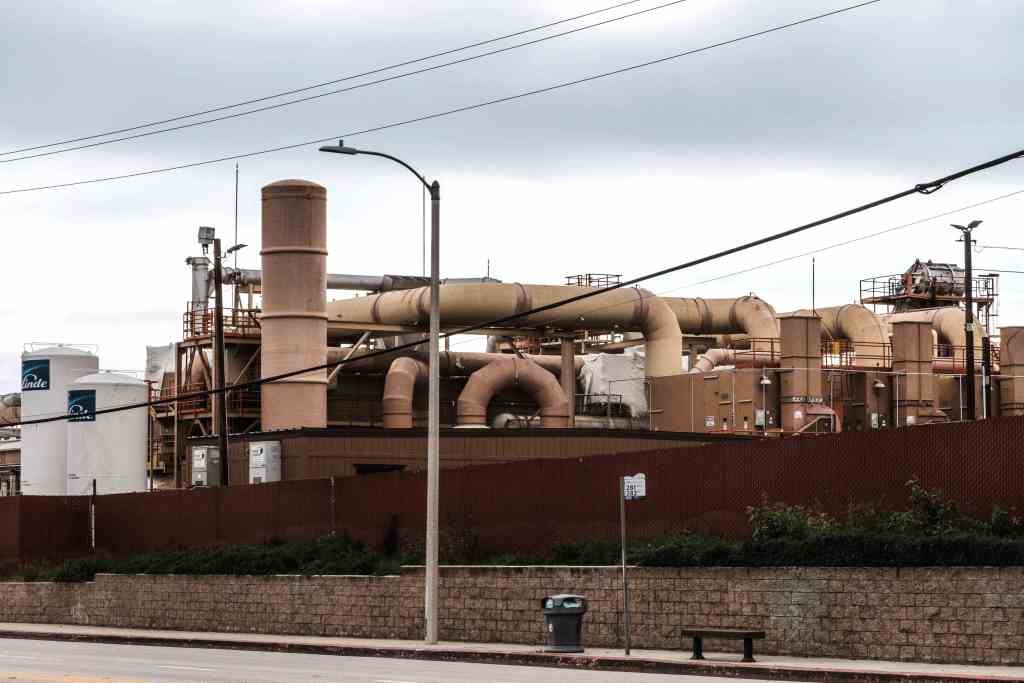
According to Ecobat spokesman Kramer, “the extensive air and soil monitoring that we’ve done and continue doing under the supervision of DTSC/AQMD all support the conclusion that Ecobat’s … operations have not impacted the community.”
But experts at DTSC now disagree with that assertion, according to a memo written July 12. Although regulators accepted the earlier soil report as final, DTSC’s site mitigation and restoration program has concluded that Ecobat’s hazardous waste has contributed to contamination within a quarter mile of the plant, and likely farther away.
The draft permit would increase the amount of money Ecobat must hold in reserve to address environmental problems in times of trouble. The amount reserved in case the facility closes is now $25.3 million, more than triple the amount required when the permit was last issued in 2005. Ecobat must set aside $21.8 million in case it needs to take corrective action on-site.
Lead remediation in California has proven to be an expensive process, with costs 20 times those amounts, or higher, at another shuttered smelter.
Exide, a battery recycling facility in Vernon, south of downtown Los Angeles, closed abruptly in 2015. A bankruptcy court permitted the company to abandon the property. Estimates for cleaning up lead contamination in residential yards, parkways, schools and playgrounds nearby have ballooned to $750 million. While the U.S. Environmental Protection Agency is considering listing Exide as a Superfund site related to the presence of the solvent trichloroethylene, or TCE, in groundwater, the lead contamination costs are being borne by California.
The public can comment on Ecobat’s draft permit through November 18. Williams said regulators will accept comments by mail, in person, by email or by phone – “in any format.” DTSC also will hold virtual and in-person meetings for the public in September and October.
Neighbors who have long criticized both Ecobat’s operations and regulators’ oversight of the plant say they asked for the lengthy comment period so they would have time to study the highly technical, 131-page draft operating permit, the facility’s compliance history, a post-closure permit, a human health risk assessment for the facility and fact sheets explaining the basis for permit choices.
Overmyer-Velázquez and the Clean Air Coalition’s lawyer, Angela Johnson Meszaros, said they were frustrated that DTSC didn’t notify them before the draft permit was released.
“We’ve been working with them eight years, and the community learns about it by reading the notice in the newspaper. Really?” Johnson Meszaros said. “People are literally breathing hazardous materials and they are in their homes and yards and schools and bodies. And they just deserve better.”
DTSC’s Katie Butler said engaging with the community is “a huge priority” for her team. “And I think the evidence is starting to speak for itself.”
According to Envirostor, DTSC’s data management system, Ecobat’s draft permit had been expected last year, and at various points, in February, April and May of this year, before it was released.
On July 11, a day after Envirostor said the permit would come out, DTSC told Public Health Watch that the permit was expected “by the end of the month/early next month.” Then, on Monday, a DTSC spokeswoman told Public Health Watch the permit was coming out the next day.
The agency attributed the delays and confusion to the complexity of the permitting process.
“The longer a facility has been operating on a continued permit, the more complex and time-intensive it is to review a permit renewal application,” a DTSC spokeswoman said in a written response to questions. She called the draft permit a “complete overhaul.”
Investigating the facility’s legacy pollution, and the need to communicate with people living nearby, also complicated matters, according to DTSC.
The statement acknowledged that similar circumstances have slowed the permitting process for another hazardous waste facility in Los Angeles County: Phibro-Tech, whose last permit was approved by DTSC 33 years ago.
Located in Santa Fe Springs, Phibro-Tech is a chemical manufacturing facility that takes in wastewater laden with toxic chemicals and heavy metals. The company reclaims these materials, including chemicals used for etching in electronics manufacturing, and also handles and disposes of the hazardous waste. In every year since 1999, the company has had an enforcement action, a workplace injury or a regulatory violation, such as excess hydrochloric acid or ammonia spilled into the air.
In the nearby Latino neighborhood of Los Nietos, Jaime Sanchez and his neighbors had expected to see a draft permit for Phibro-Tech last week. He learned by email that the permit would be delayed, again, this time by two months.
Sanchez, who is 69 and retired, says delays add to the “extreme hardship” residents of vulnerable communities face as they try to keep up with technical information and changing plans.
In May, the Santa Fe Springs fire department arrived at the Phibro-Tech facility there after a technician spilled 10 pounds of nitric acid into a tank. DTSC investigated some days later, and inspectors registered a serious violation for the incident.
Reached by phone, a company operator said that Phibro-Tech’s environmental expert was on vacation this week, and no one else was available for comment before publication of this story.
This month, the Clean Air Coalition and Neighbors Against Phibro-Tech have staged weekend rallies at the company’s facilities in City of Industry and Santa Fe Springs.
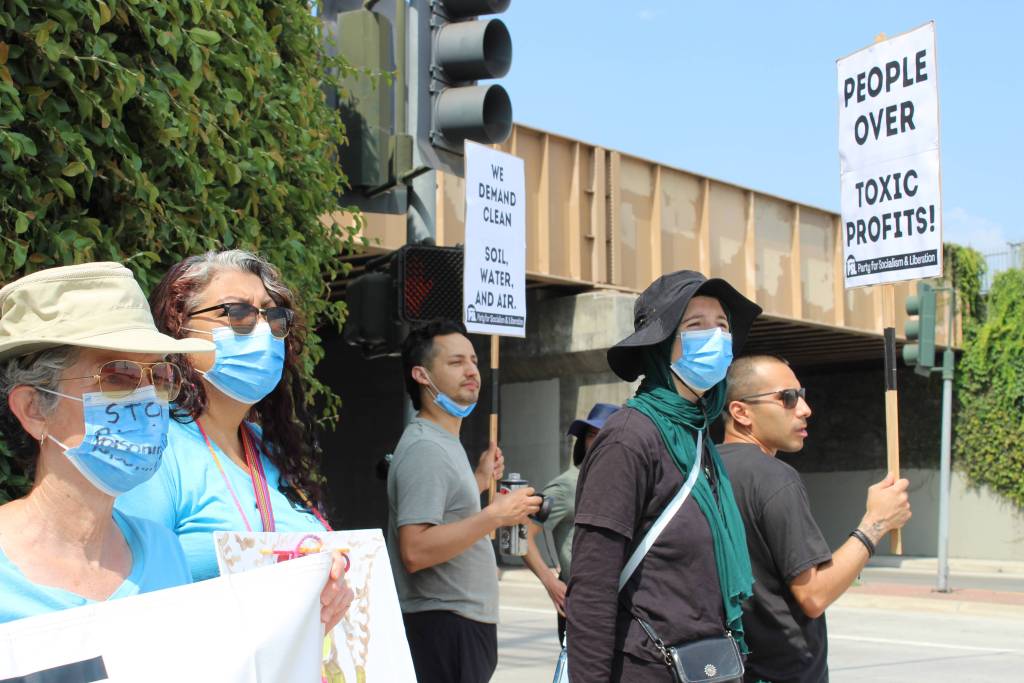
Sanchez says the protests are a way for communities to stick together.
“There’s no shortage of examples where DTSC has failed to do what’s required by their own regulations,” he said. “We’ve called them on it repeatedly, to no avail.”
DTSC “is conducting further review to determine all appropriate mitigation measures to prevent future accidental releases” at the Phibro-Tech facilities, according to a statement. Regulators also are considering adding more permit conditions “specifically related to process safety management and other measures that would prevent future incidents.”
About the permit delays at both Phibro-Tech and Ecobat, DTSC said: “We understand the frustration.”
Regulators “are going to continue to learn” to do better, the department’s Katie Butler said.
In Los Nietos, Jaime Sanchez says some regulators have reached out more lately, especially Butler. But he finds others unsympathetic to his concerns.
“Most of these facilities are located in disadvantaged communities, and this is a very common theme,” Sanchez said. “In our opinion, it’s not a matter of consequence. It’s a matter of design.”