
The Smelter Debate
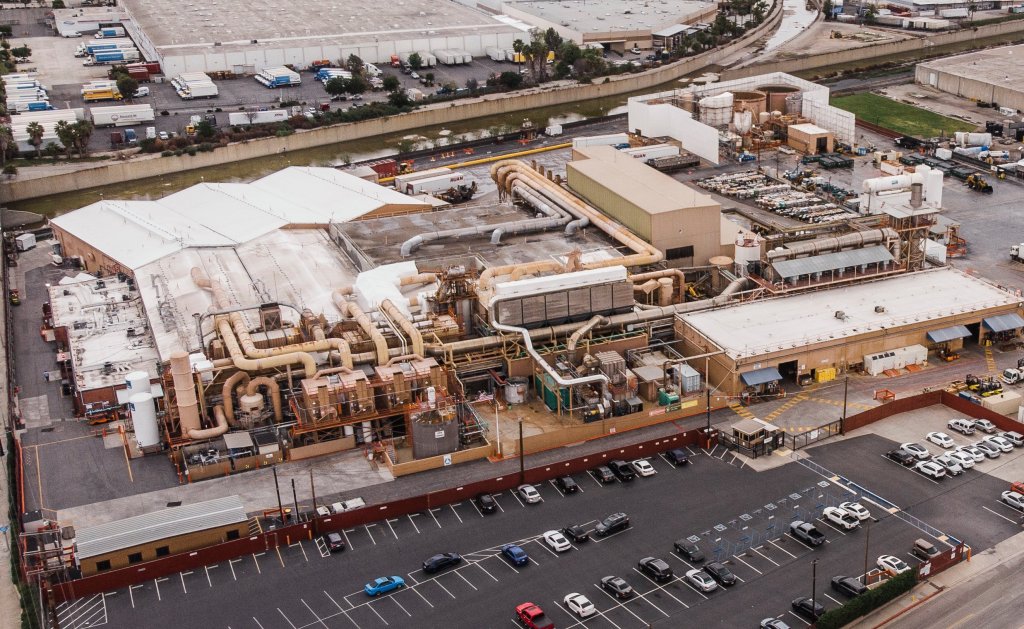
California regulators have invited public comment on a long-awaited draft permit for the state’s only lead battery recycling facility. Residents near the Ecobat smelter in Los Angeles County have complained for years about uneven regulatory oversight and legacy lead pollution at the plant. This series examines key aspects of the permit and the permitting process.
Offsite Concentrations of Lead in Soil

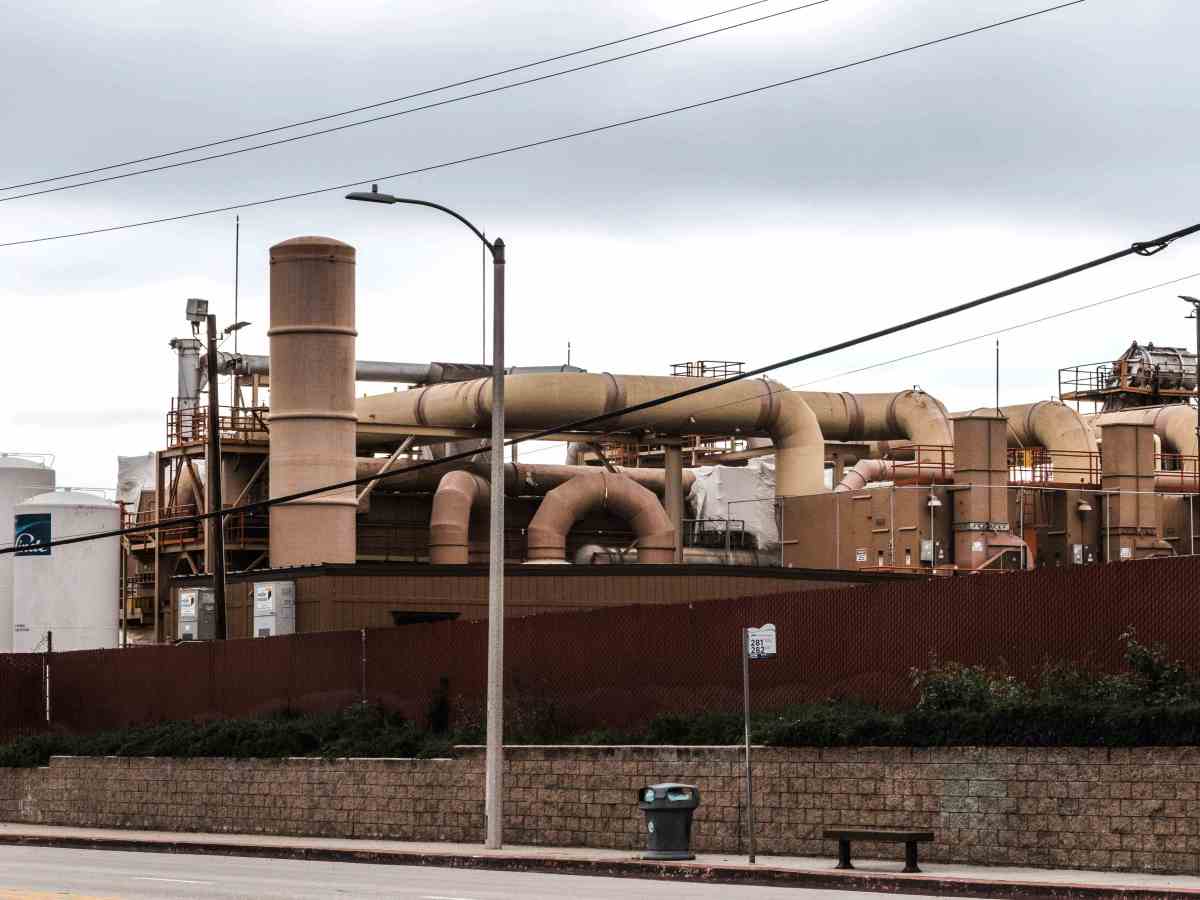
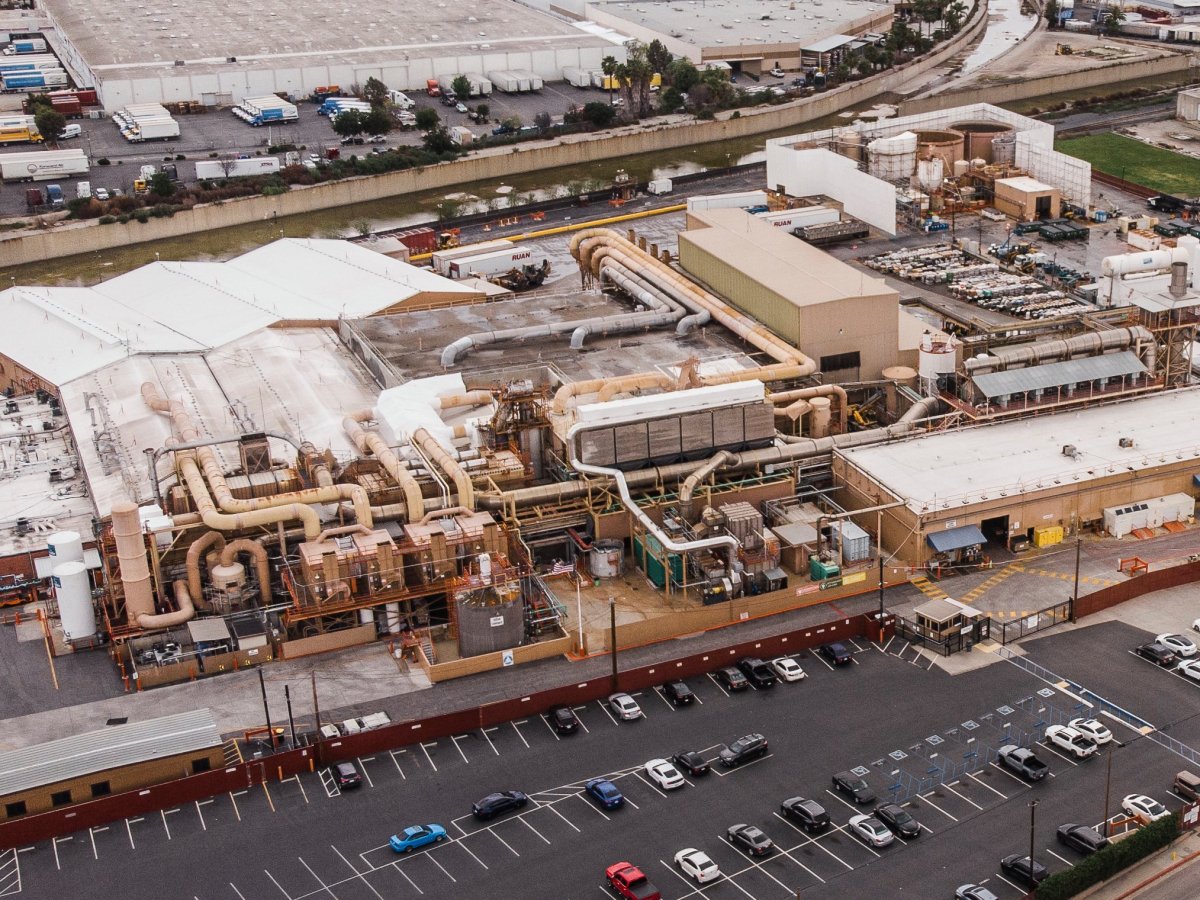
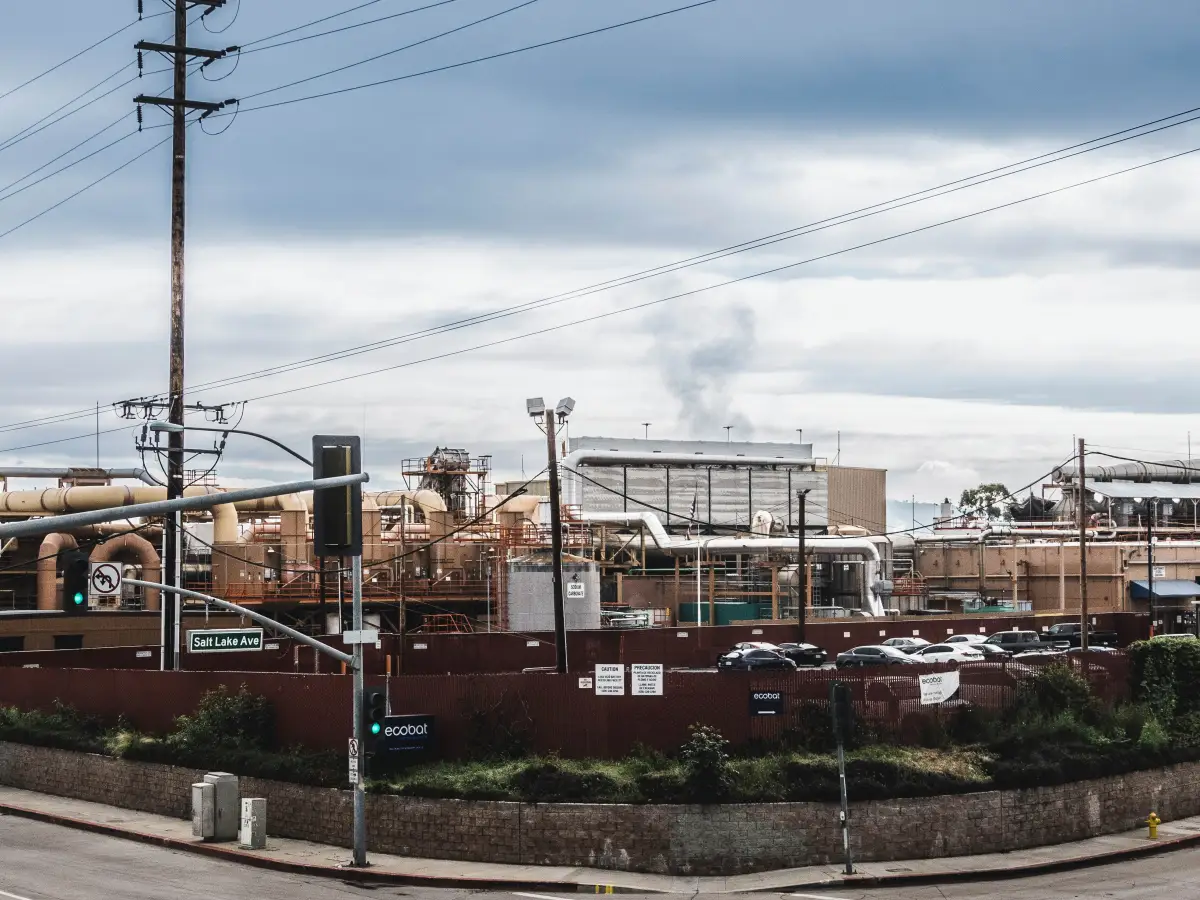
About the only thing regulators, community groups and Ecobat agree on when it comes to lead pollution in the City of Industry is that the smelter generated lots of it over the years: Thousands of pounds from the stacks annually, reported to the federal government, then hundreds, then 26 pounds or fewer each year since 2009.
Where all that lead ended up and whether a smelter operating since 1959 can be held responsible for any of it are open questions.
Katie Butler, director of the California Department of Toxic Substances Control, said regulators aim to change that with Ecobat’s draft hazardous waste permit – on which public comment closes November 18 – and a potential investigation into lead that landed beyond its perimeter.
“Practically speaking, it’s like, of course, there’s probably some impact,” Butler said. “After several investigations, we’re still not able to prove that with the soil data.”
But the company has always rejected responsibility for off-site contamination.
“Ecobat’s operations have not impacted soil” in neighborhoods beyond the plant’s fenceline, company spokesman Dan Kramer wrote in response to questions from Public Health Watch. After “nearly a decade of voluntarily investigating soil conditions in the surrounding community,” he continued, “the data simply does not demonstrate any impacts from Ecobat’s operations to residential properties.”
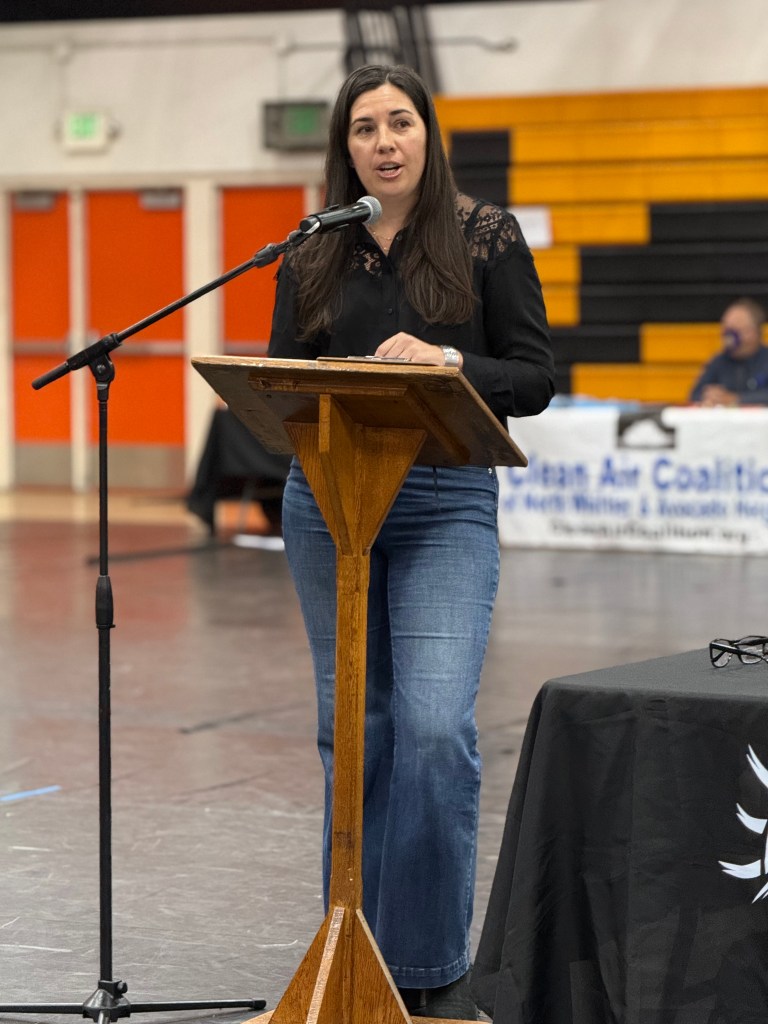
For Butler, soil-sampling is an issue “near and dear to [her] heart.” An epidemiologist, she worked for Los Angeles County’s health department before becoming the state’s top hazardous waste regulator. When Ecobat’s predecessor, Quemetco, was in charge of the site, she helped educate nearby residents on the hazards of lead.
“When you have inconclusive results like this, it can cause a lot of environmental stress because there’s so much unknown for people who are living nearby,” Butler said.
DTSC’s permit conditions and a soil investigation may not reduce that stress. Ecobat has disputed the scope, methodology and significance of soil testing. The company argues that an array of other sources, among them aviation fuel, put lead in the ground. The standoff has delayed a public accounting demanded by community activists for decades.
Disputes and Pushback On Soil Sampling
California’s screening levels for lead, a brain-damaging metal, have long been stricter than federal standards. Where there’s more than 80 parts per million of lead in soil near a house, or 500 parts per million of lead in soil near commercial and industrial properties, state regulators will do further study and consider requiring cleanups or other protective measures.
Beyond Ecobat’s fenceline, DTSC has investigated – slowly.
In 1992, a state-funded search for soil contamination within a mile of the facility found that 13 of 42 samples exceeded the present-day screening standard for commercial properties. Scientists found lead at 660 parts per million in the soil outside at least one house. But it was more than two decades before sampling happened outside the facility again. (In 2015, a DTSC official said it was hard to “piece together” why.)
In 2016, regulators requested that Ecobat investigate possible lead contamination within a quarter-mile of the smelter at the company’s expense. Company consultants sampled soil at dozens of commercial properties and hundreds of residential properties, finding as much as 5,260 parts per million of lead in soil. The company’s lawyers claimed the results demonstrated a “lack of impact” offsite. Regulators rejected that conclusion, writing that the sampling was “inadequate.”
With the company unwilling to investigate further, DTSC issued an enforcement order, directing expanded testing in 2018. Using a statewide air modeling tool, regulators said that lead pollution might have traveled as far as 1.6 miles away from the facility. Ecobat told Public Health Watch that the model “contained many significant errors that rendered its results unreliable.” Again the company objected to the breadth of the proposed testing, to the methods that would be used, and to the justification for it.

Regulators later dismissed the order – it’s not clear why – instead negotiating a second request for soil sampling in 2021, along transect lines poking out into the community. Earthjustice, a public-interest law firm representing the Clean Air Coalition of North Whittier and Avocado Heights, consulted an expert who warned that the sampling plan “lack[ed] statistical power” and was “insufficient to achieve its stated objectives.” The company’s expert disagreed.
Once again, Ecobat asserted the results demonstrated that its operations had not deposited lead in surrounding neighborhoods. DTSC says it disagreed, but three years later is still evaluating the final report submitted by Ecobat and its consultants.
Another Request for a Test, Backed by a Permit
Regulators now say that Ecobat may have spewed lead pollution as much as three-quarters of a mile away from the smelter. DTSC has again asked for an investigation, seeking tests at 14 areas between half a mile and three quarters of a mile outside Ecobat.
The company points out that the department has issued not an order, but a request – one it has not assented to. Ecobat, spokesman Kramer said, is engaged in “technical discussions” with the state.
14 Recommended Sampling Areas

Ecobat also objects to the draft permit, which would require the company to test for lead and other heavy metals on its property and at three spots immediately beyond the fenceline. The company says this requirement “is based on a profoundly flawed analysis of the data.”
“I don’t know of any responsible party who will volunteer to spend money and do investigation,” said Mehdi Bettahar, an assistant director for DTSC, who oversees the site mitigation and restoration program. “That for us is a normal process.”
Nevertheless, Bettahar said, “I am optimistic that we will get to an agreement, that an investigation will happen, and it will reach the area that we have highlighted in our memo.”
Sampling efforts are part of DTSC’s enforcement strategy, which director Butler says will rest on multiple authorities, woven together into the draft permit.
“We have a critical window of time right now with the permit decision,” Butler said. “That provides us additional authority to require the soil investigation to be done in a way that’s going to be most effective in getting some answers.”
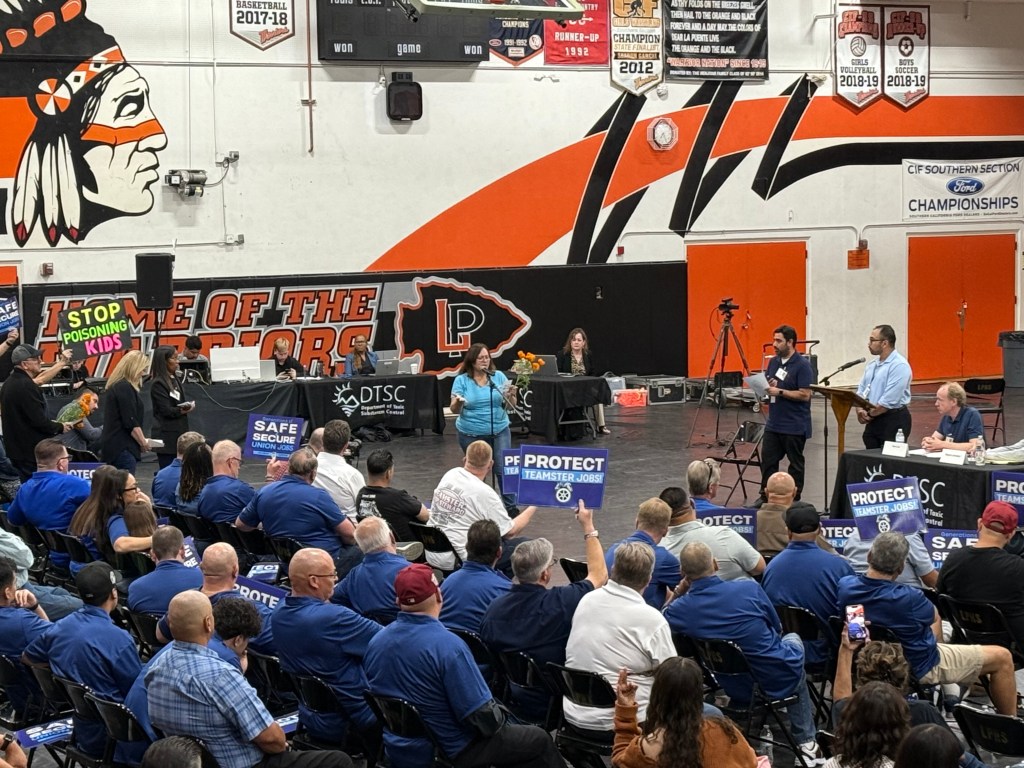
The draft permit contains a requirement to sample soil around Ecobat’s perimeter. Under hazardous waste law and prior DTSC directive, the company already must investigate and clean up soil there. According to Butler, adding the permit provision doesn’t change that; “it just ends up putting us in a better position enforcement-wise.” DTSC already has the power to order the company to act; if Ecobat fails a permit condition, it could also accrue violations.
Still, it’s entirely possible that DTSC could grant Ecobat a hazardous waste permit without any further clarity on historic lead pollution, or any consensus about where neighborhood-level soil testing happens next.
‘Notoriously Complex’ Work to Fingerprint Lead
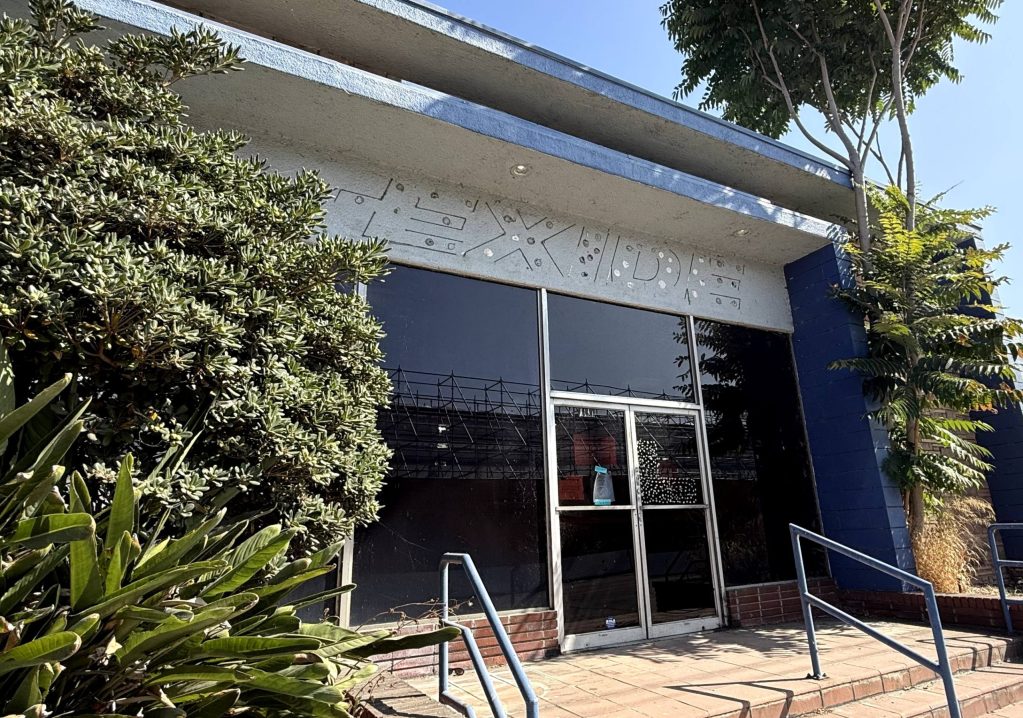
Tracing historic lead is a stubborn and complex national problem. In California, what happened at another nearby lead battery smelter, Exide Technologies in Vernon, underlines the challenge. Closed in 2015, Exide has become the largest and most expensive toxic cleanup in state history. Regulators have been unsuccessful in shifting costs to the polluter or obtaining federal support, and thousands of properties still need remediation.
After sampling found high levels of lead as far as 1.7 miles away from Exide, a federal district judge determined in 2022 that California regulators had failed to prove that smelter could have caused that contamination. Expert testimony from DTSC, it turned out, was less persuasive than from the company’s consultants. And while DTSC has amassed soil samples from thousands of properties, the U.S. Environmental Protection Agency says only recent tests met federal standards: the agency has proposed listing the site under the Superfund program, but for the presence of the cancer-causing solvent trichloroethylene in groundwater, not lead in the soil.
Butler said the department learned many lessons from Exide. “We have to have the scientific evidence or we’re not going to win in court,” she said. She pointed to new approaches from a new site management team; Bettahar, its leader, said that neighborhood-level soil testing around Ecobat now is justified by “multiple [lines of] evidence,” strengthening it against attack. (According to Ecobat, “those analyses, across the board, suffer from numerous fatal flaws, which render the results of these analyses totally unreliable.”)
After Exide, the California legislature funded a program to investigate and clean up legacy lead pollution at abandoned properties. Ecobat is not part of this program, known as LABRIC. But since 2021 LABRIC has been investing in research with the U.S. Geological Survey to identify and differentiate sources of lead for a potential reference tool that could be used statewide. Butler said the tool might be used around Ecobat.
Soil lead investigations are “notoriously complex,” wrote the company. Trade groups and smelters have long pointed out that lead can come from paint, car brakes, car fuel, and aviation fuel. “Fingerprinting lead from secondary lead smelters is exceedingly difficult, if not impossible,” Kramer said, adding that Ecobat had offered state and federal researchers its help.
Asked about the methodology for studying lead attribution, DTSC recommended talking to USGS. USGS refused to discuss the matter in depth, saying only that results are expected in January.
Butler acknowledged that the process of figuring out what’s in the soil around Ecobat “hasn’t moved quickly.”
But, she said, “We’re not giving up.”