
The Smelter Debate
California regulators have invited public comment on a long-awaited draft permit for the state’s only lead battery recycling facility. Residents near the Ecobat smelter in Los Angeles County have complained for years about uneven regulatory oversight and legacy lead pollution at the plant. This series examines key aspects of the permit and the permitting process.
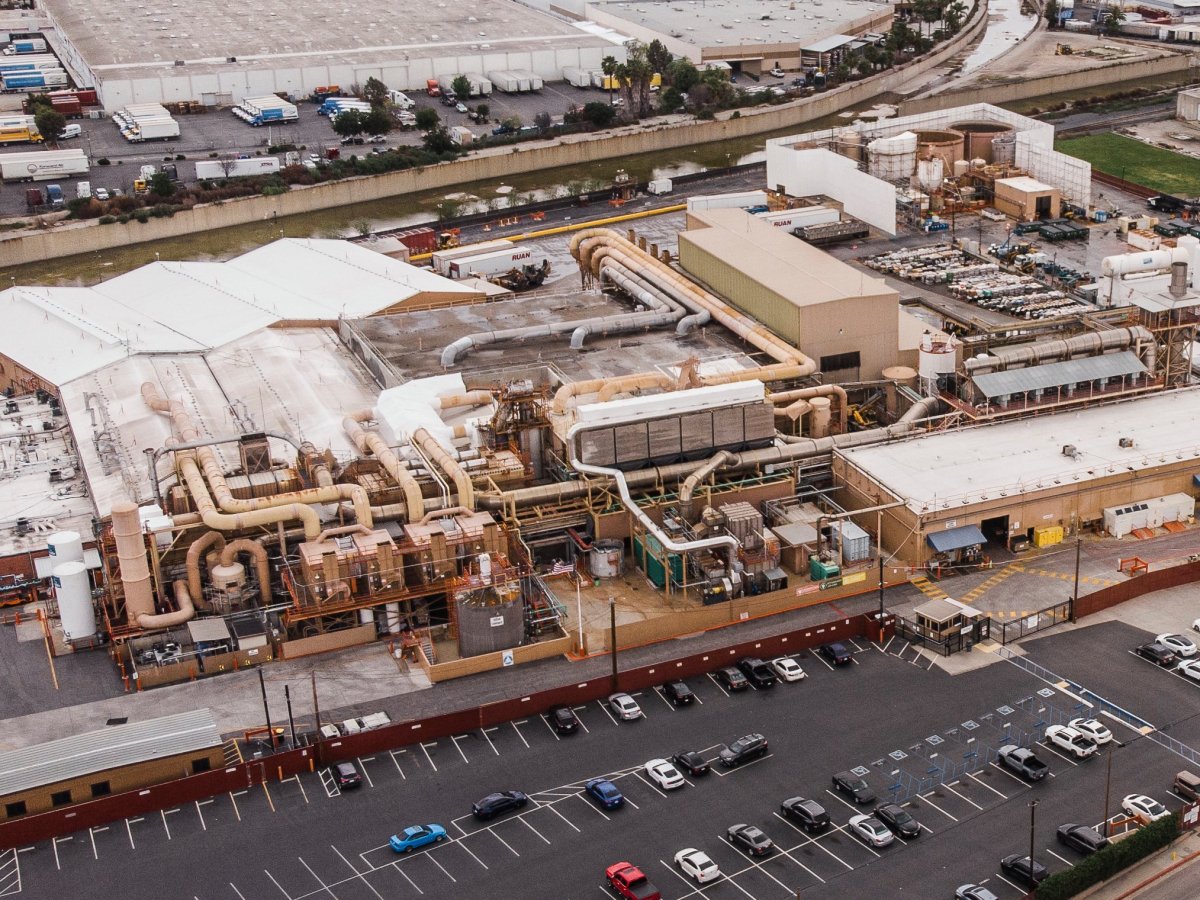
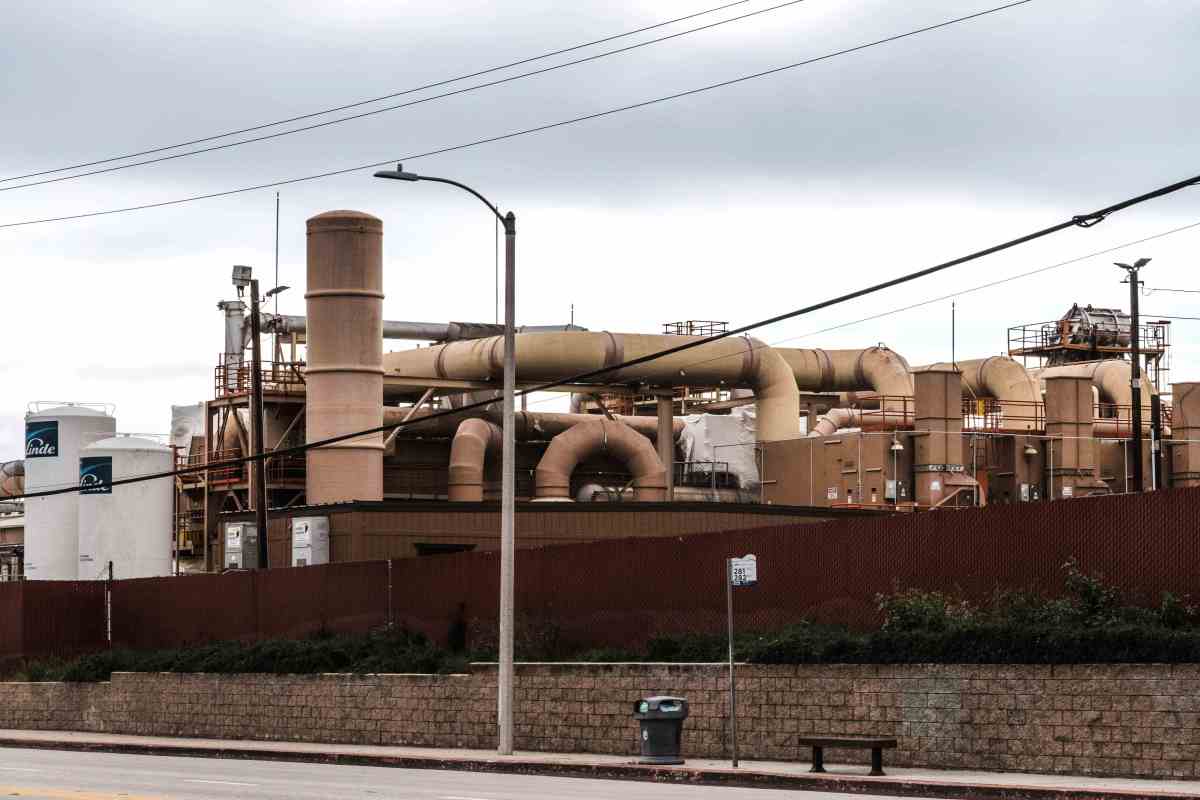
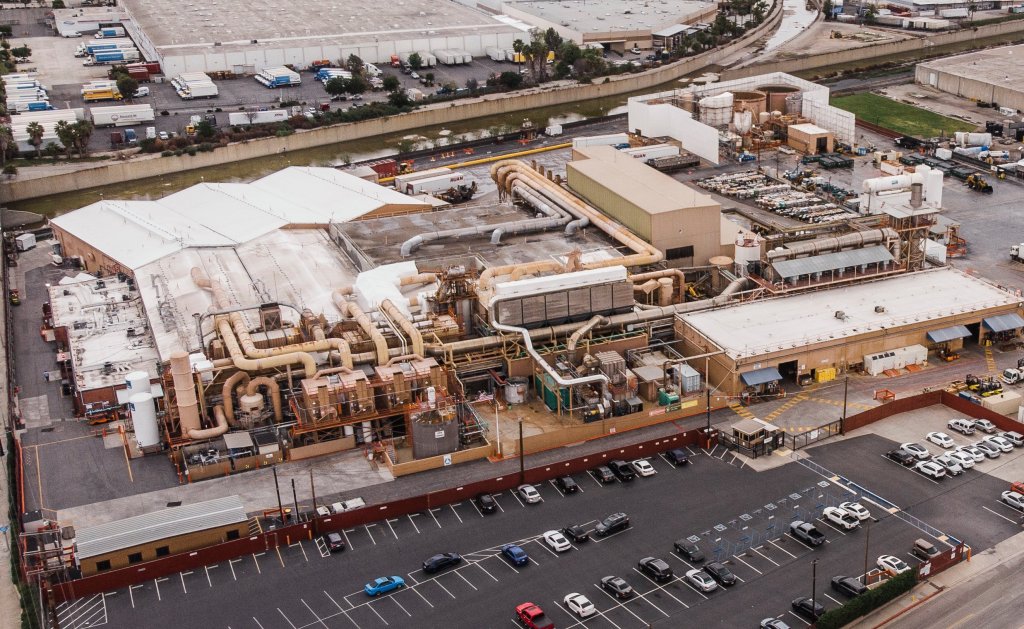
Inside a corrugated-metal shed at Ecobat’s lead smelting facility in California, heaps of lead-acid battery hulks wait to be melted down. Visitors don Tyvek suits and industrial-grade face masks to enter, and rinse their boots when they leave. One job of this containment building is in its name: Toxic waste inside isn’t supposed to get out.
But in July of 2018, state Department of Toxic Substances Control staffers found a hole six feet long and seven feet wide cut into the building’s floor.
Inspectors who asked about it were told “that information regarding the hole was attorney/client privileged” and to contact the company’s lawyer for more information. The department, inspectors noted, “was not notified” before the hole was cut.
That day, DTSC issued three “serious” violations in the building informally called the batch house, one because the “secondary containment and leak detection system does not function.” They’re among more than two dozen serious violations handed out in the last decade at the facility now owned by Ecobat. Inspectors issued most of them since the last DTSC permit expired in 2015.
These citations have spurred an administrative order and a multimillion-dollar civil settlement. They’re part of why DTSC says it’s granting Ecobat a permit for five years, rather than 10, as is customary.
But they do not disqualify Ecobat from receiving a permit — an outcome sought by some neighbors to the facility.
California regulators thread a needle: Past problems shorten the term of Ecobat’s permit, but the facility’s response to those problems justifies granting it.
Ecobat, too, threads a needle even as it disagrees. While the company says it is pleased the DTSC has issued a draft permit, “Ecobat does not believe that compliance record merits less than a full permit term” of 10 years, according to spokesman Dan Kramer, who responded on behalf of the company in writing.
The company also says it has a strong record of meeting standards. “This is not an issue of trust — it is oversight mandated by state law,” Ecobat said.
Under that law, however, Ecobat has challenged oversight at every opportunity.
How Ecobat Fought Violations
Newly appointed DTSC Director Katie Butler, who formerly oversaw the permitting division, says Ecobat is trustworthy, based on a look at the violations and the facility’s “return to compliance” behavior. “My confidence in their future ability to follow the permit conditions and comply with laws is based on their record of returning to compliance for the issues other than the batch house floor,” she said.
At one point in 2021, the DTSC had alleged 26 serious violations at Ecobat over eight years. They included finding cracks in a battery storage area, transporting plastic battery waste that was dripping diluted acid, no or inadequate groundwater monitoring, and a failure to sample surface water that runs off to nearby San Jose Creek. Inspectors also cited the facility for storing waste in an unauthorized tank and for letting nine more tanks become deteriorated and corroded.
In the batch house, the DTSC found fault both with the containment system — a floor made of concrete, installed over a layer of PVC, with sand in between — and with Ecobat’s method of monitoring leaks.
Ecobat said that “none of the violations alleged by the DTSC involve a release into the environment, let alone a release posing a risk to the surrounding community.” The company characterized violations as “largely technical and paperwork issues.” Ecobat told Public Health Watch that the hole in the batch house floor was created during an investigation it now claims it had a right to keep secret, because it was under threat of enforcement and civil actions. (Regulators, now asked about this claim of privilege, say it’s the first they have heard of it.) Ecobat adds that hazardous waste was kept away from the hole while the floor was under repair.
Making a full accounting of Ecobat’s violations years later is maddeningly difficult. The facility can appeal citations, and regulators can modify or even rescind them. But where violations persisted, state officials have also moved to use less common — and more aggressive — enforcement tools to resolve them.
In 2016, a state enforcement order demanded fixes to the batch house. Then regulators found more problems, including the hole in the floor, in 2018. A few months after that, DTSC filed a civil complaint against the company then known as Quemetco. Groundwater monitoring and batch house violations — what Ecobat now calls technical and paperwork issues — made up most of the 29 causes of action in the case.
Regulators and the company battled over those claims for years before reaching a settlement. In 2022, Quemetco agreed to pay $2.3 million, half in fines and half toward environmental benefit projects. The severity of some violations was reduced. But the company accepted others as final, including the one for the hole in the floor.
“Some facilities will return to compliance quickly,” Butler said. “Others will take a longer time, and that matters.” Ecobat told Public Health Watch that regulators commended the company for its cooperation.
Legal disputes between Ecobat and regulators dragged on for six years, through the tenure of two DTSC directors.
How Ecobat Challenged Scores for Violations
As part of statewide reforms, DTSC began issuing annual scores to all hazardous waste facilities to gauge compliance. Points are awarded for violations, and that total is averaged over the number of inspections during a 10-year period. The higher the score, the worse a facility is deemed to be. Facilities must keep scores below 40 to remain in good standing to receive a permit.
Separate from appeals to knock the severity of violations down, Ecobat has challenged the accounting on those violations in an effort to lower its compliance score. Even after the civil court dispute, Ecobat has remained “conditionally acceptable” — good enough to receive a permit.
Environmental and community-based critics say Ecobat’s experience points up a flaw in the compliance system’s design, causing facilities with more violations and more inspections to reach lower average scores. DTSC’s Butler admits this is a “valid concern” and says that her staff will likely propose changes to the system later this year.
Yet Butler insists that, across the board at hazardous waste facilities, compliance scores have served as deterrents to facilities’ bad behavior. Since 2019, the year scoring started, the number of Class 1, or serious, violations has dropped. While facilities frequently challenged scores that year, the number of challenges has dropped, too.
Inspection and Violation Trends

Dispute Trends

A Civil Complaint Against the Oversight Board
Asked whether Ecobat is trustworthy, spokesman Kramer pointed out that there are “multiple layers of oversight,” including the five-member Board of Environmental Safety. Created in 2022 as part of the DTSC’s reforms, the board hears appeals related to permit decisions at hazardous waste facilities. The first appeal the panel heard was about Ecobat.
A community group called the Clean Air Coalition challenged a limited permit Ecobat received for equipment in the batch house installed without prior approval. The board sided with the neighborhood group. Ecobat then filed a civil complaint in Los Angeles County Superior Court against the board and the coalition to appeal that decision.
A judge has sent that dispute back to the board, which declined to comment for this story.
Ecobat “has been forced to defend against baseless claims from various agencies and challenges to its permits,” according to Kramer, who claimed some community members are making “false accusations” against the company.
Butler called Ecobat’s attitude toward the community “problematic.”
“Their legal posture has been damaging to the relationships in the community, and that matters,” she said.
Ecobat’s contentious history demonstrates why the draft permit is necessary, Butler added: Without clear requirements, “whether or not the facility is in compliance could be debated.”