


A weekly roundup of public health news

NIH cuts could mean fewer new drugs for Americans
Continued steep cuts to the National Institutes of Health could slow the pipeline of life-saving medicines in the U.S., a new analysis warns.
A proposed 39% budget cut to the NIH could put the development and approval of new drugs at risk, according to researchers with the nonprofit National Bureau of Economic Research. Cuts at that scale could mean fewer treatments for cancer, HIV and rare diseases reach patients, the Sept. 25 analysis in Science found.
Researchers based their predictions on past drugs developed through NIH funding, identifying “at-risk” grants that would not have been approved if the federal agency’s budget were 39% lower, as proposed in the president’s fiscal year 2026 budget. They found that nearly half of all drugs approved since 2000 were linked to NIH-funded research that would have been eliminated under a smaller budget.
Drugs that would not have come to market include Gleevec, also known as imatinib, which transformed chronic myeloid leukemia into a generally manageable condition; Tarceva, also known as erlotinib, which offered new options for lung cancer patients; and Emtriva, also known as emtricitabine, which is a standard part of HIV treatment and prevention regimens.
If approved, the proposed research cuts at NIH — which add up to about $18 billion — would come on the heels of major funding decreases already leveled against the agency by the Trump administration this year. A July analysis by the Congressional Budget Office found that even a 10% cut would decrease the number of new drugs coming to market by about two drugs each year.
Income inequality alters children’s brains
When children grow up around income inequality, the experience can alter the structure of their brains, and ultimately damage their mental health.
In a new study in Nature Mental Health, published Sept. 30, researchers found kids who were exposed to unequal distribution of wealth showed physical changes in their brains. Those alterations, which occurred among children from both wealthy and low-income families, were linked to poorer mental health outcomes.
Scientists examined neuroimaging data on 10,000 children across the U.S. and compared it to inequality scores based on where the children lived. The scans showed that children living in more unequal areas had reduced surface area in their cortex and changes in how parts of their brains were connected.
States with higher inequality included California, Connecticut, Florida and New York, while Minnesota, Utah, Vermont and Wisconsin had smaller income gaps.
The researchers suggested that large gaps in wealth can make people feel stressed and insecure about their place in society. That stress can affect the body and may lead to changes in how the brain develops.
Fenceline communities experience mental health harms
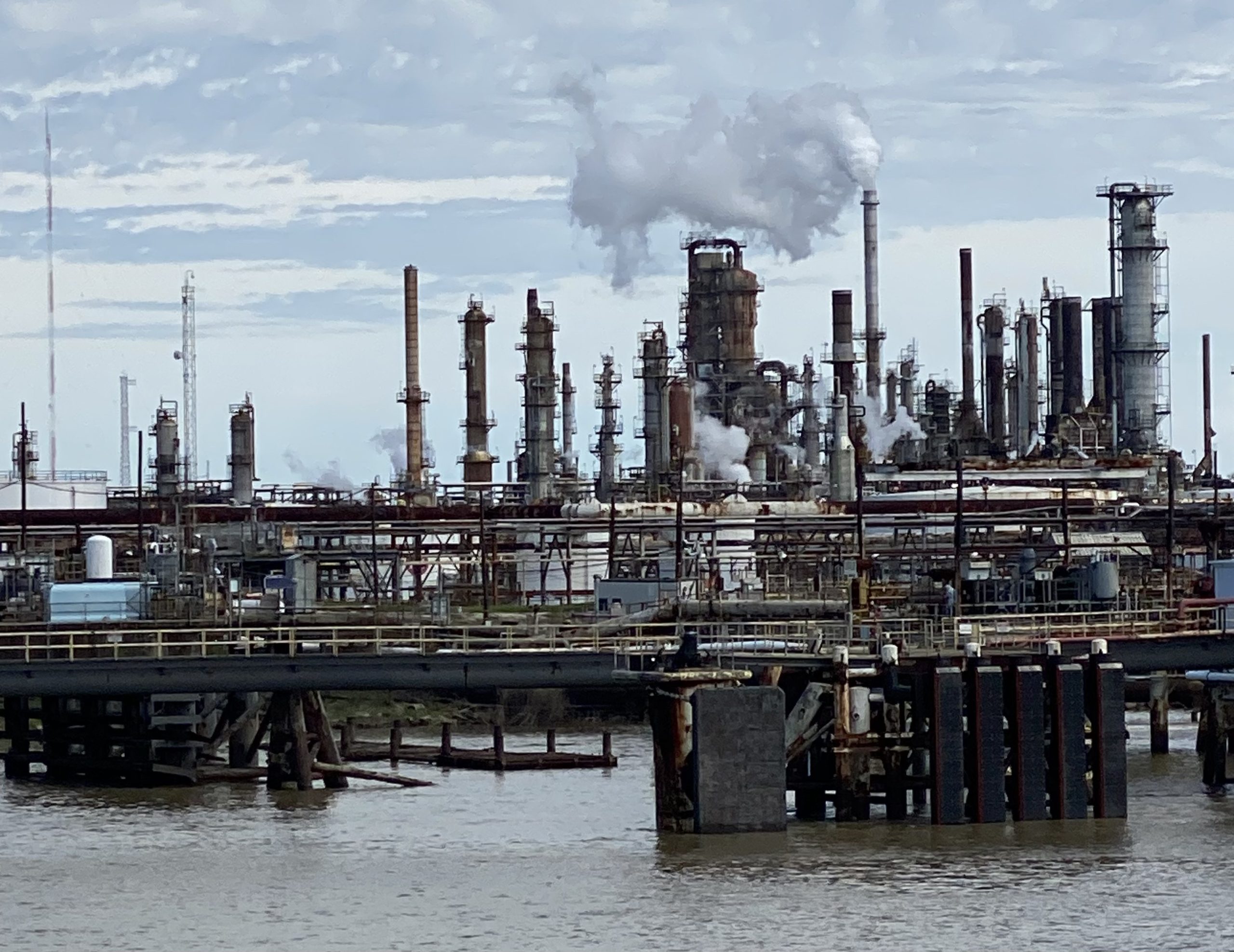
People who live near refineries, gas wells and other industrial sites are subject to mental and emotional harm — in addition to serious risks to their physical health, a new report says
Released Sept. 30 by Physicians for Social Responsibility Pennsylvania, the report examines the impacts that toxic air, contaminated water and disruptive noise and light have on “fenceline communities,” which are neighborhoods that border industrial polluters.
While previous research has documented higher rates of asthma, cancer and cardiovascular health problems, the mental health harms of living near industrial sites have often been overlooked, researchers said.
Among those impacts are increased risks for depression, schizophrenia, bipolar disorder and other psychiatric disorders.. Living with fears about contamination and safety can increase chronic stress in residents and worsen physical illness.
Residents describe being forced to keep windows closed, losing sleep because of noise and feeling that their complaints were dismissed. Property values near industrial zones often drop, limiting the ability of residents to move, the report said.
Health risks do not fall on all people equally, as low-income neighborhoods and communities of color are more likely to be located next to industrial facilities. One of the most well-known regions for fenceline communities is Louisiana’s “Cancer Alley” along the Mississippi River, which is densely sited with petrochemical plants, refineries and other potentially hazardous industries. Cancer rates in some parts of the region are as much as 50 times higher than the national average, the report noted.
Other recent public health news of note includes:
• Mutations in blood-forming cells may help explain why workers who responded to the 9/11 disaster in New York City have higher risks for leukemia and blood disorders, a new study in Cancer Discovery finds. First responders with the mutations were nearly six times more likely to develop leukemia than those without them.
• Long-term ambient exposure to trichloroethylene may raise the risk of Parkinson’s disease, according to new research in Neurology. Researchers found that people exposed to the highest outdoor levels of the banned industrial solvent — once used widely in dry cleaning — had a 10% greater risk of developing the disease.
• New findings in PLOS Medicine show that tropical cyclones such as hurricanes and typhoons increase death risks for children under age 5. Researchers estimated such storms were responsible for 850,000 deaths among young children in 34 countries over two decades.
• Exposure to sulfur dioxide, a pollutant commonly associated with vehicle exhaust, is linked to a higher risk of developing ALS, according to a new study in Environmental Research. As symptoms usually show up about 10 years after exposure, the disease may be advanced by the time patients are diagnosed, researchers said.
• Severe allergy seasons — which are becoming more common with climate change — could have serious consequences, new research in the Journal of Health Economics suggests. Researchers found that years with high pollen counts are associated with a 7.4% increase in suicide rates, possibly due to the physical and mental strain of allergies.
• Sea foam along U.S. beaches may carry more toxic “forever chemicals” than the water it comes from, a recent study in Environmental Science & Technology shows. Researchers found that some foam samples on North Carolina beaches contained higher levels of per- and polyfluoroalkyl substances than are allowed in drinking water.
The Watch is written by Michele Late, who has more than two decades of experience as a public health journalist.