


A weekly roundup of public health news
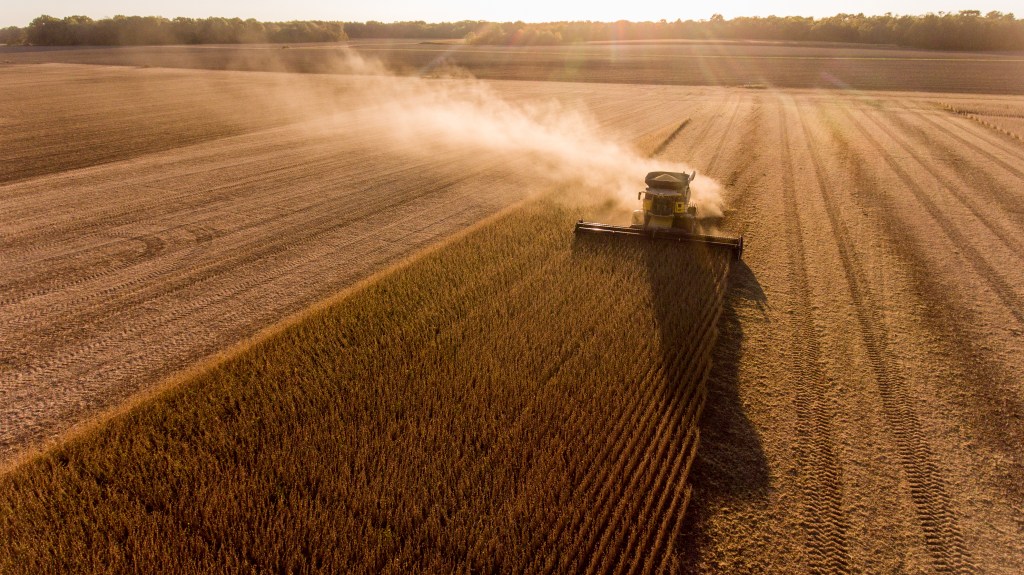
Climate change creating rollercoaster of crop harvests
Food production around the world is becoming more unstable, with crop yields varying more widely from year to year, scientists warn.
Hotter and drier conditions from human-caused climate change are creating severe swings in the yields of corn, soybean and sorghum — three of the world’s most important food crops.
For every 1-degree increase in temperature, year-to-year changes in yields are widening by 7% for corn, 19% for soybeans and 10% for sorghum, according to a new study in Science Advances. The instability in yields can make it difficult for farmers to decide how much to plant and to make a profit. In especially bad years, it can also lead to hunger and famine.
As the swings in yields widen, so does the chance of very poor harvests, researchers said. With a 2-degree increase in temperature, soybean crop failures that once struck once every 100 years would occur every 25 years; corn failures, every 49 years; and sorghum failures, every 54 years. Once-in-a-century crop failures could strike every 10 years by 2100 if warming stays on track.
While poorer regions of the world will suffer most from the drier soil and hotter temperatures, high-income nations such as the U.S. will be impacted as well. Some regions of the U.S. already have been feeling the effects: A drought and heat wave that hit the U.S. Midwest in 2012 caused corn and soybean yields to drop by a fifth, raising food prices globally, researchers noted.
Heat is not the only climate change effect that is hurting crop yields, however. Another new study, published in Plant Physiology, finds that when drought and ozone pollution occur together, soybeans are doubly damaged.
Together, corn, soybeans and sorghum — a staple food in Africa and Asia —are estimated to provide about 23% of the world’s calories, according to World Atlas.
U.S. passes tipping point on clean water access
Millions of Americans have difficulties accessing clean, affordable water, and the crisis is worsening, according to a new review in PLOS Water.
Accelerating climate change combined with aging infrastructure and lagging governmental action have pushed the U.S. past what researchers called “peak water security” — a tipping point for access to adequate water supplies.
People of color and those with low incomes are more likely to experience higher rates of water contamination and more frequent service shutoffs and to miss out on infrastructure improvements, according to researchers. Incidents such as the Flint, Michigan, lead water crisis in 2014 and the Jackson, Mississippi, water treatment plant failure in 2022, both of which disproportionately impacted Black communities, show the impacts of the nation’s declining and neglected water infrastructure.
Unincorporated communities, including those in the Southwest, Alaska and Appalachia, also historically have had lower access to reliable, clean and affordable water. People living in coastal areas that rely on fresh water sources are threatened by climate-change driven saltwater intrusion through storms and flooding. City residents are not immune to problems with access, with 72% of Americans who lack running water living in urban areas, the analysis noted.
Overall, nearly 30 million Americans experience high water stress — a condition in which the demand for water is consistently high relative to the available supply — according to the U.S. Geological Survey.
To help monitor the nation’s water crisis, the researchers are employing a new tool, called the Household Water Insecurity Experiences-USA scale, that uses data from more than 1,000 households to predict water insecurity, they also reported in PLOS One.
Lifesaving hospital transfers less likely for patients without commercial insurance
The kind of health insurance a patient has can determine whether they are transferred for lifesaving treatment, a new study finds.
Published Aug. 26 in JAMA Network Open, the research showed that critically ill patients with acute respiratory failure who lacked insurance were half as less likely to be transferred to high-volume specialty hospitals for treatment than people with commercial insurance.
The likelihood that a patient with Medicare or Medicaid was transferred to a specialty hospital, where patients with respiratory failure are less likely to die, was also lower than for people with commercial insurance. Patients who lacked commercial insurance tended to be transferred later during their hospital stays.
Critically ill patients who are transferred to a higher-volume specialty center may be less likely to die because clinicians there have more experience managing such patients or because of better intensive care unit protocols, researchers suggested.
Previous research has also linked a lack of commercial insurance with earlier withdrawal of certain life-sustaining therapies for critically ill hospital patients.
Other recent public health news of note:
• Extreme heat and high levels of air pollution are more commonly occurring together as climate change increases. A new study in Urban Climate finds episodes of the overlapping threats are more frequent and intense in urban areas than rural ones. Ozone levels are higher in rural regions, however.
• Even relatively modest levels of plastic in ocean waters can cause severe ecological damage, according to new findings in Nature Sustainability. Researchers studied risks to ocean life from plastic ingestion, entanglement, pollutants and chemical leaching, identifying high-risk zones in the mid-latitude North Pacific and North Atlantic oceans, parts of the North Indian Ocean and coastal East Asia. Coastal areas were at high risk for plastic-related hazards from abandoned fishing gear such as traps, fishing lines and trawl nets.
• New research strengthens science on the link between air pollution and human disease. A recent study in Frontiers in Public Health ties long-term exposure to ozone pollution with chronic obstructive pulmonary disease, also known as COPD, while findings in Science show an association between fire-particle air pollution and Lewy body dementia.
• New research in the Journal of Clinical Medicine finds health risks and inequalities are widening as women in high-income nations opt to give birth at later ages. The review, which examined maternal health in the U.S., U.K. and Australia, identified rising rates of maternal deaths, gestational diabetes and caesarean sections, as well as greater risks for women of color.
• Community water filtration systems that remove “forever chemicals” also lower levels of other harmful contaminants, a new Environmental Working Group study shows. Published in ACS ES&T Water, the research found systems that screen out per- and polyfluoroalkyl substances, also known as PFAS, help reduce levels of disinfection byproducts, agricultural nitrates and heavy metals from drinking water.
• A “no surprises” law that took effect in 2022 in the U.S. has reduced out-of-pocket spending for medical care, new findings in The BMJ report. Researchers found the law, which was created to help protect people from unexpected bills after receiving medical care, has saved about $600 per patient a year. Before the law took effect, about 20% of insured patients received surprise bills following care.
The Watch is written by Michele Late, who has more than two decades of experience as a public health journalist.