


A weekly roundup of public health news
Billion-dollar weather disasters stacked up across U.S. in 2025
From hailstorms in Texas to drought in the Southwest, 2025 had more billion-dollar weather and climate disasters than nearly any other year on record.
The U.S. experienced 23 separate weather and climate disasters that each caused at least $1 billion in damage in 2025, according to a new analysis from Climate Central. Together, the events caused an estimated $115 billion in damage and were linked to at least 276 deaths nationwide.
Only two other years — 2023 and 2024 — have seen more billion-dollar disasters, placing 2025 among the costliest for extreme weather since recordkeeping began in 1980, the analysis found.
Severe storms accounted for most events, including large hail outbreaks, tornadoes and powerful windstorms across the central and eastern U.S. Texas and Colorado were hit repeatedly by costly hailstorms, while the Midwest and South experienced multiple destructive storm systems. Most of the billion-dollar disasters were concentrated in a broad swath of the central and eastern U.S., stretching from Texas through the Midwest and into parts of the Southeast.
Wildfires were the single biggest driver of losses, the analysis found. The Los Angeles wildfires a year ago were the costliest disaster of the year, causing an estimated $61.2 billion in damage, nearly twice the cost of the previous record-setting wildfire. The fires killed 31 people, destroyed thousands of structures and forced large-scale evacuations.
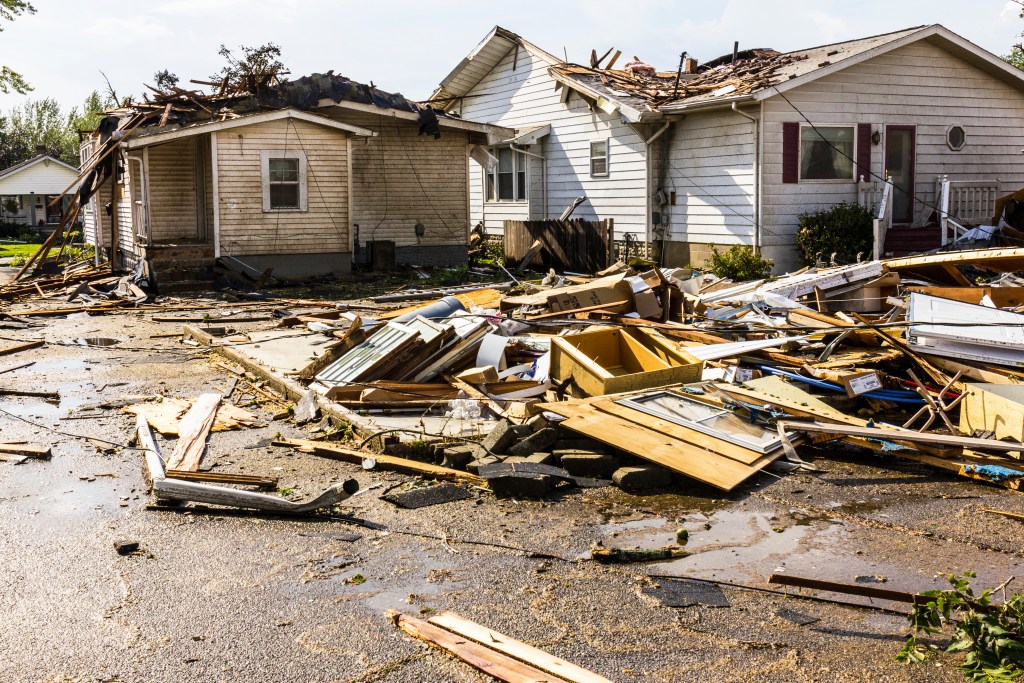
Two major tornado outbreaks ranked as second- and third-most costly. A central U.S. tornado outbreak in March caused an estimated $11 billion in damage, making it the second-most costly disaster of the year. That was followed by a North Central and Eastern tornado outbreak and severe storms in May, which caused about $6.3 billion in losses, according to the analysis.
While the July catastrophic flash flooding in the Texas Hill Country was one of the deadliest inland floods in U.S. history, killing as many as 138 people, the analysis said losses ultimately did not reach $1 billion — demonstrating that devastating losses can come even without sky-high economic damage.
The analysis draws from the U.S. Billion-Dollar Weather and Climate Disasters database, which tracks the cost of extreme events after adjusting for inflation. Climate Central now maintains the database, which was previously overseen by the U.S. National Oceanic and Atmospheric Administration but discontinued as a federal tracking tool by the Trump administration.
The report also highlights a longer-term trend: Billion-dollar disasters have become far more common in recent decades. In the 1980s, the U.S. averaged about three such events per year. Over the past 10 years, that average has climbed to about 20 annually, according to Climate Central.
The average time between billion-dollar disasters has also shortened, with just 10 days in between each in 2025.
Researchers cited a combination of factors driving the increase, including a warming climate that intensifies certain types of extreme weather, development in high-risk areas and rising costs of infrastructure.
Study links plastic-related chemicals to higher risk of death
Exposure to a mix of common chemicals used in plastics is linked to a higher risk of dying, particularly from cancer and heart disease, a recent study in The Lancet Planetary Health finds.
Researchers looked at health data on about 8,400 Americans, finding people with higher levels of the plastic-related chemicals in their bodies were more likely to die from cancer and cardiovascular causes than those with lower levels.
The study focused on plasticizers — chemicals commonly added to plastics to make them flexible, durable or shatter-resistant — along with bisphenol A, a chemical used to make hard plastics and protective coatings. The chemicals are widely used in everyday products, including food packaging, plastic bottles and other containers, medical supplies and household items.
People are exposed to the chemicals in routine ways. Chemicals can move from food packaging into food, especially when plastics are heated. They can also be absorbed through the skin from personal care products such as lotions, soaps and cosmetics, or inhaled from indoor air and dust as plastics break down.
Rather than looking at one chemical at a time, the researchers examined the combined effects of several plastic-related chemicals together. They found that each incrementally higher level of exposure to the chemical mix was linked to a 79% higher risk of cancer death and an 83% higher risk of death from cardiovascular disease.
Based on the findings, the study estimated 10% of annual U.S. deaths — about 256,000 — may be linked to higher exposure to the chemical mix.
Researchers also looked at whether nutrition can influence risks. They found increased risk of death from plastic chemical exposure appeared only among people with the lowest levels of vitamin D or folate.
Black, Hispanic children more likely to live in poverty
Poverty rates may have fallen for many U.S. kids, but they remain disproportionately high for Black and Hispanic children, new findings show.
Analyzing county-level data from 2022 to 2025, researchers found that child poverty rates decreased in most U.S. counties during the three-year period. Those gains were uneven, however, with large racial and regional disparities across the country, according to the study in JAMA Pediatrics.
The gaps were most marked in the South. Nearly 37% of Black children in Southern counties lived in poverty last year, compared with 29% of Hispanic children and about 16% of white children, according to the analysis.
Child poverty increased across counties in the Western U.S., regardless of race or ethnicity. Researchers suggested several factors may be contributing to the rise there. Shifts in demographic and immigration patterns have led to a growing number of families with limited financial resources, increasing the share of children whose basic needs may not be fully met, they said.
Rising living costs may have further strained household budgets. Inflation peaked around mid-2022, and from January 2020 to January 2024, prices for everyday groceries increased by as much as 23%, the study noted.
Other recent public health news of note:
• Gestational diabetes is becoming more common, and exposure to “forever chemicals” may be one reason, a new review suggests. The analysis, published in The Lancet eClinicalMedicine, found that women exposed to higher levels of per- and polyfluoroalkyl substances were more likely to develop gestational diabetes during pregnancy. PFAS exposure was also linked to problems with how the human body uses and produces insulin, which helps control blood sugar.
• Prenatal and early-life air pollution exposure is linked to high blood pressure in children, a new study in Environmental Research finds. Kids who were exposed to more fine-particle pollution, known as PM2.5, before age 2 had higher blood pressure at ages 5 to 12 on average than kids with lower exposure, according to the research. High blood pressure in children is becoming more common and can raise the risk of heart and kidney problems later in life.
• Microplastics and other contaminants in soil may be making it harder to grow healthy food, new research suggests. A new study in PLOS One finds polyester microplastic fibers in soil can harm the growth and development of food crops, raising concerns as they build up in agricultural land. A separate analysis published in Biocontaminant warns that microplastics are increasingly showing up alongside heavy metals and antibiotic resistance genes in soils, especially in intensive farming systems. Researchers say the combination of pollutants could threaten soil health and food production more than any single contaminant alone.
• Pregnant women who received fertility treatment are more likely to die in states with so-called TRAP laws, a new study in JAMA Health Forum finds. Targeted regulation of abortion providers laws — which institute cumbersome requirements such as strict rules for clinic structures to prevent people from obtaining abortions — were in place in 24 states as of 2022. The study found the women who had undergone fertility care in states with the laws faced higher death risks compared with similar patients in states without such regulations.
• Even after wildfires are over, smoke chemicals can linger inside homes and pose health risks, a new study in Environmental Science & Technology Letters finds. Researchers measuring air quality after the 2025 Los Angeles wildfires found that indoor levels of volatile organic compounds, also known as VOCs, remained elevated in homes days to weeks later, suggesting that smoke-contaminated materials continued to release potentially harmful chemicals into the air.
The Watch is written by Michele Late, who has more than two decades of experience as a public health journalist.