

A weekly roundup of public health news
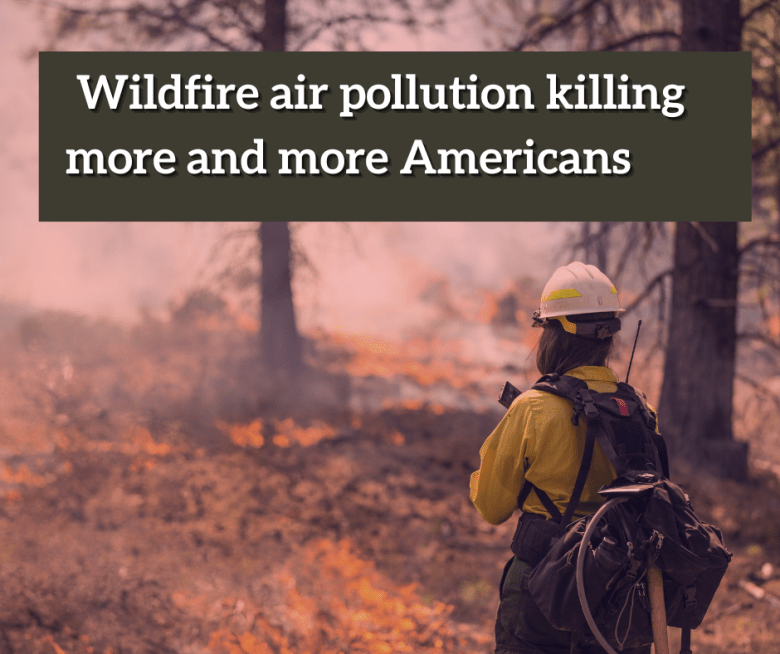
Wildfire air pollution killing more and more Americans
By Michele Late
About 164,000 people in the continental U.S. died from wildfire air pollution over a recent 15-year period, a new study in Communications Earth & Environment finds.
The deaths were associated with wildfire PM2.5, fine-particle pollution that is 2.5 micrometers in size or smaller and can be inhaled deeply into the lungs and reach the bloodstream. The annual U.S. death rate from wildfire PM2.5 over the study period, which covered 2005 to 2020, was about 5 per 100,000 people — double the annual rate of deaths from tropical cyclones such as hurricanes.
About 9% of the 164,000 deaths were attributable directly to climate change, researchers said — which means 15,000 of those deaths would not have occurred without human-caused changes to the Earth’s climate.
More than a third of the PM2.5 deaths attributed to climate change occurred in 2020, a year that included major fires in the Pacific Northwest, Arizona, California and Colorado.
Climate-driven wildfire PM2.5 pollution is expected to increase, leading to a 50% increase in deaths from smoke by 2050, researchers projected.
While exposure to wildfire smoke tends to be worse when outside, a new study released May 14 found that more than a billion people worldwide experienced significant indoor exposure to wildfire-based PM2.5 at least one day a year from 2003 to 2022. Indoor exposure was felt unequally throughout the globe, with higher risks in areas that included the Western U.S., the study in Science Advances said.
Exposure to wildfire smoke can worsen symptoms of asthma and other respiratory diseases, increase risks for heart attacks and cancer, and contribute to preterm births in pregnant women.
Abortion restrictions linked to mental stress in women
Abortion restrictions that took effect in Texas in 2021 increased levels of mental distress among women of reproductive age, a new study published May 12 in JAMA Network Open finds.
The research found frequent mental distress among Texas women ages 18 to 44 increased 54% in the year after Texas Heartbeat Act Senate Bill 8 took effect in September 2021. In comparison, men in the state experienced only an 11% increase in mental distress, which was defined as 14 or more days of poor mental health, such as stress, depression or problems with emotions, over the past month.
The highest increases in distress were seen among younger women, who researchers said may have been less likely to be able to overcome barriers to abortion access because of the law, such as travel, cost or time off work.
Also known as SB 8, the 2021 Texas law essentially banned abortion after cardiac activity was detected in an embryo, making Texas the most restrictive state in the U.S. at that time. Since the U.S. Supreme Court decision in June 2022 that overturned Roe v. Wade, Texas and 15 other states have adopted complete or nearly complete bans on abortion.
Disinfectants raise cardiovascular disease risks in nurses
Nurses who are exposed to disinfectants at work are at higher risk for cardiovascular disease, a recent study shows.
Published May 9 in Environmental Health Perspectives, the study found using disinfectants and spray or aerosol products was associated with an increased subsequent risk of cardiovascular disease, including coronary heart disease. Nurses who reported exclusively using spray or aerosol disinfectants weekly had a higher risk of stroke.
Nurses commonly use disinfectants for tasks such as surface and instrument cleaning, patient care and air freshening. The greatest risk for cardiovascular disease was found among nurses who had the most frequent and highest exposure levels to disinfectants while on the job.
Study researchers called for reducing disinfectant exposure in health care settings, considering alternative products and ensuring that personal protective equipment is used by workers.
Global warming, droughts lowering crop yields
Crop yields for agricultural products such as wheat, barley and corn that are food staples across the world are taking a hit from climate change, a new study in the Proceedings of the National Academy of Sciences finds.
Global yields from the three crucial crops are as much as 13% lower than they would be without the more frequent hot weather and droughts caused by human-caused climate change, the research found.
Both higher temperatures and air dryness have increased in nearly every major agricultural region of the world. While trends have not been as severe in the U.S. as climate models predicted, the nation still has suffered significant crop losses: In 2023, drought, heat and wildfires accounted for more than $16 billion in U.S. crop loss, according to the American Farm Bureau Federation.
Wheat, barley and corn make up a significant portion of the world’s crops. In the U.S., corn accounts for nearly a third of all harvested crop area, with much of the product used as feed for animals that are raised for human food, such as cattle.
Other recent public health news of note includes:
• People who live in communities with a higher proportion of Black residents, especially disadvantaged communities, experience longer waits to be taken off an ambulance at a hospital, says a new study in JAMA Network Open that was conducted in California. A 3.3% increase in the proportion of Black residents was associated with a 17-minute increase in wait time, researchers found.
• Losing access to prescription drug assistance increases the risk of death for low-income seniors, according to a study published May 14 in the New England Journal of Medicine. The Medicare Part D Low-Income Subsidy helps 14.2 million low-income people, most of whom are older adults, access their medications. Risk of death was highest for people with multiple health conditions or who relied on more expensive medications, such as HIV antiretroviral therapy.
• Millions of Americans do not make enough to meet costs of living, says a new analysis from the Ludwig Institute for Shared Economic Prosperity. The research, released May 12, found that the lowest 60% of U.S. earners hold 22% of disposable income, but need 39% for a minimal quality of life. The institute’s index tracks essential expenses as well as those needed for well-being, growth and upward mobility.
• Scientists have coined a new term for the dual diagnosis of two serious pulmonary diseases that threaten the health of workers. Writing in the American Journal of Industrial Medicine, researchers introduced the word “silicosarcoidosis” to designate cases in which patient lung tissue shows features of both silicosis and sarcoidosis, two diseases common in the construction, mining and stone fabrication industry. Workers who have both diseases concurrently tend to be underdiagnosed, researchers said, and the new designation may help improve recognition and treatment.
• Converting forests to urban development or agriculture near streams can have harmful effects on water quality, according to a recent study in PLOS Water. High fertilizer used in agriculture and impermeable urban surfaces that promote runoff can increase nitrogen levels and sediment and impact drinking water, researchers said.
• Arsenic is common in rice sold in U.S. supermarkets, with some products containing levels that are higher than recommended for infant foods, a new study from Healthy Babies, Healthy Futures finds. Researchers analyzed rice samples purchased at 145 stores nationwide, detecting inorganic arsenic, cadmium, lead and mercury. To reduce exposure, they recommended consumers boil rice in excess water and drain it before serving, as well as vary their grain intake.
• The Trump administration has quashed a federal plan that would have reduced the amount of “forever chemicals” that Americans are exposed to through their drinking water supplies. On May 14, the U.S. Environmental Protection Agency said it would retain current regulatory levels for perfluorooctanoic acid and perfluorooctane sulfonic acid. Also known as PFOA and PFOS, the two chemicals were once used widely to provide stain and grease resistance to products, but have since been linked to cancer, liver damage and numerous other health problems in humans.
New standards released in April 2024 would have established legally enforceable levels for the chemicals in drinking water.
• Women with breast cancer who live in previously redlined neighborhoods are more likely to die within five years of diagnosis, a recent study in Cancer Epidemiology, Biomarkers & Prevention finds. The lower a grade assigned under redlining, the more likely women with breast cancer who reside there today would have a more advanced or aggressive type of the disease, the researchers found. While redlining — a discriminatory practice in which lenders denied mortgages in neighborhoods of color — was banned more than a half century ago, many formerly redlined areas continue to suffer disadvantages.
The Watch is written by Michele Late, who has more than two decades of experience as a public health journalist.