This editorial is part of a series by Public Health Watch and MyRGV.com. Read the first story here.
This editorial was corrected on 6/11/26.
Agriculture remains one of the primary elements of the Rio Grande Valley’s economy, creating more than $10 billion in revenue and hundreds of jobs. Obviously, local officials, and probably most Valley residents, support any effort to help the industry thrive and grow, such as efforts, supported by the Texas Department of Agriculture, to resurrect the billion-dollar sugarcane industry that was abandoned in 2024.
That support, however, can’t come at the cost of public health.
As noted in a series of articles that begins today, our Valley experiences a higher incidence of neurological disorders including Parkinson’s Disease that have been linked to several pesticides and herbicides. Those chemicals include paraquat, a weedkiller that is popular among many Valley growers.
Paraquat has been used widely throughout the country since the early 1960s, including at several military bases, and used on marijuana fields during the 1970s. After service members and veterans exposed to it and other herbicides began falling ill with neurological problems, cancers and respiratory issues, our military acknowledged a likely correlation between their use and health issues. Many veterans exposed to paraquat have received benefits including treatment and disability compensation.
Because of the evident risk, more than 70 countries have banned the herbicide outright.
The United States, however, is not one of those countries, and paraquat continues to be used on many Valley farms.
Moreover, neurological problems, and their possible link to agricultural products, aren’t new to this region. A spike in prenatal and infant anencephaly, spina bifida and other neurological defects was detected in the early 1990s in the Valley. Although pesticides were studied and commercial bread makers began adding folic acid to their products, a single definitive cause for the problems was never determined.
The risk of chemical exposure is not restricted to our farms, however. Like many fertilizers and pesticides, paraquat generally is sprayed onto fields from airplanes. But it doesn’t stay there. Gulf breezes can carry airborne particles for long distances. Many Valley residents likely have seen ash from sugarcane burns miles away rain down on their homes like black snow.

As noted in our article, the federal Environmental Protection Agency has found that paraquat particles can be detected 20 miles from where they are deposited.
Research into the effects of agricultural chemicals on public health is increasing. Local officials, as well as industry-related organizations, should support and monitor the research, and, if appropriate, set new policies that prioritize public health.
Members of our local congressional delegation should pay heed as well. If our own military and VA have acknowledged likely correlations between paraquat and major health issues, they should consider supporting or expanding the research, and determine if greater regulation is needed.
Ultimately, the convenience and cost savings of using potentially hazardous chemicals on our produce will never offset the greater medical cost of treating related illnesses, and their effect on our quality of life.
This article originally ran on MyRGV.com here.
Correction: Due to inaccurate information from a source, our June 9 editorial regarding the pesticide paraquat incorrectly stated that the herbicide was used extensively during the Vietnam War. It was tested for use, and used at some military bases, and veterans have received treatment and benefits related to exposure.
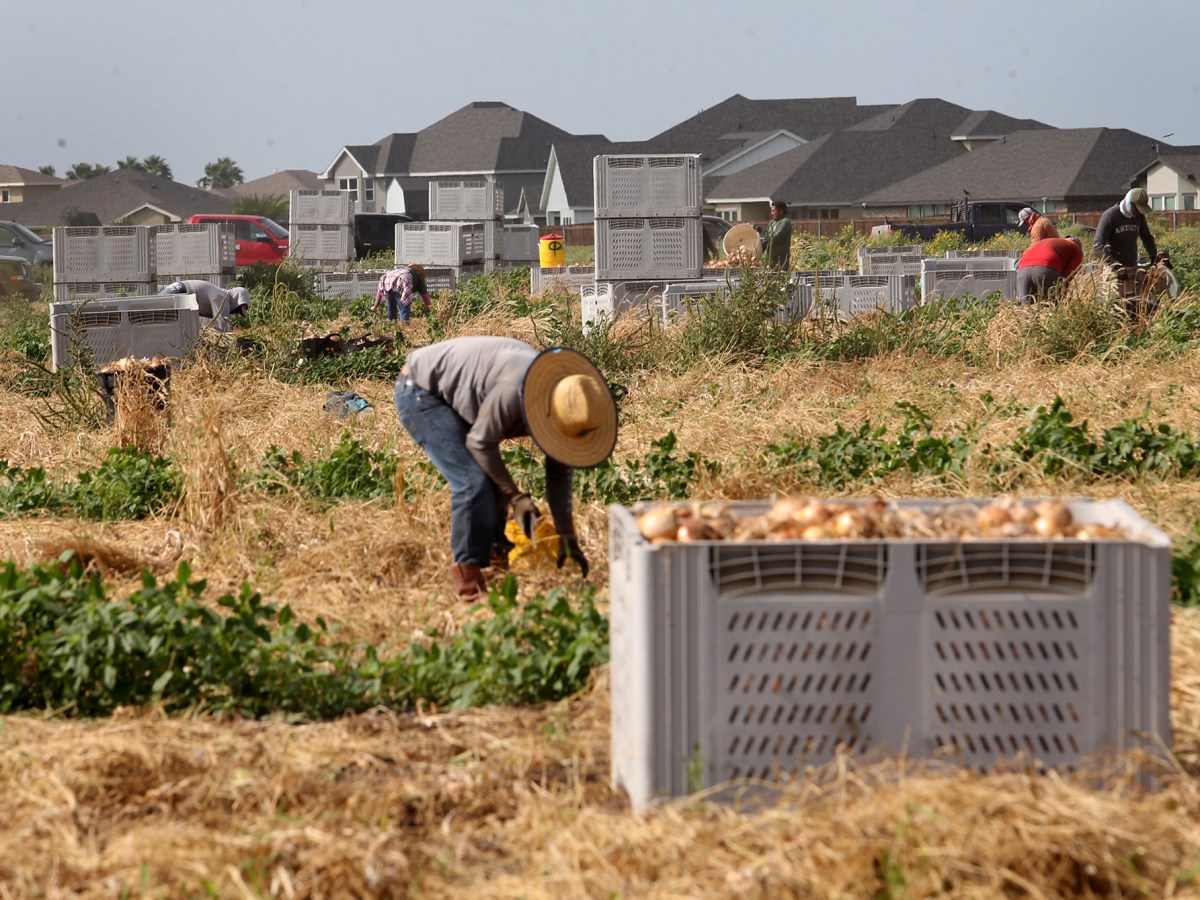
Parkinson’s Disease Is Consistently Linked to Pesticide Exposure. Farmworkers — and Nearby Communities — Are at Risk in Texas’s Rio Grande Valley.
Parkinson’s is the world’s fastest growing neurological disorder. Experts worry that people living and working in pesticide-laden agricultural regions are especially at risk.