
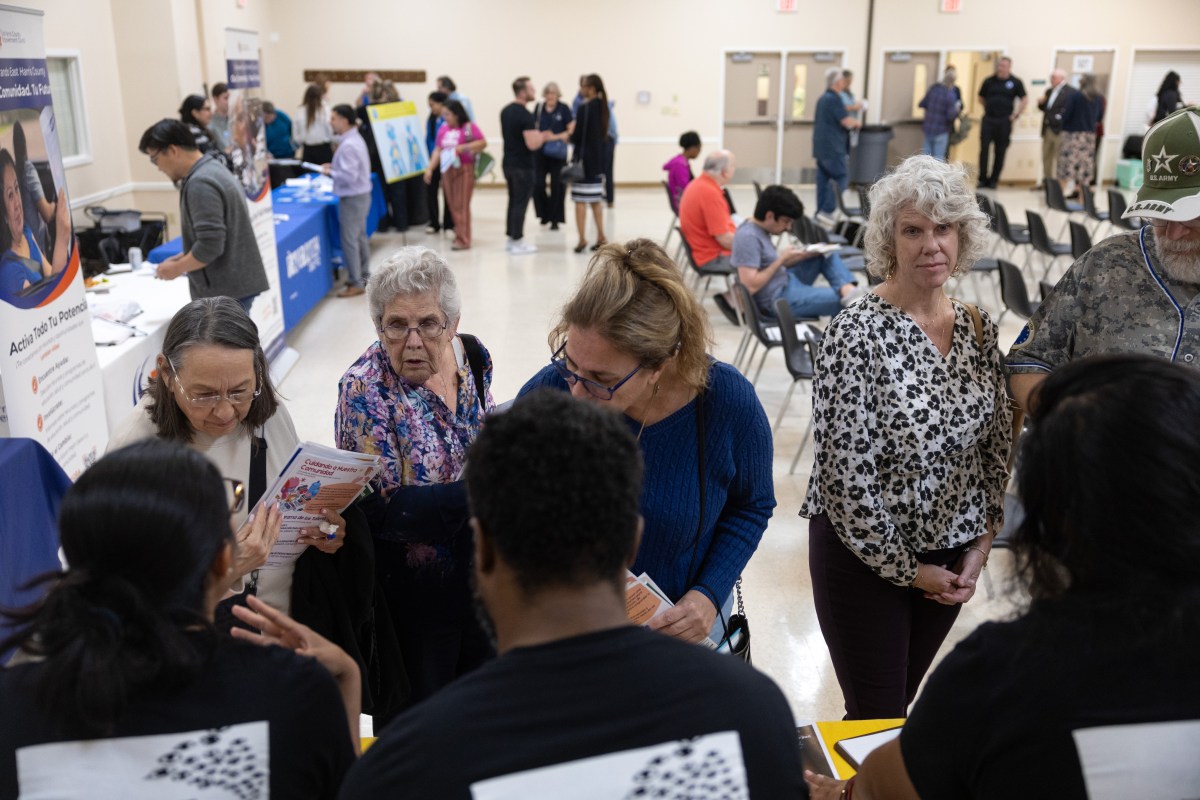
About 60 people gathered in Highlands, Texas, last week to react to and ask questions about a Public Health Watch investigation into government obfuscation and high rates of cancer across East Harris County.
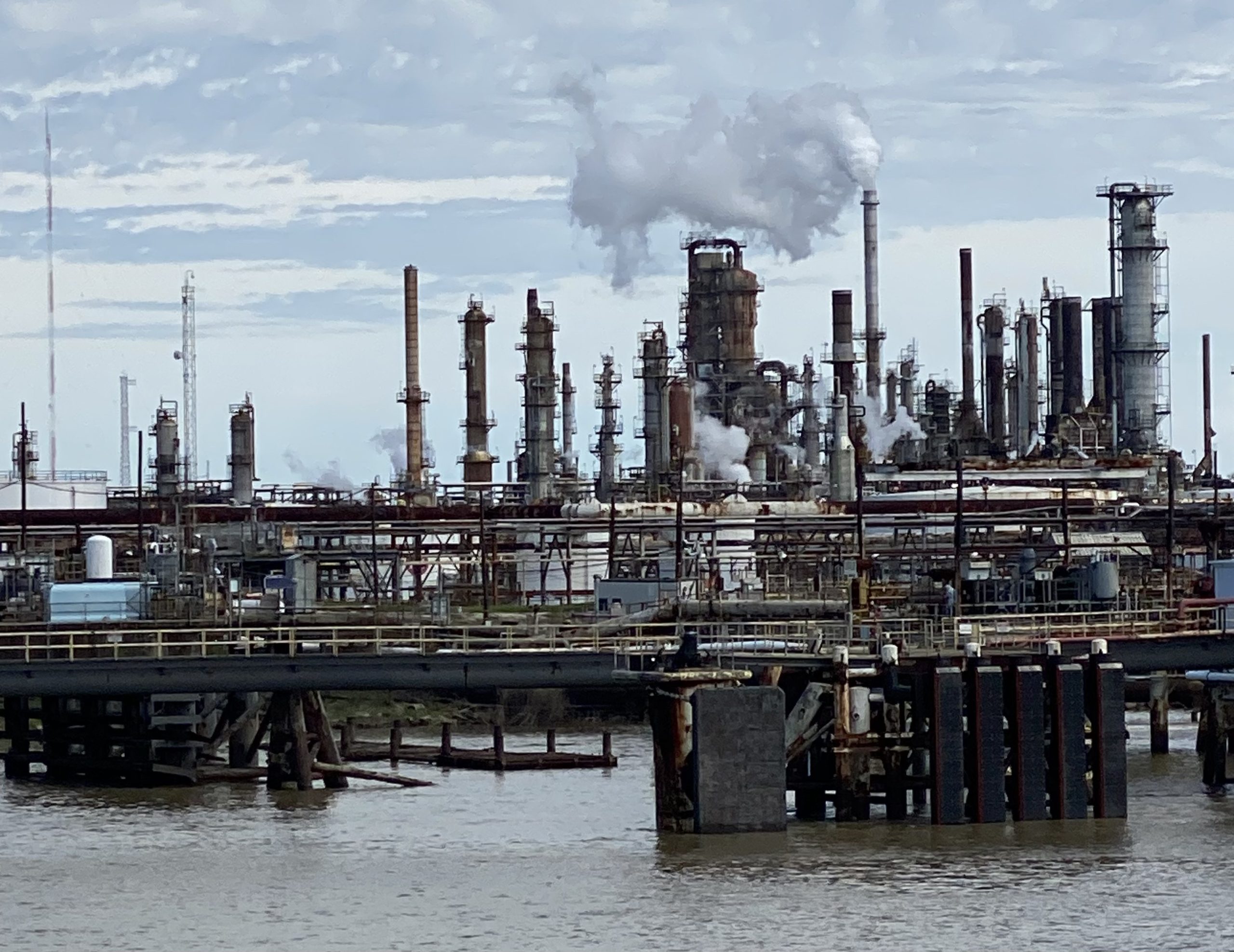
The story, published last October, revealed that the Texas Department of State Health Services, or DSHS, had withheld critical information and downplayed its findings in a 2025 cancer study. The study found that residents in a 250-square-mile area east of Houston may be at elevated risk of several types of cancer, especially leukemia. But few conclusions about the severity of the threat in specific locations can be drawn because state epidemiologists have refused to release the cancer data at the census-tract level — a move advocates and experts called into question.
“It doesn’t make any sense at all,” Kyle Steenland, a professor in the departments of environmental health and epidemiology at Emory University, told Public Health Watch. “This [new] study found a threefold excess of leukemia [across all] 65 census tracts. It’s shocking — more than 300 cases of leukemia when the state was expecting 100. This is either a systematic error, or the entire state of Texas should be mobilized to find out why this is true.”
Philip Landrigan, a pediatrician, public health physician and professor at Boston College who studies the human-health effects of hazardous exposures, put it more bluntly. “They’re snowing you,” he wrote in an email. “It’s BS.”
In the months since the investigation’s release, the DSHS has refused Public Health Watch’s requests for follow-up interviews and stopped answering questions related to the study. The agency has also refused to host any community events to answer questions from the public. So Public Health Watch hosted a town-hall meeting of its own on February 19 at the Highlands Community Center.
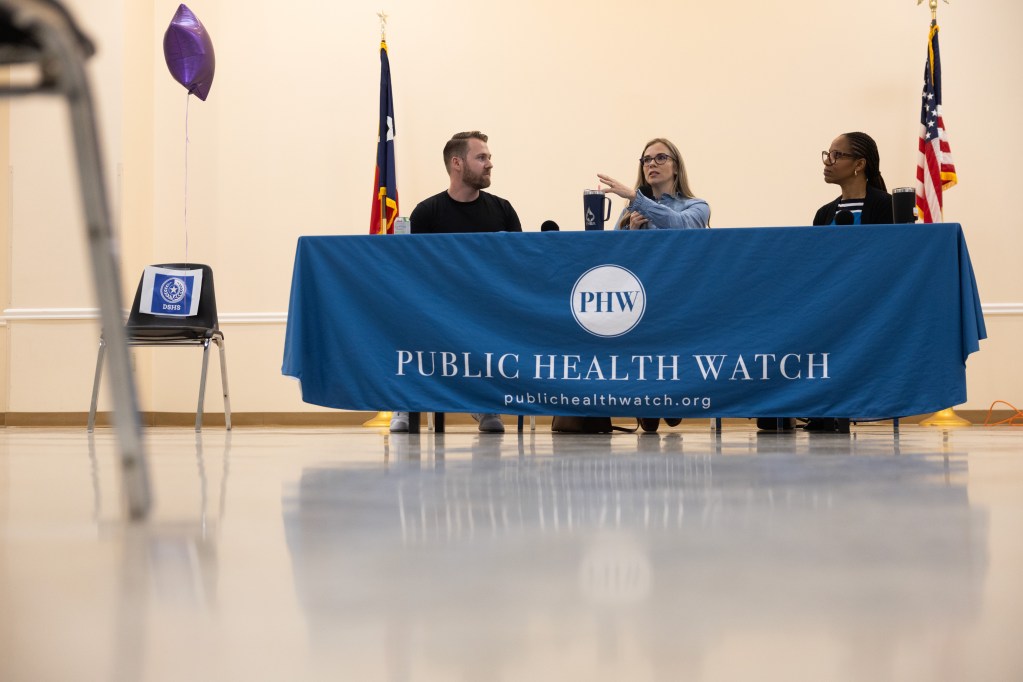
Residents, advocates and other interested parties filled the room to hear from a panel of experts: Inyang Uwak, a physician and an environmental epidemiologist who serves as the research and policy director for the nonprofit Air Alliance Houston; Jackie Medcalf, founder and executive director of the Texas Health and Environment Alliance, and the CEO of the Center for Health, Environment & Justice, and David Leffler, a Public Health Watch editor and senior staff writer and host of the Fumed podcast. An empty chair was left next to the panelists to signify the absence of DSHS scientists, who did not attend the event despite being invited to participate nearly two months in advance.
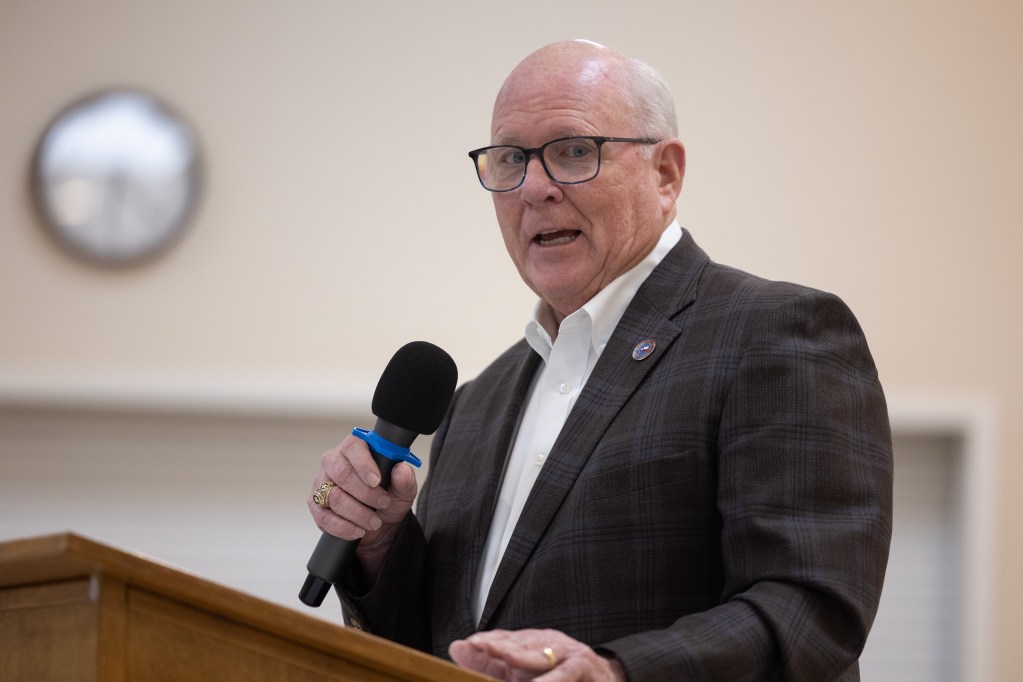
Precinct 3 Harris County Commissioner Tom Ramsey, a Republican who has been outspoken in his support of the cleanup of local Superfund sites like the San Jacinto River Waste Pits, kicked the event off with a forceful statement.
“Just give us the data. There’s no good in keeping data under wraps like this. Y’all deserve to know the truth,” Ramsey told the audience. “The [San Jacinto] river needs to be cleaned up. They’ve got a plan for remediation, but it’s stuck in a bureaucratic holding pattern. Do it. Move forward. Fire the gun.”
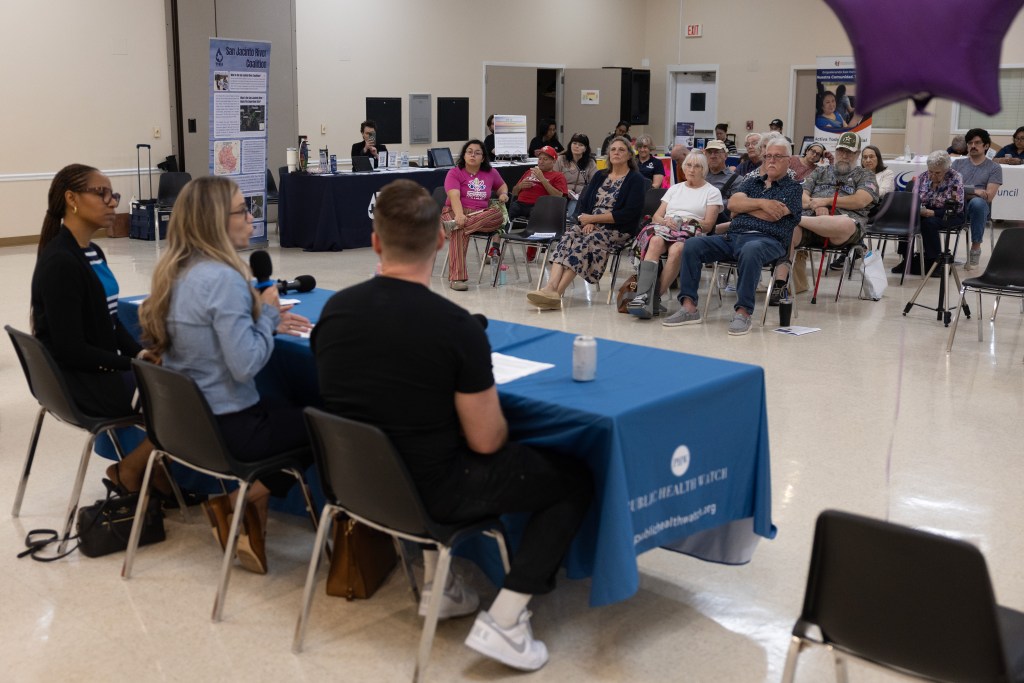
Following Ramsey’s remarks, Leffler moderated a spirited panel discussion on the need for the DSHS to continue investigating and communicating about East Harris County’s high rates of cancer, especially in industrialized communities like Highlands, Channelview and Crosby.
Uwak spoke at length about the original study’s findings — the alarming rate of leukemia across a massive region, the need for further analysis and the state’s failure to provide clear, useful data.
“I’ve never seen a study in an area this large with three times as many cases of leukemia than expected,” Uwak said. “But what makes this so alarming to me is that the state doesn’t want to do anything about it. That level of leukemia alone should trigger further investigations. Cancer is a complicated disease to study for a number of reasons, but these results speak for themselves. In an area like East Harris County, with so many potential environmental factors that could lead to the development of cancer, it’s imperative that scientists dig deeper and find out what specifically is driving these results. That’s the first thing I would do if I had the data.”
Medcalf, who lived in Highlands for years before moving away a decade ago, has endured myriad health problems she attributes to pollutants, especially from the dioxin-filled San Jacinto River Waste Pits. She still struggles with reproductive issues and recently had a hysterectomy at the age of 39.
“This study is terrifying for me, given my connection to this area,” Medcalf said. “But it doesn’t even tell us the whole picture. We want this information. We should have this information. DSHS has failed to inform our communities. It’s failed to even reach out to our communities to make sure we know what’s going on and what we’re facing. Census-tract-level data is critical to helping us understand who has the greatest threats and who has the most abnormal health outcomes in the area.”
Communities along the San Jacinto River and the Houston Ship Channel deserve some level of clarity, Medcalf added, even if cancer data won’t tell the full story.
“I have a reproductive disease that will haunt me forever,” she said. “What I’m going through won’t show up in a database. It hurts to say that there are so many health issues that plague our communities that won’t show up in a study. So, please, give us the data. It’s the least we deserve.”
Several residents delivered impassioned statements during the event’s question-and-answer segment. Perhaps the most powerful came from Bud Hall, whose family legacy in Highlands dates back to the community’s creation nearly 100 years ago.
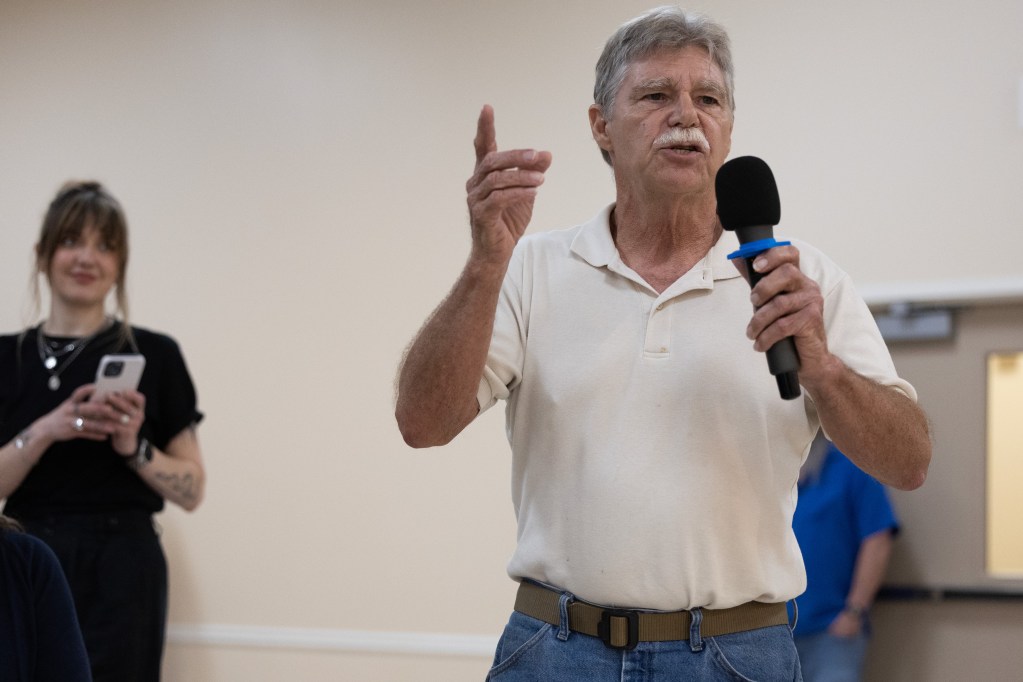
“We talk about all the chemicals in the air, but in reality, these companies have permits. Our government is not set up to regulate this, it’s set up to promote this. Did you know that of all the permits submitted to the state for industrial processes, only .5% get rejected?” Hall said, staring out at the crowd and citing a statistic included in a December Public Health Watch story. “You can’t blame the companies. They’re just there to make a profit. If you want to know where the real problem is, go to Austin. They — the Texas government — are the ones who are allowing this to happen. It’s their job to protect us and they’re failing. If you want this to change, change who you’re voting for.”
Representatives of the offices of Texas State Rep. Ana Hernandez and Precinct 2 Harris County Commissioner Adrian Garcia were invited to the event, but did not attend.