
This article was updated on March 19, 2025.
OAKLAND, California — The engine from Oakland Fire Department’s Station Number 2 had rolled out to Schnitzer Steel before, but this call was different.
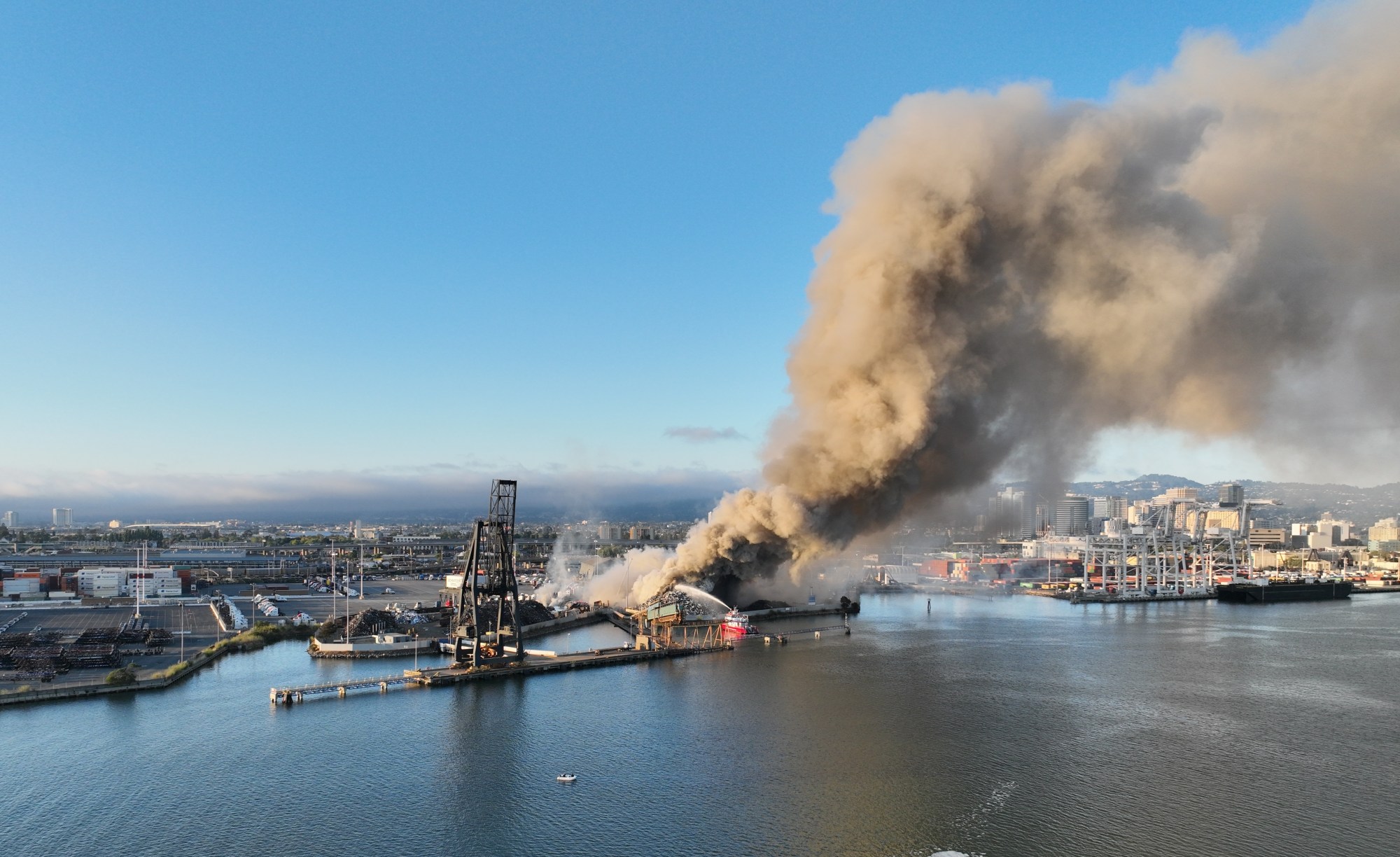
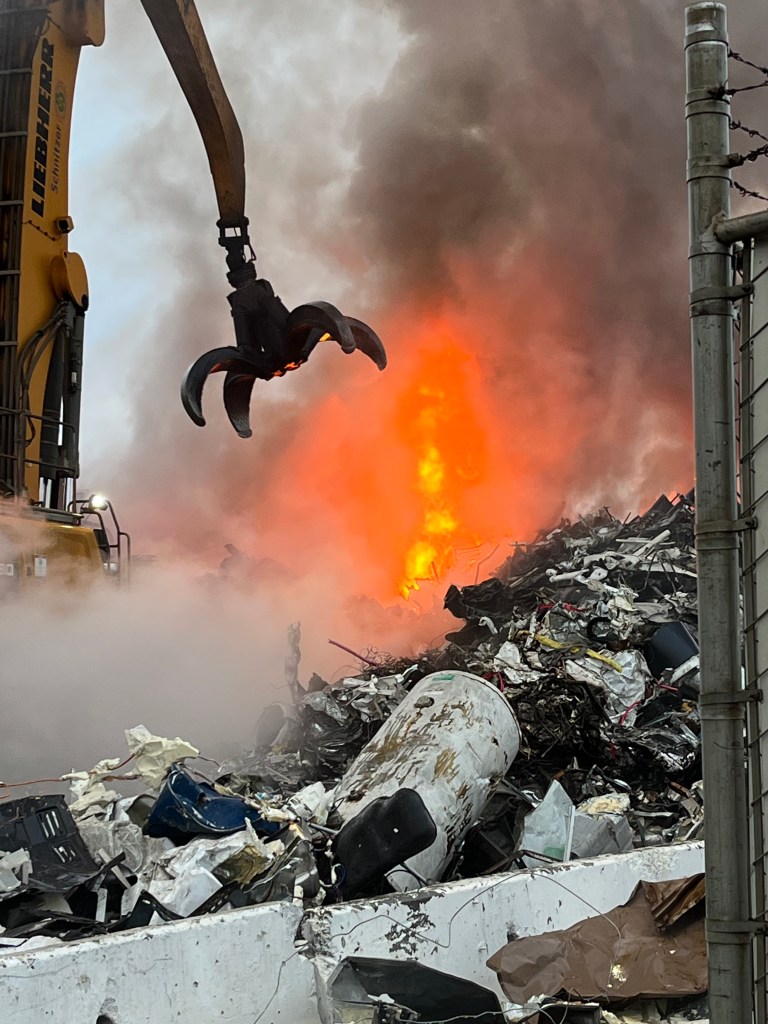
It wasn’t the typical smoldering nugget of debris. Instead, smoke was billowing from a massive pile of scrap as flames shot outward from an orange glow deep within.
Lt. Eduardo Ibarra was on that engine, the first to respond to the metal shredder’s bayside yard that night in August 2023. He guessed the burning pile was close to the size of a football field, 50 to 70 feet high in places.
“We knew that we were gonna be there for a long time,” Ibarra told an Alameda County criminal grand jury, according to a transcript of the proceedings obtained by Public Health Watch.
“My first question was why we weren’t called earlier,” he testified. “By the time we got there, that thing had already been burning for a while.”
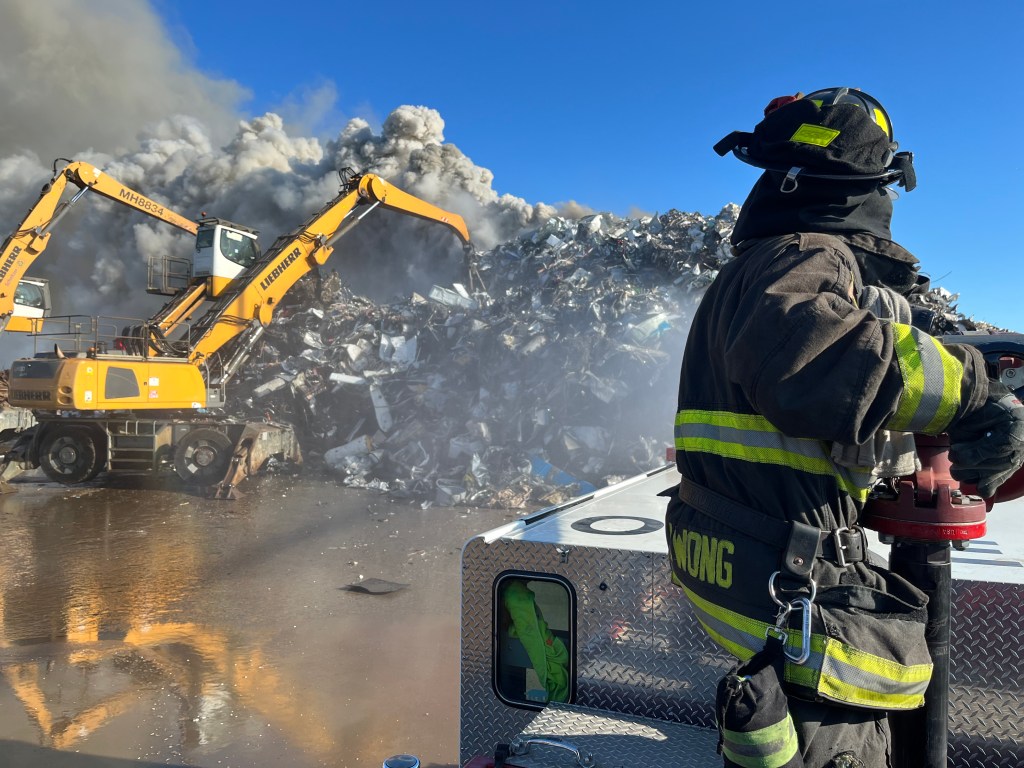
The glowing core — the seat, the origin of the fire — proved hard to reach, with the scrap piled up near the back fence. Fire crews struggled to maneuver their trucks and hoses around the mound, and it soon became clear that something inside was volatile.
Hours after the first fire truck arrived, repeated explosions sent hot metal sizzling through the air. At one point, an oval piece of metal about two feet long and four feet wide flew over the heads of Ibarra and his crew, landing on a discarded Bay Area Rapid Transit car, where it burned through the roof and started another fire.
“The explosions [are] not something that we deal with all the time,” Ibarra later told Public Health Watch. “We do deal with explosions from, like propane tanks and things like that, RV fires and things of that nature. But we never deal with explosions of this caliber on a regular basis.”
Ibarra’s sworn testimony and the testimony of others recorded in the 2,700-page grand jury transcript provide new details about the fire and its aftermath.
Public Health Watch also reviewed hundreds of pages of additional documents obtained under the California Public Records Act that recounted what state and local regulators have done — and what they haven’t — to keep the public safe over the years.
The new details raise questions about California’s oversight of the metal shredding industry and the potential health hazards posed by the toxic and airborne metals and other pollutants that drift off property. About 23,000 people live in West Oakland within a mile of the Schnitzer site, and thousands more live downwind.
The company, which has since been renamed Radius Recycling, and two employees were later charged with up to 10 separate environmental felonies and misdemeanors. The charges include felony violations of the state’s health and safety code between 2021 and 2023, as well as conspiracy to destroy evidence, reckless handling of hazardous waste and negligently emitting air contaminants. The company and both employees pleaded not guilty in December.
Radius Recycling did not respond to requests for comment from Public Health Watch before the article was published, but the company has defended its business and the metal shredding industry as a way to produce steel — a construction staple — with a small or neutral carbon footprint that can help mitigate climate change and meet regulatory requirements for greener building.
On Tuesday, after the story was published, the company issued a statement to Public Health Watch via email, complaining that allegations raised in the story, based on grand jury testimony and other sources, were false.
“Radius Recycling remains committed to safety, environmental compliance, and transparency,” according to the statement from Eric Potashner, the company’s chief sustainability officer. “Following the fire at our Oakland facility, we worked closely with the District Attorney’s Office and multiple regulatory agencies — including the California Department of Toxic Substances Control and the Bay Area Air Quality Management District — who were on-site immediately …
“Our operations follow strict environmental regulations, and we remain fully confident that the facts will demonstrate Radius Recycling’s continued prioritization of public safety and compliance with the law,” Potashner said.
The statement also challenged some of the testimony presented to the grand jury that later issued the indictments, saying the company had alerted officials it would immediately shred the evidence from the fire and that no one objected.
“As part of standard fire prevention protocol, we proactively informed regulators that we would begin shredding the burned material that day to eliminate any risk of reignition. No agency or regulator objected to this process,” according to the statement.
Without the Oakland facility, according to a Schnitzer legal filing in 2021, end-of-life cars, refrigerators and other appliances “would pile up in huge quantities in California and be abandoned along roadways and in neighborhoods, alleys, fields and backyards, causing urban blight, creating public nuisance conditions, and posing threats to public safety and the environment.”
Then-District Attorney Pamela Price called the criminal charges “historic.”
“We believe Radius has often shrugged off the regulations when it was convenient to them, treating minor administrative penalties and fines as the cost of doing business,” Price said at the time the indictment was handed down.
Regulators, it appears, also fell down on the job.
Oversight of the metal shredding industry has repeatedly faltered. Over the years, the state has granted exemptions from a key rule, missed a deadline for drafting new regulations and avoided enforcement of existing laws, either through lack of resources or lack of effort.
“These agencies have failed to actually do the job of enforcing those laws.”
Karen Chen, an attorney with the Natural Resources Defense Council
Along the way, decades of poorly coordinated efforts among a host of public agencies have enabled — and in some cases exacerbated — problems across the industry, Public Health Watch learned.
“There’s multiple agencies in charge of making sure industry complies with relevant laws, but these agencies have failed to actually do the job of enforcing those laws,” said Karen Chen, an attorney with the Natural Resources Defense Council, which has filed friend-of-the-court briefs in support of stricter enforcement.
“In the meantime, real people suffer irreversible health harms while [the state Department of Toxic Substances Control] waits to truly do its job and enforce the hazardous waste control law,” Chen said. “In turn, metal shredders get to skirt regulations in order to make a buck.”
Haphazard regulation
The company now known as Radius Recycling opened in 1906 as a one-man scrap operation, the Alaska Junk Company, run by Sam Schnitzer in Portland, Oregon. It later expanded to include steel production and was incorporated as Schnitzer Steel.
Today, Radius Recycling produces steel in McMinnville, Oregon, and operates auto parts and metal recycling facilities in 26 states, two Canadian provinces and Puerto Rico.

Radius is among nearly 300 metal shredders across the United States, including eight in California, that turn millions of tons of scrap each year from cars, old appliances and other junk into fist-sized pieces of marketable metal.
Most metal recycled in the U.S. is sold domestically, but Radius Recycling, which is based near the Port of Oakland, exports more than half of the scrap metal it produces to other countries, including China, according to public filings. The scraps of tin, steel, aluminum and other metals are recycled into rebar, batteries, car parts and industrial components.
Shredders screen to keep a long list of hazardous and potentially explosive items out of their metal yards, but the risk of fire is ever-present. Lithium batteries and gas in the tanks of cars may slip through. Even cars that have been “depolluted” may still have flammable upholstery, foam or plastic clinging to the frame.
Another fire risk at metal shredders is a byproduct known as auto shredder waste, which includes fluff and light, fibrous material, known as LFM. Fluff looks like dirt or clumps of lint and is a mixture of materials such as plastics, rubber, textiles and other debris that is left behind after scrap is pounded into shreds. It is prone to spontaneous combustion on hot days when piled up in large quantities, and may contain arsenic, cadmium and polychlorinated biphenyls, or PCBs, that can cause breathing problems and cancer.
In 1984, California regulators did something other states and the federal government had not done: They declared fluff a hazardous waste that required safe disposal. Scrap metal has been exempted as hazardous waste under federal law to promote recycling, but federal exemptions do not apply to fluff.
What is fluff?

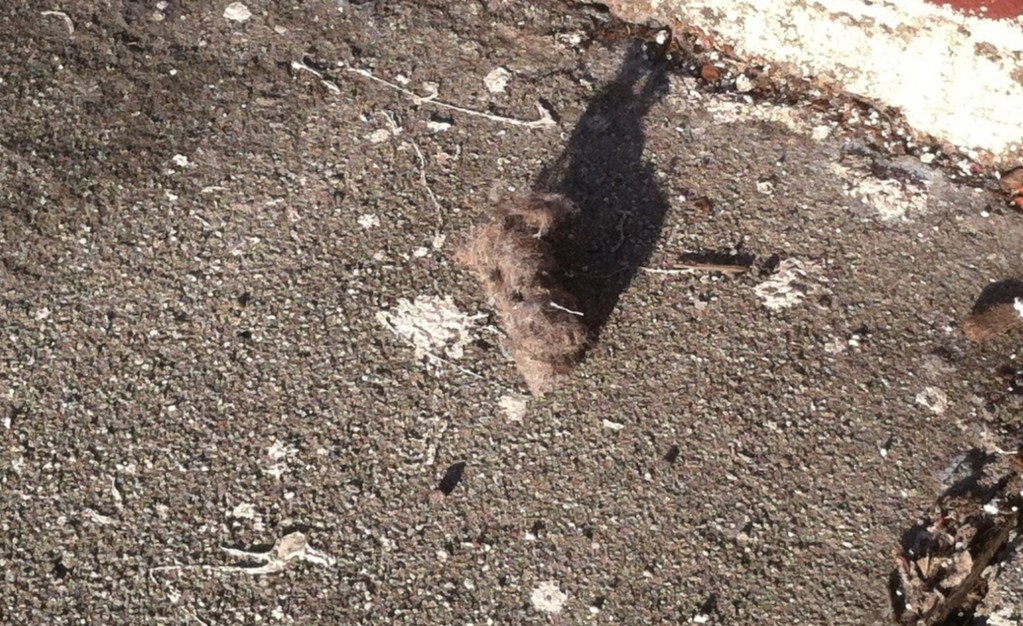
When old cars and appliances first pass through a hammermill at a metal shredding facility, valuable scrap and a byproduct known as auto shredder waste are produced. But what’s in it?
- Fluff: It looks like lumpy dryer lint or dirt, but fluff, shown at left, can contain toxic levels of cadmium, copper, lead and zinc.
- Light, fibrous material (LFM): Stringy and fine, LFM, in the photo on the right, can include shredded plastics such as vinyl from car seats. It can blow into neighborhoods, carrying with it some of the microscopic fluff.
- Both fluff and LFM can be flammable, and can carry toxic heavy metals offsite during everyday operations or in the smoke from a fire.
Since then, however, the state has flip-flopped on how to regulate the byproduct. Just four years after determining fluff was hazardous, the state created a loophole to the disposal requirements. They notified shredders in what is now known as an “F” letter that their fluff would be considered non-hazardous and could be deposited into regular landfills if it first was sprayed with a lime-based coating that formed a candy-like shell to seal in toxins.
But the coating broke down over time, potentially leaching toxic metals into the environment, according to a 2002 analysis by a state scientist who raised concerns within the Department of Toxic Substances Control that the 1980s-era policy be rescinded.
The DTSC didn’t take action on the 2002 findings, but over the next decade, the risks of fluff and metal recycling erupted into public view — and into flames.
In Alameda County, a landfill using fluff as a cover layer over municipal waste reported a spontaneous fire in 2004.
In 2007, a fire and explosion at a metal recycler in San Pedro, near the Port of Los Angeles, destroyed air pollution equipment, but the damage wasn’t reported to air regulators for weeks.
Later that year, a fire broke out at Sims Metal in Redwood City, and smoke blanketed San Mateo and Santa Clara counties, the heart of Silicon Valley. The core of the fire was deep within a tin pile 100 feet wide and 30 feet tall, and it took firefighters almost a day to put it out.
Air regulators called it a public nuisance, eventually issuing a $20,000 violation. After two more fires that fall, Sims said it would spend nearly $5 million to upgrade pollution and safety controls.
Then Schnitzer reported fires of its own, in 2009 and 2011.
By then, the DTSC had created an Office of Criminal Investigation, or OCI, and it remains the only department within the California Environmental Protection Agency with sworn law enforcement officers in-house. After the 2007 fires, its officers and scientists began to investigate local shredders, records show.
Schnitzer was among those facing scrutiny. Between 2012 and 2014, OCI investigators found copper, lead, zinc, cadmium and chromium at high levels in light, fibrous material at the perimeter of the Schnitzer property and on neighboring properties, state records show. More sampling in 2015 found PCBs and heavy metals in soil at the facility.
Multiple reports, including inspections, also concluded that light, fibrous material had floated off Schnitzer’s property. State records reveal that the company paid for spot cleanups at the state’s direction, and over five years, from 2015 to 2020, crews removed more than 100 cubic yards of LFM from off-site.
Problems also continued across the bay at Sims. The U.S. Fish and Wildlife Service sent a letter to Sims in 2011 notifying the company of heavy metals, PCBs and phthalates at a nearby wildlife refuge. Then, in 2013, fires broke out twice in six weeks at the facility in Redwood City. The company eventually paid $2.4 million to settle with the DTSC. While it didn’t admit wrongdoing, Sims agreed to take steps to control auto shredder waste.
That wasn’t enough for California lawmakers. The following year, a bill sponsored by then-Sen. Jerry Hill, a Democrat from Redwood City, was signed into law, requiring the DTSC to assess the risks of metal waste and create a plan to regulate the industry by 2018. The law, known as SB 1249, passed with support from industry and environmental groups.
But state regulators missed the January 1, 2018, deadline imposed by the Legislature. The state finally issued a preliminary report later that year suggesting hazardous permits might be required. At that point, an industry trade group, the Institute of Scrap Recycling Industries, went to court to block any regulations, arguing that enforcing rules after so many years would be a “death knell” for recyclers.
The same year, another fire started in a pile of fluff at Schnitzer. Oakland firefighters told local TV news that it was the fifth fire in eight years at the facility.
Nearby, the Oakland A’s Major League Baseball team was intensifying its push to develop a ballpark complex near the port’s Howard Terminal. In August 2020, the team sued the DTSC, saying the agency’s lax oversight had failed to protect the community from pollution. An official with the A’s posted on social media that the department’s oversight of Schnitzer was a 30-year “regulatory failure.”
Six months later, on February 3, 2021, the DTSC and Schnitzer reached a $4.1 million settlement, in which Schnitzer admitted no wrongdoing. The settlement of a civil enforcement action brought by the state required the company to pay $1.5 million in civil penalties to the DTSC. The company also agreed to spend nearly $1.9 million for installation and maintenance of air filtration systems in a community center and at affordable housing projects through a partnership with the nonprofit West Oakland Environmental Indicators Project, and to provide $94,000 to fund a mobile pediatric asthma clinic run by the nonprofit Prescott-Joseph Center.
Schnitzer agreed to enclose its metal shredding operations and install air pollution control devices at the new structures. The company also promised to continue to remove auto shredder waste where visible, warn people about its hazards, and stop accepting, treating or storing hazardous waste that was generated offsite.
In 2023, however, investigators with the DTSC’s Office of Criminal Investigations were still finding light, fibrous material on nearby properties, according to state documents. On July 31, nine days before the fire, regulators sent a stern warning to the company, saying the release of auto shredder waste “constitutes disposal of hazardous waste and is a violation of the Hazardous Waste Control Law, and other laws, regardless of the amount.”
Schnitzer announced its name change to Radius Recycling on July 26, 2023, in what it termed on its website a “rebranding.” The fire erupted two weeks later.
‘Hard to breathe’
Kelly Kistner told the grand jury she thought she smelled an electrical fire as she parked her car in her Alameda garage after arriving home from work the evening of August 9, 2023.
Inside her house, where the windows had been open all day, the odor was worse. She told the grand jury that she ran to the kitchen, thinking something had burned, and then went outside on her balcony. From there, she could see the black smoke and flames from a fire that seemed very much out of control at the Schnitzer site.
“I thought it must be toxic, chemical in nature. I didn’t know if it was plastics or some other materials burning,” Kistner testified, according to the grand jury transcript. “It was a horrible, horrible smell. And it was really hard to breathe it in.”
Kistner could not be reached for comment by Public Health Watch. But, according to the grand jury transcript, Kistner has asthma; she testified that the fire forced her to pick up her inhaler for the first time in six months. Soon she was using it every four hours. She closed the windows and doors, using the HVAC system to filter the smoky air. Even then, she held a towel up to her face to breathe.
“The thing that jumped out at me, that was the most concerning, was the level of lead.”
Anne Kelsey Lamb, of the Oakland-based Public Health Institute
She wasn’t alone. Smoke was detected in communities as far away as Livermore and San Jose. Even though winds initially had carried pollution south of the facility, people who lived and worked in West Oakland opted to shelter in place. A small survey from the West Oakland Environmental Indicators Project found that more than half of residents had health impacts from the fire. Only one reported receiving an alert, but didn’t indicate whether it was by phone, social media or email.
Metal shredding is far from the only hazard in West Oakland, a community designated as overburdened by pollution using the state’s environmental assessment tool. Located on a bulbous nub of land, hemmed in by freeways, the neighborhood is surrounded by infrastructure for moving goods. Trucks and ships spew pollution on the way to and from the Port of Oakland, and the landscape is decidedly industrial.
Schnitzer/Radius is part of that cumulative burden, according to Anne Kelsey Lamb, who runs a program focused on asthma for the Oakland-based nonprofit Public Health Institute.
Lamb testified before the grand jury about sampling data that local air officials gathered before, during and after the fire. The air sampling showed elevated levels of heavy metals, including zinc, lead, bromine, chlorine and copper. That data, she said, shows that West Oakland absolutely suffered health consequences from the incident.
“The thing that jumped out at me, that was the most concerning, was the level of lead,” Lamb said.
Referring to a research article estimating premature deaths attributable to California wildfires, Lamb testified that “we could deduce that a fire of the magnitude that the Schnitzer fire was, would contribute to some premature deaths.”
None of this surprised West Oakland Environmental Indicators Project co-director Margaret Gordon, who says that the health impacts of the fire’s air pollution create a civil rights problem under the law. The nonprofit has long demanded that Schnitzer clean up or get out.
“Over 20 years they’ve been getting away with [stuff],” Gordon said. “Who has the authority to say you will cease and desist? It’s straight-up neglect, historical neglect, to protect a polluter.”
Regulatory contradictions
Oversight of the metal shredding industry is scattered across a number of public agencies, each with its own specialized area of responsibility.
For Radius, for example, the DTSC is the hazardous waste authority within the California Environmental Protection Agency, known as CalEPA. The Bay Area Air Quality Management District oversees federal, state and local air pollution rules.
CalRecycle — the state’s Department of Resources, Recycling and Recovery — regulates landfills and what goes into them. The Oakland Fire Department upholds the local fire code, and the Alameda County government helps enforce environmental laws as part of a statewide program.
To enforce other laws, the federal EPA, the State Water Resources Control Board and its regional board — the San Francisco Bay Regional Water Quality Control Board — can also take action.
The multitude of agencies often struggle to coordinate among themselves, and fires, including at Schnitzer/Radius, have continued, despite ongoing attempts at regulation.
“It puts lives and property at danger,” said attorney Chen, with the Natural Resources Defense Council. “It uses significant local resources to manage those fires. And so, yeah, I do think that they are accidents waiting to happen. And there’s a significant need to control the risk from those facilities.”
Chen said oversight is complicated by the multiple agencies and laws that apply.
“I can recognize that the job of DTSC involves keeping track of lots of technical details and responding to the demands of multiple stakeholders, right? Industry, the community, legislators,” she said. “I appreciate the work that DTSC has done, but it’s not enough … These agencies have failed to actually do the job of enforcing those laws. If you ask me, I think it could be that the agencies are concerned about stepping on each other’s toes. It could be that they are under-resourced or simply lack the political will or the capacity to do the hard work of implementing these laws …I think there are a lot of factors at play here.”
As a result, she said, health risks persist.
“We’re talking mostly about airborne toxic pollution,” Chen said. “These agencies have not done a great job at making sure the metal shredders comply with air pollution rules. If DTSC were to actually enforce the law and require the metal shredders to operate only with permits in hand, then yeah, I think it would certainly mitigate the fire risk at the metal shredder facilities. It’s a multibillion-dollar industry.”

Agencies have made attempts at enforcement over the years.
In 2008, the DTSC’s then-director, Maureen Gorsen, sent a letter to the companies that had received “F” letters 20 years earlier, suggesting the loophole should be closed.
The next year, in 2009, a white paper published by CalRecycle included a recommendation that auto shredder waste be considered hazardous and that waste from metal shredders should not be allowed to be dumped in landfills.
But neither of those things happened.
Gorsen left the DTSC in 2009. Six months later, under pushback from the Institute of Scrap Recycling Industries, the department abandoned its plan to rescind the exemption. Now at the law firm Sidley Austin, Gorsen has been critical of the DTSC, and has represented both trade groups and a scrap yard.
CalRecycle, meanwhile, still allows chemically treated fluff to be used as daily cover at landfills.
The Bay Area Air Quality Management District has taken a different approach by trying to control fires at metal shredders through its permitting and oversight. A rule issued by the district in 2013 required Schnitzer to submit an emissions minimization plan that “details the management practices, measures, equipment and procedures that are employed or scheduled to be implemented to minimize fugitive emission for the operations subject to the EMP.”
The company submitted its first plan in 2014. The plan has been amended several times, most recently in 2021.
In the document, Schnitzer commits to shredding as much scrap as possible each day and watering down piles of incoming metal to cool them down. The plan also notes the installation of monitoring equipment, including sensitive infrared cameras set to sound alarms when piles get too hot. But it sets no limits on the size of stockpiles.
When the Bay Area Air Quality Management District approved the latest plan in 2021, regulators also recommended that Schnitzer monitor its stockpiles more frequently. But the company rejected that idea, saying it was already monitoring stockpiles around the clock.
District officials’ visits to Schnitzer were infrequent. By the time the fire erupted in August 2023, the district had conducted just one full inspection in more than two years.
After the fire, the company volunteered to update its emissions management plan.
“Schnitzer is reevaluating its fire prevention procedures in view of last week’s incident and will make appropriate changes to its EMP as needed to minimize the potential for future fires,” according to a letter the company sent to regulators.
Air regulators with the Bay Area Air Quality Management District now say that they’re “undertaking efforts to reevaluate and strengthen” the rule for metal shredders. Instead of an emissions management plan, the district indicated it was considering amendments that could require companies to meet specific and mandatory standards.
After the fire
A gaggle of regulators descended on Schnitzer the morning after the fire — from the DTSC’s emergency response program, from the air district, and from the Alameda County environmental health department.
Joined by an investigator from the district attorney’s office, they were there to gather evidence and question Schnitzer supervisors.
Based on grand jury testimony, that wasn’t easy.
Hours of explosions had scattered shards of metal and ash. Bobcats and cranes had reached into the pile and moved material around. After almost a day of firefighting, burned material was scattered around the property.
What happened next, however, is in some dispute in both civil and criminal court.
Ryan Miya, from the DTSC’s enforcement and emergency response division, testified that a Schnitzer manager said in a meeting with regulators on August 10, 2023, that the company planned to shred the burned material. He said he warned the company that it was responsible for making a hazardous waste determination before any evidence was shredded.
The same day, DTSC staffers took two samples of burned materials that were later found to contain high levels of zinc and copper, records show.
The district attorney’s office notified Radius on August 11, 2023, not to destroy evidence from the fire, according to testimony and the indictment. Prosecutors presented testimony and text messages to the grand jury, however, suggesting that burned metal was moved to the shredder on August 12 and over the next several days.
Radius has argued that it was not required to take samples of the materials that burned because the fire started in what the company called an overflow pile of tin that had already been sorted for hazards.
“Radius Recycling notes that the incident in question involved an accidental fire of unknown origin in a pile of exempt scrap metal,” the company said in a written response to the DTSC. “As such, we disagree that the regulations referenced in the [Statement of Violations] have any application to the circumstances.
“The fire did not result in the release of hazardous waste or hazardous waste constituents. All residues from the fire were promptly cleaned up, containerized and will be profiled for proper offsite removal.”
But in a follow-up visit in November, DTSC inspectors collected more samples of fire debris, this time from material that Radius had gathered into a rolling bin and labeled with a red and yellow sticker as “hazardous waste.” When tested, this material also contained high levels of lead, zinc and copper, records show.
The grand jury also heard testimony from current and former Schnitzer/Radius employees, some of whom received limited immunity from prosecution, about the company’s efforts to control fire risk.
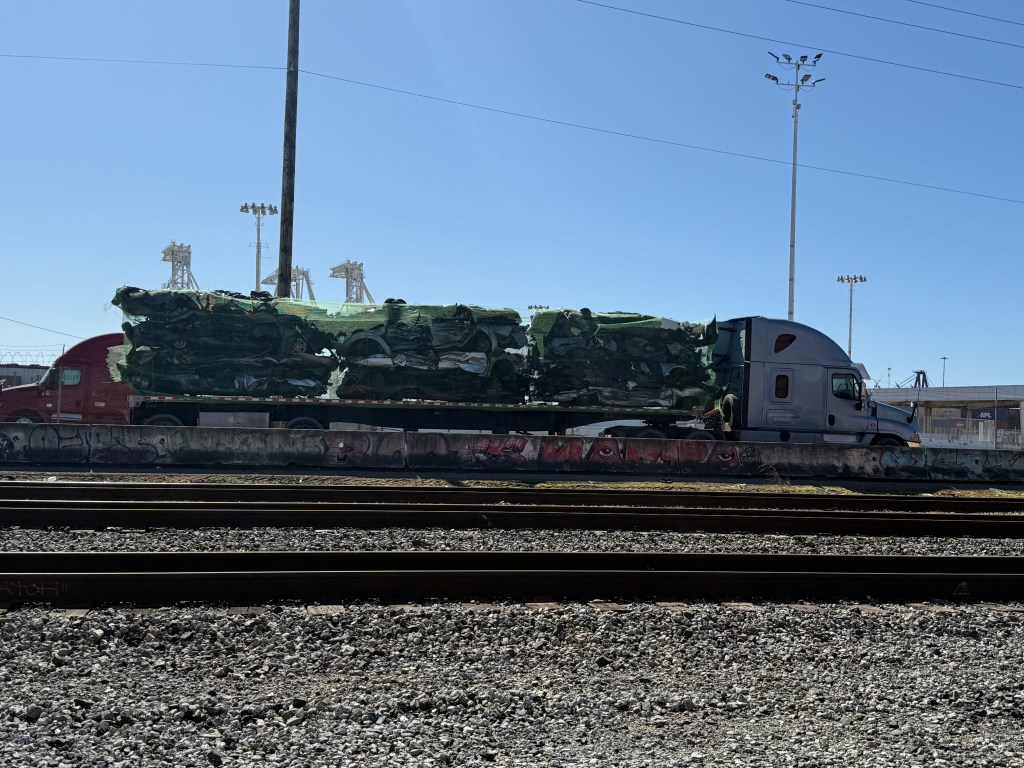
Employees testified that about 150 trucks selling scrap to the company arrived each day, but that workers spent only about four minutes looking over each incoming truckload instead of the 30 minutes or longer they said it would take to properly scrutinize the load.
In 2019, a consultant told the company that it had “an extremely high level of fire risk compared to facilities around the country,” one employee testified.
The consultant recommended that Schnitzer spread incoming materials on the ground to audit truckloads, to try to keep risky materials from coming in. A vice president for health and safety told the grand jury that wasn’t done, but a scales and inspection supervisor said that he did an audit once a month, though he didn’t explain the method used.
Testimony and records presented to the grand jury also detailed internal discussions at Schnitzer/Radius before the fire about the size of scrap piles and the importance of shredding “to the ground” every day — that is, running everything on site through the hammermill.
Schnitzer/Radius employees also testified to the grand jury that they had looked into recommended practices from the trade organization ISRI, now known as Recycled Materials Association or ReMA, about limiting the size of the piles, but those were not adopted.
The next steps in the criminal case aren’t clear.
In November 2024, after the grand jury had handed down the indictment, the district attorney lost a recall election and was removed from office. The Alameda County Board of Supervisors appointed a new district attorney, former judge Ursula Jones Dickinson, who was sworn into office in February. Her office told Public Health Watch that it “does not comment on active cases before the court.”
Radius Recycling is charged with eight counts in the indictment. The company’s regional general manager Daniel Woltmann is facing 10 counts, and terminal manager Dane Morales is charged with nine. Woltmann declined to comment, according to his lawyer. The lawyer for Morales did not respond to a request from Public Health Watch.
Radius and other shredders have argued in court documents and other filings that their operations pose no threat to the environment, that the DTSC lacks the authority to impose hazardous waste permits on facilities, and that any regulation should include an economic impact analysis.
In 2018, Meg Rosegay, an attorney representing Radius Recycling, wrote to the DTSC on behalf of the California Metal Shredder Coalition, of which Radius is a member, that the facilities she represented “contribute in meaningful ways to public health and safety and protection of the environment.”
If the companies faced additional regulation, they might be “forced out of business because they cannot operate economically,” she wrote. “[T]he enormous benefits provided by this industry must be weighed against the negligible (if any) environmental benefits that would result from the new draft requirements.”
The DTSC, meanwhile, also refused an interview request from Public Health Watch, responding instead to written questions.
“The circumstances surrounding the August 9, 2023, fire at Schnitzer Oakland are the subject of ongoing legal proceedings which DTSC cannot comment on,” spokeswoman Alysa Pakkidis wrote.
The official cause of the fire remains undetermined. Radius told regulators it wasn’t able to identify the source after an internal investigation, according to the grand jury transcript.
Momentum for change
This year could be pivotal for the metal shredding industry, and not just in West Oakland.
Momentum is growing — in the Legislature, in courts, and at public agencies — to define once and for all what oversight of metal shredders should look like in California.
The momentum is driven in part by the industry itself, which continues to claim that California regulations could drive them out of business. Besides Schnitzer in Oakland, shredding facilities that have been exempted from the disposal requirements operate in Redwood City, Anaheim, Bakersfield, Colton and San Pedro. Two more shredders, in Lancaster and Stockton, opened after state regulators handed out the “F” letters.

In early 2025, federal regulators announced a “collaborative effort” with the state in the waning days of President Joe Biden’s administration, in direct response to the 2023 fire.
The underlying memorandum of understanding includes an assortment of agencies that have some authority over Radius. The West Oakland Environmental Indicators Project is also party to the agreement, along with the company.
The agreement’s language is aspirational but vague. The company, the community, and public officials “intend to discuss the public health and environmental concerns” in West Oakland, it states. It also notes that the parties “recognize the existence of limitations” about sharing information.
“I’m not putting all my eggs in a basket and looking at the federal government being a partner in this.”
Margaret Gordon with the West Oakland Environmental Indicators Project
It’s not clear what role potential tariffs or the Trump administration’s Environmental Protection Agency might play in the effort, and neighborhood activist Gordon is not optimistic.
It’s not clear what role potential tariffs or the Trump administration’s Environmental Protection Agency might play in the effort, and neighborhood activist Gordon is not optimistic.
“We forged this collaboration, but we haven’t met yet,” Gordon told Public Health Watch. “And with all the chaos going on at the White House, we might not ever meet. So this has to be a state thing, not a federal thing … I’m not putting all my eggs in a basket and looking at the federal government being a partner in this.”
Several state-level civil cases remain open. The Oakland A’s continue to press the case against the DTSC, even as the team is seeking to break ground on a stadium in Las Vegas, the franchise’s new home.
In Los Angeles Superior Court, the Pacific Auto Recycling Center and the DTSC have slung legal claims back and forth. The metal shredder won a policy-related ruling in 2023, when a court found that the DTSC should not be able to backtrack on its exemption for fluff. The DTSC then brought an enforcement-related suit, claiming that the company had violated hazardous waste laws.
And after six years of preliminary motions and hearings, the industry trade group ReMA and the DTSC are awaiting trial on their longstanding fight over regulating shredders. According to recent filings, negotiations among regulators and the trade groups are unresolved but are continuing.
The DTSC is also legally entangled with Schnitzer/Radius over a 2021 “corrective action enforcement” order. The company has asked for a hearing to challenge the order, which has stopped the order from going into effect.
“DTSC and Schnitzer are continuing to engage in confidential settlement discussions that may obviate the need to have the hearing,” DTSC officials said in a written response to questions from Public Health Watch.
Negotiations are also underway with lawmakers.
Last summer, state Sen. Ben Allen, a Democrat from Los Angeles County, amended a coastal resources bill at the last minute to substitute wording that would establish a regulatory scheme for metal shredders. The bill was negotiated with input from the DTSC and the shredding industry; it would have repealed existing oversight and explicitly exempted Schnitzer and other companies from hazardous waste laws.
After public objections from a lobbyist for the Oakland A’s and environmental groups, including the West Oakland Environmental Indicators Project, Allen pulled the bill.
“The metal shredding industry provides a critical service to our circular economy,” he wrote, in a statement released when the bill died. “All parties, from the facility managers to the regulators, agree that this is in the best interest of the public and the industry, but we need to get this right.”
A new proposal has been filed for this year’s legislative session.
State Sen. Ana Caballero, a Democrat from Merced, introduced legislation, SB 404, that would seem to allow metal shredders to operate as they presently do, without a hazardous waste permit. Caballero’s summary of the bill says that the DTSC and regulators have acknowledged the need for a comprehensive regulatory scheme, and that the bill would establish new and separate permits for shredders.
“The industry has been working diligently and proactively with DTSC and other stakeholders … over the last several years to develop a regulatory structure and permitting process that assures full protection of human health and the environment while allowing metal-shredding facilities to operate effectively within the broader global metals market,” according to Winston Hickox, advisor to the California Metal Recyclers Coalition and former secretary of CalEPA.
The coalition supports the proposed legislation filed by Caballero, he said.
Gordon, with the West Oakland Environmental Indicators Project, says she’ll oppose any legislation that doesn’t protect the community’s civil rights. She supports the multi-agency collaborative, but is unconvinced that the DTSC and other regulators will prevent pollution or fires.
The DTSC, she said, “does not have the strongest outcome and relationship to health disparities in California communities. Yeah, they may be trying, but the history shows that they have not really accomplished that level where people feel really confident about them.”
Stronger regulations and enforcement are needed, she said, to protect low-income and minority communities from the impacts of metal shredding.
Gordon hasn’t yet spoken with Alameda County’s new district attorney, but says the criminal case may now be the community’s best bet.
“The only one that seems to have any authority to do anything,” she said, “is the district attorney’s office.”
‘How can I justify this’
Fire Lt. Ibarra can see Radius Recycling out the kitchen door of Oakland Fire Station No. 2, where he picked up the call in August 2023.
The station is at Jack London Square, an area in economic transition, named for the progressive adventure writer who chronicled the transformation of the West. On sunny weekends, young professionals wander through niche home goods stores and crowd waterfront restaurants with their kids and dogs. It’s more deserted on weekdays, when long trains cut the mixed-industrial area off from the rest of Oakland.
In late February, Ibarra took Public Health Watch on a short drive to the front gates of Radius, where three trucks lined up, waiting to go inside. One by one, each driver, checking in, stopped underneath a fixed camera suspended over the truck bed. In under 10 minutes, the trucks had all come and gone.
Ibarra still can’t shake his recollection of the fire.
One explosion knocked his helmet off. But it was another incident that really sticks with him. It came in the wee hours, as company crane operators worked to loosen metal from the pile so that hoses could jet water into the heart of the blaze.
Ibarra says the core was like lava. Over and over, the crane operators would reach in, grabbing molten metal with their claws, to swing it away from the mound. They moved quickly to avoid damaging the cranes’ hydraulics. One crane swung farther than Ibarra expected, then stopped, suddenly, above a younger member of his crew.
Ibarra yelled, loud and long. He thought his station mate “was going to be gone.”
Back in the kitchen of the firehouse, Ibarra pointed to a cork board of pictures, including the crew member who had the close call at Schnitzer. Just days earlier, that firefighter and his wife had welcomed a baby.
The incident has left Ibarra questioning the risks his crew faced that summer day.
“Why do we put so much effort for scrap metal?” he asked. “How can I justify this to my firefighter’s wife, if he would have died? That he died to save scrap metal?”