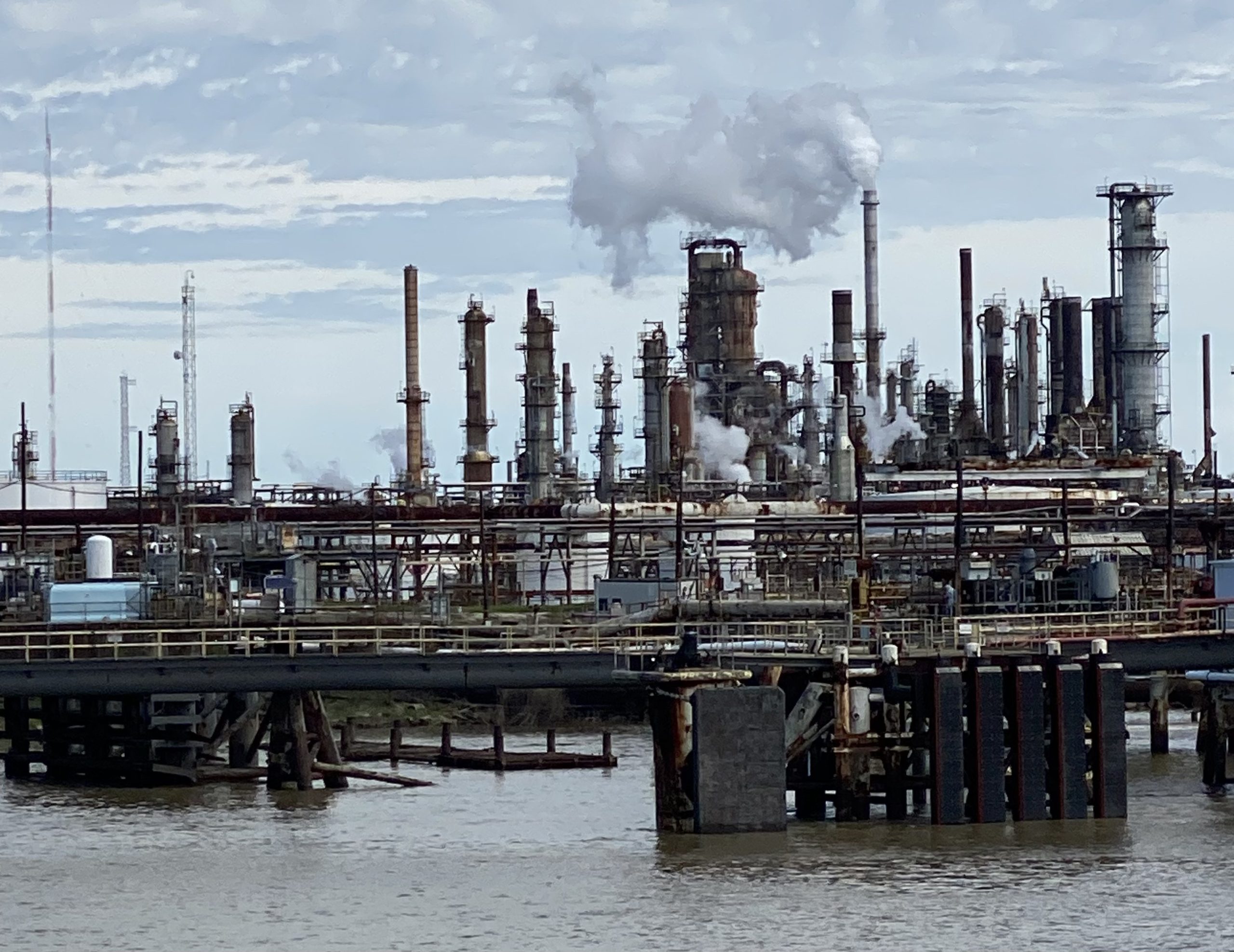

One year after Public Health Watch uncovered dangerous levels of benzene in Channelview, Texas, new state data places the unincorporated community at the center of another alarming report.
The study, released last week by the Texas Department of State Health Services, found “significantly greater than expected” rates of leukemia, lymphoma, cervix, lung and bronchus cancer on Harris County’s industrial east side.
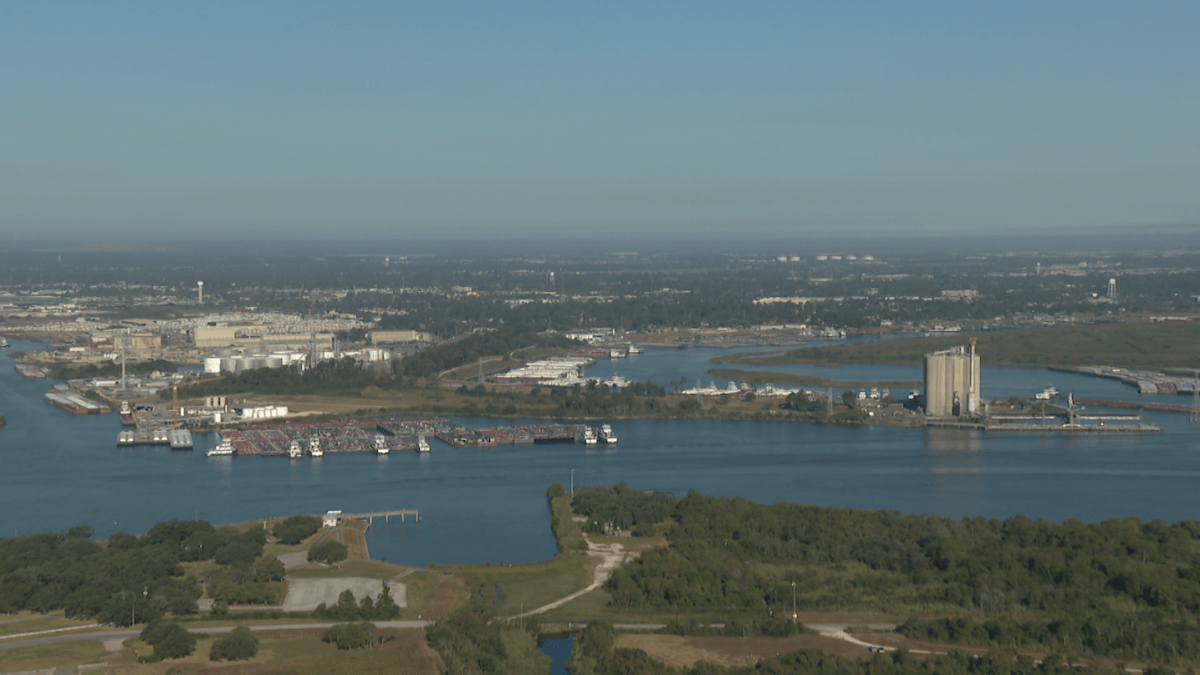
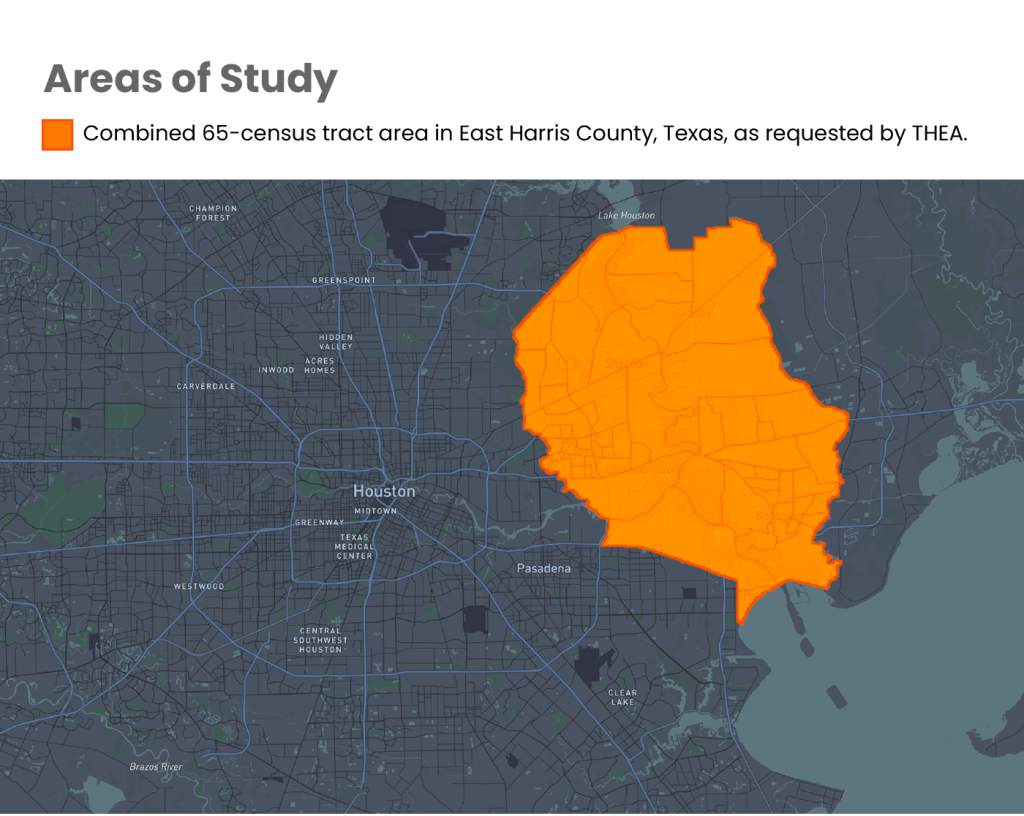
The analysis covered a 250 square mile area in the floodplain of the San Jacinto River, a waterway tied to a Superfund site known as the San Jacinto River Waste Pits. The site is located in Channelview.
Cindy Thompson Miller, 60, a lifelong Channelview resident, said the data cemented her longstanding fear that the neighborhood has been abandoned by regulators. “To see so many people die of cancer … there’s agencies that were supposed to protect us and they didn’t.”
Between 2013 and 2021, the study found, rates of leukemia in the study area were triple the Texas state average. Rates of cervix cancer were 18% above the state average. Rates of lung and bronchus cancer were 17% above the state average and rates of lymphoma were 10% above.
The analysis was conducted at the request of the Texas Health and Environment Alliance, or THEA, an environmental nonprofit.
“When I got the news of this study, I couldn’t help but be incredibly emotional because we’ve lived it. We know this, but now it’s confirmed,” said Jackie Medcalf, THEA’s founder.
The study, which did not determine the cause of the cancers, was based on data from the Texas Cancer Registry. Although the registry collects data by ZIP code and census tract, that more specific information wasn’t included in the report.
Medcalf wants the state to release the data by census tract, so residents know which cancers, if any, are prevalent in their immediate neighborhoods.
“The burden of pushing for things like this falls on us, it’s difficult,” Medcalf said. “This study opened a can of worms … and now we need to figure out what’s going on and where … Give us the data.”
Carolyn Stone, founder of the Channelview Health and Improvement Coalition, a community group advocating for cleaner air and water, also wants the census tract data released.
“We shouldn’t have to beg and plead for the data,” Stone said. “How many people have to get sick or die? We’re not getting protection, we’re getting thrown to the wolves here.”
A Health Department spokesman told Public Health Watch that “analyzing data at the census tract level leads to multiple statistical problems.” The spokesman said no additional investigations are planned into the unusual patterns of cancer, but the department is “talking with the community about possible next steps.”
Contamination in the San Jacinto River can be traced to a now-defunct paper mill. Roughly 9,000 truckloads of pulp and paper waste, contaminated with dioxin, were discarded on the banks of the waterway in the 1960s.
Dioxin is a carcinogen linked to leukemia, lymphoma, lung and bronchus cancer and other health problems. When mixed with water, the chemical can latch onto moving sediment particles and permeate soil, fish and food chains for decades.
According to a lawsuit filed by Harris County in 2016, the industrial deepening and widening of the San Jacinto caused the strip of land containing the waste pits to rupture. As a result, dioxin was released “into the water daily,” beginning in the late 1980s. According to legal filings, the dredging projects were led by barge companies servicing Houston’s petroleum industry.
In 2008, the U.S. Environmental Protection Agency designated the San Jacinto River Waste Pits as a Superfund site, a federal classification given to the nation’s most contaminated hazardous waste zones. The agency earmarked the site for cleanup on its National Priorities List and estimated the dioxin would be removed by 2020.
But years of dispute over who’s responsible for cleaning the site, and how it should be done, have pushed the cleanup more than five years behind schedule.
Harris County Precinct 3 Commissioner Tom Ramsey called the delays an “atrocity” at a press conference held by THEA on the cancer study last week. “This is the worst possible place to have a Superfund site,” he said.
Ramsey was particularly concerned about the increase in barge traffic near the waste pits.
According to satellite images analyzed by Public Health Watch, at least 550 barges are stationed on the San Jacinto River within the “area of concern” the EPA has designated around the waste pits. Roughly 15% of the barges navigate within one mile north of the waste pits, risking a collision with the dioxin impoundment each time they travel to or from the Houston Ship Channel.
“We need to get the barges out of the north side,” Ramsey said.
Public Health Watch investigations over the past two years have found that Channelview residents are exposed to dangerous levels of airborne benzene, a carcinogen linked to leukemia.

Coming March 7: Our new podcast, Fumed, tells the story of a group of residents fighting to save their working-class community from industrial takeover.
Benzene readings taken by the Texas Commission on Environmental Quality, or TCEQ, in 2021 and 2022 — the most recent data available — consistently exceeded levels considered safe in California. On two occasions, they exceeded even Texas state health guidelines, which are the weakest in the nation. One air quality reading in Channelview showed benzene levels three times higher than what Texas considers safe.
Internal documents obtained by Public Health Watch showed that the TCEQ knew about Channelview’s benzene problem for nearly two decades but did not tell residents about the health risks they face.
The agency removed the area that includes Channelview from its Air Pollutant Watch List for benzene in 2010, even as readings of the chemical over the following years remained high. The area is now listed as an “Air Pollutant Watch List Success” on the agency’s website.
“There’s cancer down here. The residents know it, everybody knows it,” said Greg Moss, a Channelview resident who lives less than a mile from the Superfund site. “The EPA keeps doing this song and dance with the waste pits… They should have had [the cleanup] done.”
EPA Region 6 spokesperson Joe Robledo declined to comment on the study, the status of the dioxin cleanup or whether the study may accelerate the agency’s approach. In a statement, he said the EPA “is focused on addressing the contamination” to ensure it “doesn’t pose a risk to nearby communities.”
Public Health Watch reporter Savanna Strott contributed to this story.
You can listen to Fumed on Spotify, Apple Podcasts and publichealthwatch.org or wherever you get your podcasts.