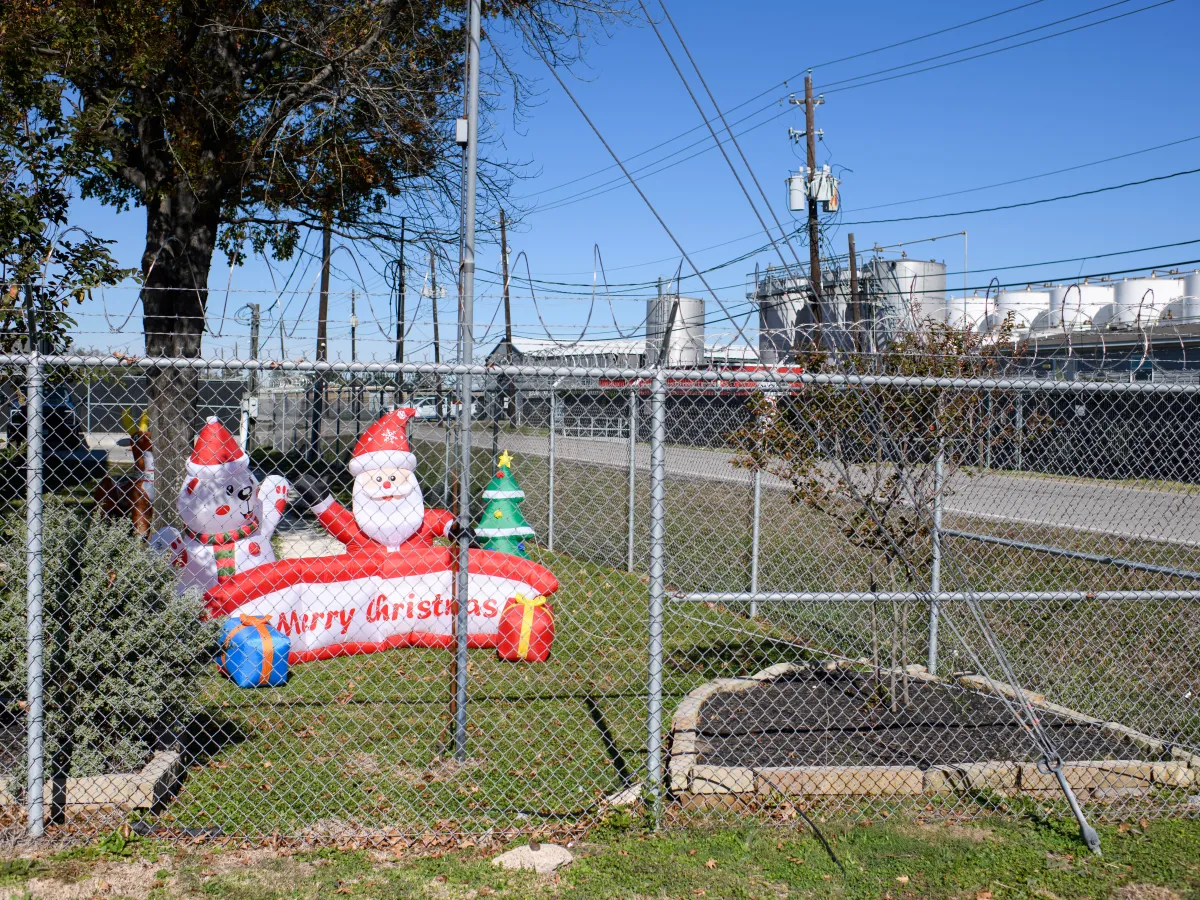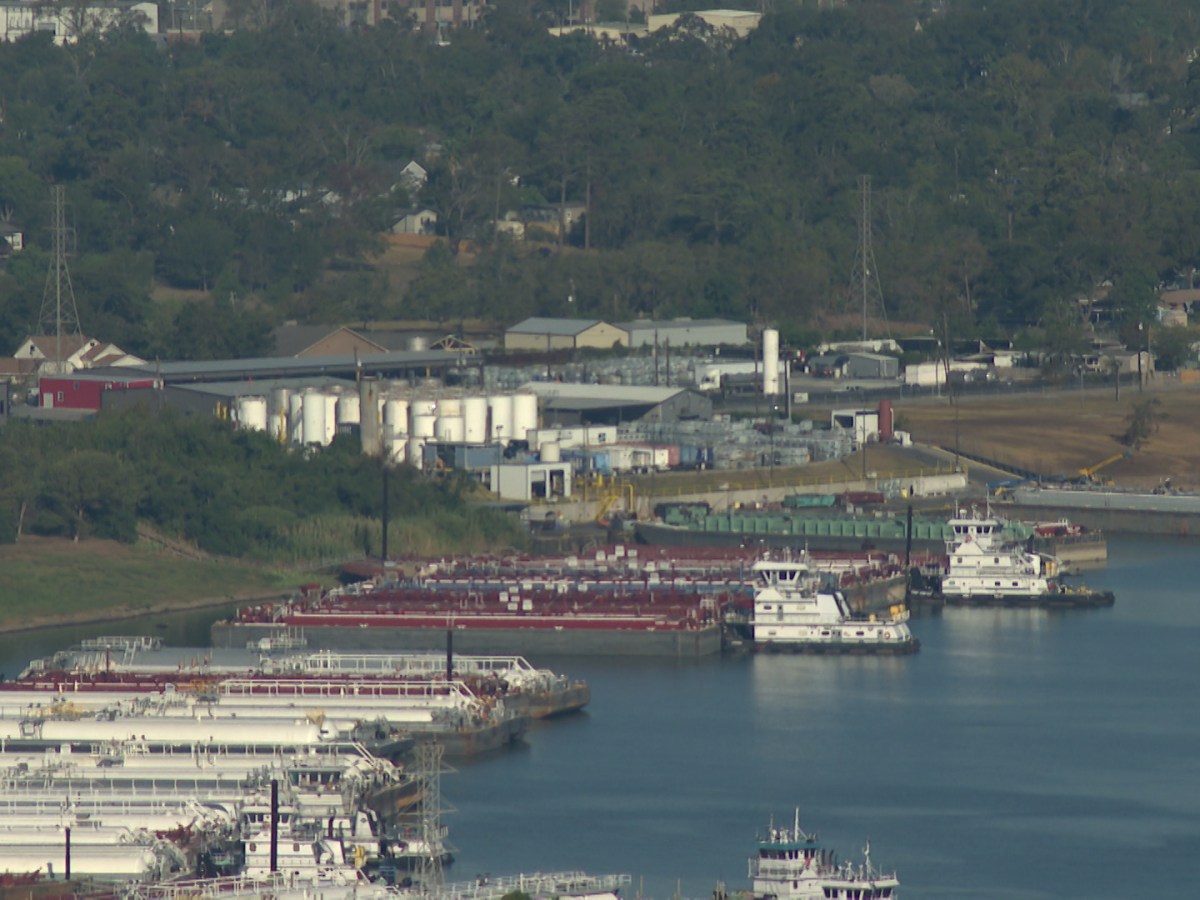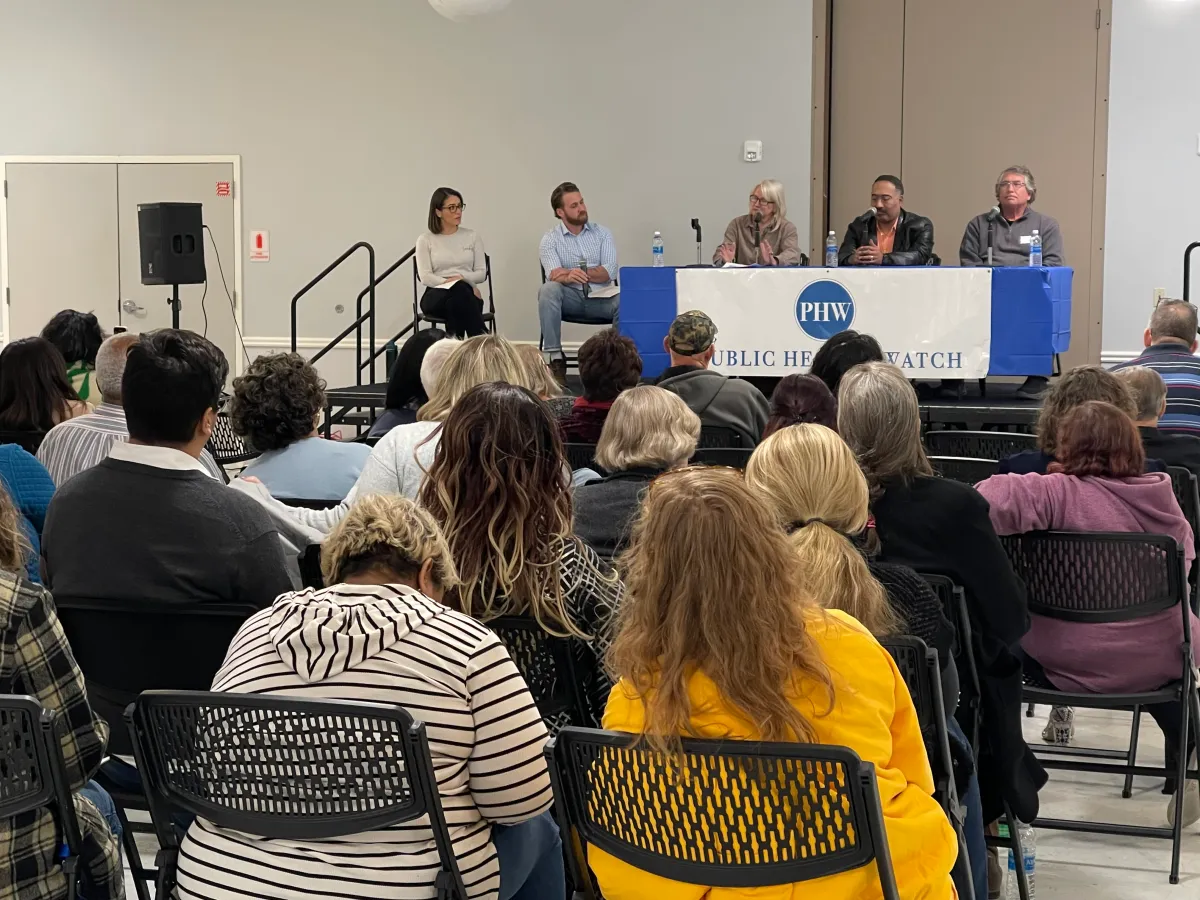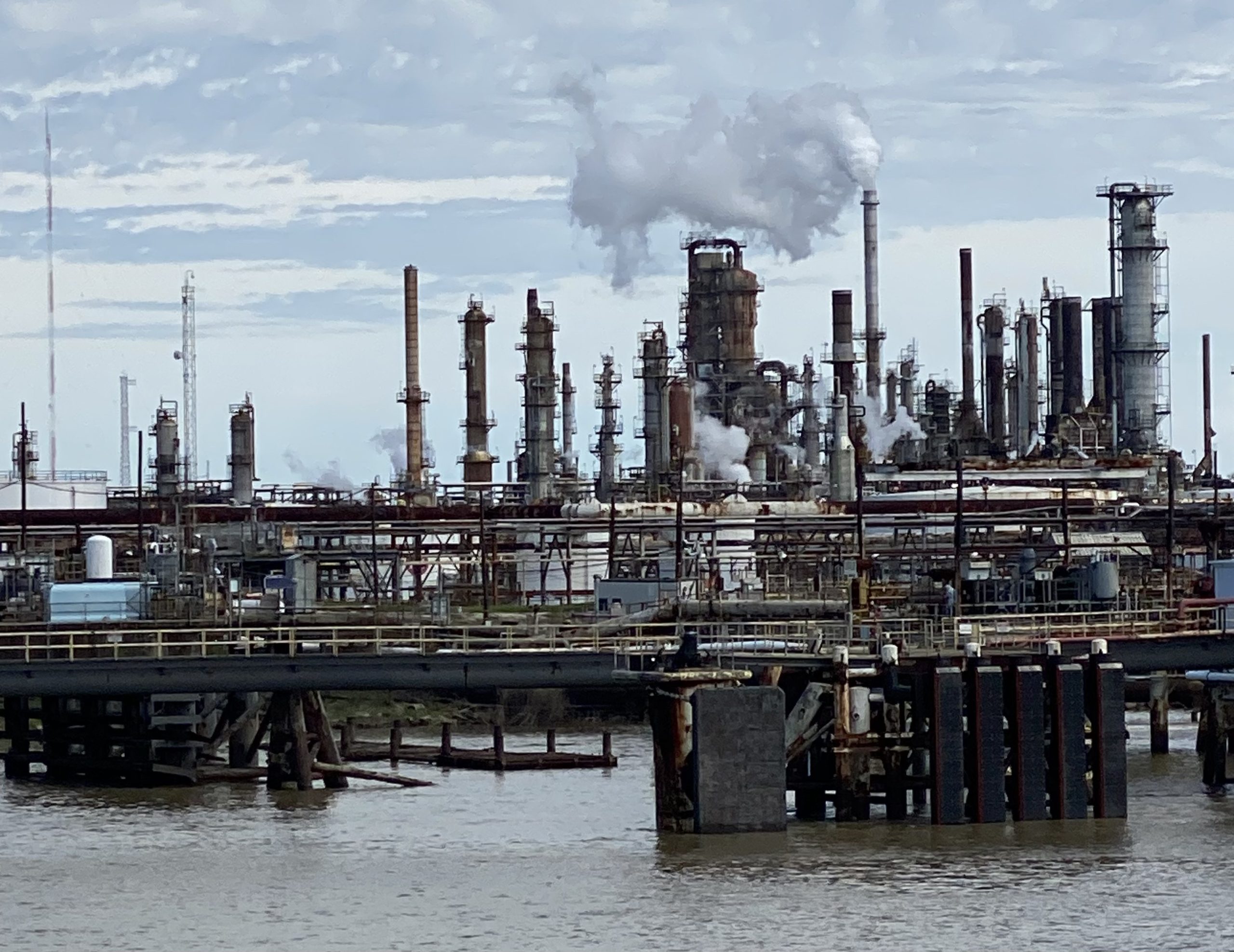

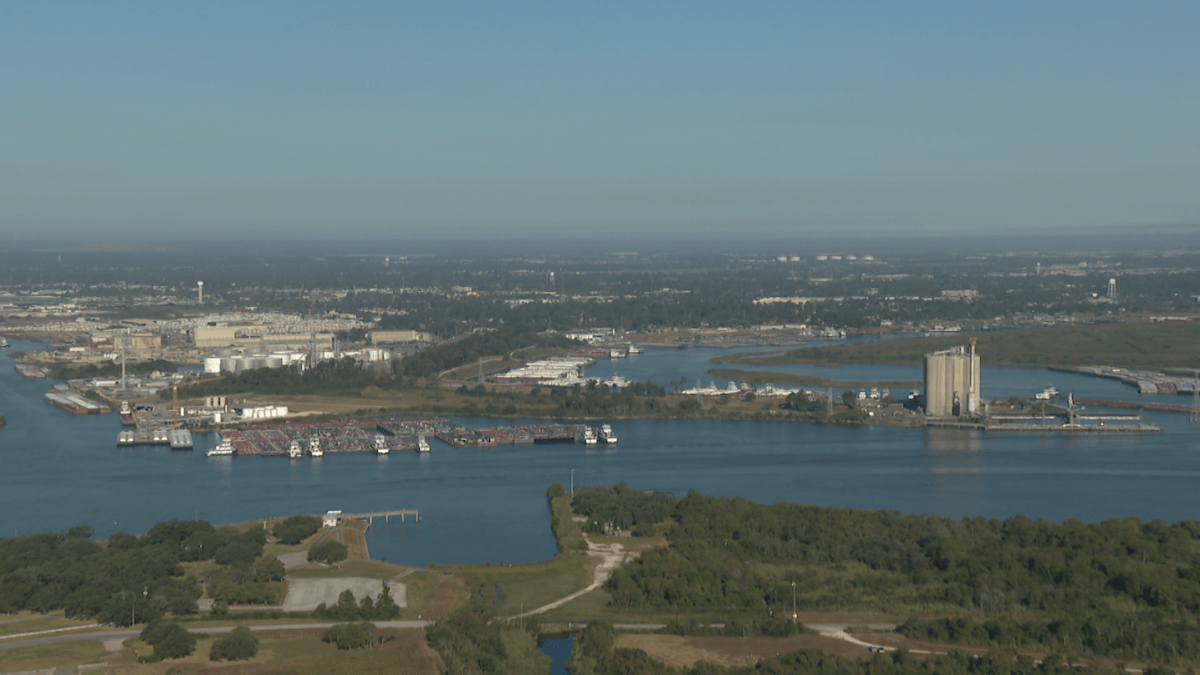
A Texas state senator has introduced a bill that addresses issues uncovered by Public Health Watch’s reporting in Channelview, an unincorporated community that has been plagued by cancer-causing benzene for at least 20 years.
Sen. Carol Alvarado’s bill requires facilities that store and distribute volatile organic compounds, a class of chemicals that includes benzene, to install “state-of-the-art” equipment to limit emissions. It also calls for increased monitoring and inspections.
“Chemical facilities … operate in our communities, near our schools and homes,” Alvarado said in a statement to Public Health Watch. “For too long, we have been without practical safeguards to protect public health and hold emitters accountable for violations.
“We are open for business in Texas. But for those who don’t play by the rules, it’s time to show them that we also mean business.”

Alvarado, a Democrat whose district includes Channelview, began working on the bill in 2023 after Public Health Watch revealed that scientists with the Texas Commission on Environmental Quality had recorded high levels of benzene in 2005 downwind of a chemical distribution company called K-Solv. A more recent Public Health Watch report, released in December, found that in 2021 and 2022, TCEQ scientists had again recorded high levels of benzene downwind of K-Solv and that the state’s stationary monitor was not positioned to capture the company’s emissions.
In a statement to Public Health Watch, K-Solv said it “shares Senator Alvarado’s commitment to the environment.” It said the company already has state-of-the-art equipment to “maintain emissions at or below permitted levels” and that it regularly monitors chemical emissions on its property.
K-Solv said it was concerned about the monitoring component of the bill because monitors capture pollution from many sources. “We hope the Senate will work with industry, regulators and other subject matter experts to evaluate whether this bill would achieve its intended purpose,” the company’s statement said.
Alvarado’s bill likely faces an uphill battle in the Republican-dominated Texas Legislature, whose members received nearly $3 million in campaign contributions from the oil, gas and petrochemical industries in 2023 and 2024, according to FollowTheMoney.org. But some recent laws have found success.
In 2021, the legislature passed another bill sponsored by Alvarado. It created new construction standards for above-ground storage tanks, which had fueled a massive fire at the Intercontinental Terminals facility in 2019. Last session, the legislature raised the maximum fine for polluters for the first time in more than a decade. Rep. Penny Morales Shaw, a Democrat from the northwestern part of Houston who sponsored the bill, was inspired by a 2022 Public Health Watch investigation that showed how the state has limited local officials’ ability to punish polluters.
Adrian Shelley directs the Texas office of Public Citizen, a national nonprofit that focuses on curbing corporate power. He said Avarado’s determination to reform the chemical distribution industry will eventually have an impact, whether it’s through a version of the bill she just filed, other legislation or the TCEQ taking action of its own.
Shelley, who consulted on Alvarado’s bill, said she’s eager to negotiate in good faith with the industry.
“But it is going to take a regulated industry that is honest about their impact on the community and earnest and eager in their desire to do better,” Shelley said. “That would be the necessary starting point.”
Alvarado’s bill would require chemical distribution companies like K-Solv to install monitors to measure volatile organic compounds in neighboring communities. The data from these monitors would be publicly available in real time.
Companies would also have to conduct quarterly visual inspections of their equipment and annual inspections to ensure there are no detectable emissions. If the TCEQ finds an issue, such as a leak, the facility would be required to fix it immediately.
The bill requires the TCEQ to audit chemical distribution companies every quarter for compliance and levy fines on those who violate the rules. The fines would fund a new grant program that would support environmental remediation projects in communities most affected by pollution from volatile organic compounds.
Support from other officials
Rep. Ana Hernandez, a Democrat whose district includes Channelview, told Public Health Watch in December that she will work with Alvarado to get her legislation passed in the House of Representatives.
Hernandez said she would also explore ways to require the TCEQ to re-evaluate its benzene guidelines, which are among the weakest in the nation, and to address the issues with the stationary monitor.
“The information that they’re relying on to set these public safety guidelines” is not accurate, Hernandez said. “That’s not the way we should operate a state agency that’s tasked with protecting public health.”
Harris County Attorney Chrisitan Menefee said Alvarado’s bill is an “important step” in protecting communities from pollution.
“We know there’s more work to be done to keep people who live, work, and go to school near these facilities safe,” he said in a statement. “I’m hopeful that our lawmakers in Austin will support this bill.”