GAO: Federal coordination needed to address textile waste
From clothing to carpets, textile waste is growing, and U.S. agencies need to work together to address the problem, says a new federal report.
The amount of textile waste — made up of garments and products such as upholstery, footwear and linens — discarded annually in the U.S. increased 50% over two decades, according to the Dec. 12 report from the U.S. Government Accountability Office.
In 2018, about 66% of textile waste was disposed of in landfills, 19% was burned and 15% was recycled. Textile products can release chemicals, microplastics and greenhouse gases into the environment as they decay, contributing to pollution and climate change.
Clothing makes up the bulk of textile waste, with most garments discarded by consumers ending up in landfills. The rise of fast fashion — in which clothing is produced rapidly and cheaply — is credited with increasing the amount of textiles discarded around the world. The products are often low quality, made from artificial plastic-based fabrics and not kept long-term by purchasers.
Furthering the problem, adequate, coordinated systems to collect and sort consumer textile waste are lacking, and textile recycling technology is limited, the GAO report said.
The report recommended the U.S. establish an interagency body that would focus on reducing textile waste and advancing recycling, and that leaders support state, local and organizational work that advances those goals.
Petrochemical emissions costing lives, report says
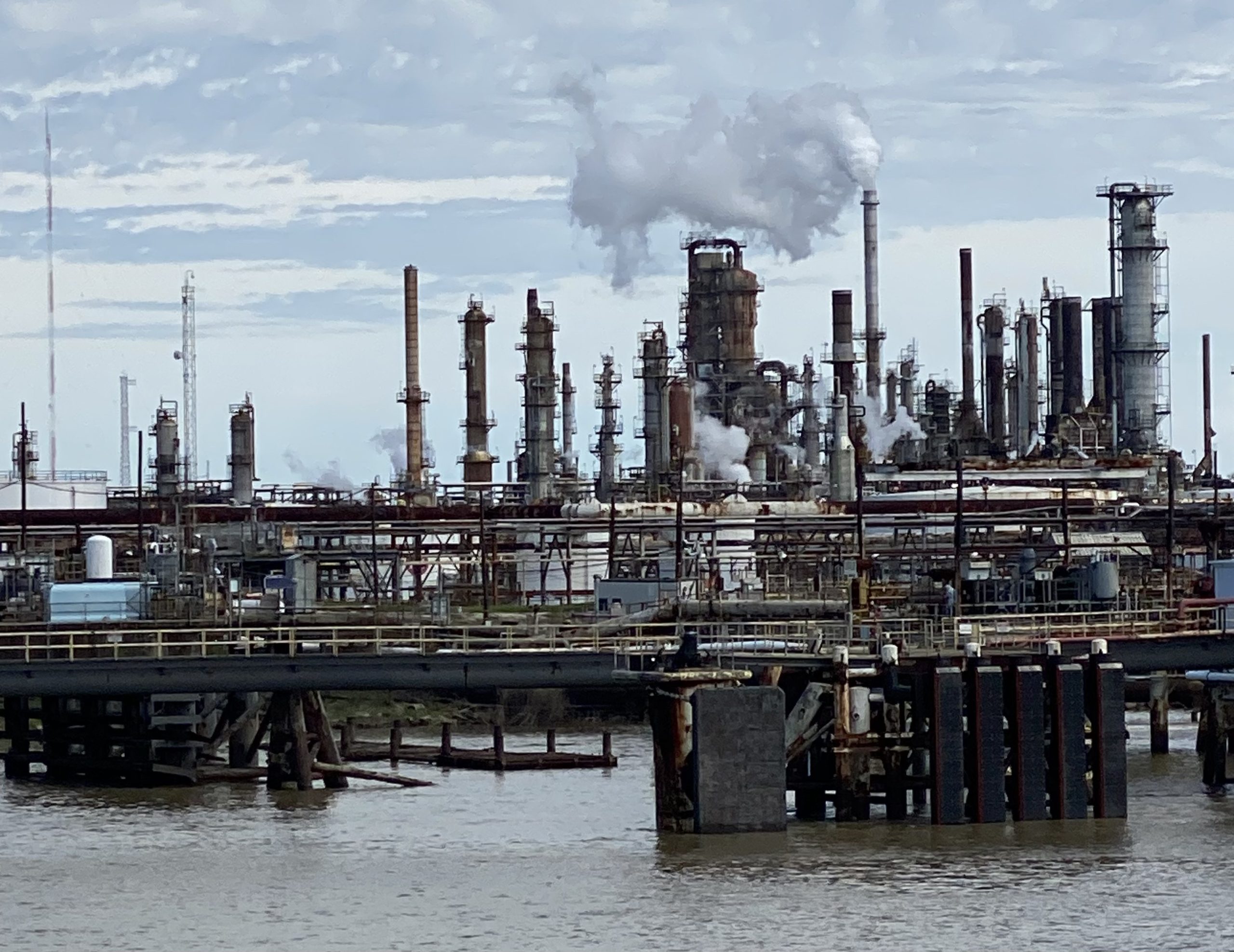
Emissions from petrochemical facilities in the Gulf Coast and Ohio River Valley regions contributed to nearly 1,500 premature deaths in 2020, a new report estimates.
Released Dec. 9 by PSE Healthy Energy, a California-based scientific research institute, the report examined the impact of emissions from nearly 800 facilities in the two regions. Millions of people in Louisiana, Ohio, Pennsylvania, Texas and West Virginia are estimated to live within three miles of at least one of the facilities.
From 2012 and 2021, annual greenhouse gas emissions across the Gulf Coast and Ohio River Valley regions grew an average of 12%, the report found, with the greatest increase seen in Texas, at 17%. The facilities use oil, gas and coal to make chemicals, pesticides, fertilizers, synthetic fibers and other products, emitting millions of tons of greenhouse gases annually.
Those emissions include fine-particle pollution, also known as PM2.5, and chemicals such as sulfur dioxide, nitrogen oxides and volatile organic compounds.
About 92% of the premature deaths from industry emissions that occurred in 2020 were in Texas, which has the highest number of petrochemical facilities among the six states.
People who live near petrochemical facilities are at increased risk for a range of cancers, respiratory conditions and pregnancy-related concerns such as premature birth and low birth weight.
Government assistance helps new moms weather stress
Access to government assistance programs can help ease mental health stressors among women who’ve recently given birth, particularly during times of crisis, a recent study in BMC Public Health says.
Researchers surveyed Louisiana women who had been pregnant during stressful periods — such as the COVID-19 pandemic, local hurricanes and the 2022 infant formula shortage — and given birth. They found that overall, women who had access to food assistance programs, stimulus payments and other government benefits were better able to cope with the financial and mental health effects of the stressors.
Having stable housing and employment and a supportive workplace after giving birth also contributed to better health and mental well-being for the women, the study found.
Anxiety and depression is common among women following childbirth, which can affect their ability to care for their children, such as disrupting breastfeeding, as well as themselves. Large-scale stressful events, such as natural disasters, can worsen mental health problems.
The study also found higher rates of depression among Black women who had given birth compared to other new mothers. Black women were also more likely to report loss of hours, decreased pay and less job security during the stressful periods compared to white women.
Previous research has found that Black women are at higher risk for postpartum depression than white women but are less likely to receive the mental health services they need.
Other recent public health news of note includes:
• High waters are associated with lower birth weights, a new study on flooding risks finds. Released Dec. 10 during the American Geophysical Union’s 2024 Annual Meeting in Washington, D.C., the research found flooding increases preterm birth rates by about 3%.
• There’s a strong connection between long-term exposure to air pollution and increased risks for depression, according to new research published Dec. 10 in Environmental Science and Ecotechnology. Another study, published Dec. 17 in BMJ Open, finds long-term air pollution exposure is associated with higher rates of hospital admissions for both mental and physical illness.
• Few U.S. medical students are being taught how to care for the nation’s millions of incarcerated and formerly incarcerated people, who often face unique health challenges, says a study published Dec. 10 in the Journal of General Internal Medicine.
• Older adults are vulnerable to heat-related low sodium levels, also known as hyponatremia, say new findings published Dec. 16 in JAMA Network Open. Women are especially vulnerable to developing the condition, which may become more common as the world warms with human-caused climate change.
• Tourism accounts for 9% of the world’s total greenhouse gas emissions, says research published Dec. 10 in Nature Communications. Air travel and long-distance flights account for much of the tourism-related emissions, which at current growth rates may double every 20 years, researchers said.
• Early exposure to endocrine-disrupting chemicals may lead to behavioral and psychological problems later in life, according to a new study in the Journal of the Endocrine Society.
Researchers found that rats exposed to polychlorinated biphenyls, also known as PCBs, while in utero and through their first year of life experienced changes in their neuroendocrine systems. While PCBs have been banned for decades, the chemicals persist in contaminated soil and some fish, posing possible exposure risks to humans.
• Microplastics may be linked to both lung and colon cancer, a systemic review published Dec. 18 in Environmental Science and Technology concludes.
The Watch is written by Michele Late, who has more than two decades of experience as a public health journalist. Stay tuned for our next issue Jan. 9, following our end-of-year break.