Abortion patients in Texas travel farther for services
Texans who are seeking abortion services have had to travel a lot farther to reach a provider since the U.S. Supreme Court overturned the constitutional right to access.
Since the June 2022 decision in Dobbs v Jackson Women’s Health Organization, Texas residents have been forced to travel an additional 457 miles, on average, to reach an abortion provider, according to a study published May 23 in the American Journal of Public Health. About 3.6 million women of reproductive age in the state have been subject to at least a full additional travel day after the overturning of Roe, Tulane University researchers estimate.
People living in the Texas Panhandle experienced the least amount of change in travel time, as abortion remained legal in nearby Colorado, New Mexico, Kansas — though with a 24-hour waiting period in the latter state. People in the southern and southeastern parts of Texas experienced the most increase in travel time, as bordering states to the east ended abortion services entirely.
Texas residents in census tracts with the highest levels of income inequality were more likely to have greater increases in travel times.
As of this month, 14 states have total bans on abortions and another seven have strict gestational age limits. Since the Dobbs decision, abortion visits in states without bans have increased, the researchers noted, suggesting residents are traveling elsewhere for services.
Childhood air pollution harms mental health
Exposure to air pollution early in life is associated with higher risks for certain mental health conditions later on, new research shows.
Published May 28 in JAMA Network Open, the study followed participants over 25 years, finding that depression and psychotic experiences — such as hallucinations and delusions — were more common in people who had been exposed to higher levels of fine-particle pollution during fetal development and early childhood. In the case of depression, every 0.72 μg/m3 increase of exposure to fine-particle pollution, also known as PM2.5, during pregnancy increased odds for the condition by 10%.
Researchers also found a link between early-life noise exposure and later mental health. Specifically, higher exposure to road traffic noise in childhood and adolescence was associated with elevated odds for anxiety in early adulthood. Over two-thirds of participants, who lived in an urban area, were exposed to high levels of noise pollution throughout the study period.
Early-life exposure to air and noise pollution could damage important brain development that occurs during early life, the researchers suggested. More than 60% of people who develop psychiatric disorders do so by age 25, they noted.
Health care costs unequal for low-income people
People with low incomes pay a disproportionate amount of their income on health care costs, despite having private insurance, a new study finds.
In 2019, families with annual incomes that were less than 200% of the federal poverty level — about $42,600 for a family of three — spent about 26% of their income on health care. In contrast, families with higher incomes only spent 6.5% of their income on care, according to the study, which was published May 28 in JAMA Internal Medicine.
Though they used a larger portion of their income for health care, the total amount spent by low-income people was less. Mean health care spending for low-income families was about $3,250 in 2019, compared to $5,240 for higher-income families. Costs included health insurance premiums and out-of-pocket medical and prescription drug spending.
For all privately insured U.S. families, the average financial medical burden in 2019 was 9.8% of income after food costs, a more than 16% increase from 2007.
High health costs are of particular concern for people with low incomes, as they are more susceptible to debt, bankruptcy and worse health outcomes, the researchers said.
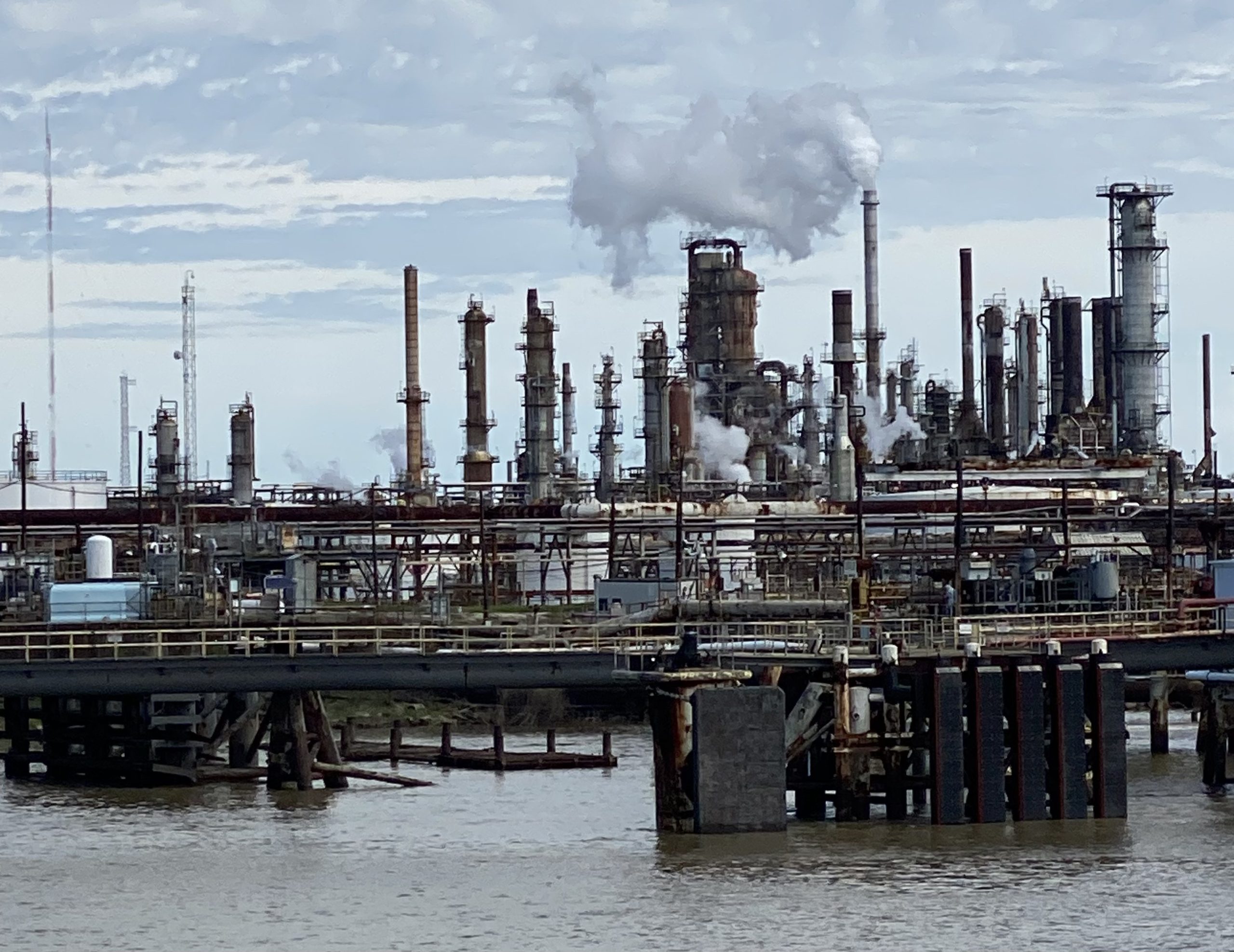
Monitoring shows reduced benzene from refineries
Fewer oil refineries in the U.S. emitted potentially dangerous levels of benzene last year, a recent analysis by the Environmental Integrity Project finds.
Using data from the U.S. Environmental Protection Agency, the project found that the number of refineries that emitted actionable levels of the cancer-causing pollutant has fallen by half since 2020.
Only six of the nation’s 115 refineries had average annual benzene levels in 2023 that required them to conduct investigations and carry out cleanup under federal law. The actions are triggered if benzene levels measured at facility fence lines exceed an annual average of 9 micrograms per cubic meter. Benzene, which is found in oil, gasoline and other petroleum products, has been linked to leukemia and other cancers.
Four the six refineries that were required to take action are located along the Gulf Coast, with two in Texas and two in Louisiana, and the others are in Ohio and Hawaii. The highest levels of benzene were detected at Houston’s Pemex Deer Park Refinery, which had an annual average of 17.3 micrograms per cubic meter — almost twice EPA’s actionable level. Benzene levels at the refinery have been increasing for more than two years, according to the Environmental Integrity Project.
Across all of the nation’s refineries, the number of facilities that exceeded the action level at any point in the year fell 30%, from 24 in 2020 to 17 in 2023, showing that the value of federal regulation, according to the project.
Additional regulations expanded by EPA last month will require fenceline monitoring for benzene and five other pollutants —1,3-butadiene, ethylene oxide, vinyl chloride, chloroprene and ethylene dichloride — at more than 200 U.S. chemical plants starting in 2026.
Other public health news of note this week includes:
• About 60% of Black people in the U.S. are exposed to gun violence, and many of them suffer mental and physical harm as a result, according to new research in the Journal of Urban Health.
• In the absence of a national occupational standard, a patchwork of state and local regulations are leaving workers at risk of harm from extreme heat, a Public Citizen report concludes.
• New final standards from EPA are aimed at reducing hazardous emissions from coke ovens used by the steel industry.
• Some aluminum and brass cookware sold in the U.S. can leach lead, a study in the Journal of Exposure Science & Environmental Epidemiology finds.
• High levels of greenhouse gasses could be released as climate change thaws Arctic permafrost, further raising global temperatures, a study in Nature Microbiology predicts.
The Watch is written by Michele Late, who has more than two decades of experience as a public health journalist.