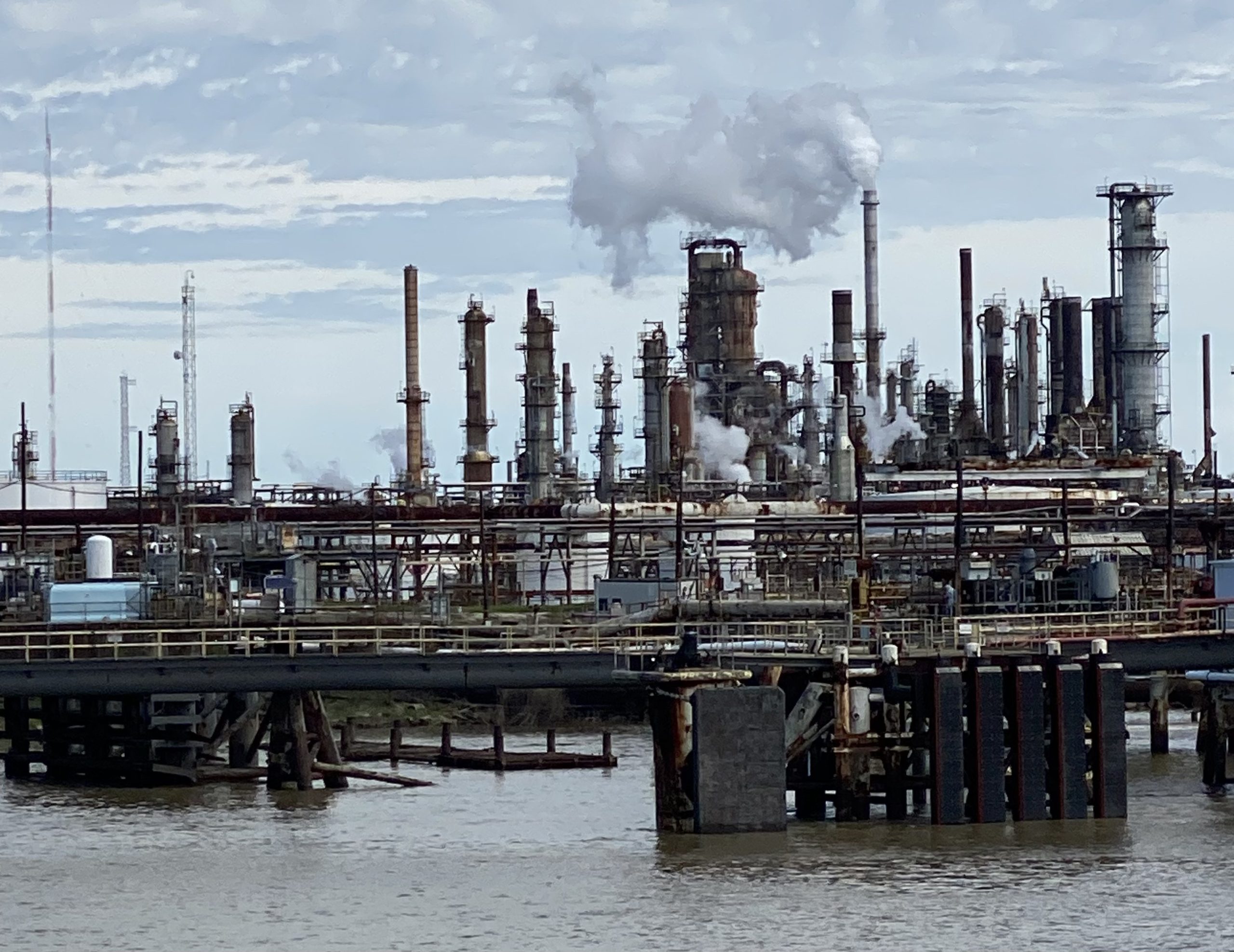


Today “The Cancer Factory,” an investigative book by Public Health Watch founder Jim Morris, goes on sale. Published by Beacon Press, it covers territory familiar to PHW readers. It shows how blue-collar workers — in this case, at a Goodyear Tire and Rubber Company chemical plant in Niagara Falls, New York — can be exposed to deadly substances without their knowledge, and how government efforts to protect them often fall short.
Ten years in the making, “The Cancer Factory” chronicles the lives of Goodyear workers who endured one of the nation’s biggest workplace epidemics of bladder cancer since World War II. It documents a decades-long crusade by a New Jersey lawyer to help the ailing workers win some measure of justice against DuPont, the primary supplier of the carcinogen that inflicted such misery, and force Goodyear to clean up the factory. The book also examines America’s broader failures to enforce the Occupational Safety and Health Act of 1970, especially when it comes to toxic exposures. We re-publish here the book’s introduction:
Around four o’clock in the afternoon on August 4, 1992, during a bathroom break from moving furniture, Rod Halford began urinating blood. Not a little blood; sheets of it. It was “such a startling effect,” he would later testify in a deposition, that “I jumped back and [the blood] went all over.” Halford, then living in Youngstown, New York, near Lake Ontario, had the presence of mind to hold his urine stream and ask his wife, Nellie, to bring him a jar so he could capture a sample. She brought him a baby bottle. Halford called his family doctor, who told him to dump the bottle’s contents and report to Mount St. Mary’s Hospital in Lewiston, seven miles away, the next morning. There Halford gave another urine sample, but a proper analysis wasn’t possible—still too much blood. X-rays were taken two days later, and a urologist at Sisters of Charity Hospital in Buffalo gave Halford the results on August 10: he had a malignant tumor on his bladder the size of his pinky fingernail. The tumor was removed without general anesthesia. Halford had vetoed the idea of being put under and staying overnight in the hospital because, he explained in his deposition, Nellie couldn’t drive his pickup truck, which had a stick shift, and “I just don’t relish hospitals anyway.” There was, Halford admitted, some discomfort associated with the procedure.
At the time of his diagnosis, Halford was the eighteenth employee of the Goodyear Tire and Rubber Company’s chemical plant in Niagara Falls, New York, to develop bladder cancer. Halford had started at the plant as a chemical operator in 1956, become an electrician in 1970, and retired as a janitor at fifty-five in 1991. His tumor was, to some extent, foreseeable: by 1981, when he was president of Oil, Chemical and Atomic Workers Local 8–277, he knew of four coworkers with the disease. By 1988 he knew of eight. Federal health investigators, invited into the plant by the union, found fifteen cases of bladder cancer. At this writing, the unofficial tally stands at seventy-eight, though that may be an undercount given the challenges of tracking retirees. Some of the victims are dead. Others live with the anxiety of knowing their malignancies, contained by surgery and chemotherapy, could resurface at any time.
There’s little, if any, doubt about what caused the Goodyear cancer cluster. From 1957 onward, Rod Halford and his coworkers in Niagara Falls inhaled—and, more important, absorbed—a chemical called ortho-toluidine, known internally as Dominic. The chemical was used to make an anti-cracking agent for tires. Halford would come home from work stinking of it. It made his wife gag when she washed his clothes. It seeped through his pores while he slept, leaving a brown stain on the sheets. Documents show its primary manufacturer, E.I. du Pont de Nemours and Company, knew by the 1950s that the yellowish liquid caused bladder cancer in laboratory animals, and was protecting its own production workers in New Jersey against exposure. But DuPont either didn’t adequately warn its customer, Goodyear, about the risks, or Goodyear didn’t listen. Maybe both companies were at fault; that discussion may never be settled.
Not large by the standards of its neighbors, the Goodyear plant had a history with chemicals that made it a pernicious, two-headed beast: eleven years before Goodyear started buying ortho-toluidine from DuPont and a few other manufacturers, it began using a chemical called vinyl chloride to make polyvinyl chloride (PVC), a resin fabricated elsewhere into vinyl garden hoses, shower curtains, siding, and other products. Like ortho-toluidine, vinyl chloride is a potent carcinogen, though it targets the liver instead of the bladder. By the time Goodyear closed the PVC side of the plant in 1996, eleven fatal cases of liver cancer had been recorded among its workforce—about four times what would be expected under normal circumstances.
Few outbreaks of occupational illness in the US have been documented as thoroughly as the one at Goodyear’s Niagara Falls factory. Few offer a more striking example of how blue-collar workers were exploited after World War II. Generations of them—starting with the tide of veterans fresh from the battlefields of Europe and the Pacific, eager to ride the surging industrial economy—were misled about the safety of the chemicals they made and used. Men who had avoided death or serious injury in the Hürtgen Forest or the jungles of Guadalcanal encountered in workplaces like Goodyear an adversary they couldn’t see, one that weakened untold numbers of them over time and lopped years off their lives. This was the bargain they unknowingly struck in exchange for company picnics, Thanksgiving turkey giveaways, and paychecks big enough, with overtime, to allow the purchase of fishing boats and weekend cabins. Many stayed in the same factory for years and believed what their employers told them: “Substance X won’t hurt you.” Or, in extreme cases: “You could eat Substance Y for breakfast and be fine.” Employers and their trade associations, we now know, understood the enormity of such falsehoods.
The federal government gave this generation of workers almost no help until the late 1960s, by which time some 14,500 of them were dying of traumatic injury each year and tens of thousands more were being hurt or sickened. The need for a national worker-safety law had been recognized at least as far back as the Lyndon B. Johnson administration, but Congress didn’t pass one until it was nudged by Richard Nixon early in his first term. The law created the Occupational Safety and Health Administration (OSHA), a regulatory agency that was starved of resources and vilified from the start; overwrought critics likened it to the Gestapo and the Spanish Inquisition. Apart from a burst of productivity in the late 1970s, the agency has largely faltered in its attempts to control dangerous substances in the workplace. It has set exposure limits for fewer than 1 percent of the chemicals ever made or used in the United States, and most of these limits aren’t protective. Cancer and other work-related illnesses still take as many as 120,000 lives annually in this country—more than influenza, pneumonia, and suicide combined in 2019, the last full year before the COVID-19 pandemic struck. Another two hundred thousand to four hundred thousand people get sick each year from on-the-job exposures. In truth, workers of all races and ethnicities in the United States are victims of legal segregation: they can be exposed to carcinogens at levels ten to one thousand times higher than what would be allowed just beyond the plant fence.
Niagara Falls, whose population has fallen by more than half since 1960, bet on heavy industry and lost. After World War II, chemical manufacturers flocked to the city and its cheap hydroelectric power. Jobs were so easy to find that, it was said, a worker laid off in the morning could be employed again by afternoon. Then companies began to flee to other states, other countries. With them went the workers and their families. An urban-renewal project failed, a toxic-waste dump came to personify the city, and Niagara Falls devolved into a den of poverty and crime. It is attempting yet another comeback, having attracted some modest commercial development downtown. Under no plausible scenario will it ever resemble its namesake across the Niagara River in Ontario, a tourist mecca with high-rise hotels, theme restaurants, tidy parks, and the 775-foot Skylon Tower. “Niagara Falls is a big shithole,” Harry Weist, a retired Goodyear worker, told me as we began a tour of the city one August morning in 2013. “It’s really repressed. They got idiots running it.” Starting at Interstate 190, we made a counterclockwise loop in Harry’s pickup truck: west on Niagara Falls Boulevard, which feeds into Pine Avenue; southwest on Main Street, south on Rainbow Boulevard, and east on Niagara Scenic Parkway, which parallels Buffalo Avenue, once lined with factories operated by companies such as Occidental, Carborundum, and Great Lakes Carbon. The city looked bereft of life, save for the Seneca Niagara Resort & Casino on Fourth Street and a few other hotels and chain restaurants. A half-mile west of the casino, mist rose from the American Falls and, beyond that, the Horseshoe Falls in Canada. “You’ve got this beautiful attraction,” Harry said. “I can’t believe you can’t do something with this.”
We wound up at the Goodyear plant, at Fifty-Sixth Street and Goodyear Drive, where Harry and his father-in-law, Ray Kline, had worked with Rod Halford. Like Halford, Harry and Ray developed bladder cancer. Harry was case No. 37 from the plant, Ray No. 21; both have had recurrences. Harry pointed out the rubber-chemicals division, where all three men had been exposed to ortho-toluidine. Part of the plant’s old PVC section had been torn down; the rest was being used as a warehouse. A sign outside read, “TAKE SAFETY TO THE EXTREME. WE MUST. WE WILL.” Harry, a man of medium height and build with close-cropped gray hair and a handlebar mustache, was delivering auto parts to supplement his retirement income at the time and regularly passed this spot. “I don’t even give it a second thought,” he said. We went on to the United Steelworkers Local 4–277 (formerly OCAW Local 8–277) union hall, where we met Harry’s best friend, retiree Robert Dutton, and two Goodyear workers. They recounted how bladder cancer—they called it “the ginch” for reasons unremembered—had spread through the plant, ensnaring front-office managers as well as operators and maintenance men. “We had guys that retired, and they said, ‘You know what? I worked here all them years, I never got sick, I’m good,’” Harry said. “But that latency period—” Dutton interrupted: “Lo and behold, it bites you in the ass.” Harry continued: “That latency period kicks in, and, all of a sudden, they start peeing blood. We all know what happens when you start peeing blood.”
Like many postwar factory workers, Harry and Ray earned comfortable livings. Their jobs, while sometimes unpleasant, did not sink to the level of sweatshop labor. They did not toil in dusty coal mines or scorching steel mills. And yet both were ambushed by a preventable, chemically induced illness that could not be blamed on lifestyle, genetics, or rotten luck. Versions of this story have played out around the United States since the mid-twentieth century. The latency period to which Harry Weist referred is the time lag between the first exposure to a toxic substance and the manifestation of disease, a period often measured in decades. Latency is why we still see about 2,500 deaths annually from mesothelioma, a savage cancer of the lining of the lung or abdomen associated with the inhalation of asbestos fibers. Cancer cells invade organs and destroy normal tissue for thirty, forty, even fifty years. Then the malignancy surfaces, dispatching its victim with unusual haste. While workplace conditions overall are not as harsh as they were a half-century ago, membership in unions (the OCAW was instrumental in uncovering the Goodyear cluster and forcing the company to respond) has plummeted, depriving workers of an effective tool to ensure their safety, and the odds of an OSHA inspection on any given day, absent a fatality or serious injury, are infinitesimal. The nation remains ill equipped to protect workers from ancient hazards like asbestos, a fire-resistant mineral spun into blankets and tablecloths by the Greeks, and silica, a ubiquitous mineral that ruined the lungs of stonecutters, masons, and miners millennia ago and is still afflicting construction workers and fabricators of artificial-stone countertops. Modern chemicals such as methylene chloride, found in paint strippers, and trichloroethylene, an industrial solvent, disable and kill because the government refuses to ban them or is slow to restrict their use. Thousands of others may be doing harm; we don’t know because we haven’t studied them. In 1942, the Industrial Hygiene Foundation of America advised, “Every new chemical or product should be investigated as to its toxicity before it is prepared in large amounts and released to the public.” Nothing remotely close to that has happened in the eighty-plus years since.
I began to grasp the scope of this quiet catastrophe while working as a newspaper reporter in Houston, an oil-refining and petrochemical-manufacturing hub, in the 1990s. Far too often there would be fires, explosions, or chemical releases in industrial enclaves such as Texas City, Channelview, or Baytown. Some of these events maimed or killed workers and made front-page news. But the more insidious hazard, I came to learn, was occupational disease. I’d meet workers at union halls and lawyers’ offices and hear stories about cancers that ate away skin, lungs, livers, and brains. The plight of these workers was acknowledged obliquely in paid obituaries; one might read that a certain company man died at fifty-five after “a lengthy illness.” Decoding was required.
I learned of the Goodyear bladder-cancer cluster in 1998, when I was working on a yearlong investigation of the chemical industry for the Houston Chronicle. I made mention of it in a longer article—quoting Rod Halford, one of the twenty-three victims to that point—and put it out of my mind. By 2013, when Goodyear regained my attention amid another investigation, the number of bladder-cancer cases in Niagara Falls had leapt to fifty-eight. I wrote a piece for the Center for Public Integrity, where I worked at the time. But I could see that the story was too big for a single article—or series of articles. At its core is a fastidious lawyer, Steven Wodka, who represented twenty-eight Goodyear bladder-cancer sufferers over the course of thirty-four years in third-party, product-liability claims against chemical suppliers—the only legal approach that could afford some measure of justice. In none of these cases was there a courtroom reckoning; each was settled without a trial. The corporate defendants wrote checks, insisted that the amounts be kept secret, admitted nothing, and largely avoided publicity. Wodka, fortunately, has an encyclopedic memory and the documents to back it up. And some of his clients—men like Harry Weist and Ray Kline—were willing to share details about conditions in the plant and their experiences with a fiendishly capricious disease. They, Wodka, and others made it possible for me to piece together the debacle that unfolded over decades in Niagara Falls and contextualize it amid the epidemic of disease that is threaded through the American workforce.
Excerpted from The Cancer Factory: Industrial Chemicals, Corporate Deception, and the Hidden Deaths of American Workers, by Jim Morris (Beacon Press, 2024). Reprinted with permission from Beacon Press.